Over the years, I've worked on countless software applications in various capacities. I've learned a great deal about what works and what doesn't!
Recently, I've found myself repeating the same ideas over and over, so I thought it'd be worthwhile to share.
I call the process SPARK.
SPARK is a five-point product lens to build software people adopt, love, and trust:
Simple — dead-obvious conceptual model; learning curve ≈ flat.
Purposeful and Prioritized— solves a problem that matters now; no fluff, no bloat.
Attractive and Attentive— emotionally appealing; sparks delight and pride in use.
Reliable — it doesn’t flake; trust via uptime, consistency, and polish.
Known — aims at problems users already know they have.
Read more here!
https://t.co/dsggANs2JD
SpaceX has just released a new blog about Starship's upcoming 15th flight planned for Nov 13 with more info about what to expect, the significance of this flight, and their approach to safety:
"Starship is preparing to take a major step towards full reusability: bringing the Starship upper stage back to the launch site for a catch by the tower at Starbase.
To return Starship to Starbase, the spacecraft must now fly a safe trajectory that will take it over inhabited areas in northern Mexico and southern Texas to reach its launch site for catch. Like previous flight testing and the first successful mission to orbit, Starship’s flight profile for this ambitious mission is being designed with opportunities to safely end the mission early if necessary and will follow strict criteria before committing to the final phases of flight.
OUR APPROACH TO A SAFE RETURN:
On Flight 15, Starship will initially launch to a passively safe suborbital trajectory. This is the same flight profile used on Starship’s first orbital mission and ensures that any issues encountered during ascent or shortly thereafter will result in Starship reentering over a cleared area of the Indian Ocean.
After this initial ascent, flight controllers will assess the health of Starship’s systems before giving a “go” or “no-go” for orbit. If “go”, Starship will then perform an orbital insertion burn with a single Raptor sea-level engine, increasing its speed and achieving orbit around Earth.
Once on orbit, Starship will deploy its payload of Starlink V3 satellites. Three of these satellites have been modified to acquire imagery of Starship’s heatshield. This method of analyzing Starship’s heatshield has been tested on previous flights and is one of several data sources to help inform Starship’s readiness to return to the launch site on Flight 15.
After deploying its payload, Starship will then coast in orbit for another ~21 hours until its orbit aligns with Starbase for a return. During this multi-hour orbital coast, flight controllers will continuously perform manual and automated checks of Starship systems which, similar to the first orbital flight, will be intentionally conservative. They include Raptor engine health, loss of power or communications, the health of the flight computers and navigation sensors, the structural integrity of the propellant tanks and feedlines, the ability to hold tank pressure, and Starship’s ability to control its attitude.
During this prolonged coast phase, flight control teams have several options to end the mission early and return Starship to precleared areas of the Pacific Ocean if needed. These locations include early- and late-mission splashdown options around Hawaii and a mid-mission splashdown opportunity several hundred kilometers off the coast of Chile. These precleared areas, which were also used during Flight 14, provide a safe place to land Starship if any conditions arise that may preclude the ability to perform a safe reentry.
WHAT SHIP CATCH WILL LOOK (AND SOUND) LIKE:
Flight controllers will only permit Starship to return to Starbase if the vehicle’s status meets our internally developed, and FAA-approved, conditions for a return to launch site and catch.
If these requirements are met, Starship will perform a deorbit burn with a single Raptor 3 engine. This deorbit burn will alter Starship’s path to place the vehicle on a course to reenter Earth’s atmosphere at a specific point over the Pacific Ocean, thousands of kilometers uprange from Starbase.
During reentry, Starship can alter its flight path by moving its four control flaps. This will permit Starship to maintain a safe and known trajectory while guiding itself with high precision control toward Starbase. This control will also allow Starship to carry out a series of small turns in its trajectory to intentionally fly over sparsely populated areas of northern Mexico and southern Texas.
As Starship approaches Starbase from the west, the vehicle will weave its way around the major cities in the Rio Grande Valley, passing to the north of South Padre Island and out over the Gulf of America as it makes its final turn south towards Starbase. This banking maneuver has been demonstrated several times on previous Starship flight tests.
During this phase, residents of Cameron County and those in the nearby area may hear one or more sonic booms as Starship approaches the launch site. A sonic boom is a brief, thunder-like noise a person on the ground hears when an aircraft or other vehicle in the area flies faster than the speed of sound. The sonic boom does not present a health risk and what people experience will depend on weather and other conditions.
As Starship arrives over Starbase, it will perform the final bellyflop maneuver down towards the tower at Pad 2. This bellyflop was proven during a series of high-altitude test hops and during numerous suborbital flight tests. Shortly before reaching the tower, Starship will ignite its three sea-level Raptor engines and flip itself vertical while stowing its flaps. After the flip is complete, Starship will down-select to two Raptor engines and maneuver between the tower's mechanical arms, before down-selecting to a single engine as it comes to a near hover. The arms will close rapidly to catch Starship on its two catch fittings just below the forward flaps. Once Starship registers contact with the tower arms, it will shut down its final Raptor engine.
During reentry, flight controllers will have several options to end the reentry early and safely by intentionally tumbling Starship to ensure that it breaks up in the atmosphere before reaching land. There is also a late-reentry option to send Starship into the Gulf of America if any of its systems or the tower itself encounter an issue after reentry that would preclude a safe catch at Starbase.
THE HOLY GRAIL OF ROCKETRY:
Recovering an entire orbital launch system has never been done, and Starship has always been designed change that. This full recovery is often referred to as the Holy Grail of rocketry as it enables full and rapid reuse of a rocket – opening the door to airplane-like cadence where a vehicle flies again rapidly.
Reaching this milestone with Starship will allow SpaceX to unlock the true capability of Starship and will enable future missions to establish a permanent human presence on the Moon, expand the worldwide Starlink network, launch our Starmind supercompute constellation, extend the light of consciousness to the stars, and make life multiplanetary."
Video below of the what flight 15's mission profile is:
This is a really great idea! I've been doing it for my new projects as well. Kind of phenomenal the feedback you can get.
Be sure to hook it up to a @bot or similar so that you can automatically process the feedback!
The future of software engineering is agents talking to other agents. Even across different companies.
We’re learning daily from the feedback agents send us on how to make a better Vercel.
Put in your 𝙰𝙶𝙴𝙽𝚃𝚂.𝚖𝚍: send Vercel feedback when something could be better.
Make @bot more of a platform! Two big things: 1. add more fundamental data structures under the hood (e.g. database, graphs, constraint engines, append only/auditable history) and 2. make it possible for third parties to extend the bots beyond the current MCP conenctors. MCP Events would be a great start, and ideally we'd be able to send back a small amount of interactive UI (think charts, diagrams, forms, etc).
With these two things, you could run an entire company--at least a small company- out of @bot!
I'm working on this with @ambitiousbots https://t.co/o6kWUykTXr
My biggest takeaways from Rob Snyder, author of The Power of Pull:
1. Solving a pain point isn’t enough to get people to buy your product. Rob’s first startup checked all the classic boxes: hair-on-fire problem, a differentiated solution, and design partners using it daily. Yet he still spent two years pivoting aimlessly. Every prospect agreed it solved real problems, but none bought.
2. Rob’s "PULL" framework identifies four conditions that drive a buying decision: The buyer has a Project on their to-do list, and a reason it’s Unavoidable right now. They also have a List of options they’ve considered, each with Limitations that leave them stuck. That person is a “coiled spring,” desperate to find a product to buy.
3. The right cold outreach message needs to be interesting, not persuasive. Its only job is to get someone to take the call. Rob calls this “founder magic” outreach. One startup’s entire message was: “Hey, Snoop Dogg invested in us, and I thought you’d find it interesting too. Would you be open to chat?” No pain points, no value propositions, no personalization. Just something that gets a conversation. Rob’s LinkedIn benchmarks are 20 requests a day, 30% to 40% accepted, 30% to 50% of those replying, and most saying yes.
4. Design partners are a trap. Nearly every time, the partner buys into your vision, hands you a pile of feedback, and never buys. Then you realize “all of their feedback was just like them playing Steve Jobs.” The people who have something important to get done don’t want to be design partners. They just want it done. Offering a partnership is “a negative signal to people who actually have pull, and a positive signal to people who don’t.”
5. Pull belongs to a specific person, not to a company. A common founder mistake is to say “we sell to SpaceX” or “we sell to mid-market private equity firms.” In practice, you’re selling to the head of legal at SpaceX, who has a particular project on her to-do list she can’t solve with her current team. The company doesn’t have pull. She does.
6. The signal of real pull in a meeting isn’t just enthusiasm—it’s someone leaning in and asking how to move forward. “Wow, that’s amazing, totally the future of our industry, I can see how that would save us a ton of money” is not pull. That’s a polite exit. What Rob looks for is a “pull-shaped action”: “Wait, you can do that? How do we get started? Does the product exist yet?” Before the product even existed, someone in pharma told one founder, “If you can do that, I will pay you right now.”
7. Run the first sales call like a detective, not a pitcher. Rob’s opening question is always some version of “I’m sure you get a lot of people reaching out. Why did you take this call?” The best-case outcome: they fill out the PULL framework for you unprompted. They tell you exactly what they’re trying to do, why now, and what they’ve already tried.
8. When a call goes lukewarm, throw the Hail Mary. Ask, “Is there anything on your to-do list that you would pay me to do right now?” A team selling applicant tracking software to governments got a lukewarm reaction but then learned the buyer would pay for help with job descriptions. That became their first contract. When founders are truly stuck, Rob recommends going into “goblin mode,” a burst of slightly crazy effort to get in front of customers, like the founder whose parents went door to door to dental offices for him.
9. Rob calls "The Case Study Factory" his most important idea. The job is to find one type of customer who says 'hell yes' before and after buying, then repeat that success through pipeline, sales, and delivery. This customer forms your repeatable case study. A startup finds one repeatable case study and then repeats it a million times. To grow as fast as possible, borrow the theory of constraints from manufacturing: find the bottleneck in the process of repeating that case study and treat it as the only thing that matters until it’s fixed.
Hacking governments used to take serious brains and resources.
Today, hackers just need a $20 Claude subscription and a laptop.
Earlier this year, a hacker got past Claude's guardrails and used it to attack at least 9 Mexican government organizations, including the national tax authority, Mexico City's civil registry, and the National Electoral Institute.
The attack used models from Anthropic and OpenAI with a human at the keyboard.
The attacker told the model they were on an authorized "bug bounty." When it refused to comply, they tricked the model into saving an MD file with a 1,084-line hacking cheatsheet that reloaded at the start of every session.
Less than 40 minutes after the first prompt, the hacker had remote code execution, the worst kind of access, on a server at SAT, Mexico's tax authority. The model asked, "What command do you want to execute now?"
The hacker went on to steal 195M taxpayer records, 50,000 patient records, and the files of 17,000 domestic violence victims. The hacker even built a live API to query government systems in real time.
"Vibe-hacking" attacks like this will only become more common.
In September, Google reported an AI agent building and running an entire credential theft campaign with preconfigured MD instructions and little human intervention.
Earlier this month, CrowdStrike linked a wave of breaches at Shinhan and at least six other South Korean financial institutions (68,000 customers exposed) to a single hacker running ARTEX, an open-source AI pentesting tool, alongside Claude Code.
The attacker used the same playbook: a CLAUDE.md file telling the model how to hack. The hacker even had Claude write a résumé listing the breaches as accomplishments.
AI now enables a single hacker to do the damage of 100. The only way defenders can protect themselves is by finding and fixing their holes first.
That's why we built @Xbow - to find and patch vulnerabilities before attackers do.
Great question @poteto! In my mind, the whole point of agents is to get something done automatically or with less effort. So anyplace this can be done without interaction, the better. @mercury and @puzzlefin have done this well with their accounting products--it just works behind the scenes! The opposite of this is something like Micrsosoft Security Copilot goes the other way. I just want a secure computer, I don't want to chat about it unless there is something really unusual.
Similarly, while natural language communication is a phenomenal interaction mechanism, there are plenty of times when another chanel would be better--think video and cinematography in movies, a lot more is conveyed than just the dialog! Or more prosaically, a graph or diagram can often convey information more efficiently than text.
This is why I'm eager for @bot to have extensibility for all of the other UIs that might be appropriate in different scenarios!
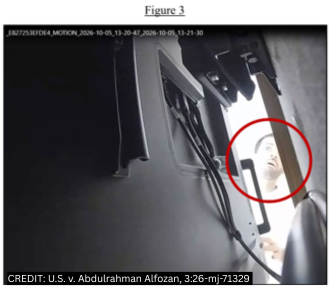
🚨An employee of OpenAI has been arrested for and charged with using or endeavoring to use an electronic, mechanical, or other device to intercept oral communications.
🔗: https://t.co/BAhAIfRafE
Great interview from ex-Microsoft CVP @ashokk !!! Really great insights on how to manage teams, and a shout out to Debbie Gibson 😂 https://t.co/idHhSLYm0G
Ship Code at Scale with Grok Bot and Cursor is on Thursday 15 Oct. For engineering teams: see Grok Bot pick up requests from Slack and hand the coding to Cursor Cloud Agents. https://t.co/DKshAMOrhL