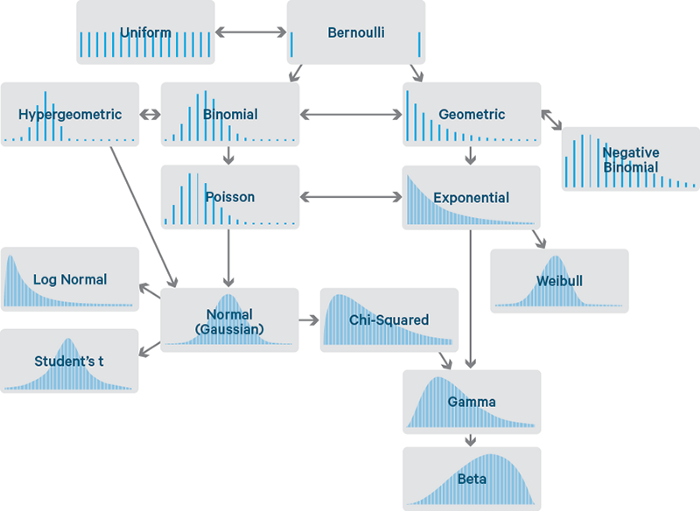
Earlier this year I was getting frustrated with Claude's charts, fed this book to claude and had it generate a Tufte skill. Instantly got simpler/more beautiful visualizations.
https://t.co/lfXwyQfmQG
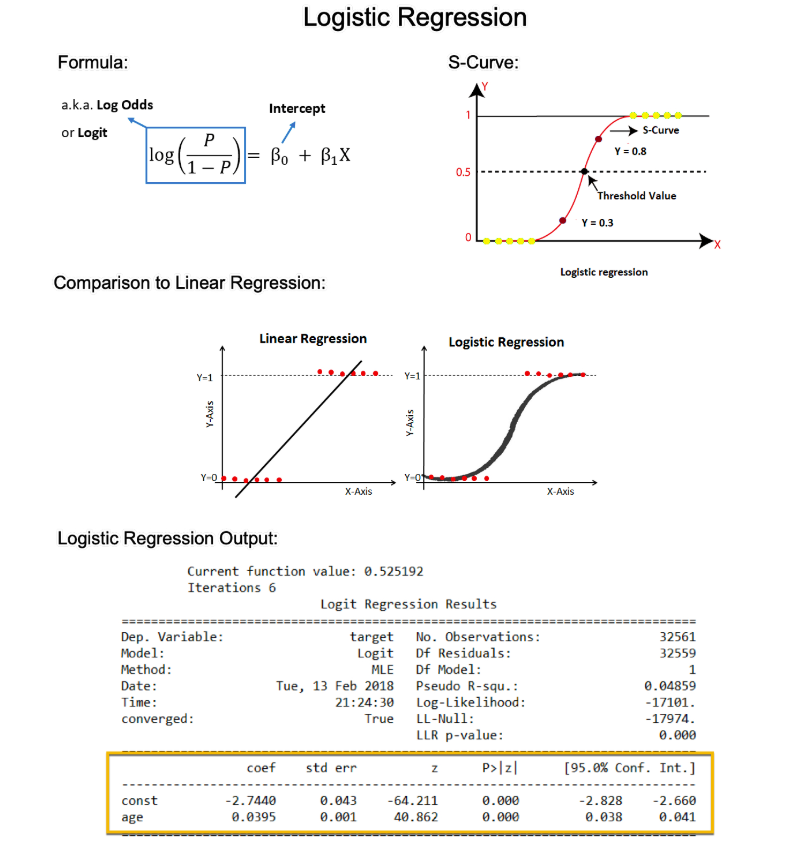
Logistic Regression is the most important foundational algorithm in Classification Modeling.
In 2 minutes, I'll teach you what took me 2 months to learn.
Let's go: 🧵
Building a personal knowledge base for my agents is increasingly where I spend my time these days.
Like @karpathy, I also use Obsidian for my MD vaults.
What's different in my approach is that I curate research papers on a daily basis and have actually tuned a Skill for months to find high-signal, relevant papers.
I was reviewing and curating papers manually for some time, but now it's all automated as it has gotten so good at capturing what I consider the best of the best. There are so many papers these days, so this is a big deal.
You all get to benefit from that with the papers I feature in my timeline and on @dair_ai.
The papers are indexed using @tobi qmd cli tool (all of it in markdown files along with useful metadata). So good for semantic search and surfacing insights, unlike anything out there.
I am a visual person, so I then started to experiment with how to leverage this personal knowledge base of research papers inside my new interactive artifact generator (mcp tools inside my agent orchestrator system). The result is what you see in the clip.
100s of papers with all sorts of insights visualized. I keep track of research papers daily, so believe me when I tell you that this system is absolutely insane at surfacing insights. This is the result of months of tinkering on how to index research and leverage agent automations for wikification and robust documentation.
But this is just the beginning. The visual artifact (which is interactive too) can be changed dynamically as I please. I can prompt my agent to throw any data at it. I can add different views to the data. Different interactions. I feel like this is the most personalized research system I have ever built and used, and it's not even close.
The knowledge that the agents are able to surface from this basic setup is already extremely useful as I experiment with new agentic engineering concepts. I feel like this knowledge layer and the higher-level ones I am working on will allow me to maximize other automation tools like autoresearch. The research is only as good as the research questions. And the research questions are only as good as the insights the agents have access to.
Where I am spending time now is on how to make this more actionable. I am obsessed about the search problem here. The automations, autoresearch, ralph research loop (I built one months ago) are easier to build but are only as good as what you feed them.
Work in progress. More updates soon. Back to building.
I made a Claude Code skill that turns any arxiv paper into working code.
Every line traces back to the paper section it came from & any implementation detail the paper skips will be flagged, and not assumed.
open sourcing it -
https://t.co/sSio4JfpIo
People often say mathematicians are not afraid of anything—except one thing: the Collatz Conjecture.
It is one of the most famous unsolved mysteries in mathematics.
Here’s how it works:
Pick any positive number.
If the number is odd, multiply it by 3 and add 1.
If the number is even, divide it by 2.
Now repeat this process again and again.
For example, start with 7:
7 is odd → 3×7 + 1 = 22
22 is even → 22 ÷ 2 = 11
11 is odd → 3×11 + 1 = 34
…and so on we get:
7 → 22 → 11 → 34 → 17 → 52 → 26 → 13 → 40 → 20 → 10 → 5 → 16 → 8 → 4 → 2 → 1
The surprising claim is this: no matter which number you start with, you will always eventually reach 1.
It sounds simple, but no one has been able to prove that it is true for all numbers. That’s why it remains a mystery.
Why did the US ban this number in 2001? It sounds insane, but 25 years ago, the Motion Picture Association of America was genuinely trying to delete this number from the internet.
You see, back in 1999, a teenager in Norway named Jon Lech Johansen wrote a piece of code called DeCSS.
It cracked CSS, the encryption on DVDs. Suddenly, anyone could copy a movie with the click of a button. It was a nightmare for the movie studios.
They went nuclear. They sued the hacker magazine 2600: The Hacker Quarterly.
They threatened Slashdot, and their lawyers fired out cease-and-desist letters to anyone hosting the code. They called it a digital burglary tool.
But the internet found a loophole.
A computer scientist named Phil Carmody realized that computer code is just binary ones and zeros.
And you can treat that string of binary as a single number. That way, you get a really, really big integer—which is the illegal code.
But Carmody knew that just finding any number wasn’t going to be enough, because the government could still ban a random number.
So he needed a number that science would be forced to protect. He needed a prime number.
You see, the University of Tennessee maintains a prestigious academic database called the Prime Pages.
It records the 5,000 largest known prime numbers. Carmody realized that if he could turn the illegal code into a record-breaking prime number, the university would have to publish it.
His first attempt was 1,401 digits long. It was prime, but too small.
It didn’t crack the top 5,000 list. It wasn’t mathematically interesting enough to save.
So, he hacked the math.
Use this formula:
K × 256^N + B
Now, K is the illegal code part. 256^N is the mathematical equivalent of adding useless zeros at the end—like making a book longer by adding blank pages. It doesn’t change the actual content inside.
So, he kept adding “blank pages,” shifting the number, until he hit a mathematical jackpot—a 1,959-digit monster.
This wasn’t just illegal code anymore. It became the 10th largest ECP prime number ever discovered at the time.
It was checkmate.
The number was immediately added to the university database. For the MPAA to ban the code now, they would have to order a university to delete a scientific record.
You can’t censor mathematics.
@wowclassicdevs *UPDATE*
"we dug into our options, and we’ve found a way to award updated Ranks one more time. This will include Honor gained in the current week, which ends when we take realms offline at 23:59 CET on Monday, January 12"
https://t.co/j1A9PrlcZQ
I am enough of an artist to draw freely upon my imagination. Imagination is more important than knowledge. Knowledge is limited. Imagination encircles the world.
-- A. Einstein (1879-1955)
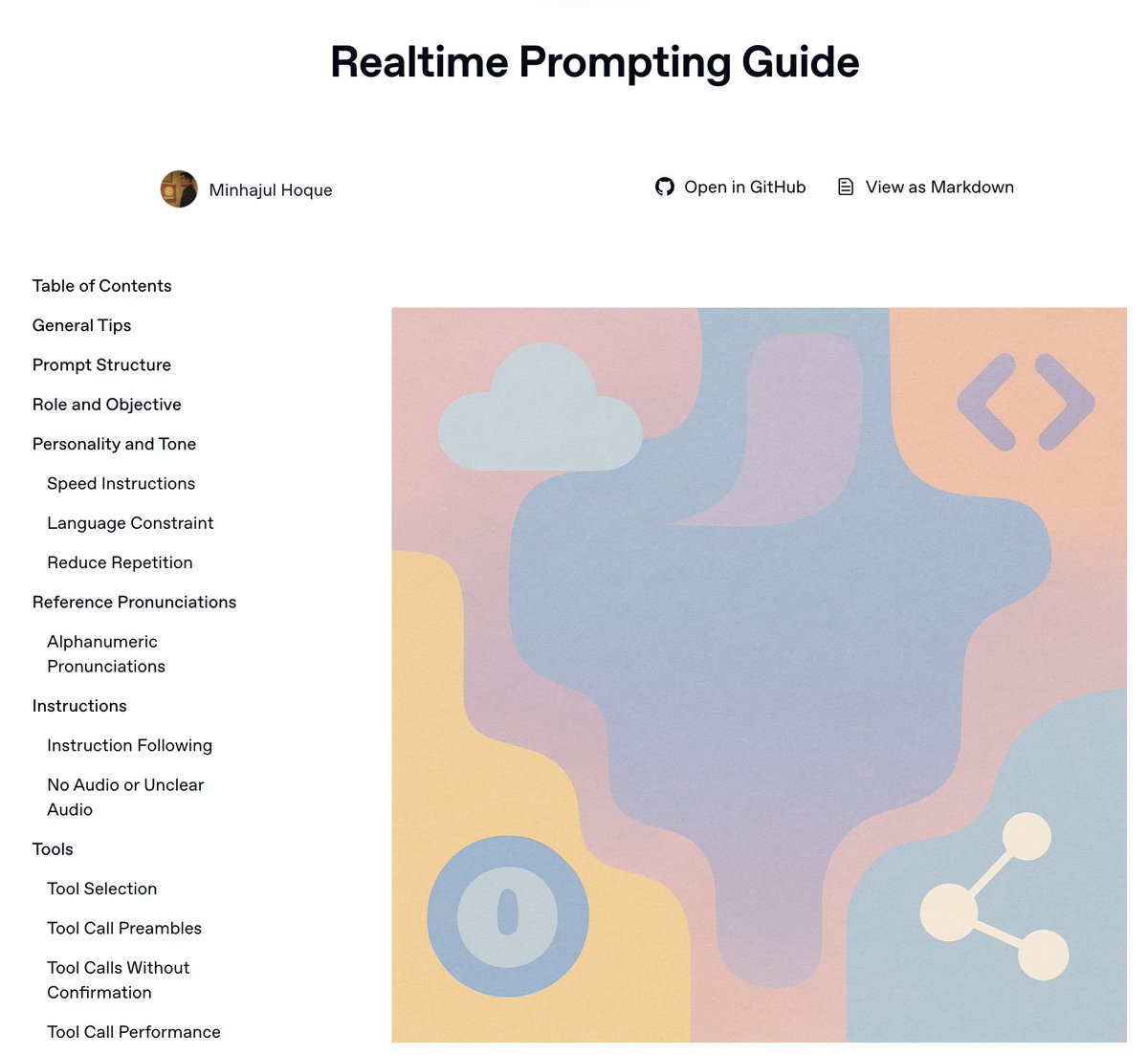
OpenAI has released its "Realtime Prompting Guide". This is a paradigm shift in how to build an agentic AI system. Let's dig into the details of how different this is!
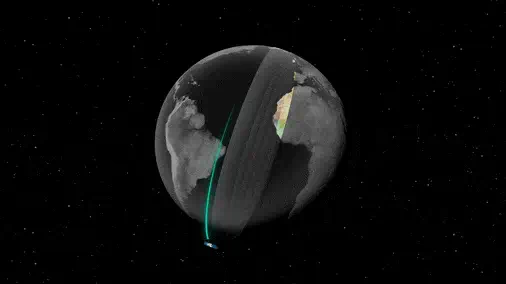
Google DeepMind just released one of the most important tools in geospatial data science.
It’s called AlphaEarth Foundations.
I want to break it down for you in intuitive terms:
"Decem" means 10 in Latin, so why is December the 12th month of the year?
Well, the story begins nearly three thousand years ago with Romulus, the mythical founder of Rome...
CSS Trick 🤙
You can use trigonometric functions in CSS to create sweet sine wave-style animation delays 🎬
.node {
animation-delay: calc(
sin((var(--index) / var(--count)) * 45deg) 👈
* var(--speed) * -1s
);
}
Trick here is to inline some CSS custom properties that you can use to generate the delay with calc 🧮
--index: for each element
--count: on the parent for the number of elements
--speed: to generate offsets
The negative animation-delay means that you get an animation with the playhead already part-way into the timeline. No waiting for all of them to start 🍿
@CodePen link below! 👇
I'm curious about why @Microsoft made the decision to retire" Visual Studio for Mac" (@VisualStudioMac) but at the same time decided not to retire "Visual Studio for Windows" (@VisualStudio) ?
If "Visual Studio Code" (@code) really is the future, then what are we waiting on ?
Arguably, the best Linear Algebra course out there.
It's Free!
Taught by MIT's legendary Professor Gilbert Strang.
Build a strong foundation in mathematics for machine learning!
Check this out👇
https://t.co/Y2f1wvq1UW
Today we presented our work on Action Recognition with 3D pose and tracking at #CVPR.
We also released our code, models, and dataset of 1.5 million human trajectories.
Code: https://t.co/VAAhlPZSi4
Project Page: https://t.co/DaH4vbL7Ea