What happens when war reaches the cloud?
In their latest blog, Hemant Adarkar, Senior Fellow, and Shubham Shinde, Associate, at @Artha__Global, examine how digital infrastructure has become a target in the current conflict in West Asia, forcing governments and companies to rethink the physical security of their data infrastructure.
As data becomes a critical economic and strategic asset, the assumption that the “cloud” will remain constantly accessible is increasingly untenable. Protecting digital infrastructure now requires planning for physical risks ranging from geopolitical tensions to sabotage and energy disruptions.
Hence, this piece argues that building resilient digital systems will require rethinking where data centres are located, how they are powered, and how countries safeguard these critical nodes of the global economy.
Read more here: https://t.co/r86Sw316nv
#DigitalInfrastructure #CyberSecurity #Geopolitics #DataCentres
How can middle powers build AI systems navigating difficult geopolitical, economic and technical choices?
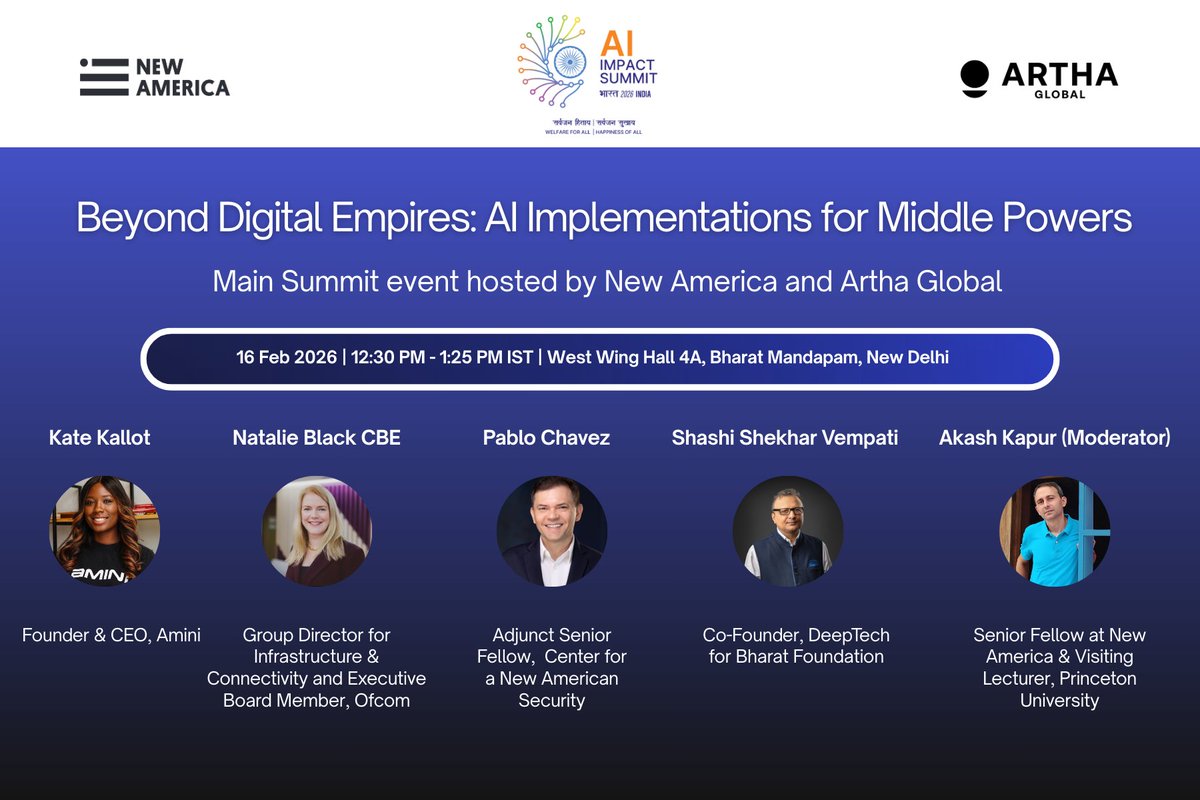
At the India AI Impact Summit 2026 (@OfficialINDIAai), @Artha__Global and @NewAmerica are bringing together global experts to examine how middle powers can chart their own AI futures.
Join us at #IndiaAIImpactSummit 2026 for:
Beyond Digital Empires: AI Implementations for Middle Powers
📅 Feb 16 | 12:30 PM IST
📍 Bharat Mandapam, New Delhi
With: Kate Kallot @KateKallot | Natalie Black CBE (@natalieblackuk) | Pablo Chavez (@CNASdc) | Shashi Shekhar Vempati (@shashidigital)
🎙️ Moderated by Akash Kapur (@akashkapur)
We’ll dive into sovereign vs open-source AI, compute strategy, and Digital Public Infrastructure.
Registration for the Summit required. If you have not yet registered, you may do so here: https://t.co/987oU0t0bO
@GordonLaForge
#AI #TechPolicy #DPI #AIInfrastructure
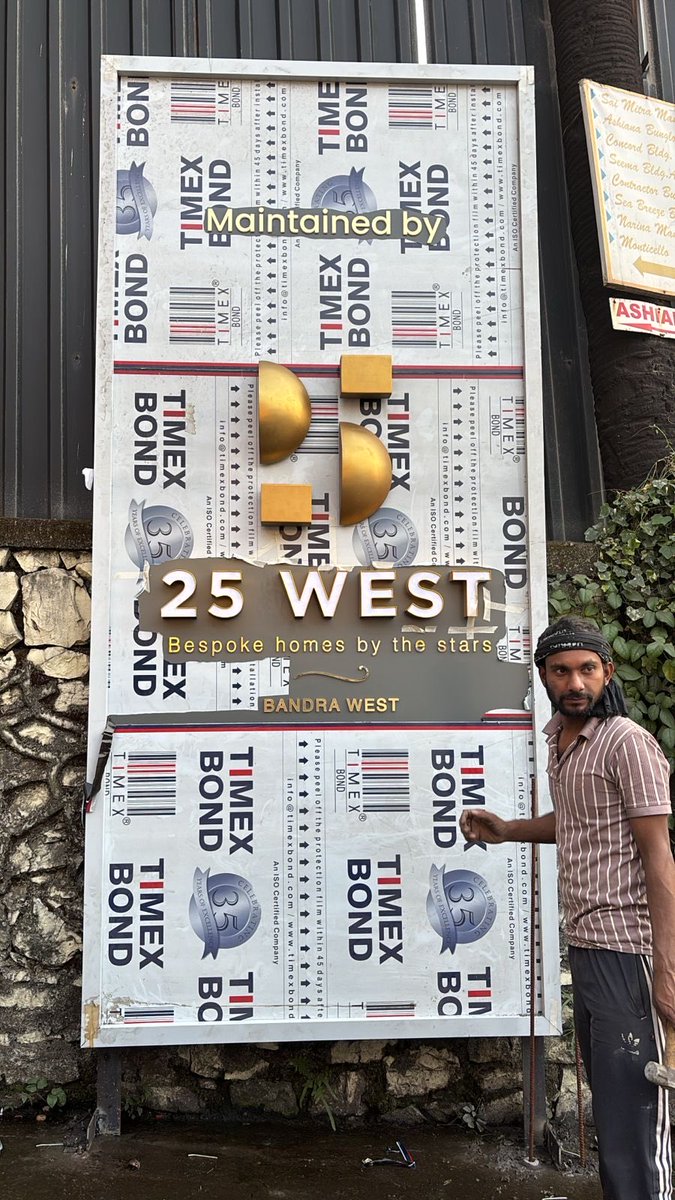
Shocked 2 see a massive advt. signage blocking Bullock Road — a very narrow 6mtr rd. Contractor claims BMC has given permission
How is this allowed when it endangers residents & blocks emergency access?
@mybmc@mybmcWardHW@ShelarAshish@ShelarAshish@Asif_Zakaria
India stands at a crossroads. It can choose to be a passive consumer of AI innovations built elsewhere, or it can build an AI ecosystem rooted in its diversity. The future lies not in mimicking Silicon Valley but in embracing the Bharat-first approach.
In their new piece, @HAdarkar, Senior Fellow and Sridhar Ganapathy, Principal at @Artha__Global examine why India’s linguistic diversity requires a fundamentally different approach to AI development. With 22 official languages and hundreds of dialects, India cannot depend on the widely accessible, resource-intensive, large models primarily trained on English language data.
We have to remember that what we observe is not nature herself, but nature exposed to our method of questioning.
-- W. Heisenberg
(Physics and Philosophy, 1958)