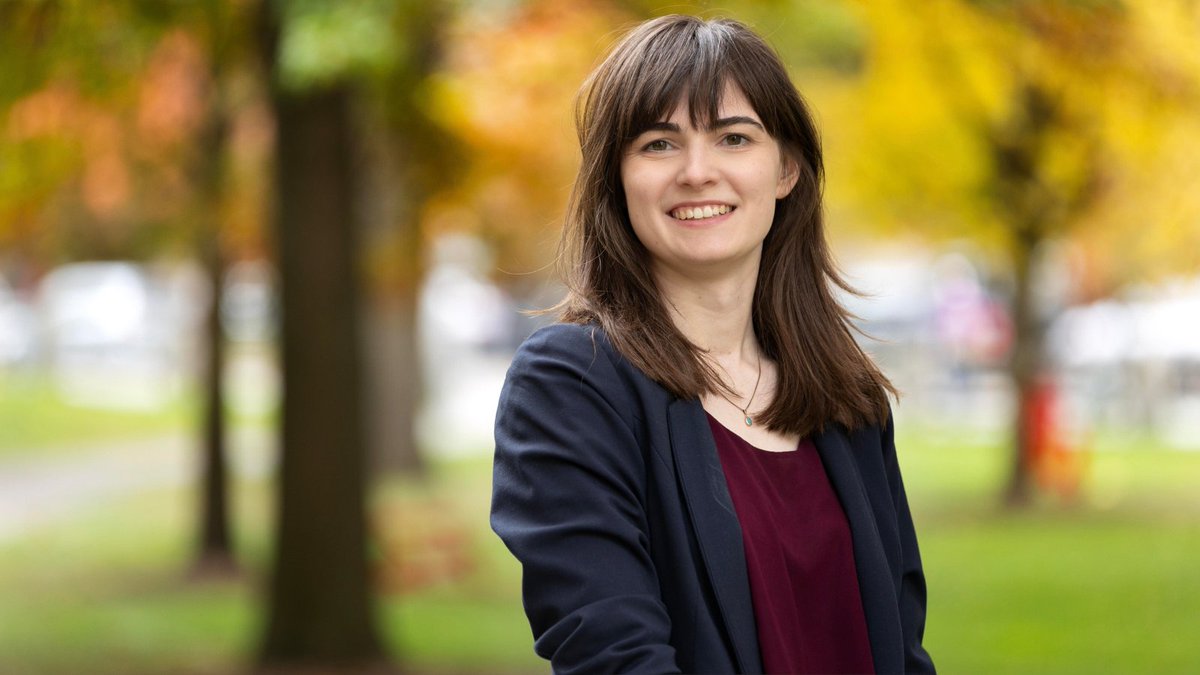
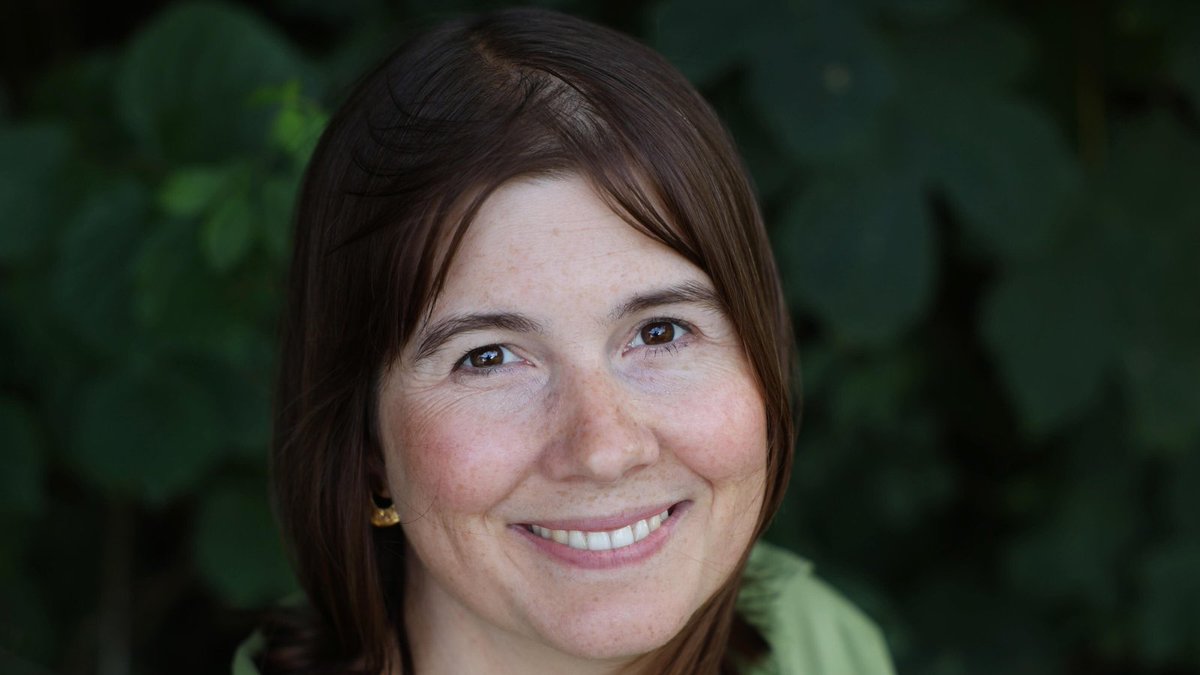
Congratulations to Mary Cipperman, A.B./S.M. ’26, named a 2027 Rhodes Scholar—one of five Harvard students to receive the honor! At Oxford, she plans to pursue advanced degrees in applied digital health and medical physics with radiobiology. #RhodesScholar https://t.co/sIHf0JfDez
Ferns that pull rare earth elements from soil. A tree that grows crystals in acidic ground. Light that sorts near-identical metals. Meet the early-career researchers on eight newly funded #Scialog teams: https://t.co/aQJ8QCZAao
Thanks @SloanFoundation and @KavliFoundation
A summer internship at Ramboll helped Tiffany Kalu, S.B. ’24, turn her interest in environmental engineering into a career in water infrastructure. Now a water resources staff engineer, she’s helping plan sustainable systems with communities in mind. https://t.co/cjpC9YjWZ7
Elise Penn combines atmospheric chemistry, satellite observations and AI at Zeus AI to explore new approaches to weather modeling and climate forecasting. https://t.co/QlNsJ9FoCm
For environmental science and engineering alum Nicole Nishizawa, sustainability is an optimization challenge. From green buildings to ESG strategy, she helps companies use data and resources more efficiently—and turn complex goals into clear action. https://t.co/9NjEtVR4Jo
Computer scientists are testing whether AI could enhance a digital health intervention program aimed at generating peer referrals for HIV services in South Africa. https://t.co/Ww07WkkFeP
Can machine learning improve weather forecasts 2–6 weeks out? Applied math concentrator Hannah Guan helped develop a method to correct errors in existing models—a project that began at Microsoft Research and later led to a publication in Nature. https://t.co/ePTpp8vFUM
SEAS Professor @JenniferALewis1 has been elected to the @theNAMedicine. She has earned the rare distinction of membership in all three National Academies, including the National Academy of Sciences (NAS) and the National Academy of Engineering. https://t.co/BTKDHmIpbY
After Typhoon Pablo destroyed her home, Aryenne Rodrigo turned her experience into action—studying stormwater management at NYC DEP and leading Engineers Without Borders work to improve water access in Guatemala. https://t.co/odRFAervdv
Five Harvard SEAS computer science graduate students—Prashanth Amireddy, Tian (Sunny) Qin, Paula Rodriguez-Diaz, Itai Shapira and Kevin Zhang—have been named 2027 Siebel Scholars. Congratulations! https://t.co/MrMUZFLLa5
Whether it’s robots, aerospace technology, artificial intelligence, quantum computing, blending art and technology, or connecting with peers who share experiences, meet the clubs helping students learn, lead, collaborate, and innovate together.
https://t.co/RJTm3hrv6s
Environmental science and engineering junior Luna Yin found existing forest biomass models underestimated edge-plot biomass by 12%. Using field measurements in the Harvard Forest and airplane LiDAR, her research could improve carbon capture predictions. https://t.co/Wq7pfRS3JC
SEAS sophomore Amy Zhang spent her summer in the Zhou Laboratory at Dana-Farber, combining AI, computational protein design and hands-on research to explore next-generation antibody therapies through Harvard’s PRISE Fellowship. https://t.co/pbj2MfO25w
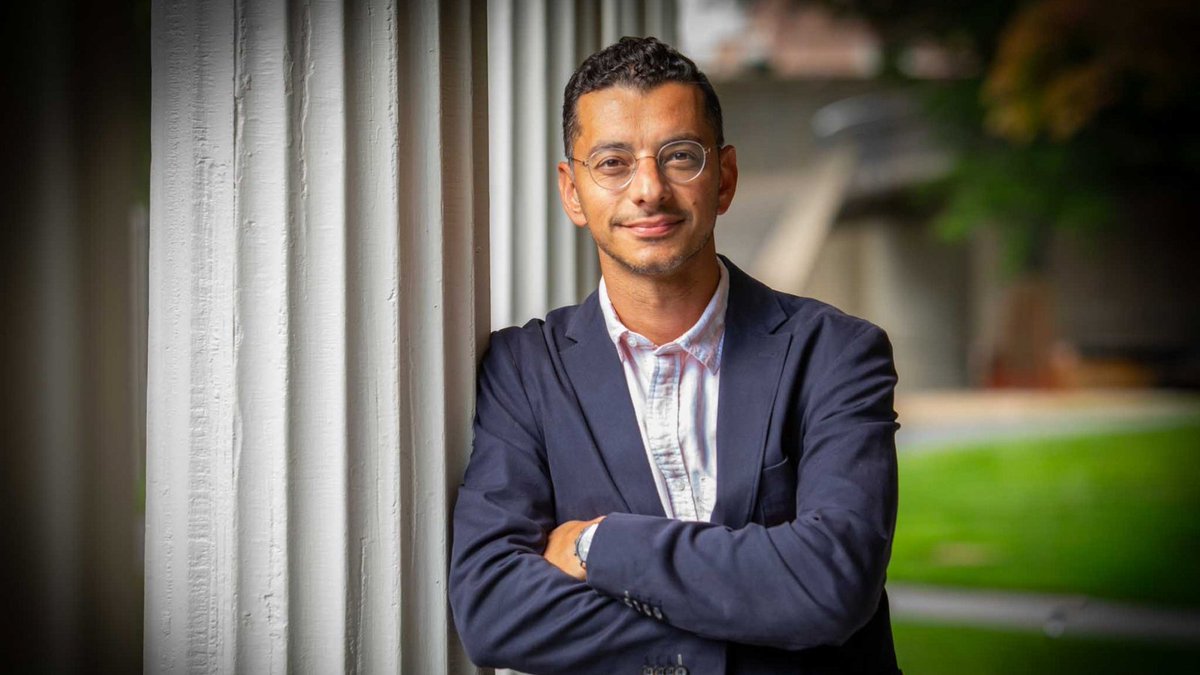
Supported by the @NIH, Harvard SEAS Professor Mo Khalil and team are developing synthetic probes that can precisely alter individual protein activity, enabling large-scale experiments similar to genetic screens, but focused on proteins. https://t.co/JWdiUlqr5y
From residential solar to carbon removal, Zander Sebenius combines engineering and business to advance climate solutions. At Rubicon Carbon, he evaluates nature- and technology-based projects that can accelerate decarbonization. https://t.co/J3woF3N7he
Rebecca Gracia turned a passion for physics and hands-on design into a career advancing utility-scale solar and energy storage. Her journey from SEAS to renewable energy shows how engineering can help build a more sustainable future. https://t.co/1jHdGtzieD
GPT-6 Astra is impressive, but agentic robotics ≠ just control.
Physical agents should control robots, learn new skills, and design their own hardware.
So we introduce RLE-Bench: 48 everyday robotics engineering tasks spanning closed-loop control, policy learning, perception, and mechanical design.
Harvard researchers have joined a project led by @SandiaLabs to create a physics-constrained AI foundation model for studying complex turbulent flows that are important to energy systems. https://t.co/SZeeNCXuvN
SEAS alum Charlotte Wagner develops environmental modeling tools that help countries evaluate policy pathways and plan for a more sustainable, resilient future as a senior scientist at the Stockholm Environment Institute. https://t.co/EbcBByXDNo