Managing Director @ EconOne | Teach @EconUofU | NYT: "one expert for the plaintiffs" | Prospect: "preeminent watchdog of The Economist's most wrong takes"
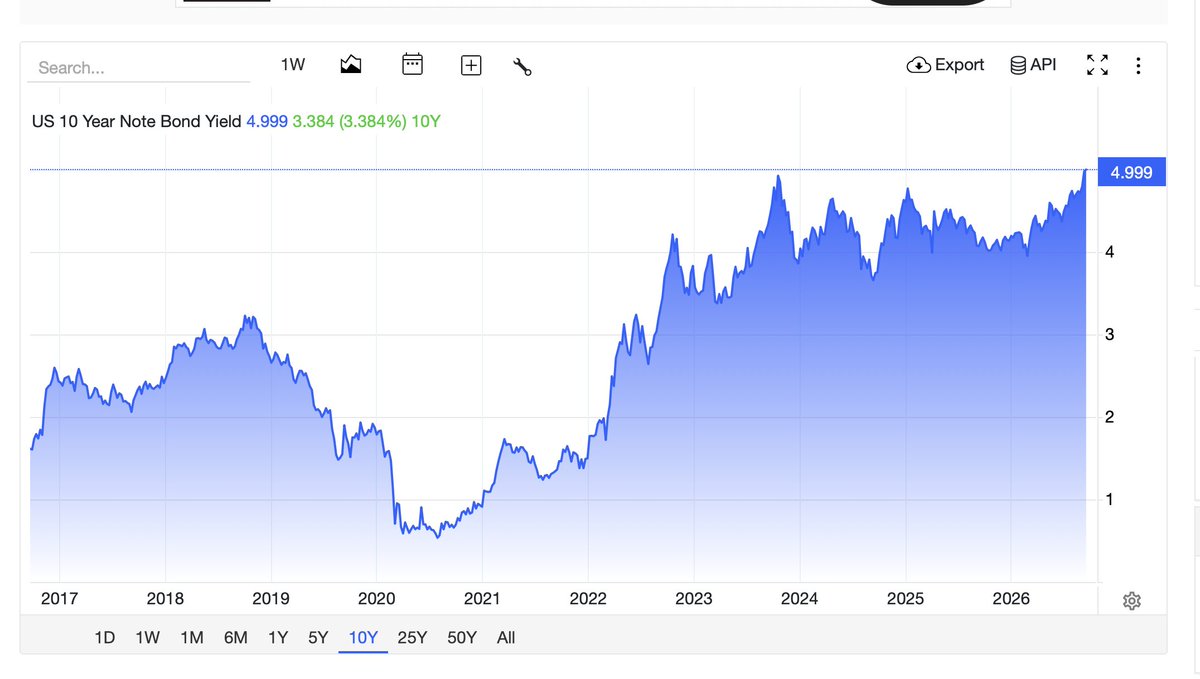
I hear you. But in fairness, you said we didn't need to appease the bond market. My response is that they seem to have lost confidence in our ability to finance the debt, and they wield significant power over the rates not just paid by the government, but also by consumers in their daily lives. Is your position that the bond market rumblings should be ignored? And if so, how do we get these interest rates down? I'm open to ideas.
The best way to appease the bond market now is to repeal Trump's One Big Beautiful Bill Act--and its massive tax cuts to wealthy individuals and corporations--which has been estimated to contribute between $3 and $5 trillion to the U.S. national debt over the next ten years. Let's get these interest rates down!!!
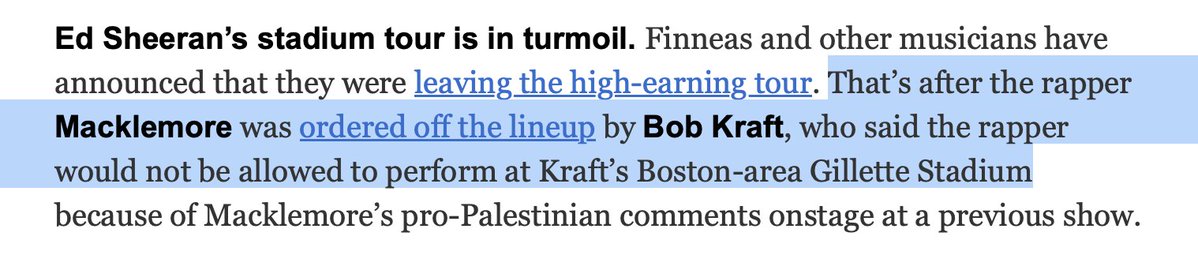
This is wild and a significant infringement on free expression, exercised by a sports billionaire owner (Kraft). If you are critical of Israeli policy towards Palestinians, you can be banned from performing at certain venues (Gillette Stadium) in the United States. Yes yes this is not suppression by a government, don't @ me, but by a private entity with government-sized powers.
A crazy argument suggesting that merging parties can resist government attack simply by a private agreement setting a large bond requirement or related agreement-failure clause.
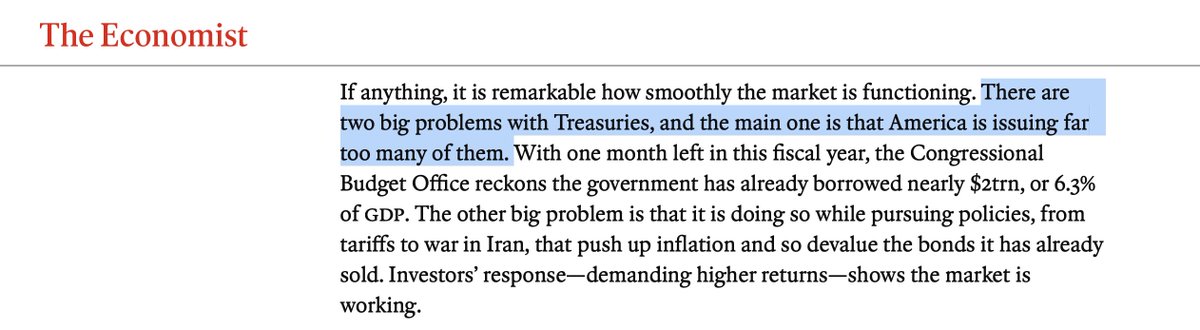
Look I'm not some austerity guy. I'm all for big spending, especially to offset a recession. But don't lenders use the Treasury yield as a reference point for pricing mortgages? If so, then there are (spillover) harms to U.S. households when the bond markets lose faith in the government's ability to finance its debt. If the bond market wants an offering, why not sacrifice tax cuts for the rich?
It's also remarkable that no Democrat, at least that I'm aware of, has called the repeal of the tax cuts in the Big Beautiful Bill. (Some have called for the repeal of certain spending cuts.) And Democrats, while Biden occupied the White House, refused to raise the corporate tax rate after Trump slashed it to 21 percent. It's as if Dems are just as beholden to corporate interests as GOPers.
Funny how the Supreme Court is so obsessed with the President's ability to fire agency heads and so little with his oath of office to "faithfully execute" his role to implement laws passed by Congress.
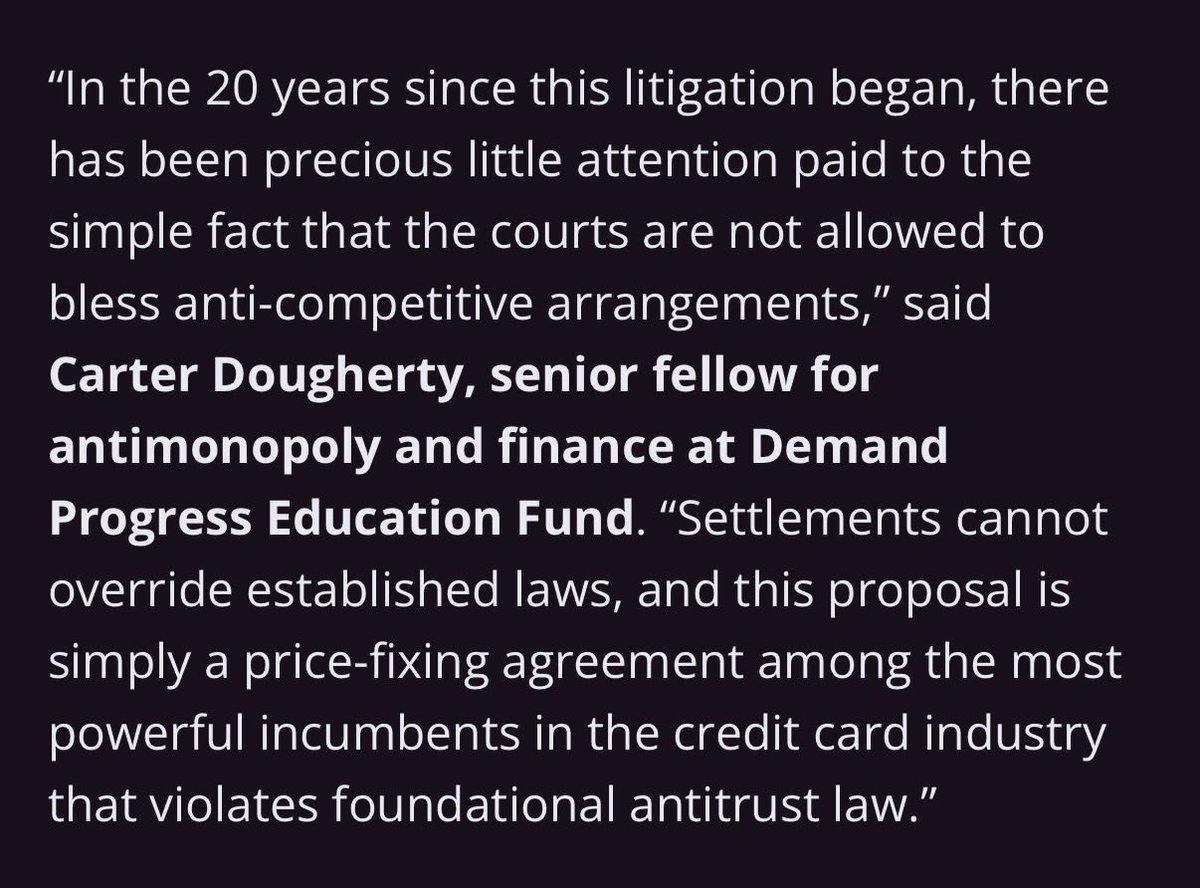
Demand Progress, @econliberties, @ConsumerReports & @SmlBizMajority asked the courts to stop the Visa-Mastercard duopoly that works with megabanks to keep the costs of credit cards high. Judges are not allowed to rewrite the Sherman Act!
30 years ago, we decided that the best way to develop technology was to give tech platforms broad immunity for the harm they caused, to treat "the internet" as wholly different, and untether it from common law, preempt state law. Remove it from the normal domain of law built up over generations; and put it in its own special category. Wholly different = outside of common law and state law.
Today, with very different motivations, the big AI companies are asking for a lot of things, but MUCH of what they are asking for is not to be subject to law itself, to be untethered from state regulators, to be untethered from existing federal law and to be untethered from tort. Wholly different = wholly new regime, reject law as it lives in the world.
They are asking for their own special regime in 100 different ways--exemptions from existing law, preemption from state law, their own regulator.
If we take the threats to human health and wellbeing seriously, the last thing we should do is remove them from the normal domain of law.
Instead, a serious precautionary regime requires state law, tort law, strong and strengthened consumer protection law with stronger private rights of actions, using existing strong protections against corporate collusion, decentralized modes of enforcement so that capture at the federal level does not mean wholesale capture (build on state parens patraie), and likely a federal regulatory regime that is built WITHIN an existing agency, like the federal NRC and NNSA, instead of something wholly new, to avoid the most obvious risk of dangerous agency capture, both by self-interested parties and by the post-law ideology of the EA world.
Any vision that requires preemption or immunity is a non-starter, and smuggles in unimaginable risk.
Respectfully, this is not encouraging at all. There is very little space between industry and government leaders -- why do we think it's been impossible to pass ANY tech policy on the federal level?
Big Tech is already in the room. They're already writing the laws. Sam Altman is on the Hill or in the WH every other day. Mark Zuckerberg & Jeff Bezos have houses down the street from the VP.
Dems are rightfully pivoting to campaigning against data center "developers" -- i.e. Big Tech -- and they will win back the House on a tech accountability platform.
The Big Tech CEOs who have spent the last 2.5 sucking up to Trump with bribes & acquiescence deserve to be left out in the cold.
"Under the Trump administration, the EPA has stopped estimating the public health benefits of reducing pollution in the cost-benefit analyses necessary for clean-air regulations. Instead, the agency has estimated only the costs to businesses of complying with the rules."
Translation: Public health benefits get zero weight in any cost-benefit analysis under the Trump administration. So long as the coal industry stands to profit from planet-warming pollution, then they have the right to pollute with impunity. This is your government on libertarianism.
Just guessing eliminating the inclusion of the benefits in a cost/benefit analysis always justifies eliminating any regulations that have a cost associated with them ...
Last time this was done was with the required disclosure for structured finance securities ... the result was the Great Financial Crisis ...
No reason to expect a less damaging result this time ...
Worth pointing out that Trump treats the inflation problem with about the same urgency as Biden did--that is, zero urgency. Weird how the polls are telling us that voters feel stretched over higher prices (at the pump, mortgage rates, food), consumer sentiment is down, and households our going deeper into debt ... and yet our presidents just shrug their shoulders. Trump mocks the notion of affordability, and eggs on inflation via his tariffs and wars. Biden "elected" (assuming he was even sentient) to leave it up to the Fed. Not sure what's wrong with our democracy, but it feels like the presidents are not internalizing the suffering of many (most?) voters.