Ahora que Zapatero está de moda, recordar que firmó el RD 661/07 que supuso más de 500.000 Millones de Euros en la factura
Que eso supuso la quiebra del sistema eléctrico, que nos endeudó hasta 2027.
Que hizo que la factura minorista se encareciera en España.
geçen hafta claude ile 6 saat dijital ayak izimi sildim.
sonuç: 47 data broker listingi kaldırıldı. 12 ölü hesap silindi. 3 arama sonucu bastırıldı.
nasıl yaptım, adım adım. thread.
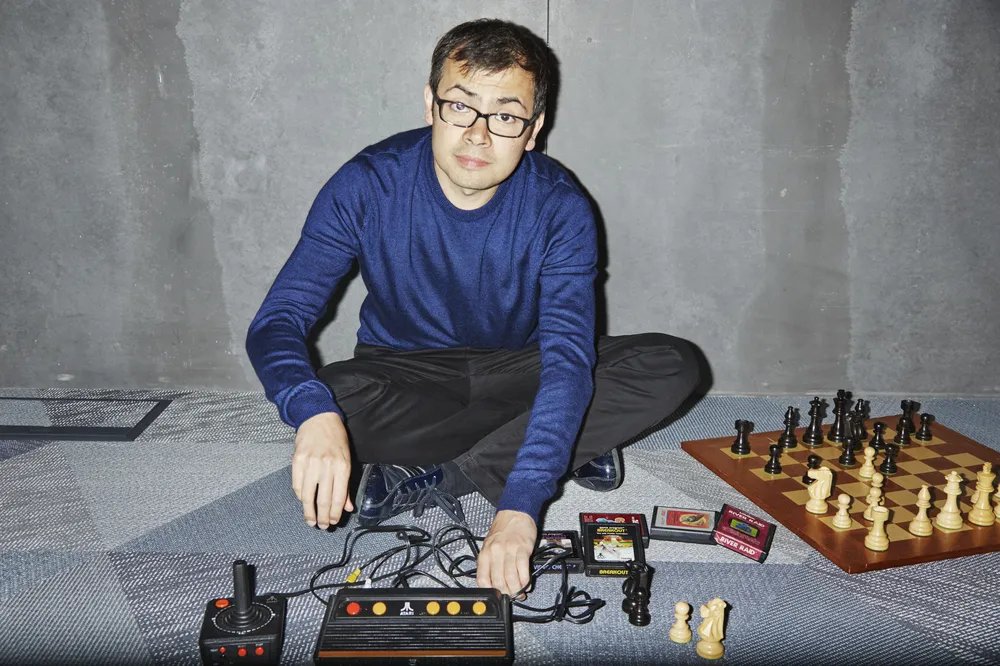
A British kid became a chess master at 13, then a bestselling video game designer at 17, then a PhD neuroscientist at 33, then the CEO of the AI lab that won the 2024 Nobel Prize in Chemistry.
People called him unfocused for twenty years. He was running the most deliberate career plan in modern science.
His name is Demis Hassabis, and the thing almost nobody understood while he was doing it was that every single step was feeding the same underlying obsession.
Here is the thread that connects the whole career, and why it matters for how anyone should think about building toward a hard goal.
The chess came first. He was born in London in 1976 and started playing at age four. By eight, he was the London champion for his age group. By thirteen, he had an international master rating that put him in the top fifty players in the world under his age bracket. He was on a track that would have made him a professional player for the rest of his life.
He walked away.
The reason he gave later, in interview after interview, is the part most people miss. He said chess forced him to think constantly about thinking itself. Every move required him to simulate what his opponent was simulating about him. He became fascinated not with winning the game, but with the process the human brain was running in order to play it. He decided chess was too small a container for the real question he wanted to answer, which was how intelligence actually works.
The video games came next. He used the money he won from chess tournaments to buy a ZX Spectrum. He taught himself to code. By seventeen, he was a lead programmer on a game called Theme Park that sold millions of copies. He could have stayed in that industry and built a career as one of the top game designers in Britain.
He walked away from that too.
He went to Cambridge, did a double first in computer science, and then made the move that looked like the strangest pivot of his life. He enrolled in a PhD in cognitive neuroscience at University College London. He was thirty. His peers from Cambridge were already running companies. He went back to graduate school to study how the human hippocampus builds memories and imagines future scenarios.
His 2007 paper on the link between memory and imagination was named one of the top ten scientific breakthroughs of the year by Science magazine. But the paper was never the point. The point was that he had spent three decades quietly building the exact combination of skills nobody else in the world had put together.
Deep intuition for how intelligent agents behave in complex systems, from a lifetime of chess. Hands-on engineering fluency, from years of shipping commercial software. And a rigorous scientific understanding of how biological brains actually produce cognition, from a PhD in neuroscience.
In 2010, he used that combination to co-found DeepMind with Shane Legg and Mustafa Suleyman. The mission statement he wrote was two sentences long and sounded absurd to most people who heard it. Solve intelligence. Then use it to solve everything else.
For the first six years, DeepMind worked almost entirely on games. Atari. StarCraft. Go. People outside the field could not understand why a lab that claimed to be building artificial general intelligence was spending hundreds of millions of dollars teaching computers to play Pong.
Hassabis kept explaining the reason in interviews and almost nobody was listening. Games were not the goal. Games were a controlled environment where you could iterate on general-purpose learning algorithms fast, measure their progress precisely, and prove to yourself that you had built something that could transfer between domains.
In 2016, AlphaGo beat Lee Sedol, the world champion at Go, in a match that had been considered decades away. And the day after that match ended, Hassabis sat down with his team lead David Silver and asked what they should do next.
The answer was the thing he had been working toward his entire life.
They turned the same deep reinforcement learning approach at a problem biology had been stuck on for fifty years. Protein folding. Given an amino acid sequence, predict the three-dimensional shape the protein would fold into. Every drug discovery effort in the world depended on it. The best computational methods could only solve a small fraction of proteins. Experimental methods took years per structure and millions of dollars per protein.
AlphaFold2 was released in 2020. Within a year, it had predicted the structure of almost every protein known to science. Two hundred million structures. Made freely available to the entire research community. More than two million researchers from a hundred and ninety countries have used it since.
In October 2024, Demis Hassabis and John Jumper were awarded the Nobel Prize in Chemistry for that work.
The line almost nobody quotes from his speeches is the one that explains the whole career. He has said, many times, that he did not build AlphaFold to solve protein folding. He built AlphaFold to prove that the approach he had been developing for thirty years could actually work on a real scientific problem. Protein folding was the demonstration. AGI was always the goal.
The chess taught him how to think about adversarial systems. The games taught him how to ship software. The neuroscience taught him how the only existing example of general intelligence actually worked. DeepMind used all three to build a method that could transfer between domains the way the human brain does. And the moment the method was ready, he pointed it at the single most important unsolved problem he could find in a domain where a breakthrough would save millions of lives.
Most people looking at his career from the outside, at any point before 2016, would have called it scattered. A chess prodigy who gave up chess. A video game designer who walked away from a gaming career. A computer scientist who detoured through neuroscience. A startup founder who burned six years on board games.
From the inside, it was the most focused career in modern science. Every step was quietly answering the same question. How does intelligence actually work, and what would it take to build one that could solve problems humans have not been able to solve alone.
The people who change a field are almost never the ones who looked focused along the way.
They are the ones who were obsessed with a single question so deep and so long that the path they took to answer it looked like chaos from the outside and like a straight line from the inside.
And they almost never get credit for the plan until decades later, when the Nobel Committee calls.
El orgullo de trabajar en una de las mejores centrales nucleares del mundo.
Almaraz, que pretende cerrar el Gobierno entre 2027 y 2028 por razones políticas, genera el 7% de la energía eléctrica de España, constante y fiable, baja en emisiones de CO₂ y segura, según el CSN y organismos internacionales como WANO y el OIEA.
Almaraz es una central tecnológicamente avanzada, gracias a inversiones anuales de más de 40 millones de euros, y está preparada para seguir operando, como North Anna (su central de referencia en EEUU), que tiene licencia para 80 años.
Almaraz es un ejemplo mundial en seguridad, gracias a su equipo de 3000 personas (empleos directos e indirectos) altamente capacitadas, comprometidas y orgullosas, como muestra el vídeo.
Mi camino acaba aquí. Gracias a todos, porque también habéis formado parte de ello. En esta nueva aventura llevaré conmigo los valores que me han acompañado hasta ahora e intentaré devolver a la sociedad todo lo que me ha dado en este tiempo. Ha sido un viaje maravilloso ♥️
🏥 La Ciudad de la Salud de la @ComunidadMadrid
albergará las nuevas instalaciones del Hospital público La Paz.
🔝 El campus biosanitario más moderno e innovador de Europa,con una inversión de más de 1.000M€.
+Info: https://t.co/wwAALzuMbX
#SomosLaPaz
¡¡MARIANO GARCÍA, CAMPEÓN DEL MUNDO DE 1.500!!
🥇Espectacular Mariano García, que se cuelga el oro mundial con una carrera impecable (3:39.63) #WorldIndoorChamps
🔴DIRECTO https://t.co/t5F2R2j3jQ
Consejo General de Colegios Oficiales de Ingenieros Industriales @cgcoii
«El análisis realizado en este informe evidencia que la decisión de cerrar la Central Nuclear de Almaraz no responde a criterios técnicos ni medioambientales. La falta de un análisis basado en fundamentos técnicos rigurosos podría afectar negativamente la seguridad del suministro eléctrico, aumentar los costes de la electricidad y comprometer los objetivos de descarbonización.»
https://t.co/7LXoHceVEg
𝗦𝗜𝗖𝗨𝗥 𝟮𝟬𝟮𝟲 𝗿𝗲𝗳𝘂𝗲𝗿𝘇𝗮 𝘀𝘂 𝗽𝗮𝗽𝗲𝗹 𝗰𝗼𝗺𝗼 𝗴𝗿𝗮𝗻 𝗽𝘂𝗻𝘁𝗼 𝗱𝗲 𝗲𝗻𝗰𝘂𝗲𝗻𝘁𝗿𝗼 𝗱𝗲𝗹 𝘀𝗲𝗰𝘁𝗼𝗿 𝗱𝗲 𝗹𝗮 𝘀𝗲𝗴𝘂𝗿𝗶𝗱𝗮𝗱
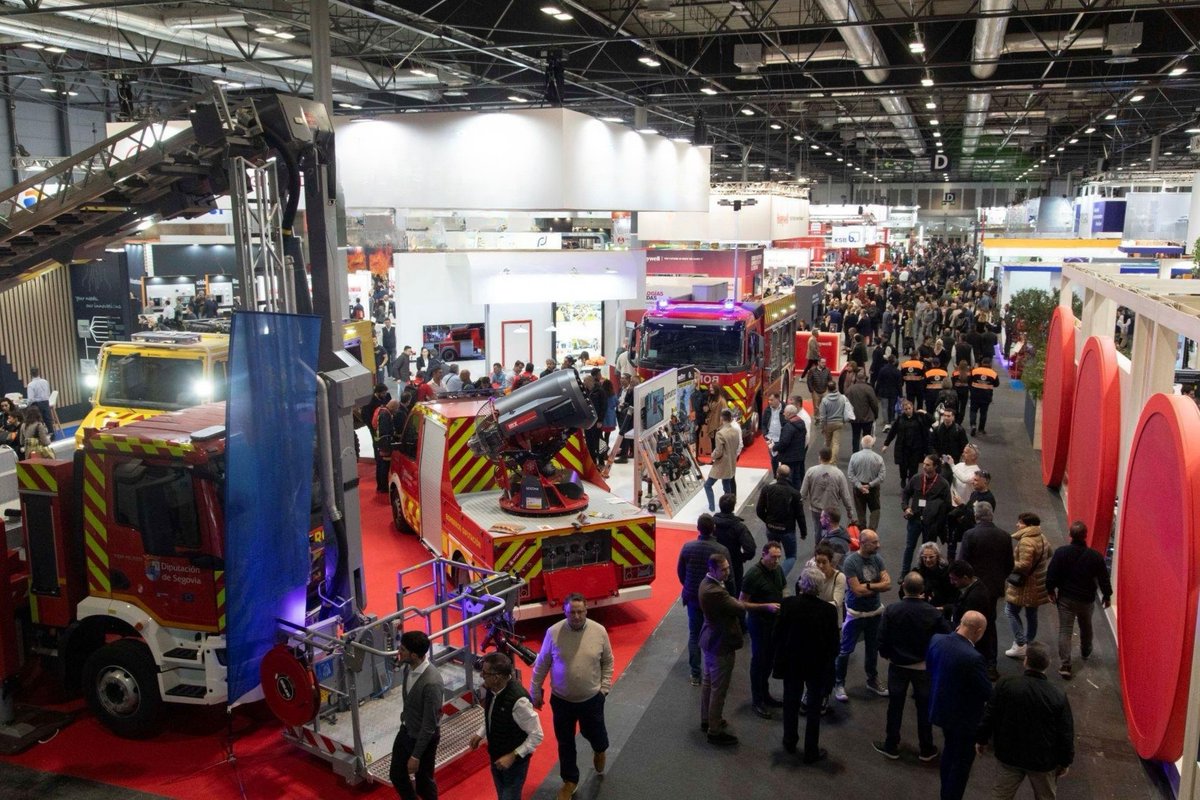
Del 24 al 27 de febrero, @SICUR_ 𝟮𝟬𝟮𝟲 volverá a situar a @IFEMA como el epicentro de la seguridad integral, reuniendo a más de 670 empresas de 25 países y consolidándose como un espacio clave para la innovación, la prevención y el intercambio de conocimiento en el sector.
En su 25ª edición, la feria desplegará una amplia oferta expositiva y una agenda técnica de alto nivel, con especial atención a la seguridad laboral, la prevención de riesgos y la salud laboral, junto al desarrollo de soluciones cada vez más avanzadas y sostenibles.
👉 𝗔𝗦𝗘𝗣𝗔𝗟 𝗲𝘀𝘁𝗮𝗿𝗮́ 𝗽𝗿𝗲𝘀𝗲𝗻𝘁𝗲 𝗲𝗻 𝗦𝗜𝗖𝗨𝗥, 𝗲𝗻 𝗲𝗹 𝗽𝗮𝗯𝗲𝗹𝗹𝗼́𝗻 𝟲, un espacio de referencia para la protección laboral, el diálogo sectorial y el impulso de buenas prácticas en seguridad y salud en el trabajo.
Una cita imprescindible para profesionales, empresas e instituciones comprometidas con una seguridad laboral sólida, innovadora y alineada con las necesidades reales del sector.
#SICUR2026 #SeguridadLaboral #ProteccionLaboral #Prevencion #EPIs #ASEPAL #SomosEPI
Por aquí estamos, preparando la vuelta para el lunes 12😊!!
👂Somos todo oídos para tus preguntas sobre búsqueda de empleo, pensiones, jubilaciones, para emprender... todo lo que tenga que ver con el mundo del empleo
Pregunta aquí y te contestan nuestros expertos en @la2_tve
“Meta shut down internal research into the mental health effects of Facebook after finding causal evidence that its products harmed users’ mental health” https://t.co/ZuaFDFQHWD