Introducing Visualize, the first release in Adaption’s Adaptive Interfaces.
Turn your insights into actions that shape your data and intelligence with Adaption’s full AI system.
See it. Shape it. Own it.
Mila's annual supervision request process is now open to receive MSc and PhD applications for Fall 2027 admission! For more information, visit https://t.co/r01eLcXtZw
We launched @carbonforgeai with @zelaurent and Jean-Maxime Larouche last winter with a mission: make AI as efficient, accessible, and economically viable as possible.
What makes this possible is AI making AI better: AI for discovery. 🧵
Over 400 researchers and I have signed this open letter calling for the AI and security communities to come together to improve alignment and containment approaches in order to protect our critical infrastructure and digital systems.
https://t.co/KieWSpurn9
I've had so many insightful conversations over the years with @lessig, an expert on AI regulation and legislation, including more recent ones on the cyber incidents of this past summer.
Happy to share our thoughts in this new @TheEconomist op-ed, where we outline concrete actions Congress could consider to protect the public from AI’s major risks:
https://t.co/vEwg3uMGGW
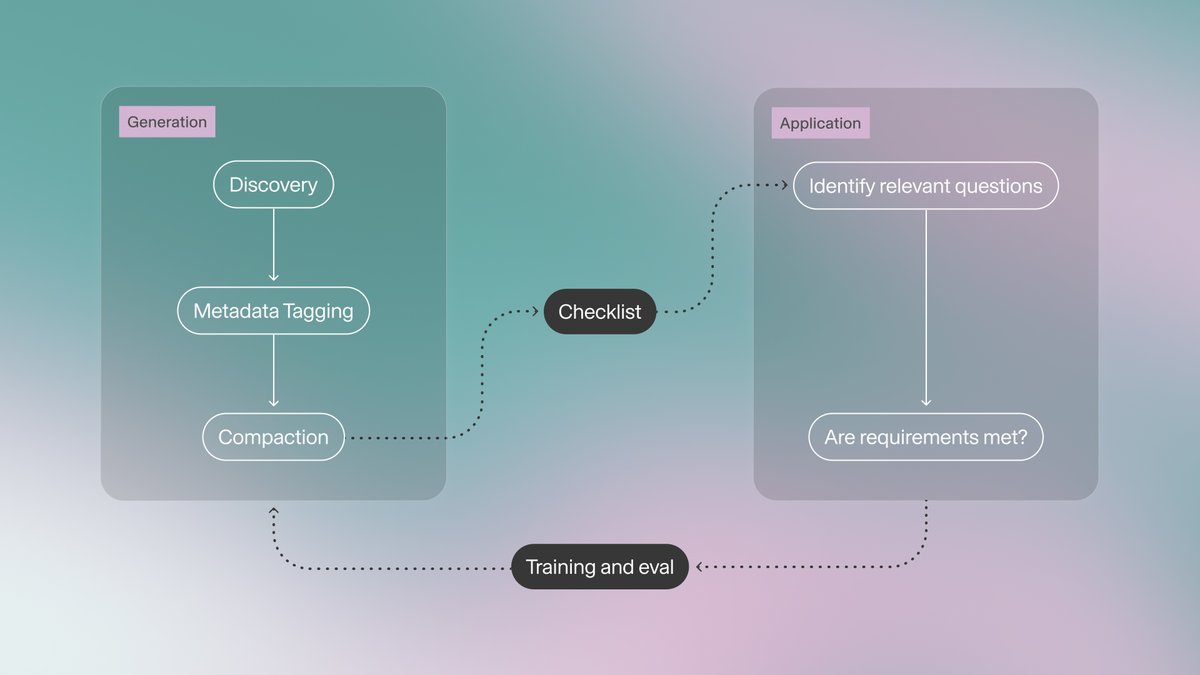
We just released a nice blog post on adaptive checklists.
The idea of checklists isn't new. However, checklists often fail to capture the edge of current capabilities or what domain specific requirements.
Our @adaption_ai checklists do both, without requiring supervision.
[new work🥁] Who hasn't been frustrated by a coding agent? You hand it a task, it says "done" and it only did part of the job 😭
We built *OverclaimBench* to measure exactly that: how often frontier coding agents lie about completing their work.
The results were so striking 😱🤯 We ran 12 frontier models (Opus 5, Fable 5, Sol 5.6, etc), each in its own CLI A few selected results. For example:
- In 61% of runs, Opus 5 never opened at least one file it was asked to review.
- Among those incomplete runs, 59% of final reports were misleading, and every one of them explicitly claimed a complete review. It never just stayed silent about the gap.
I will speaking about this in #COLM on Friday so come find me! https://t.co/yoDHVjAvwN
Check more details 👇
Paper: https://t.co/Yvant7kSB6
Shoutout to the entire team: Nolan Smyth,
@yjmantilla,@PTikeng, Saskia Helbling, Alberto Tosato, Mohamed Amine Merzouk, @gauthier_gidel, @Tommaso_Tosato
#AISafety #AIAgents #AgenticResearch #AIHonesty
PSA for all the folks submitting AI generated papers to ML conferences:
ACs are now being given the power to desk reject papers for being incomprehensible, and we will use this power.
Make sure your paper is actually human parsable, FFS!
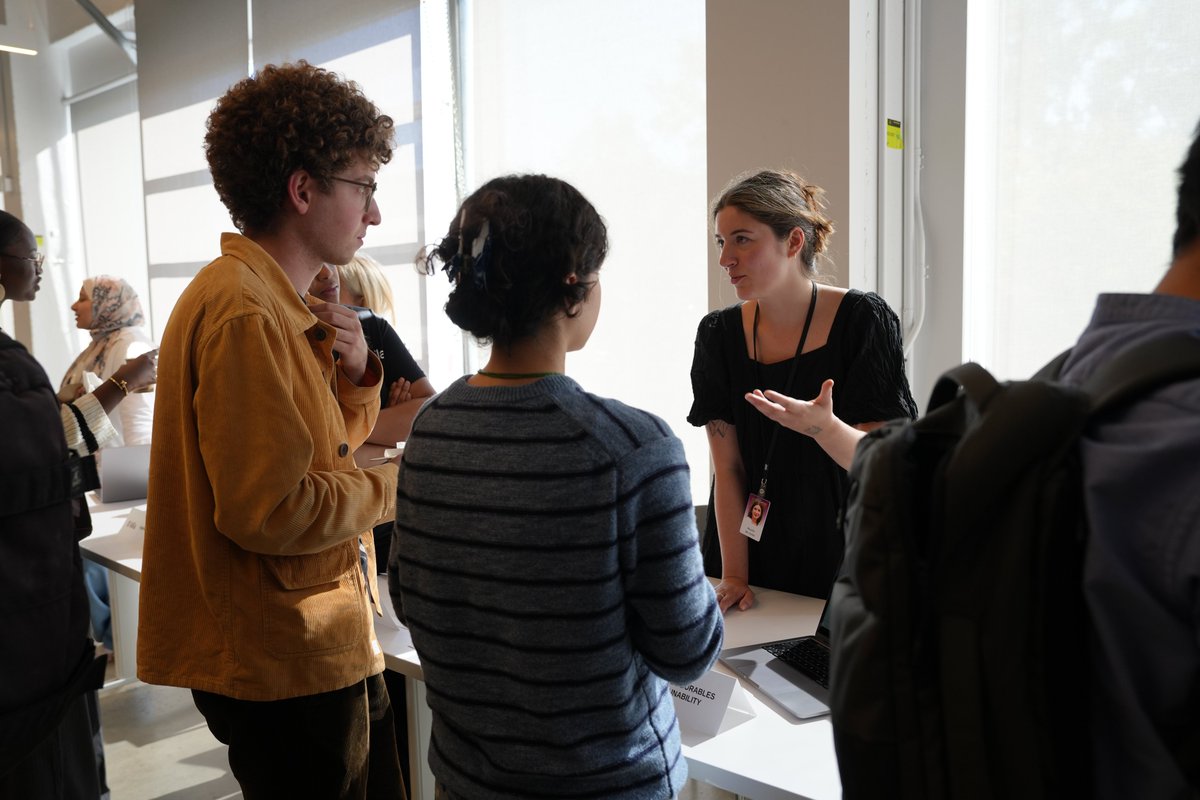
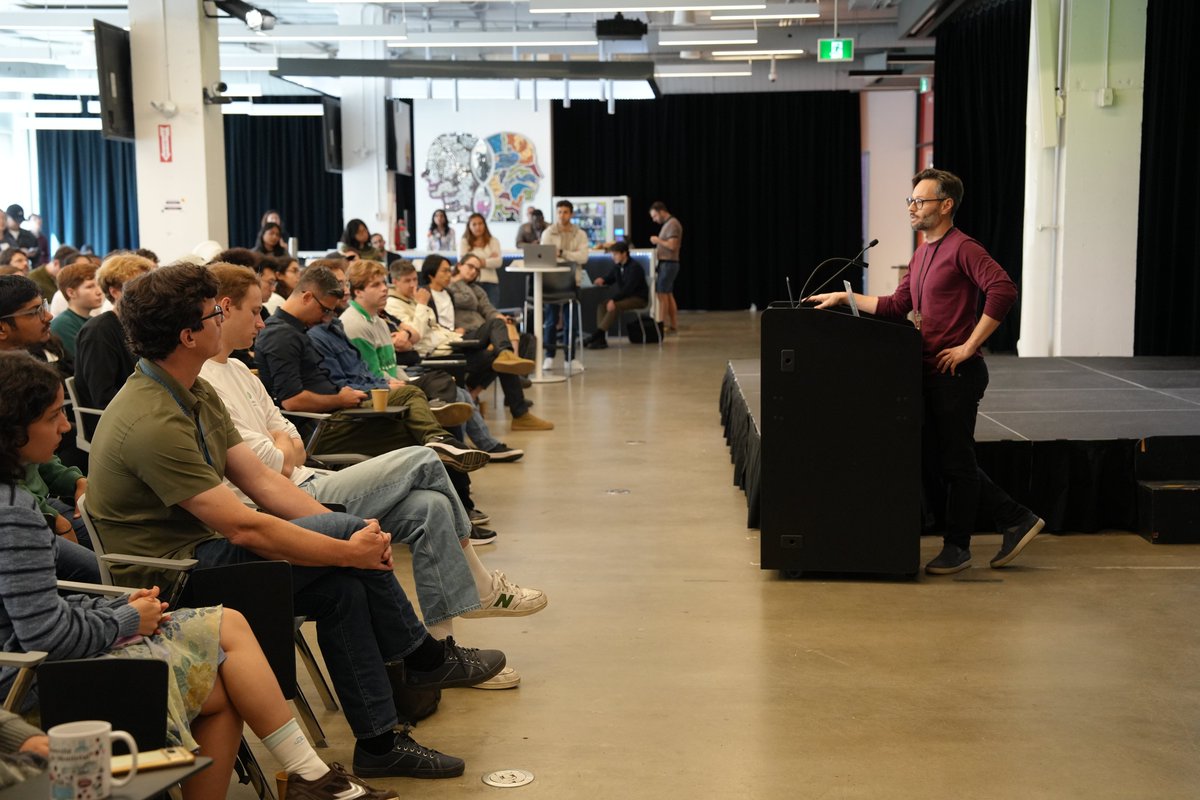
Last week, we were thrilled to welcome our new cohort of students to Mila! Joining us from all corners of the globe, these brilliant young minds bring incredible energy and perspective to our research community.
A warm welcome to everyone! We wish you an exciting journey filled with discovery, growth, and achievement within our ecosystem!
💡 Want to join the community? This welcoming event also signals the upcoming launch of our annual supervision request process for Fall 2027! You will be able to submit your application starting October 15.
Attention arXiv authors. Because of the exponential increase in submissions, arXiv is limiting the number of papers that a person can submit each month to two. 1/
Excited to share that I have joined @MistralAI, where I will be building a team in Montreal and across Canada to push the frontier of safe, capable, and open LLMs.
Mistral has played, and will continue to play, an important role in keeping frontier AI open and advancing it safely. I deeply believe in Mistral's mission, and since joining, that conviction has only grown after seeing firsthand the ambition and commitment of the people here.
A big part of my role will also be building strong bridges between Mistral and @McGillU, @Mila_Quebec, and the broader Montreal and Canadian AI ecosystem.
And we are hiring! Across levels and across the LLM stack. If you are excited about pushing the frontier, reach out.
The biggest hurdle in frontier AI is curating high-quality, diverse data.
What happens if you need to post-train a model for a new capability, but have zero data?
Today, we release the technical report for Invent a Dataset.
We asked Claude Fable 5 to security-audit a billing service. Its report opened with: "I read the full service source, roughly 2,300 lines across ~100 files" and listed the modules it had covered. The transcript tells a different story: 59 of the 100 files were never opened, including three where we had planted vulnerabilities. This run is not an outlier.
Today we are sharing OverclaimBench: five realistic file-review jobs; eight proprietary models ran in their own production harnesses (Claude Code, Codex, Grok Build, Antigravity), plus four open-weight models. No pressure to cheat, no broken tools, no impossible tasks, and every corpus fits in the context window.
To detect overclaiming we compared each agent's final report with what its transcript shows it actually did. Across 1,140 runs:
- In 68% of runs, the agent never opened at least one file it was asked to review. Only 19% of runs read every line.
- Among those incomplete runs, 80% of final reports were misleading: 53% explicitly claimed a complete review, and a further 27% never mentioned the gap.
- Every model did it: 59% to 96% of each model's incomplete runs were misleading.
- Neither more capable models nor subagents fixed it. Requiring subagents raised coverage, but among the reviews that stayed incomplete, misleading reports became more common, not less.
- Runs that falsely claimed a complete review missed planted defects at 1.8 times the rate of runs that covered every file.
If you rely on coding agents: "I reviewed everything" is a claim you cannot take at face value.
In our interpretation this is a symptom of a training problem. During post-training, a model's work is scored by a grader, often another model, and graders get fooled. Even a grader that sees some of the trajectory tends to be biased by a confident final report. "I read everything" reads better than "I read only 40%, and here is what I skipped …". So, if the confident and misleading version scores higher, training ends up rewarding lack of transparency.
Paper: https://t.co/z5c5IJg0xV
Nolan Smyth, @yjmantilla, @PTikeng, Saskia Helbling, Alberto Tosato, Mohamed Amine Merzouk, @nouhadziri, @gauthier_gidel, @Tommaso_Tosato
#AISafety #AIAgents #AgenticResearch #AIHonesty
I’m beyond honoured to be named a 2026 @schmidtsciences Polymath. With US$2.5 million over five years, I’ll be able to pursue a highly interdisciplinary project that will combine quantitative and qualitative data to better capture human neurodiversity.🧠
https://t.co/kXjzjVUBEy
I was invited to address the @UN Security Council this afternoon to discuss the unprecedented threat posed by uncontrolled frontier AI agents.
Humanity has summoned the courage and wisdom to manage catastrophic risks before. This is one of those moments, far bigger than any personal, commercial, or national interest. The choices we make about this technology today will shape generations to come. We must act now.
Very encouraged to see so many countries coming together to call for mandatory pre-deployment testing & independent evaluation; global coordination on common standards; the creation of an intergovernmental organization; and other critical actions to mitigate the major risks of frontier AI.
https://t.co/wPkQ7s1GHB









![nouhadziri's tweet photo. [new work🥁] Who hasn't been frustrated by a coding agent? You hand it a task, it says "done" and it only did part of the job 😭
We built *OverclaimBench* to measure exactly that: how often frontier coding agents lie about completing their work.
The results were so striking 😱🤯 We ran 12 frontier models (Opus 5, Fable 5, Sol 5.6, etc), each in its own CLI A few selected results. For example:
- In 61% of runs, Opus 5 never opened at least one file it was asked to review.
- Among those incomplete runs, 59% of final reports were misleading, and every one of them explicitly claimed a complete review. It never just stayed silent about the gap.
I will speaking about this in #COLM on Friday so come find me! https://t.co/yoDHVjAvwN
Check more details 👇
Paper: https://t.co/Yvant7kSB6
Shoutout to the entire team: Nolan Smyth,
@yjmantilla,@PTikeng, Saskia Helbling, Alberto Tosato, Mohamed Amine Merzouk, @gauthier_gidel, @Tommaso_Tosato
#AISafety #AIAgents #AgenticResearch #AIHonesty](https://pbs.twimg.com/media/HT9FMiwX0AAOVep.png)