How do you get Claude Code to check its own work before handing it back?
Watch how you can encode your manual checks so Claude closes its own feedback loop:
If you're stuck in your career as .NET developer
You can't get a better job or promotion.
Read this 👇
𝗝𝘂𝗻𝗶𝗼𝗿:
You're learning fast, but the .NET ecosystem is enormous.
❌ You don't know which topics actually matter for getting hired
❌ Interview questions feel random and you can't tell what's important
❌ You're guessing what to study next and often guessing wrong
𝗠𝗶𝗱-𝗹𝗲𝘃𝗲𝗹
You ship features, but the senior label keeps slipping past you.
❌ You can't pinpoint what separates you from the seniors on your team
❌ DI lifetimes, caching, messaging - you use them but couldn't explain them in depth
❌ You're not sure what options to select. What are the trade-offs, pros and cons?
𝗦𝗲𝗻𝗶𝗼𝗿
You're senior on paper, but blind spots show up at the worst moments.
❌ Topics you skipped early on now surface in architecture reviews
❌ Interviewers probe areas you've never had to formalize
❌ You want a structured map of what 'senior' actually covers
Instead, you need a system:
𝗦𝘁𝗲𝗽 𝟭 — 𝗠𝗮𝗽 𝘁𝗵𝗲 𝘁𝗲𝗿𝗿𝗶𝘁𝗼𝗿𝘆.
Get a clear list of every topic .NET interviewers actually test on:
- C#
- OOP
- Async code, threads and locking
- Optimizations
- ASP .NET Core
- EF Core
- Caching
- Messaging
- Auth and security
- Architecture.
𝗦𝘁𝗲𝗽 𝟮 — 𝗣𝗿𝗲𝘀𝘀𝘂𝗿𝗲-𝘁𝗲𝘀𝘁 𝘆𝗼𝘂𝗿 𝗸𝗻𝗼𝘄𝗹𝗲𝗱𝗴𝗲.
Run yourself through the same questions hiring managers ask in real interviews. If you can answer them with confidence, you're ready. If you can't — you just found the exact gap to close.
𝗦𝘁𝗲𝗽 𝟯 — 𝗖𝗹𝗼𝘀𝗲 𝘁𝗵𝗲 𝗴𝗮𝗽𝘀, 𝗼𝗻𝗲 𝗯𝘆 𝗼𝗻𝗲.
Stop jumping between random blog posts and half-watched YouTube videos.
Study what matters, in the order it matters, the same way the seniors who got there did it.
That's how:
↳ Juniors stop guessing and start studying with intent.
↳ Mid-levels finally close the gap to senior.
↳ Seniors patch the blind spots before they show up in an architecture review.
I packed the topic map and 200+ real interview questions into a free template (worth $200) so you can start today.
👉Here's how you get it:
1️⃣ Follow me
2️⃣ Like and Comment "beta" below 👇
3️⃣ I'll send the template your way!
4️⃣ Repost
——
♻️ Repost to help others get these interview questions
➕ Follow me ( @AntonMartyniuk ) to improve your .NET and Architecture Skills
Leave a comment "beta" and I will personally send you a free template (worth $200).
We’ve shipped a security-guidance plugin for Claude Code that helps identify and fix vulnerabilities as you’re writing code.
Available for all Claude Code users. Install from the plugin marketplace (/plugins).
What are best practices for running Claude Code at scale?
New blog post on what we've learned from teams running it across multi-million-line monorepos, decades-old legacy systems, and distributed microservices:
https://t.co/rJUYlIUiTT
Claude Code feels completely different once you install this.
Anthropic quietly released an official plugin called claude-code-setup and it basically turns Claude Code from “pretty good” into an actual AI dev environment.
It scans your project and recommends:
→ hooks
→ skills
→ MCP servers
→ subagents
→ automations
Then sets everything up step-by-step for you.
Most people are using Claude Code completely vanilla…
which is why their experience feels messy.
The real power comes from the ecosystem around it.
Install:
/plugin install claude-code-setup@claude-plugins-official
Bookmark this before you forget it.
Cursor pays engineers $1,100,000 a year to run teams of AI agents that ship code while they sleep.
[The CEO of Cursor explained in 9 minutes how they ship at 100x speed using team of agents]
↓ Save this before everyone copies the playbook
1. Engineers no longer babysit one assistant. They manage dozens of agent colleagues working in parallel, each on its own remote machine
2. Validation contract before code, not after. Humans only at scoping and review.
3. The agent team handles the full loop : planning, coding, testing, shipping PRs with each agent specialised for a role.
Watch the guide. Then read the guide below by @eng_khairallah1
Atlassian's revenue: $1.79 billion last quarter
Atlassian's move: fire the engineer who built their infrastructure
his move: post a 38-minute breakdown of every system he built, free for anyone to copy
what he revealed:
> Envoy proxy instead of enterprise load balancers
> sidecar architecture for auth, logging, rate limits
> DynamoDB + SQS for async provisioning
> Packer + SaltStack for automated VM deployments at scale
Atlassian charges per employee across 350,000 customers
this guy just handed you the enterprise playbook for free
save this
Next.js just got its worst vulnerability ever, CVSS 8.6.
→ affects versions 13.4.13+, 14.x, 15.x, and 16.0.0–16.2.4
→ attackers can access your internal services, cloud credentials, API keys, and admin panels
→ no authentication needed
→ one crafted request is all it takes
→ roughly 79,000 instances are exploitable right now
→ vercel-hosted apps are safe, self-hosted are not
upgrade to 15.5.16 or 16.2.5 immediately.
Today, we’re open-sourcing the draft specification for DESIGN.md, so it can be used across any tool or platform. We’re also adding new capabilities.
DESIGN.md lets you easily export and import your design rules from project to project. Instead of guessing intent, agents know exactly what a color is for and can even validate their choices against WCAG accessibility rules.
Watch David East break down this shared visual language in action👇. New capabilities and links in 🧵
unpopular dockerfile takes (that actually work)
1 - stop using alpine — yes, it's tiny. but musl libc ≠ glibc. your python/node app will rebuild native deps from scratch or just... silently be slower. use -slim (debian-slim) instead. same size win, zero grief.
2 - layer order is your cache strategy. COPY your lockfile first, run install, then copy source. invalidating the install layer on every code change is a skill issue ngl
3 - multi-stage builds aren't just "best practice" — they're the actual reason your prod image doesn't ship gcc and 400mb of build tools. builder stage = bloat zone. final stage = lean mean container.
4 - COPY . . is fine actually — if your .dockerignore is correct. most pain here is from forgetting to ignore node_modules/, .git, *.log. fix the ignore file, not the COPY.
5 - one process per container is a vibe, not a law. if your app needs nginx + app server and you're not at k8s scale — just use supervisord. the "one process" dogma costs more complexity than it saves sometimes.
6 - pin your base image by digest, not tag. node:20 today ≠ node:20 in 6 months. prod broke because of a tag? that's a you problem tbh.
7 - BuildKit cache mounts (--mount=type=cache) will change your life. pip/apt/cargo cache between builds without it ending up in the final layer. nobody talks about this enough fr
there's no "best practice" in a vacuum. alpine is great for Go binaries. slim is great for Python. scratch is great for static bins. know your workload, then choose.
btw if you want something to catch all this stuff automatically -
check out dockerfile-roast — a linter written in Rust that literally roasts your Dockerfile. 63 rules, brutally honest output (but it can also provide just dry facts, no roast), runs on any OS or as a docker container
https://t.co/NVYpe8iD65
#docker #devops #kubernetes #backend #linux #rust #sre #containers
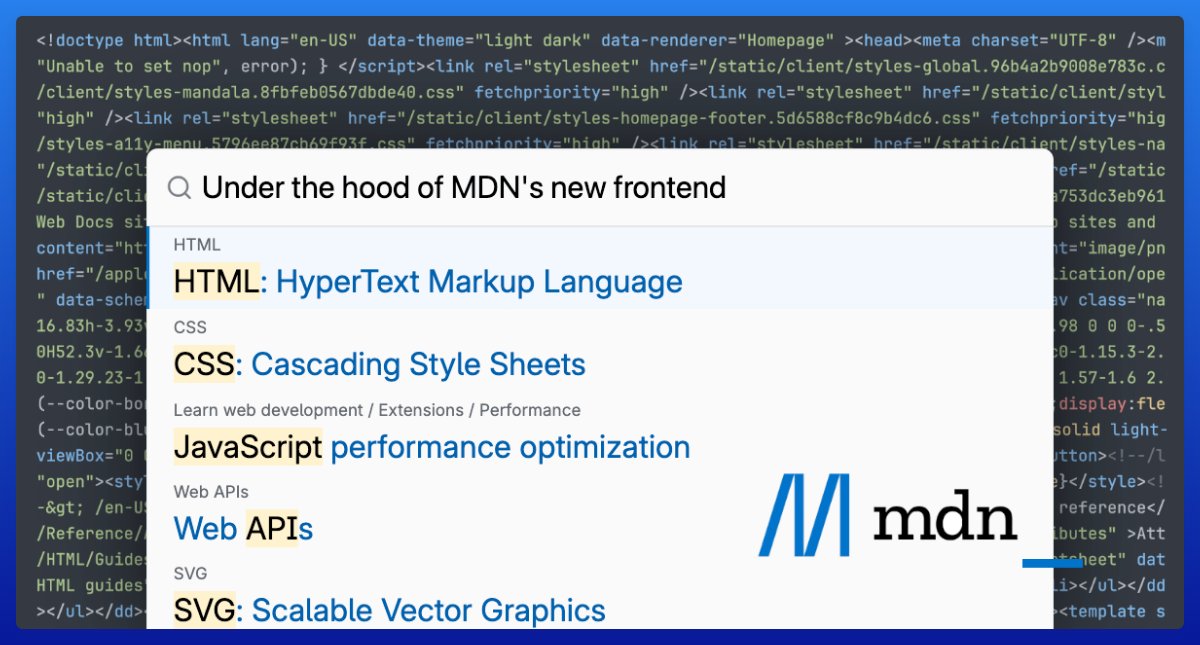
Under the hood of MDN's new frontend 🛠️
We rebuilt MDN from the ground up.
⋅ Web components for islands of interactivity
⋅ Only the CSS & JS each page needs gets shipped
⋅ Dev server starts in 2 seconds (down from 2 minutes)
Read the full story 👇
https://t.co/9yMr4jmNG7
Announcing Amazon S3 Files.
The first and only cloud object store with fully-featured, high-performance file system access.
Learn more here. https://t.co/rNuWa5Rsi2