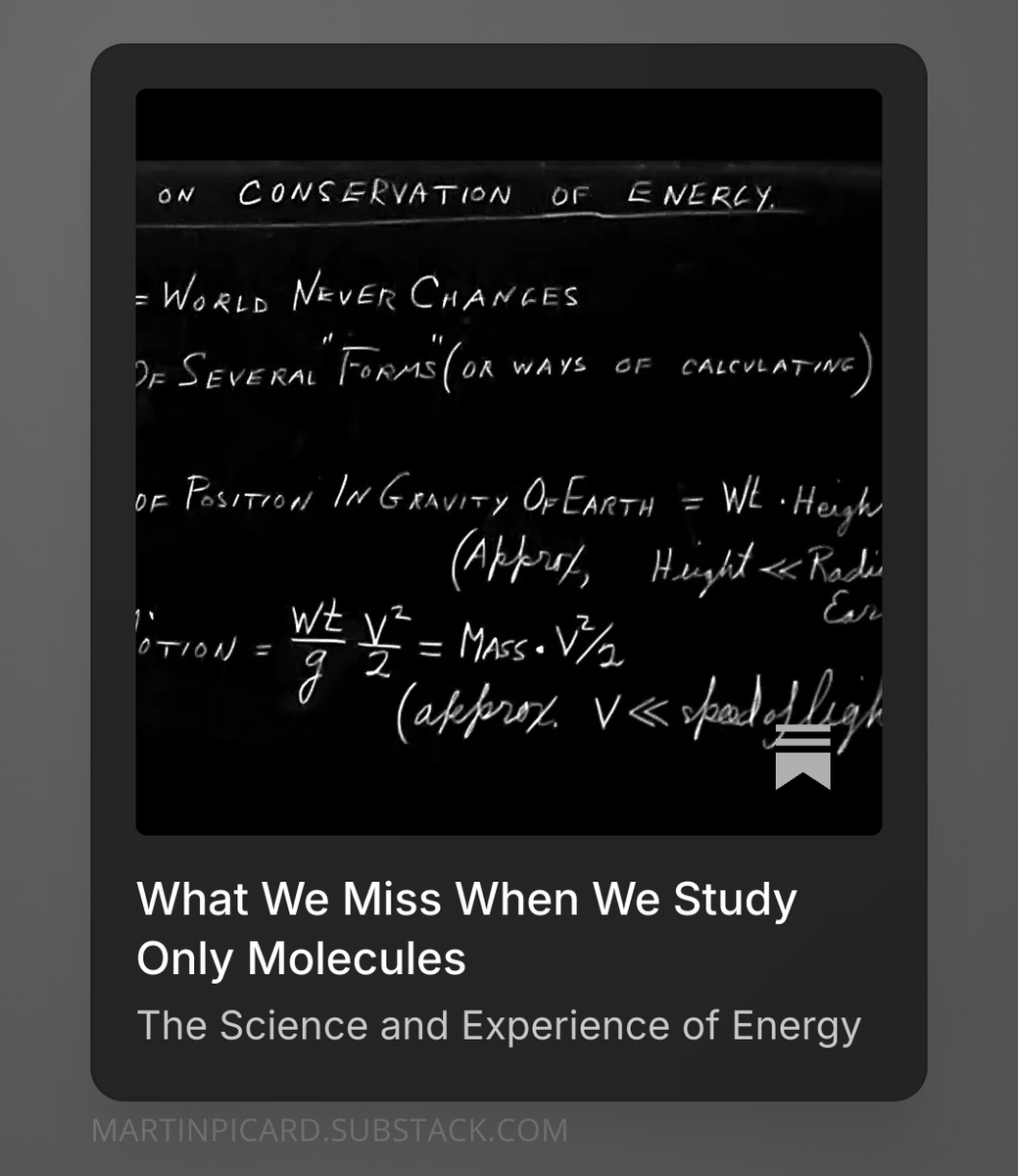
What exactly is energy?
Today on The Science and Experience of Energy, @niroshajmurugan discusses the physical nature of energy and how fundamental laws of physics are relevant to our understanding of physiology and medicine.
Viewing the body through a biophysical lens as a system that transforms energy can provide new insights and change our approach to health and healing.
https://t.co/qNa67jENJn
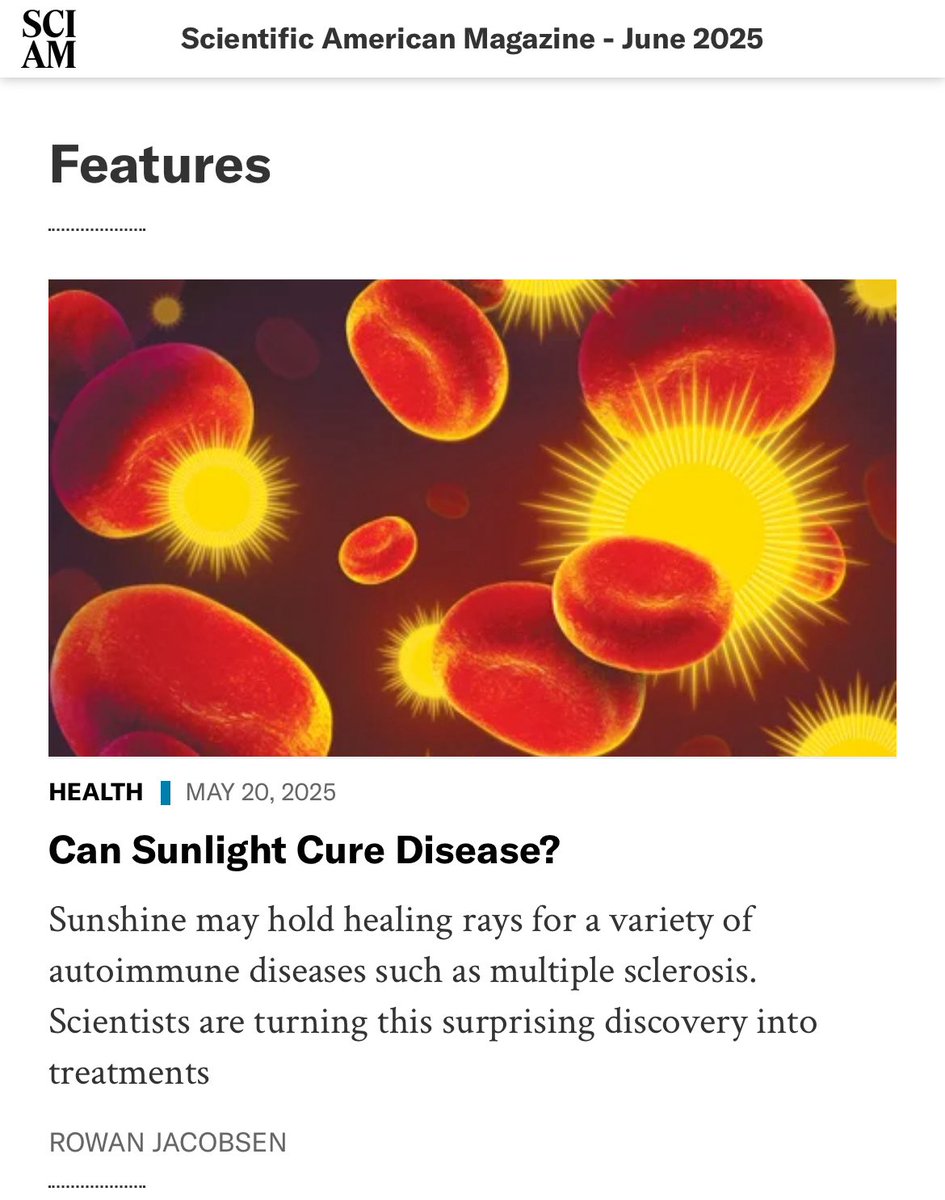
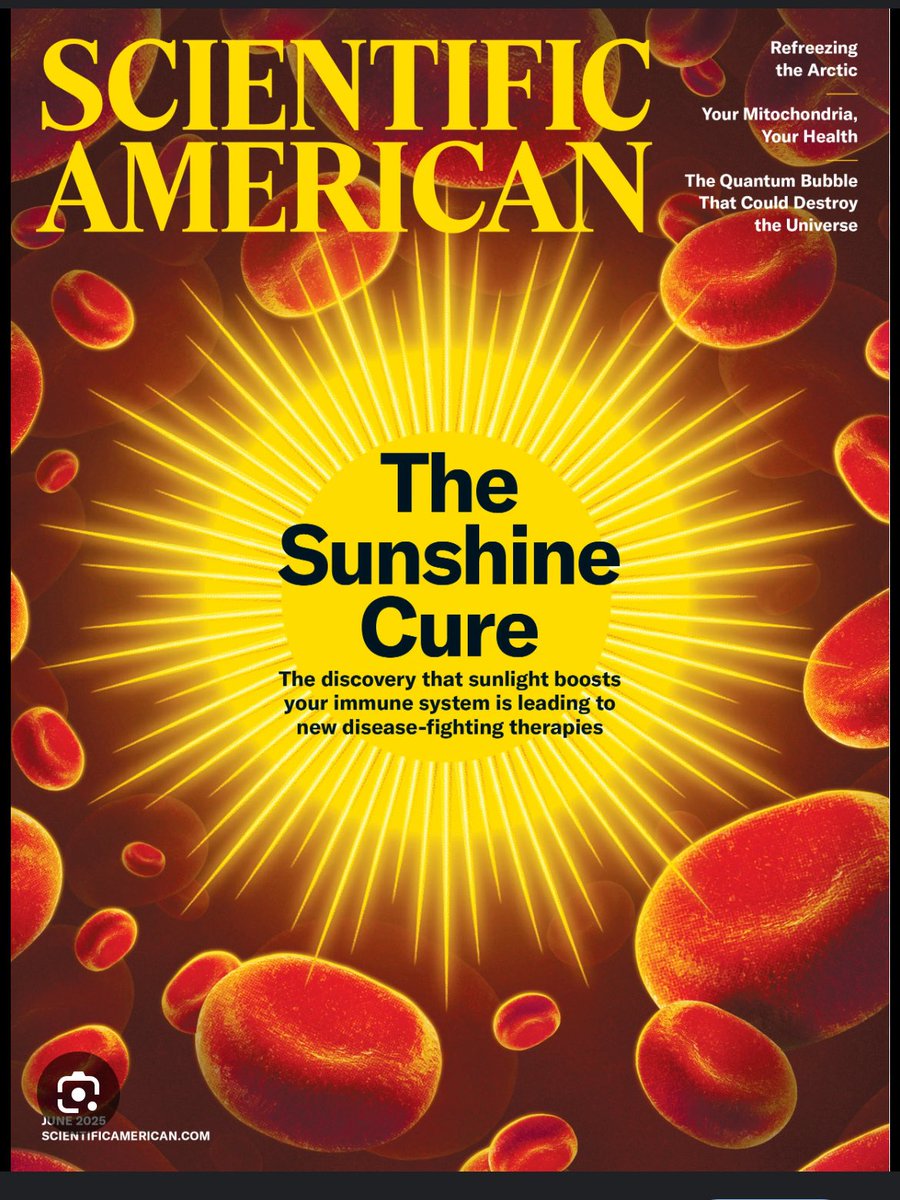
🚨I think there are a lot of healthcare providers/skeptics that are ignorant of where we are right now with respect to sunlight and infrared light in medicine.
Here are the statements that I'll make with representative peer-reviewed publications: (feel free to use this a an information packet to send to those that are interested).
1) Sunlight contains infrared light which has been shown to penetrate all throughout and completely through the human body (and clothes) and causes immediate and real physiological changes that are measurable.
https://t.co/52mWBxoIcA
2) Trees and grass are highly reflective of this type of light:
https://t.co/GCrV48jIbH
3) Makes COVID-19 patients in hospital discharge 30% faster in an RCT:
https://t.co/yQeJ94xZhK
4) Makes ICU patients discharge 30% faster and also stronger in an RCT:
https://t.co/OeYvCPrdnO
5) Improved glucose control in healthy individuals in a RCT:
https://t.co/TvOW4reIg0
6) Prevented pseudomonas bacteria from producing biofilm - a major problem in fighting bacteria.
https://t.co/8gwPA8ohBi
7) You don't need for it to hit all over your body because the mitochondria talk to each other in ways that we don't fully understand. https://t.co/5V3LSaNps8
8) Those exposed to this type of light for a lifetime live longer
https://t.co/kqlDC1qqMQ and https://t.co/YJL75O1yQe
9) The LED lighting environment is unhealthy given that it doesn't have infrared light. Adding infrared light to that environment dramatically improved vision as a measure of broader mitochondrial activity in a study:
https://t.co/y1rej3201F
@living_energy also even the acronym confuses people - some think it's referring to the electromotive force vs electromagnetic fields. Have seen that mistake a few times in the NFL/49ers coverage.
On magnetic spin, cytochrome c, and other quantum biology theories:
In cytochrome c, the heme group contains an iron ion (Fe) that acts as the redox center, cycling between Fe²⁺ (reduced) and Fe³⁺ (oxidized) states during electron transfer in the mitochondrial electron transport chain (ETC).
"Magnetic spin" in this context is the electron spin states of the iron, which determine its magnetic properties and influence how the heme interacts with ligands, electrons, and surrounding proteins.
Cytochrome c is a low-spin heme protein in both oxidation states, enabling efficient, rapid electron transfer without significant structural changes, which is crucial for its role as a mobile electron carrier between complex III and IV in the ETC.
These spin states are clinically relevant because they directly impact mitochondrial bioenergetics and cellular homeostasis. The low-spin heme optimizes electron flow, supporting ATP production via oxidative phosphorylation (OxPhos). Disruptions, like mutations altering spin states or heme coordination, can shift redox potentials, impair ETC efficiency, and lead to excess reactive oxygen species production.
This is the actual pathology behind mitochondrial disorders like Leigh syndrome, where cytochrome c dysfunction contributes to neurodegeneration, lactic acidosis, and energy deficits.
In apoptosis, cytochrome c release from mitochondria triggers caspase activation, relevant to cancer (where evasion of apoptosis promotes tumor survival) and neurodegenerative diseases like Alzheimer's (involving mitochondrial impairment and an "anti-Warburg" shift favoring inefficient OxPhos).
In cardiovascular conditions, oxidized cytochrome c can exacerbate oxidative stress during ischemia-reperfusion injury.
From a quantum biology perspective, the spin states enable quantum effects like electron tunneling in the ETC, where electrons "tunnel" through energy barriers faster than classical models predict, enhancing metabolic efficiency.
In a quantum medicine framework, disease is viewed as a loss of quantum coherence, while health relies on spin-dependent coherence in heme proteins like cytochrome c.
We already have certain therapeutic applications like photobiomodulation with red/near-infrared light, which excites heme in cytochrome c oxidase to boost OxPhos, showing promise in treating dementia, wound healing, and reducing cancer cell proliferation by restoring mitochondrial function.
There are a lot of amazing people to follow and resources to consult if you want to learn more about a particular topic.
Before dismissing what people are saying, consider just doing a cursory search and reflecting first.
@GorneyJerad @DrDeepMD@AbudBakri@zaidkdahhaj@hubermanlab@GuyFoundation Under oxidative stress, nitric oxide binds to CCO, competitively inhibiting oxygen binding & thus reducing ATP production. The energy from red/IR light dissociates NO from CCO, allowing oxygen to re-bind, restoring electron transport & increasing ATP synthesis. By as much as 10x!
Most people see this and think “dogs are good for you.”
The actual mechanism is more interesting.
Three minutes of petting your dog triggers oxytocin release in both you and the animal. Your cortisol drops. Your heart rate decreases within an hour. This happens every single day you own a dog. Twice a day, three times a day.
The loop: physical touch → oxytocin release → HPA axis downregulation → lower cortisol → reduced neuroinflammation → preserved brain volume.
The study everyone’s referencing had only 95 participants, which is small. But it replicates. A longitudinal European study tracking adults 50+ over 18 years found pet ownership associated with slower decline in executive function and episodic memory. Baltimore Longitudinal Study data showed the same pattern across multiple cognitive tests.
Why dogs specifically? Cats showed similar effects. Fish and birds didn’t. The difference is tactile interaction frequency. Dogs demand contact. They interrupt your doom scrolling. They force you outside. Dog owners in the research showed higher physical activity levels, lower BMI, and lower incidence of hypertension.
The brain age gap in this chart isn’t about dogs being magical. It’s about dogs being a delivery mechanism for consistent nervous system regulation that most people fail to achieve on their own.
Human connection does the same thing. Most people just don’t have a human who wants to cuddle them twice a day and force them on walks.
There’s a new science battle brewing. MRNA Part II?
This one is over the potential biological effects of non native electro magnetic frequencies: wifi, mobile phones, cell towers etc
Citizen researcher @living_energy sparked the debate w/ a viral post about the 49ers injury record & the stadium’s proximity to electrical substations.
Of course, mainstream media are rushing to “debunk” the “conspiracy theory” taking the position (as usual) that all technology is safe if the people who make it say it is.
They didn't even interview the two experts I referred who were going to confirm that EMF is harmful.
Kent Chamberlin who has a PhD in Computational Electromagnetics and served on a commission for New Hampshire where 10 of the 13 comissioners agreed that cellular radiation is harmful to health
Rob Brown, a board-certified diagnostic radiologist who has recently done in vivo studies that show RF radiation causes red blood cell clumping.
https://t.co/mzESezWOFJ
https://t.co/6oTEadf0TX
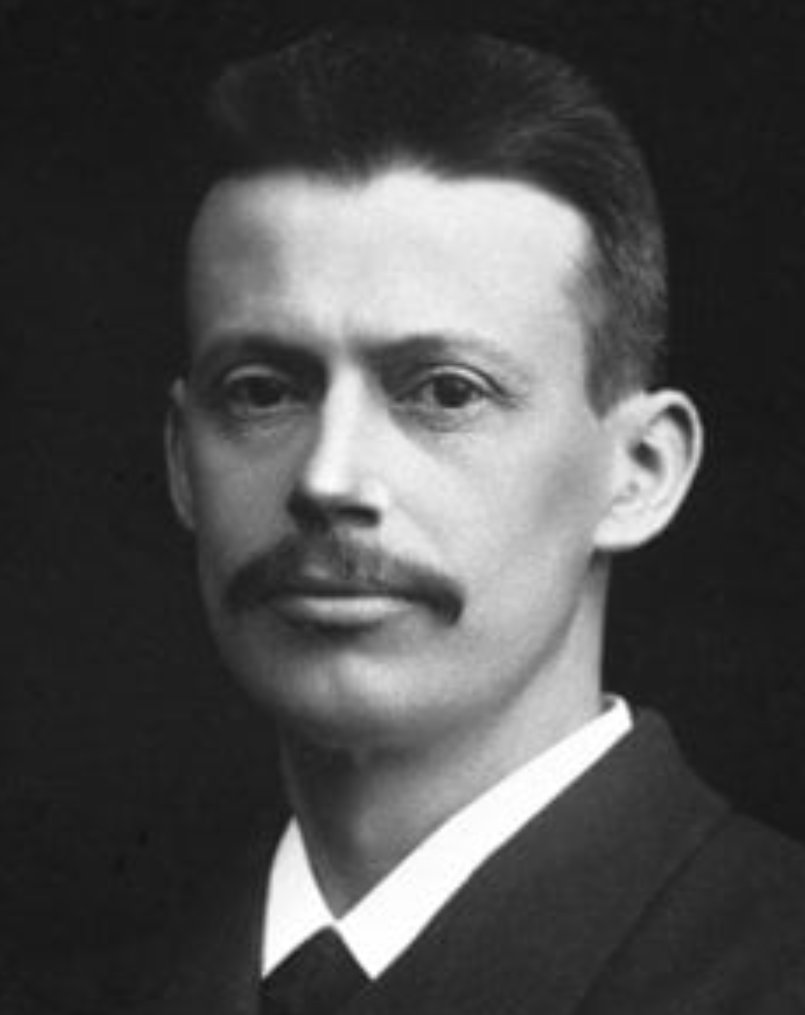
Nobel prize-winner you've never heard of...
Dr. Niels Finsen won the 1903 Nobel Prize for curing lupus vulgaris, a disfiguring form of skin tuberculosis, by using concentrated light. He designed carbon arc lamps, filtered out the heat, focused the active rays, and healed patients no one else could help. All of this happened long before antibiotics and long before anyone fully understood ultraviolet light or photobiology.
So why have so few people ever heard his name?
Once antibiotics appeared, the entire medical world shifted. Skin tuberculosis faded away, the Finsen Institutes shut down, and research money moved into drug development. Phototherapy could have been expanded to other infections and inflammatory conditions, but antibiotic research and the profit structure around drug therapy crowded it out.
As the pharmaceutical model became the default framework of modern medicine, any non-drug treatment gradually came to be viewed as fringe or old-fashioned, even though many of Finsen’s principles survived inside modern dermatology and in treatments like neonatal jaundice lamps and antimicrobial UV research.
Finsen proved that a light therapy, rather than a chemical one, could alter the course of disease.
@RogerSeheult