Food security is increasingly being shaped by geopolitics.
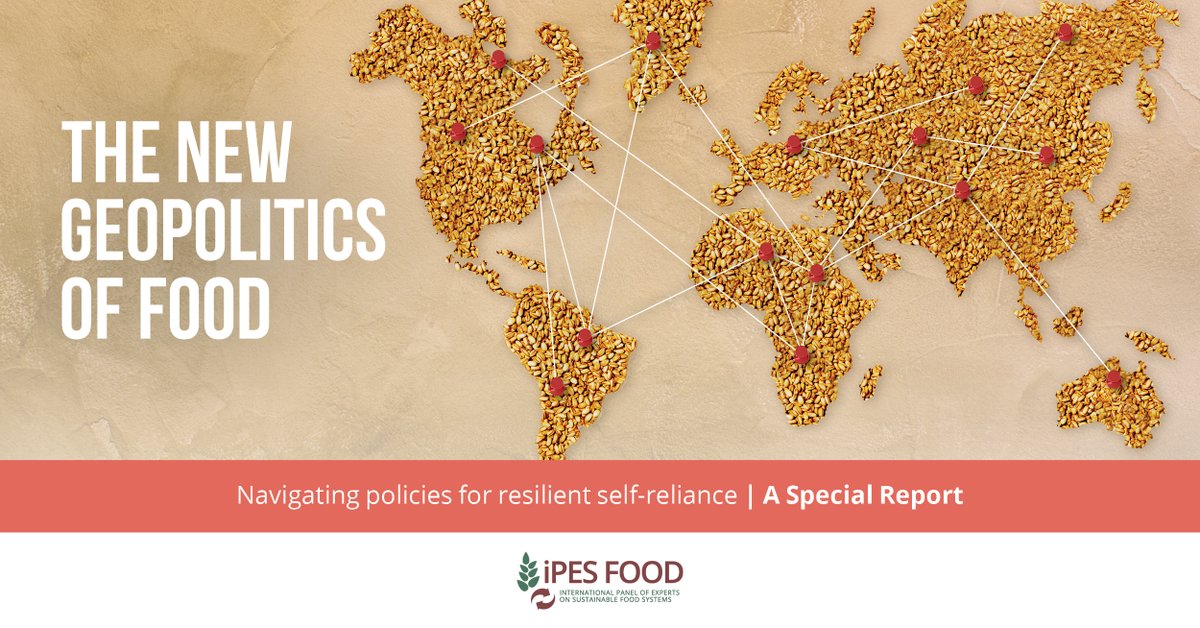
🌍Our report The New Geopolitics of Food explores how governments can reduce vulnerability to shocks, stabilise food prices, and strengthen local food systems.
Now available in:
🇫🇷FR 🇪🇸ES 🇧🇷PT
📘https://t.co/XKjkBE6ei2
“It’s good for the planet because you’re weaning food production off fossil fuels,” says @suechomba.
As geopolitical conflict sends fertiliser prices soaring once again, farmers from Senegal to India are turning to organic & natural alternatives.
https://t.co/ol3dmxwPSe
Food is increasingly being used as a weapon of war.
21,000+ incidents of “food-related violence” have been documented since 2018.
From Gaza to Sudan, Yemen, Syria, and Mali, deliberate attacks on food systems are driving hunger.
🔗 https://t.co/sbcdMDdOJ4
#RightToFood
The anti-Congolese xenophobia in Durban is horrific. It's particularly scandalous that one of the parties fanning the flames was invited to the SACP's conference. More here: https://t.co/i4xSsIm9AW https://t.co/q9SkhJqGux
La Vía Campesina Honduras condemns the massacre of peasants that has shaken the entire country and exposed the vulnerability and insecurity in which the peasant communities are forced to live.
https://t.co/UcYMStk6dc
𝗧𝗵𝗲 𝗕𝗮𝘁𝘁𝗹𝗲 𝗳𝗼𝗿 𝗔𝗳𝗿𝗶𝗰𝗮𝗻 𝗔𝗴𝗿𝗶𝗰𝘂𝗹𝘁𝘂𝗿𝗲 𝗣𝗼𝗱𝗰𝗮𝘀𝘁 || 𝗘𝗽𝗶𝘀𝗼𝗱𝗲 𝟮𝟴 - 𝗪𝗶𝘁𝗵 𝗣𝗮𝘁 𝗠𝗼𝗼𝗻𝗲𝘆 - 𝗣𝗮𝗿𝘁 𝟯
In this episode of The Battle for African Agriculture, the third part of a three part series, Dr. Million Belay speaks with Pat Mooney about what the current geopolitical rupture means for food sovereignty movements and how civil society can respond. Returning to the Long Food Movement report, Pat argues that while the world is in an extremely hazardous moment, marked by chaos in world trade and deep instability in the UN system, it is still too soon to draw final conclusions. For him, the key task is not despair but agility: to remain flexible, read shifting conditions carefully, and recognize that moments of crisis also create openings for territorial food systems, stronger local resilience, and new possibilities for institutional reform.
The conversation then turns to agroecology, which Pat describes as absolutely central, both as science and as movement. He argues that the case for agroecology is easier to make today because governments and communities are increasingly experiencing the fragility of long supply chains and the failures of corporate controlled systems. At the same time, he insists that agroecology must deepen its innovation, build stronger links across regions, and refuse the illusion that digital giants or transnational corporations can solve food crises on behalf of farmers. He warns that companies with enormous market value, greater even than the GDP of entire continents, will never see Africa as central except as a secondary market, and he stresses that food systems cannot be safely entrusted to supply chains so vulnerable to geopolitical shocks such as fertilizer dependence and disruptions in strategic trade routes.
Pat Mooney also places strong emphasis on movement strategy. He argues that food sovereignty cannot advance in isolation and must build deeper relationships with health, labor, human rights, climate, and biodiversity movements, while also paying much closer attention to the governance of multilateral institutions.
The conversation closes on a message to young activists: do not mistake a lost battle for a lost war, do not panic over tipping points as if all space for action has vanished, and do not stop scanning the horizon, not only forward, but sideways across movements and backward into history, where past defeats have often laid the groundwork for future victories.
Listen to the full conversation 👇
YouTube
https://t.co/fzrPKgQLFi
Spotify
https://t.co/NVfRZJvUif
Apple Podcast
https://t.co/fgQ9ZD0vh0
We are now facing the 5th global food price spike in just 15 years.
At what point do we stop calling these 'shocks' – and recognise a broken #FoodSystem?
@_RajPatel argues the answer may lie in rebuilding public food infrastructure.
🔗 https://t.co/RcI20hvTPB
#FoodPrices
📚Lecture: "What is at stake in a fragmented world today: Rethinking peace, imperialism & the global disorder"
📅21 May
⏰4:30–6:30pm (Kuala Lumpur time)
📍Senate Hall, Level 5, Muhammad Abdur Rauf Building, @IIUM Gombak, KL (also available in Zoom)
✍️https://t.co/Q3ySeffCe5
🎥 Wars, trade disruption, climate shocks, energy volatility. What does the “new geopolitics of food” mean for #FoodPrices and global #FoodSecurity?
Catch up with our webinar launching IPES-Food’s new report The New Geopolitics of Food
📺 Watch here:
https://t.co/CQf9mqZwpF
"Building local food capacity is not isolationism.
"It’s actually ensuring that our economies are robust & able to withstand these crises to be able to continue to be parts of the international economy."
IPES-Food's Shalmali Guttal in @devex
https://t.co/w4GJ3PBmqk
📆 Happening tomorrow!
LAUNCH WEBINAR | The New Geopolitics of Food
In the face of geopolitical chaos, what will it take to stabilise prices & build more resilient, self-reliant food systems?
REGISTER NOW https://t.co/QIxNOPon3W
Resilient self-reliance means food systems that can withstand shocks.
Stronger local food systems. Support for farmers. Strategic food reserves. Fair trade. Public tools that keep food affordable when crises hit.
These tools already exist.
📘 https://t.co/Z1Aqb0JIsE
Your grocery bill is not rising by accident.
Food systems built around fragile supply chains, imported inputs, and concentrated corporate power are highly vulnerable when global crises hit. And boy are they hitting.
📘 https://t.co/XKjkBE6ei2
#NewGeopoliticsOfFood#FoodPrices
An important contribution to the debate on food security and resilience.
As geopolitical tensions increasingly affect food systems, the Norwegian case highlighted in this report shows the value of cooperative approaches and long-term resilience policies👇
Food prices are rising again.
Crisis after crisis exposes the dangers of relying on distant markets & global supply chains to feed people.
The answer is resilient self-reliance: local food, farmer support, market management & fair trade.
📘 https://t.co/XKjkBE6ei2
🚀Just launched: THE NEW GEOPOLITICS OF FOOD💥
Food prices & hunger are rising. Crisis after crisis exposes the fragility of our food systems.
But governments have tools to stabilise markets & reduce vulnerability.
We call it resilient self-reliance.
📘https://t.co/Z1Aqb0JIsE
@ArtfSurvival Here's the article
Out of Pocket: the real cost of fossil fuels on our groceries
How we are all paying to keep our food systems hooked on fossil fuels
https://t.co/YZ9TIAF4o9
Food prices are rising: but why? And what can actually be done about it?
Join us for the launch of our new report on the new geopolitics of food, exploring how global tensions are reshaping food systems – & how countries can respond.
📅May 13
🔗Register: https://t.co/QIxNOPon3W
War. Trade disruption. Climate extremes. Oil shocks.
Our food systems are cracking under pressure.
Join the launch webinar for our new report THE NEW GEOPOLITICS OF FOOD: how countries can stabilise food prices & build resilient self-reliance.
📅13 May
https://t.co/QIxNOPon3W