Raoul Pal: "By 2030, the entire economic system has changed."
AI will rewrite the GDP formula...
The old formula:
GDP = population growth (humans) + productivity growth (human output) + debt growth
The new formula:
GDP = population growth (humans + robots + agents) + productivity growth (energy density + compute efficiency) + debt growth.
FT @RaoulGMI@RealVision
$1B in perps has been traded in @wallet_tg over the past month.
$TON drove a large chunk of that volume.
All inside Telegram, a few taps away for 1B users.
Powered by @Lighter_xyz
Boil the Oceans
You know the phrase: “don’t boil the ocean.” Everyone’s said it in some overly ambitious meeting. It’s good advice in normal times. It keeps teams focused. It prevents scope creep. But we are no longer in normal times, and I think it’s time to retire saying it.
Artificial Superintelligence means it’s time to boil the ocean. We’ll start with a few lakes first.
I was recently with a university endowment’s head of private investing who told me their engineers were terrified for their jobs after seeing what Claude Code could do. And I get it — that’s the natural first reaction. But it’s the wrong one. It’s a zero-sum reaction to a positive-sum moment.
Instead of worrying about doing the same thing we’ve been doing for cheaper, why not focus on doing the thing we never even dreamed of doing? Why can’t that endowment achieve 50% net IRR instead of 10%? Why can’t a startup deliver a service that is 100x better than the incumbent? Why can’t we have fusion energy? Why can’t we talk to every single user and have a perfect understanding of every bug in our product?
These aren’t rhetorical questions anymore. They’re engineering problems with paths to solutions.
Here is what I think is actually going on with the fear: our fear of the future is directly proportional to how small our ambitions are. If your plan is to keep doing exactly what you’re doing, then yes, a machine that can do it faster and cheaper is terrifying. But if your plan is to do something dramatically bigger, then the machine is the best news you’ve ever gotten.
If you’re a worker — someone who trades labor for a living — this is the moment to become a builder. Start a business. And if you’re already management or capital, it’s time to go 10x more hardcore on what your aspirations could be. Not eking out 5% efficiency gains. Not increasing profit margins 2% by lowering cost and firing people. Those are the old games. The new question is: what would it look like to build a product or service so good that people would happily pay 10x what they pay now?
The net result of this is more jobs, not fewer. As Ryan Petersen likes to say, the human desire for more things is absolutely limitless. We can actually fulfill that desire now — if we have the agency to prompt it for ourselves.
Buckminster Fuller coined the term “ephemeralization” in 1938: doing more and more with less and less until eventually you can do everything with nothing. His entire vision of progress was about technology enabling radical expansion of human capability through dematerialization. He traced this from stone bridges to iron trusses to steel cables — each iteration stronger, longer, lighter, cheaper. He wasn’t describing job destruction. He was describing civilization getting better at being civilization.
This is Jevons Paradox for everything. When you make a resource dramatically more efficient, you don’t use less of it — you use vastly more. Steam engines didn’t reduce coal consumption. They made coal so useful that demand exploded. The same thing is about to happen with intelligence, with labor, with every service and product we can imagine.
But Jevons Paradox doesn’t activate on its own. It requires capital and management to actually raise their ambitions — to boil lakes and oceans instead of drowning them in committee
That’s what startups have always been good at: moving fast in the face of radical uncertainty, building for the 10x future while everyone else is optimizing for the 1.05x present.
Time to start.
JUST IN: Billionaire Stanley Druckenmiller says the global payment system will run on crypto stablecoins within 15 years because they are more efficient.
We've reached the point in software development where it's far far easier for a small cracked team to actually build a product than for any team in a big co get the "approval" from "all the relevant stakeholders". This will have major consequences for most incumbents.
I accidentally discovered how to compress a month of research into 3 hours.
A founder at a YC company showed me his Claude setup. I thought he was just fast. Then I watched him build an entire go-to-market strategy for a market he'd never worked in before.
Here's exactly what he did:
First: he didn't ask Claude to "research the market."
He fed it 8 competitor landing pages, 3 earnings call transcripts, 12 customer reviews, and a Reddit thread of complaints.
Then he asked one question:
"What does every successful player in this market understand that their customers never say out loud?"
Not "summarize these." Not "analyze the competition."
The unspoken insight. The thing that takes founders 2 years of customer calls to figure out.
But the next part is what broke my brain.
He followed up with:
"Now show me the 3 assumptions this entire market is built on, and what would have to be true for each one to be wrong."
In 15 minutes he had the attack surface of an entire industry.
The blind spots. The fragile consensus. The opening nobody was talking about.
Most founders spend 6 months doing customer discovery just to find one of those.
Then he did something I've never seen before.
He asked:
"Write 5 questions a world-class investor would ask to destroy this business idea, then answer each one using only the evidence in these documents."
He spent the next 2 hours stress-testing every assumption. Every weak answer triggered a follow-up:
"What's the strongest version of this argument and where does it still break?"
By hour 3, he had a strategy deck that felt like it came from someone who'd spent a decade in the space.
The tool didn't change. The questions did.
Most people treat Claude like a faster Google.
These founders are using it like a thinking partner who has read everything and has no ego about being wrong.
The difference between 3 hours and 3 months isn't the amount of information.
It's knowing which questions actually matter.
this is such a well written article on how to squeeze most out of Claude Code or Codex:
> keep your setup barebones, frontier companies absorb what works best
> give agents only the context they need
> separate research from implementation. decide the approach, then build fresh
> use neutral prompts. don’t lead agents toward predetermined answers
> refine agents by using other agents
> iterate rules and skills every once in a while
We just passed React on GitHub stars. 🦞
Let that sink in. A personal AI assistant built by a lobster-obsessed Austrian and an army of crustacean enthusiasts just outstarred the library that powers half the internet.
We shipped 90+ changes today. They shipped a conference.
BITCOIN PRICE MANIPULATION?
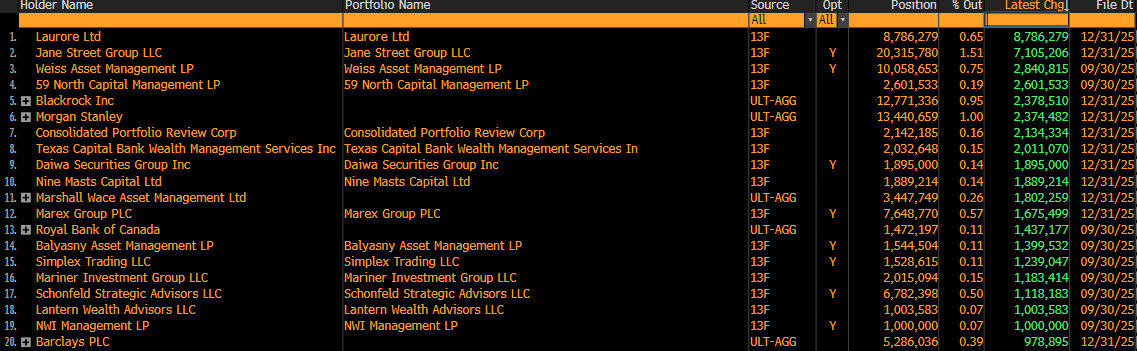
Jane Street, the major trading firm and liquidity provider, has been accused of repeatedly pushing the Bitcoin market lower to accumulate at better prices. Now they rank as the second-largest buyer of IBIT in Q4 2025. That alone tells you a lot about how this game is played. It is brutal for retail investors and new Bitcoiners. For OGs, it is just another day at the office.
Bitcoin is tracing Gold’s structure almost perfectly before the epic parabolic run in the 1970s.
If Bitcoin continues on this pattern, we will see a face melting move in 2026. 👀
🫡 @Cryptollica
R.I.P. basic prompting.
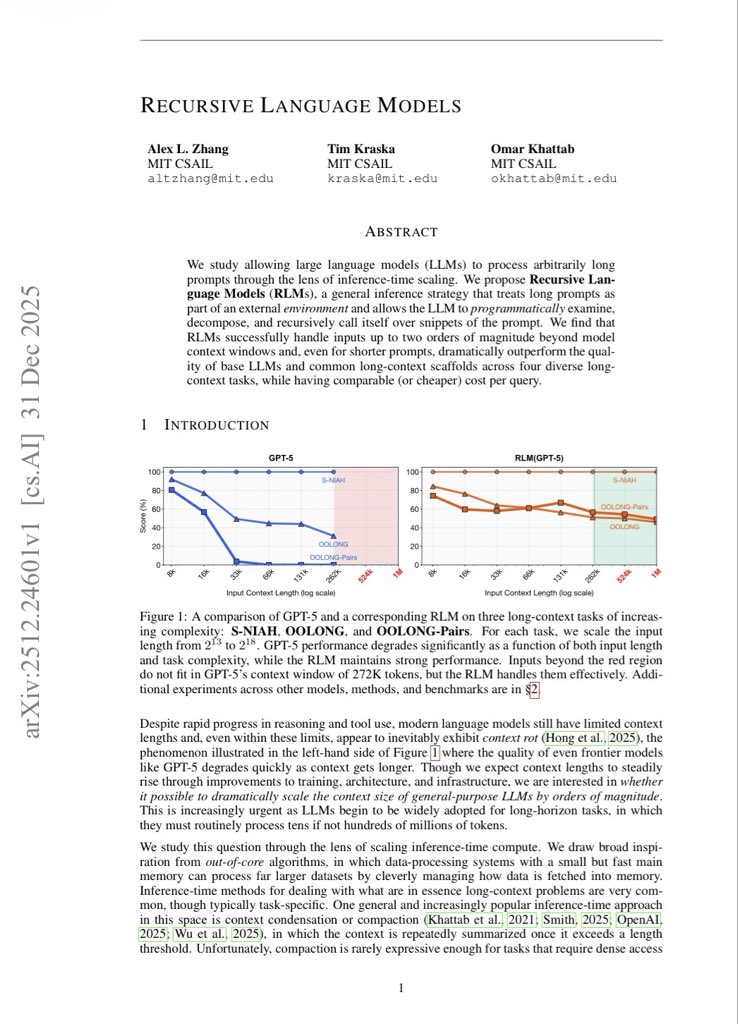
MIT just dropped a technique that makes ChatGPT reason like a team of experts instead of one overconfident intern.
It’s called “Recursive Meta-Cognition” and it outperforms standard prompts by 110%.
Here’s the prompt (and why this changes everything) 👇