Bringing together 191 member countries to improve lives through global growth and economic stability.
@FMIactualites @FMInoticias @IMFAfrica @IMFAsiaPacific
The 2026 Annual Meetings of the IMF and World Bank will open in Bangkok, Thailand, on October 12, 2026. It’s a return to the country that hosted the Meetings 35 years ago. The countdown starts today. #IMFMeetings
IMF’s latest External Sector Report finds that global current account balances widened again in 2025, reversing the post-global financial crisis narrowing trend. The widening was driven primarily by China, partly offset by narrowing in the U.S. & euro area.
https://t.co/eqWPx6D3JI
AI could help Africa grow faster, create better jobs, and improve public services. But the gains aren't automatic. Countries that move now to invest in power, connectivity, skills, and trusted institutions can capture far greater benefits. Read our IMF Country Focus blog.
https://t.co/ThWP40A6g4
Amid frequent shocks, central banks should anchor expectations by explaining how policy responds to changing conditions, not by committing to a rate path. See our new blog by Tobias Adrian: https://t.co/5A8Foq6JMC
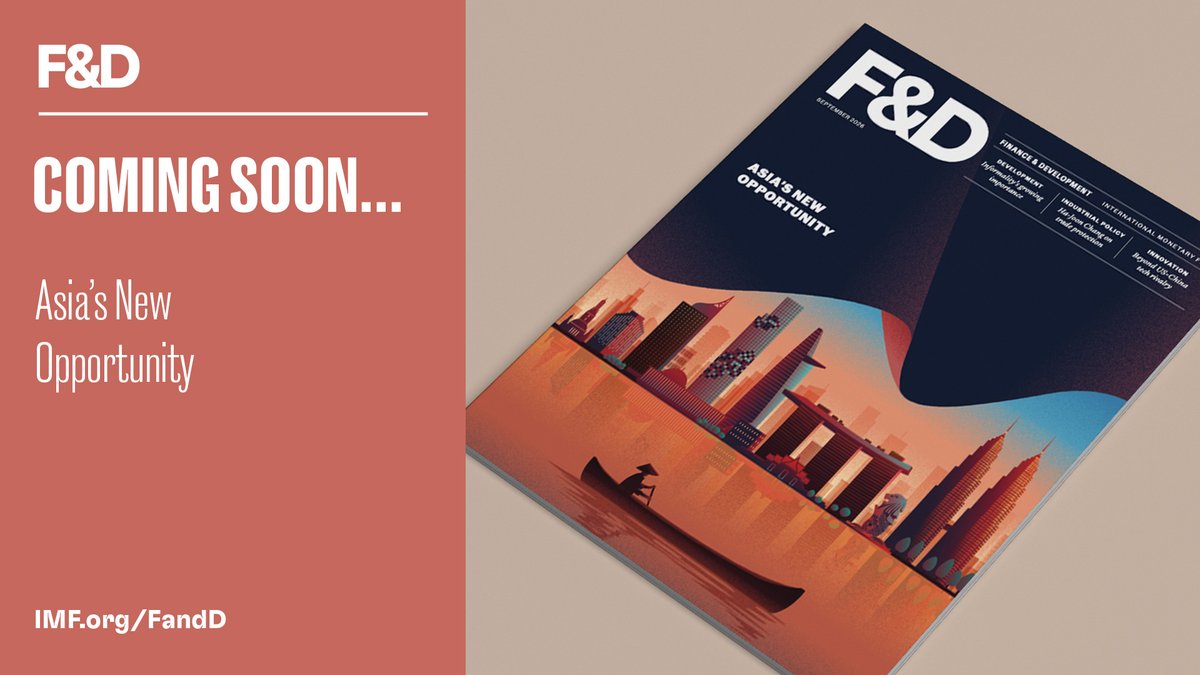
Asia faces important choices as technology advances, populations age, and global uncertainty grows. F&D magazine’s September issue explores the opportunities, innovations, and policy decisions that could shape the region’s next chapter of growth. https://t.co/sQD8khNmQb
IMF research shows that many G20 economies face regulatory constraints. The challenge is not simply to reduce regulation, but to get it right. See our new blog for more: https://t.co/ssNUvDoO1O
After repeated shocks, Nepal has rebuilt key economic buffers. International reserves now cover more than a year of imports. The challenge ahead is to build on that stability with stronger private investment, job creation, and inclusive growth. https://t.co/6LpRereb07
The use of trade and finance as tools of power is reshaping global relations in an era of rising rivalry, Christopher Clayton, Matteo Maggiori, and Jesse Schreger write in F&D magazine. https://t.co/Cfx8rJAtmR
Aid dependence varies widely across countries in sub-Saharan Africa. In some low-income and fragile states, it reaches double digits, and in extreme cases far higher. Others rely much less. But for the most exposed, the impact of cuts could be significant. https://t.co/rpCXbdfbnG
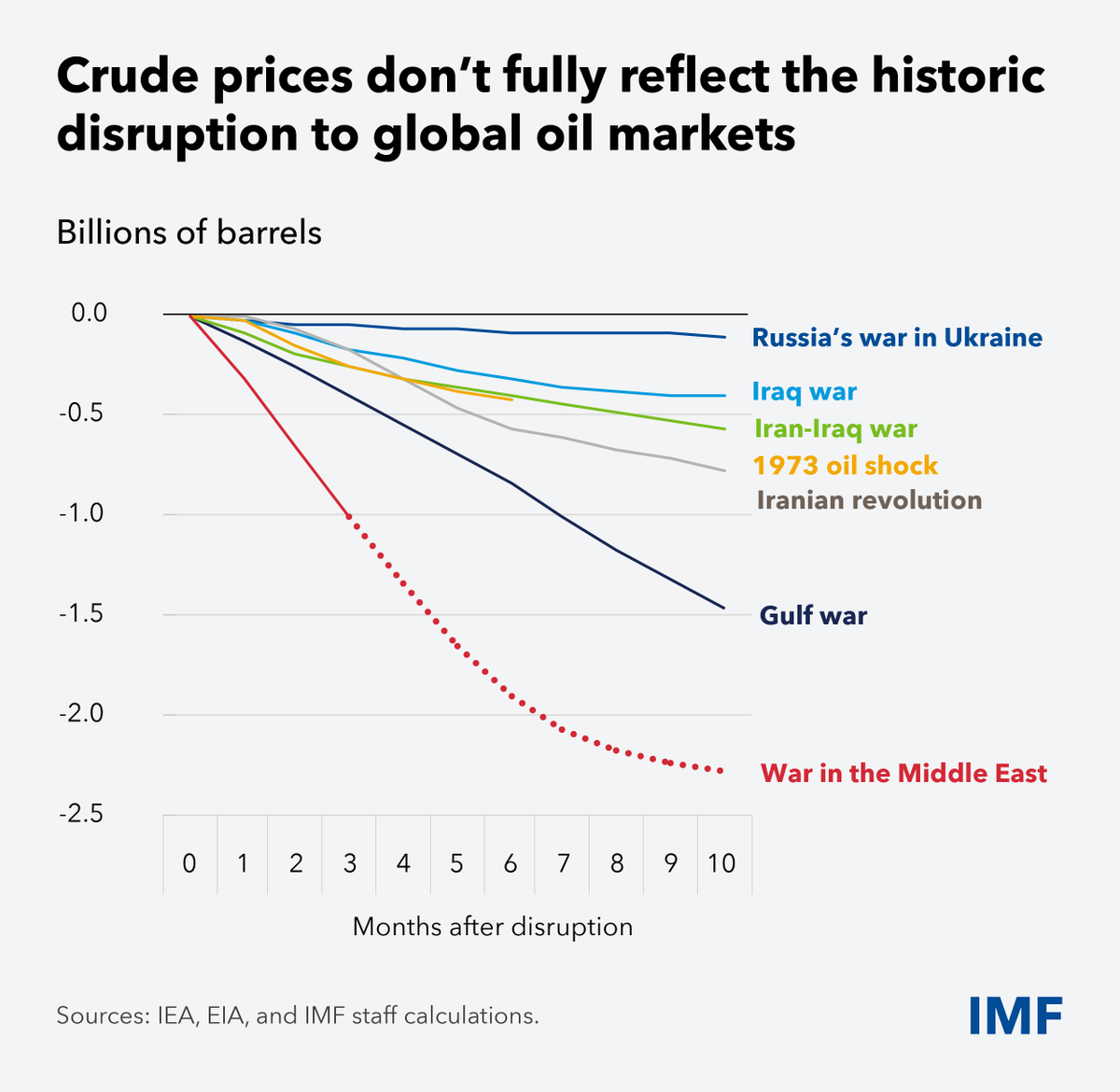
The global oil market absorbed a major disruption. Less demand, more production, and inventory drawdowns prevented a larger price spike. These shock absorbers have been used up, leaving the world weaker when the next shock comes. See our blog: https://t.co/F4RCLUpcxV
AI is expected to affect 4 out of 10 jobs worldwide. Smart policies can help ensure the gains benefit everyone. Watch our latest Ask an Economist to learn what this means for the future of work.
Nepal's recovery faced repeated setbacks, including natural disasters and political transitions. But concerted reforms helped the economy stay on course and build resilience. See our blog: https://t.co/6LpRereb07
Nigeria is a major hub for stablecoin inflows in sub-Saharan Africa. Scale brings benefits but also creates risks. IMF analysis identifies four priorities: safeguard monetary stability, strengthen oversight, improve data & upgrade payment infrastructure.
https://t.co/VPJA3faJ6p
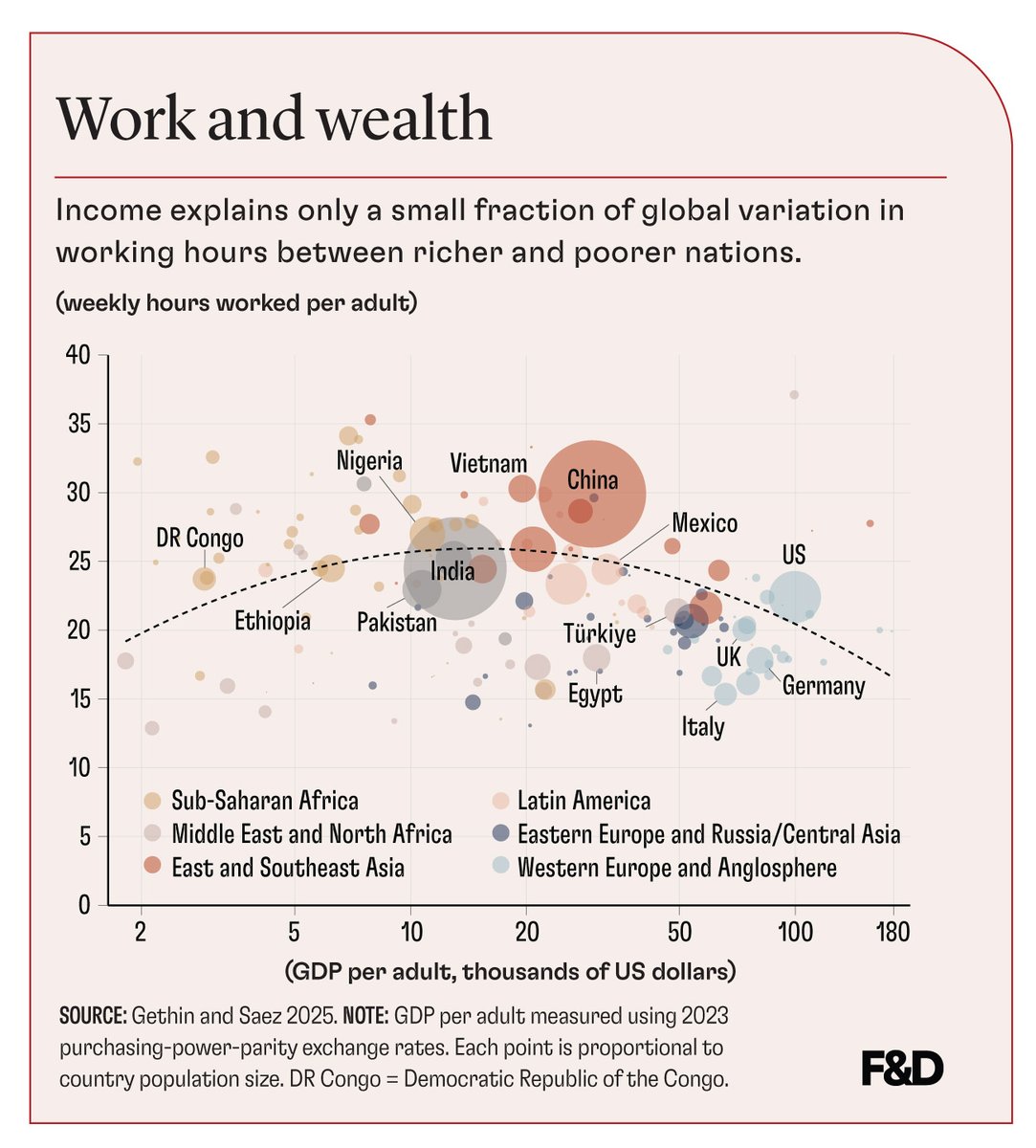
Economic growth does not lead people to work less. What matters instead are policy choices about education, pensions, and labor rules, Amory Gethin and Emmanuel Saez write in F&D magazine. https://t.co/j4AHAC5EnJ
For much of the world, geoeconomics, or the blending of economic policy and national security, is not new but routine practice, Josh Lipsky writes in F&D magazine. https://t.co/fyQvo8FxFn
Sovereign wealth funds have become some of the most powerful players in global finance, with $16 trillion in assets. Law should guide their operations and governance to ensure the institutions support financial stability. See our new blog. https://t.co/sK6yiwPOAT
AI is reshaping finance, but it could also reshape financial crises. As AI spreads across trading, lending, and supervision, central banks face new risks and new responsibilities. Read more in a new blog by Tobias Adrian: https://t.co/iFvvsbBWfW
The global economic order is unraveling under the weight of its own contradictions, Meg Rithmire writes in F&D magazine, reviewing Eswar Prasad’s The Doom Loop.
https://t.co/dzf2YQosxd
Thailand’s New Horizons are about empowering people and building resilience. Ahead of the @AM2026Thailand, @bankofthailand Assistant Governor Chayawadee Chai-anant shares the ambition of a “Bangkok Blueprint” to strengthen digital finance safeguards. https://t.co/Y5jKpUKS7l
From Buenos Aires to Vaca Muerta, @KGeorgieva met with authorities, students, workers, and business leaders to learn firsthand about Argentina’s progress, challenges, and opportunities.
Highlights from her recent visit. 🇦🇷