Telegraf is easy to deploy. Then 10 agents become 100.
Telegraf Controller 1.1 makes fleet-wide changes easier with config versioning, global constants, aliases + groups. Telegraf Enterprise adds HA with automatic Controller failover.
See what’s new: https://t.co/axkay5O5KK #InfluxDB
The Node.js client library allows you to interact with the #InfluxDB platform quickly, using a familiar language.
This quick video outlines some of the features of the Node.js client library to help you get started building awesome applications with InfluxDB even faster. ⚡
https://t.co/TivfOq1tTh
Exponential smoothing gives more weight to recent observations than older ones, helping forecasts adapt as trends shift.
This guide covers the fundamentals and shows how to implement it in Python with #InfluxDB. ⬇️ https://t.co/C8uLbnIAfW
Reliable forecasts need adaptable models.
See how #InfluxDB 3 and Hugging Face can detect drift, retrain LSTM models, and keep predictions accurate in evolving time series data. ↴ https://t.co/InDWZPvUW9
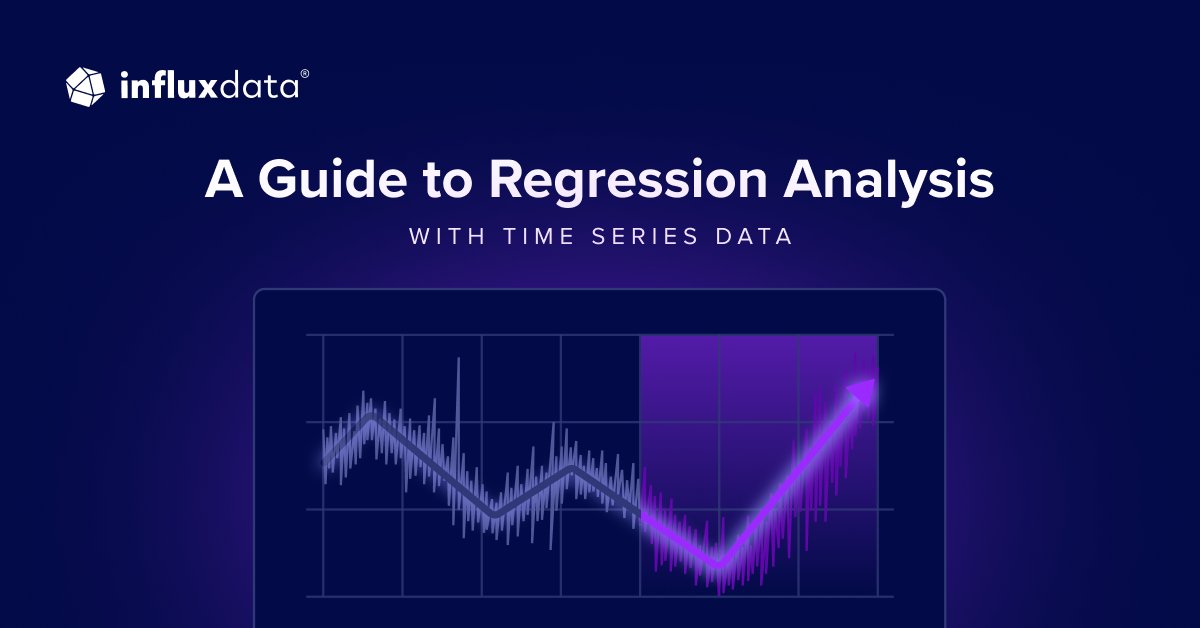
Regression analysis with time series data in Python provides a basis for understanding how values change over time.
👋 Check out this guide to get an understanding of regression as applied to time series data, how to prepare it in Python, and how to create regression models that will help discover trends and influence decisions: https://t.co/MLnXyrSa2B #InfluxDB
100+ space launches. Thousands of data points per second. 1,000 Hz telemetry streams.
@Epsilon3Inc uses #InfluxDB as the telemetry backbone for software that helps aerospace teams execute mission-critical operations with real-time insight.
Read the story: https://t.co/S4o8z3jnPl
On this episode of the @raisersedgepod, @elowitz talks with InfluxData CEO @evankaplan.
He shares practical strategies for seeing funding rounds from a VC's perspective, navigating make-or-break moments with humility, and more.
Watch here: https://t.co/vVQEm3uORE #influxdb
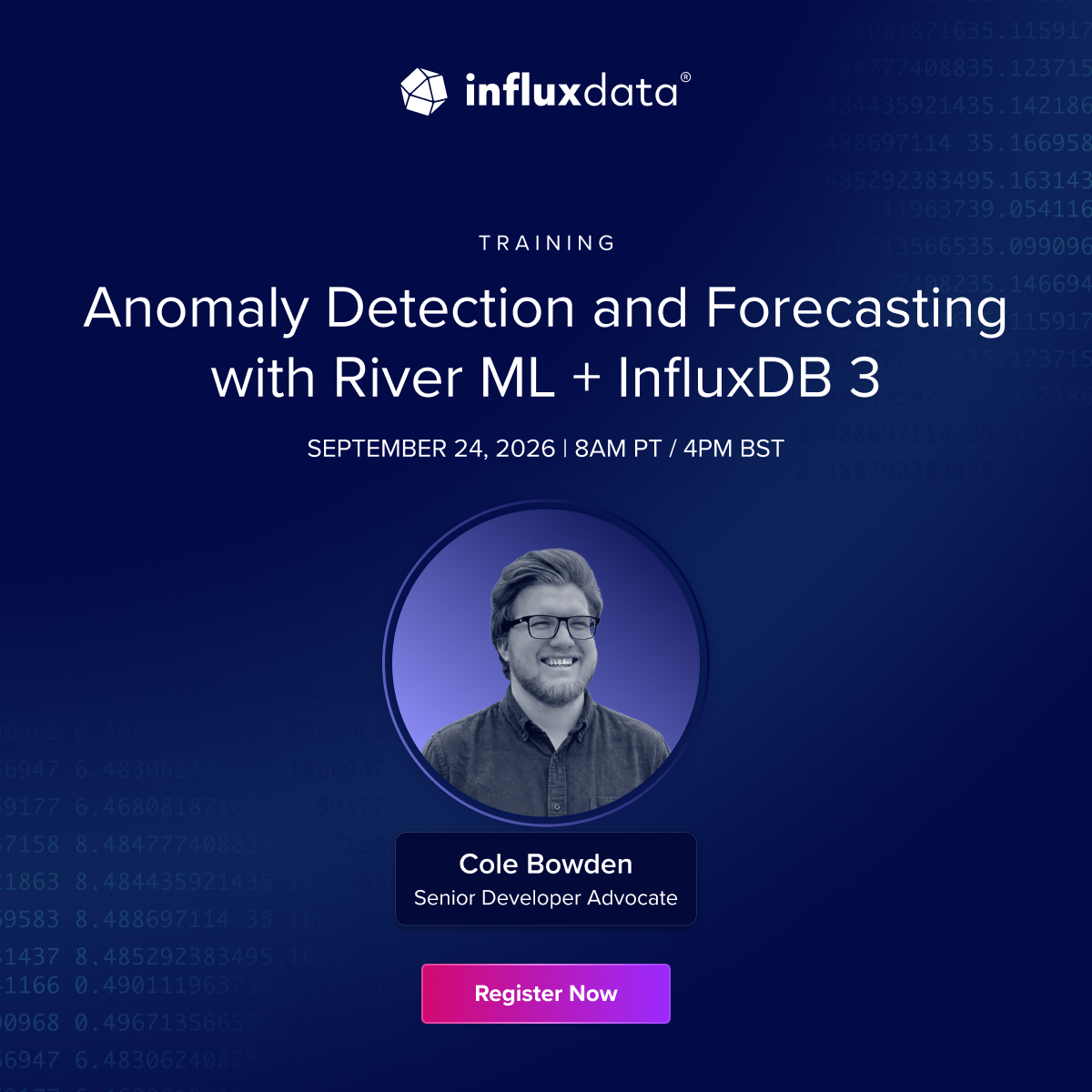
Anomalies don’t wait for the next batch training cycle.
Learn how River ML + the #InfluxDB 3 Processing Engine can update models incrementally as new time series data arrives.
Join our hands-on training on Sept. 24: https://t.co/KtJAWU7n0B
Security events tell a better story when you put them on a timeline.
Model logins, downloads + admin actions as time series to establish behavioral baselines and spot anomalies earlier.
Our security team built DiSCO around this idea. Learn how: https://t.co/9cR7bFfUf6 #InfluxDB
How do you monitor factory equipment remotely without connecting cloud apps directly to critical infrastructure?
@OlympusControls built an edge-to-cloud architecture with MQTT, Telegraf + #InfluxDB to make machine telemetry accessible for real-time monitoring.
Read the story: https://t.co/yVbc3jTT2K
CSVs go from flat files to living pipelines in #InfluxDB 3!
Whether you need automation with Telegraf, quick imports with CLI, or advanced workflows in Python, the right method fuels smarter insights. 💡
Collecting data from edge devices is one thing. Turning it into actionable insights across your distributed infrastructure is another.
#InfluxDB handles both, so you can optimize performance where it matters most. https://t.co/QEXV14D9sb
No full-time staff on site. A global radar network running 24/7.
That's how @LeoLabs_Space tracks 25,000+ objects in Low Earth Orbit while monitoring 1,000+ alerts across 2,000–3,000 devices.
Explore how the team built its telemetry platform with #InfluxDB 3: https://t.co/UDl2hCrNjj
Get real-time data without any lag.
The Last Value Cache in #InfluxDB 3 delivers latest-value queries in under 10ms. Ideal for monitoring workloads and dashboards. ⬇️ https://t.co/3xbFdJzNwj
Incremental tuning won’t solve the telemetry scaling problem facing modern aerospace systems.
As LEO constellations grow, telemetry architectures must be redesigned around scale, distribution, and context preservation from the start.
The “cardinality wall” is becoming one of the most important (and under-discussed) bottlenecks in space infrastructure. #influxdb
🛰️ Read the article via @SpaceNews_Inc featuring @LoftOrbital
https://t.co/TENrQlzSXY
Operational data doesn’t wait for batch jobs.
River-based plugins for #InfluxDB 3 bring online ML directly to streaming data, continuously detecting anomalies, generating forecasts + building profiles as new data arrives.
See how each plugin works 👇
What can 10 birds teach you about downsampling?
🐦 🐦 🐦 🐦 🐦 🐦 🐦 🐦 🐦 🐦
Our #InfluxDB 3 tutorial generates ~600 rows/min of bird telemetry, rolls it into 10-second windows, then validates the results with SQL.
Birds are the demo. The pattern works across time series workloads. #influxdb
https://t.co/lfeiekSGSE
@SeadrillLtd runs offshore drilling where real-time data is critical to safety and performance.
With #influxdb powering its PLATO platform, teams can analyze high-frequency sensor data, reduce downtime, and enable predictive maintenance at global scale, saving tens of millions.
Explore the story https://t.co/B1BgiFAkjO
Skip the setup and start exploring your data model in seconds.
With #InfluxDB 3 Explorer, describe your use case in plain English and generate realistic sample data, complete with measurements, tags, fields, and schema. Refine it with AI, write it to a database, and start building immediately.
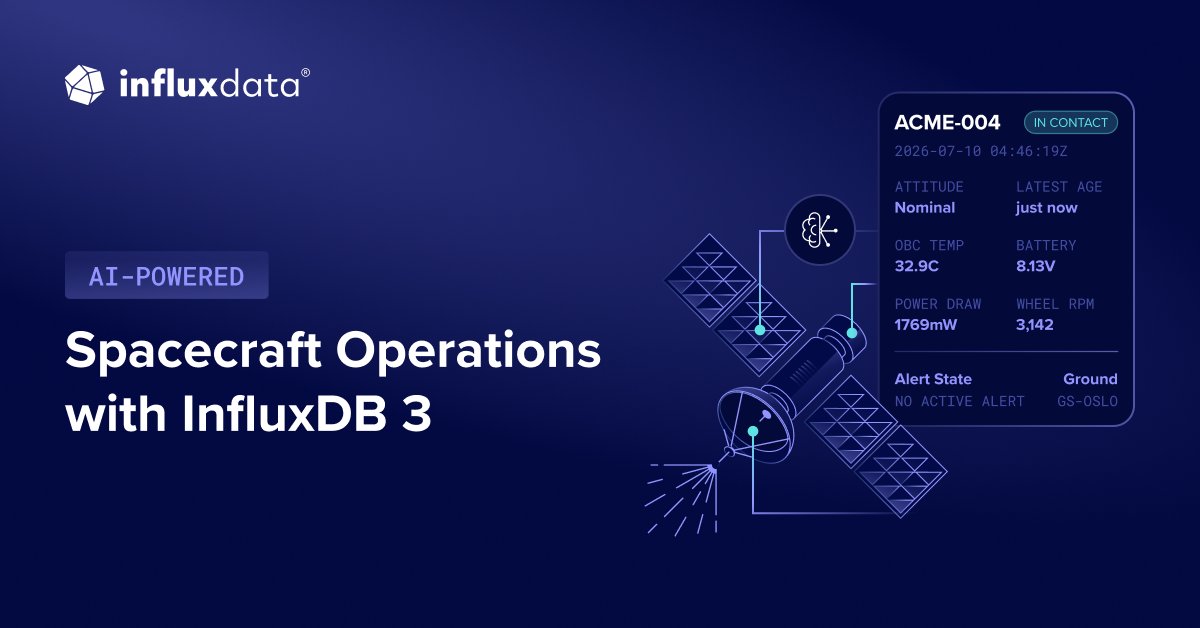
🛰️✨ Every second counts when you're operating satellites or other mission-critical systems.
When telemetry starts drifting toward a fault, you need more than data. You need context.
Explore how an AI-powered spacecraft operations demo built with #InfluxDB 3 uses live telemetry, event processing, and grounded AI to help operators investigate anomalies faster. 🌎🤖 https://t.co/2t3SVM7Bxz
Machines talk before they break.
With #InfluxDB, time series data feeds ML models that spot anomalies in sound, heat, or fluid metrics so you fix problems before downtime hits.
https://t.co/KoSDitqSlN via @ICIO_APAC