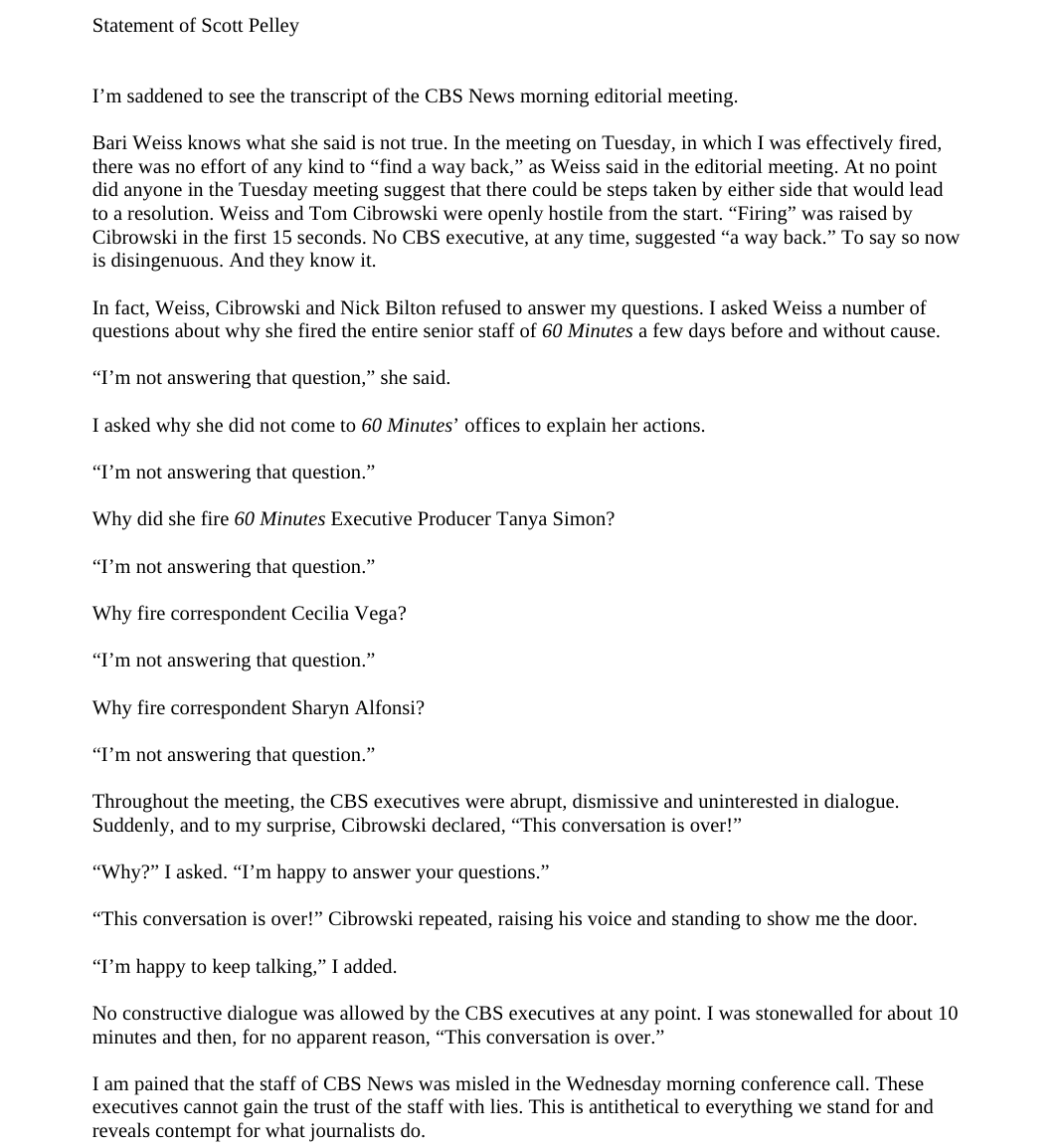
Nick Bilton walked into the 60 Minutes newsroom four days after Bari Weiss fired the people who built the show. He tried to pretend he didn't know about the firings. Scott Pelley, in front of the remaining staff, would not let that stand.
"She loves 60 Minutes," Bilton said. "She's murdering 60 Minutes," Pelley said back. "She does not love this place. She was brought in to kill it - and she's doing exactly that."
One of Weiss's lieutenants kept interrupting to say Pelley was being rude. Pelley kept going.
JVL's framing is the right one. The corrupter depends on the existing institution being too polite to say the obvious thing out loud. Christopher Wray resigned quietly to "preserve the integrity of the FBI." John Kelly gave print interviews after he left. Thom Tillis, John Cornyn, Mitch McConnell, Jim Mattis, Bill Barr - all of them saw it. All of them objected privately. None of them said it in the room where it was happening, to the person doing it, while the cameras were still running.
Pelley said it in the room. To the person's face. In front of witnesses. While he still worked there.
That is a different thing entirely. Not a memoir. Not an anonymous source in a tell-all. Not a carefully worded statement issued after the resignation letter was already filed. The true thing, said out loud, to the people who needed to hear it, at the moment it could still matter.
Authoritarianism counts on politesse. It counts on people deciding the fight isn't worth the awkwardness, the career risk, the label of being difficult. Scott Pelley decided it was worth it. The republic needs more of that calculation to come out the same way.