IRAN’S KHATAM AL-ANBIYA HEADQUARTERS:
Iran forces launched preemptive strikes on a U.S. base in Jordan, the facility was preparing to conduct attacks against Iranian positions.
The operation was intended to neutralize an imminent threat before further strikes could be launched against Iran.
The IRGC has launched a surprise ballistic missile strike targeting a U.S. military base in Jordan.
At least two ballistic missiles were launched toward the facility.
The attack comes as Iran adopts a more aggressive military posture, moving beyond its traditionally defensive approach toward a strategy focused increasingly on offensive and retaliatory operations.
Iran has launched another anti-ship ballistic missile toward the Strait of Hormuz, with the strike aimed at ship-to-ship oil transfer operations.
This is the third anti-ship ballistic missile launched in the Strait today.
The launches could indicate a tactical shift, with Iran increasingly relying on ballistic missiles instead of drones and cruise missiles.
With longer engagement ranges and greater interception challenges, the move could significantly increase pressure on maritime activity across the Strait.
Anti-ship missiles have been launched from Sirik in southern Iran, heading toward the Strait of Hormuz.
The launch comes as military activity around the strategic waterway intensifies, placing renewed focus on Iran’s coastal missile capabilities and its ability to threaten maritime operations in the area.
IRAN LAUNCHES BALLISTIC MISSILES
Ballistic missile launches have been detected across Iran, with missile activity also observed in the Isfahan area.
The launches come as tensions across the region remain at a critical level, with Iran continuing to demonstrate its long-range missile capability.
BALLISTIC MISSILE LAUNCH FROM KERMAN
A ballistic missile has been launched from Kerman Province, Iran, marking another launch from Iranian territory.
The launch comes amid heightened regional tensions, with Iran maintaining a significant missile capability and continuing to rely on long-range strikes as a key element of its military posture.
U.S. ESCALATES ECONOMIC WAR
U.S has expanded its economic campaign against Iran, targeting Türkiye-based Golden Global Bank and its subsidiaries over alleged financial ties to the IRGC-Quds Force.
The sanctions are intended to restrict Iran’s access to international banking channels and disrupt the movement of Iranian funds.
Meanwhile, Iran views the move as another step in Washington’s broader campaign of economic pressure and financial warfare against the Islamic Republic.
South Korea is now considering sending military assets to the Strait of Hormuz to support freedom of navigation.
Options include a maritime patrol aircraft, logistics support vessel, or mine-detection and clearance unit.
Seoul previously said it would consider deployment only after the U.S.-Iran war ended. The shift comes after Trump criticized South Korea for not supporting the U.S. war effort.
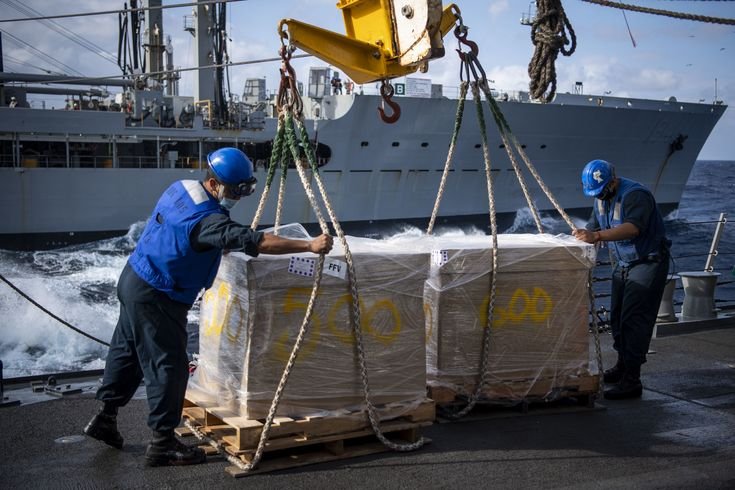
Iran’s strikes on key U.S. logistics infrastructure in Bahrain are creating a growing supply challenge for the U.S. Navy in the Middle East.
Around 20 ships carrying 20,000 sailors and Marines require more than 420,000 meals and 8 million gallons of fuel every week.
With regional ports becoming harder to use, supply vessels are reportedly making much longer journeys to restock.
The result: slower resupply, longer deployments, greater pressure on logistics ships and increasing difficulty sustaining prolonged combat operations.
Russia has rejected a U.S. demand to distance itself from Iran.
Washington cannot monopolize relations with other countries, stressing that Moscow will maintain and further strengthen its partnerships and ties with Iran.
JD Vance defended the U.S. military over the strike on a wedding ceremony in Kuhestak, saying the U.S. does not target civilians and that the incident is under investigation.
Iran rejects Washington’s explanation, pointing to the civilian casualties and demanding accountability for those killed and wounded.
The first footage from the aftermath of the U.S. strike on a wedding ceremony in Iran two days ago has emerged.
Several children are shown receiving treatment in hospitals, while others were killed in the attack.
Large crowds have taken to the streets across Iran, waving the national flag and rallying in support as tensions with the United States continue to escalate.
Netanyahu says Israel is close to removing the “Iranian threat” once and for all, declaring that bringing down Iran’s government is the main task ahead.
Meanwhile, Iran says it will not surrender to external pressure, and any attempt to force regime change will be met with resistance.
Iran’s message remains clear:
The struggle will not end while Palestine remains under occupation.
Iran will continue standing with the Palestinian people and supporting their right to freedom, dignity and an independent state.
Palestine remains at the heart of Iran’s resistance.
The wreckage of a U.S. MQ-9 drone is seen on the ground in Khomein Governorate, central Iran, after it was shot down last night.
Iranian fighters and local residents can be seen around the downed drone.
Iran generated more than $1 billion in oil revenues during the 11-day period ending September 2.
Despite the ongoing conflict and pressure on its energy sector, Iran continues to generate significant oil income.
Iran vows that those responsible for the attack on a wedding ceremony in southern Iran will “pay a heavy price.”
The attack on civilians will not go unanswered.
Iran is striking U.S. military positions in Bahrain and Kuwait with drones and missiles.
Multiple explosions are being heard as the attacks unfold, marking another major escalation against American forces across the Gulf.