Excellence in journalism, books, photography and social on Irish food and drink judged by Dan Saladino, Diana Henry, Tim Hayward & more. 2026 Awards Oct 22nd✨
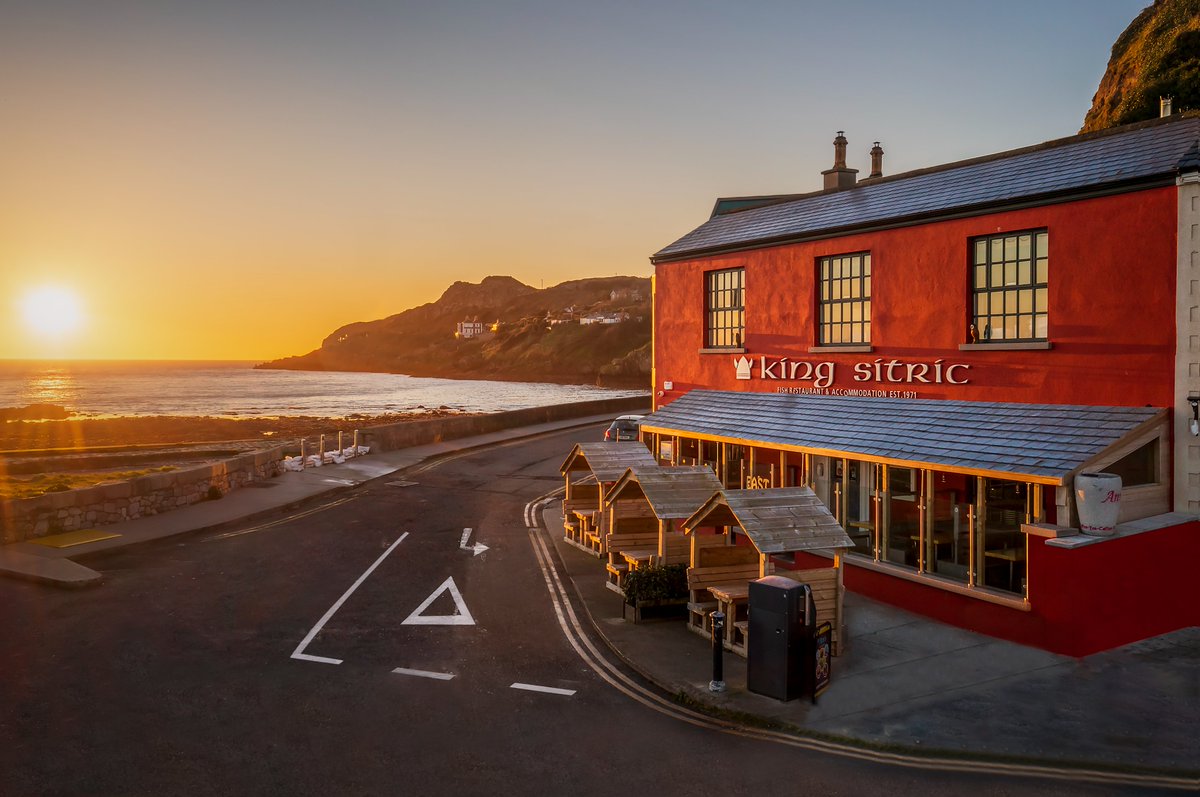
"Locally caught lobester arrives by bike at this Howth seafood instituion" Calling all seafood lovers, 14 restaurants to visit this summer with the Irish Times.
Read now: https://t.co/ewfnF2FwHY
Delighted to hear the Silk Road Café at Dublin Castle secured an interim court injunction against its landlord the Chester Beatty Library. It is deeply unfair (and hypocritical) this 25 year old business was being forced to close, leaving over 20 people unemployed for 6 months just because of Ireland's presidency of the European Union!
Incidentally this is no reflection on the staff or management of the @CBL_Dublin Chester Beatty Library, which is one of the greatest institutions in Europe. It's a treasuretrove of history, art and culture full of passionate and brilliant people who have feck all to do with this Kafkaesque crap. It's also free to visit and highly recommended!
Silk Road Café holds a valid licence agreement, but it seems ordinary people's lives and legal rights often count for very little when the Office of Public Works does its bean counting. The casual destruction of people's livelihoods is not over yet, so keep fighting.
This is a prime example of bureaucratic, livelihood destroying nonsense our goverment and certain County Councils hope you dont hear about. Not exactly an edifying look for our European Union presidency....@EU_Commission@eurireland
In Gaza, keeping kitchens running takes creativity, determination, and an entire team working together against unimaginable odds. From dustpans to onion slicers to the pots our chefs cook in every day, every piece of equipment that works is a small victory—and every meal that reaches a Palestinian family is the result of people refusing to give up. This is what the WCK team in Gaza does, every single day. #ChefsForGaza #FoodIsLife
I finally did it.
After months of people telling me I should, https://t.co/D2clufAmxx is now live
Limited dates available
No classrooms.
No chef nonsense.
Just great food, proper conversation and a few tricks picked up over 25 years in kitchens
https://t.co/ZJoPkJsh5b
If you're in the city today, if you can, spend a few quid in an independent hospitality business. Many are already struggling, and the last few days has only exacerbated that.
Spicy King slices from Flout!
I’m so delighted to be chatting to Marty Morrissey on RTÉ Radio 1 this Bank Holiday Monday, 1st June, from 9am–11am 🎙️
We’ll be talking light, fresh & vibrant dinner ideas for easy summer cooking ☀️🥗
Tune in!
#SummerRecipes#EasySummerCooking#IrishFood#RTERadio1
It was such an honour to lead the panel discussion 'How Fermentation Shapes Society & Culture’ at the Fermenter's Guild Symposium two weeks ago – it seems like the blink of an eye!
Wonderful to meet Sandor Katz, Johnny Drain, Sam Cooper, Olia Hercules and Kenji Morimoto.
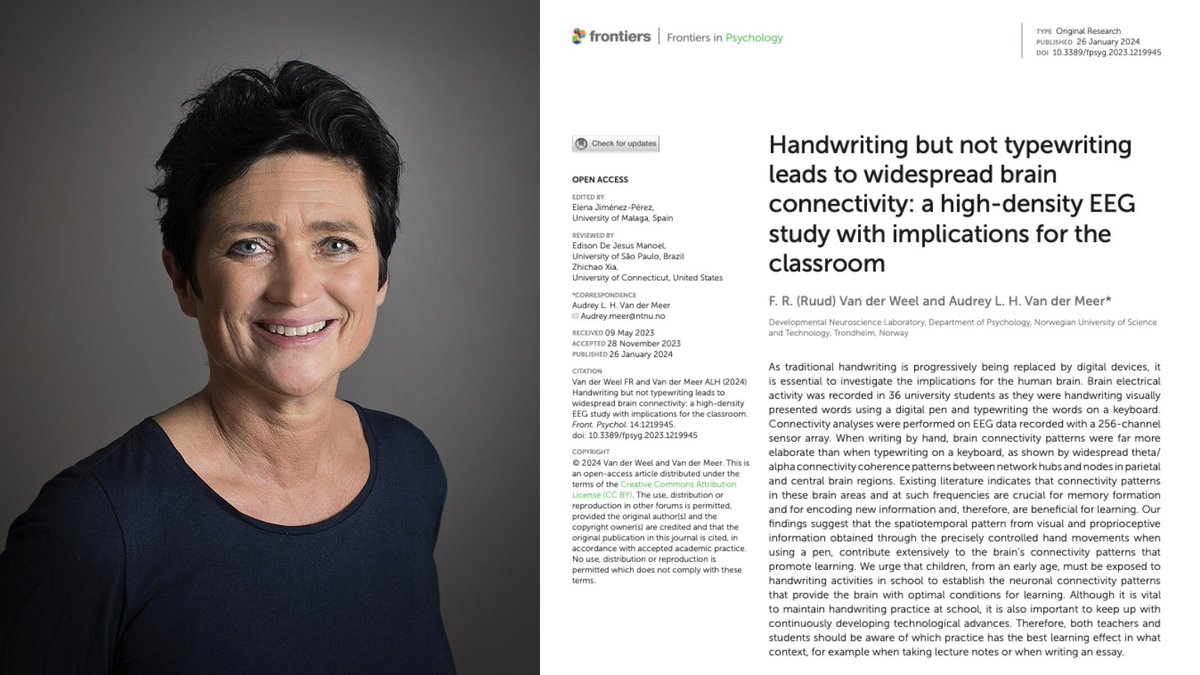
A Norwegian neuroscientist spent 20 years proving that the act of writing by hand changes the human brain in ways typing physically cannot, and almost nobody outside her field has read the paper.
Her name is Audrey van der Meer.
She runs a brain research lab in Trondheim, and the paper that closed the argument was published in 2024 in a journal called Frontiers in Psychology. The finding is brutal enough that it should have changed every classroom on Earth.
The experiment was simple. She recruited 36 university students and put each one in a cap with 256 sensors pressed against their scalp to record brain activity. Words flashed on a screen one at a time.
Sometimes the students wrote the word by hand on a touchscreen using a digital pen, and sometimes they typed the same word on a keyboard. Every neural response was recorded for the full five seconds the word stayed on screen.
Then her team looked at the part of the data most researchers had ignored for years, which is how different parts of the brain were communicating with each other during the task.
When the students wrote by hand, the brain lit up everywhere at once.
The regions responsible for memory, sensory integration, and the encoding of new information were all firing together in a coordinated pattern that spread across the entire cortex. The whole network was awake and connected.
When the same students typed the same word, that pattern collapsed almost completely.
Most of the brain went quiet, and the connections between regions that had been alive seconds earlier were nowhere to be found on the EEG.
Same word, same brain, same person, and two completely different neurological events.
The reason turned out to be something nobody had really paid attention to before her work. Writing by hand is not one motion but a sequence of thousands of tiny micro-movements coordinated with your eyes in real time, where each letter is a different shape that requires the brain to solve a slightly different spatial problem.
Your fingers, wrist, vision, and the parts of your brain that track position in space are all working together to produce one letter, then the next, then the next.
Typing throws all of that away. Every key on a keyboard requires the exact same finger motion regardless of which letter you are pressing, which means the brain has almost nothing to integrate and almost no problem to solve.
Van der Meer said it plainly in her interviews.
Pressing the same key with the same finger over and over does not stimulate the brain in any meaningful way, and she pointed out something that should scare every parent who handed their kid an iPad.
Children who learn to read and write on tablets often cannot tell letters like b and d apart, because they have never physically felt with their bodies what it takes to actually produce those letters on a page.
A decade before her, two researchers at Princeton ran the same fight using a completely different method and ended up at the same answer. Pam Mueller and Daniel Oppenheimer tested 327 students across three experiments, where half took notes on laptops with the internet disabled and half took notes by hand, before testing everyone on what they actually understood from the lectures they had watched.
The handwriting group won by a wide margin on every question that required real understanding rather than surface recall.
The reason was hiding in the transcripts of what the two groups had actually written down.
The laptop students typed almost word for word, capturing more total content but processing almost none of it as they went, while the handwriting students physically could not write fast enough to transcribe a lecture in real time, which forced them to listen carefully, decide what actually mattered, and put it in their own words on the page.
That single act of choosing what to keep was the learning itself, and the keyboard had quietly skipped the choosing and skipped the learning along with it.
Two studies. Two countries. Same answer.
Handwriting makes the brain work. Typing lets it coast.
Every note you have ever typed instead of written went into your brain through a thinner pipe. Every meeting, every book highlight, every idea you captured on your phone instead of on paper was processed at half depth.
You did not forget those things because your memory is bad. You forgot them because typing never woke the part of the brain that would have made them stick.
The fix is the thing your grandmother already knew.
Pick up a pen. Write the thing down. The slower road is the faster one.
James Bayley meets Franco-Palestinian chef Fadi Kattan and sommelier Anna Patrowicz to explore a wine region where producers navigate military checkpoints and water rations to make bottles they hope will be judged purely on what's in the glass. https://t.co/AnagiNoEuS
Pics from awards past! ❤️🏆Entries for our 2026 awards close on the 31st of May. All details at
https://t.co/SFFJfQGz7K #irishfood#foodwriting#foodphotography
Pics from awards past! ❤️🏆Entries for our 2026 awards close on the 31st of May. All details at
https://t.co/SFFJfQGz7K #irishfood#foodwriting#foodphotography