Every person posting OT verses to prove Pope Leo wrong has evidently forgotten that post-biblical rationalizations based on developing ideas of the dignity of the person are the one & only reason you think the God of the Bible was secretly against slavery the whole time.
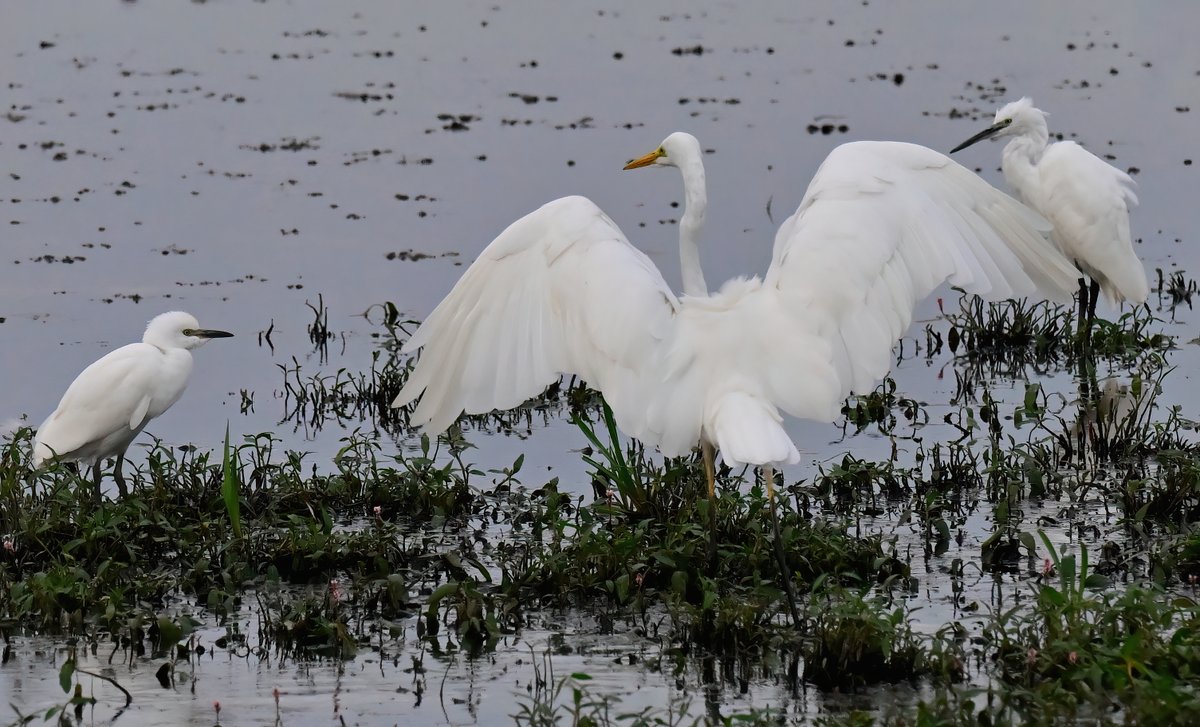
All three Egrets seen in Britain together! 😀
Left to right... Cattle Egret, Great White Egret and Little Egret! 😍
Taken recently at RSPB Ham Wall in Somerset. 😊🐦
Do also enjoy my blog on the subject of art and illustration at ZSL, find the link at the end of the ZSL post. I did like bringing together several aspects of animal art and illustration at ZSL
@Glenn_A_Barker I think the Christian West has neglected its own spiritual traditions too much. Dogmatic correctness often overwhelming the existential insights of mystics and saints. Changing an is to an ought and encouraging theological nagging😊
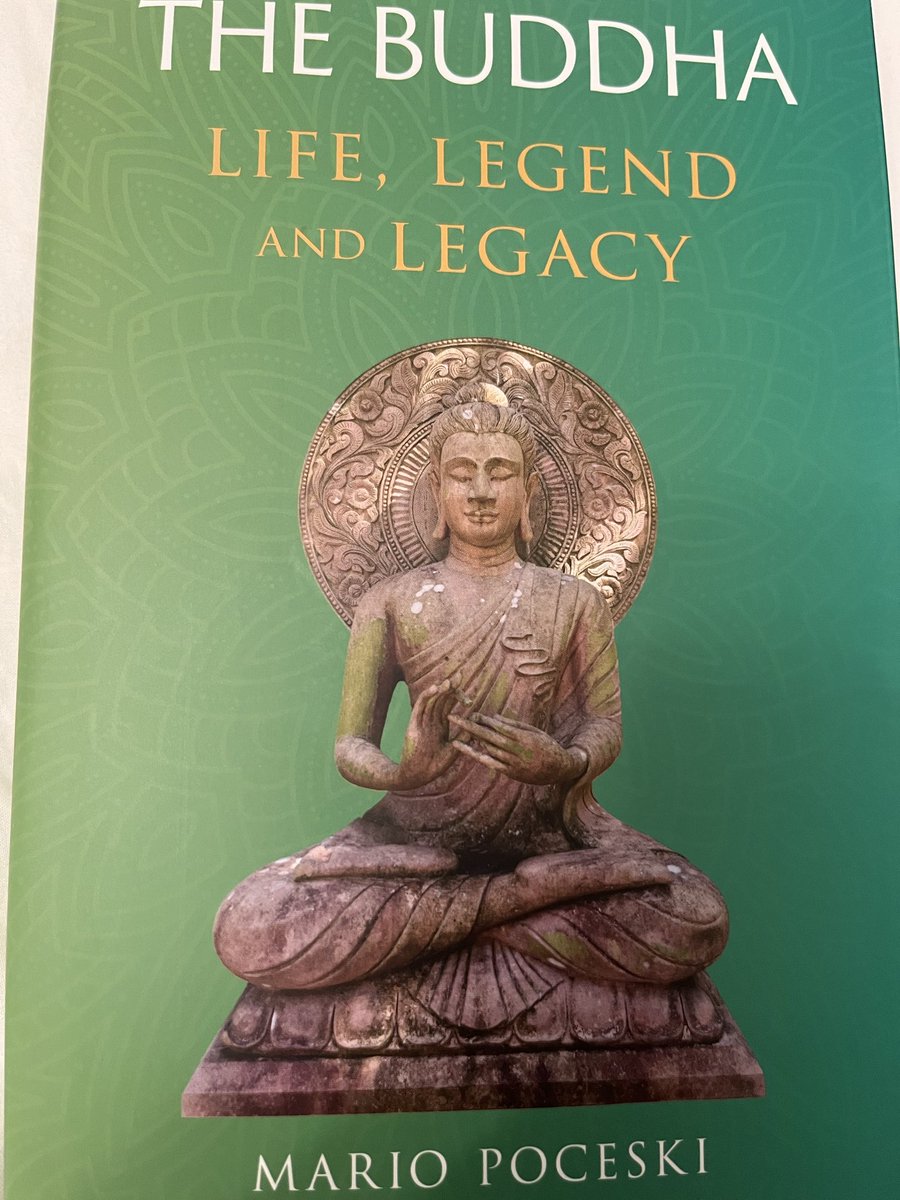
My next book to review has just arrived.
Particularly looking forward to this one as I was fortunate to study Buddhism at Lancaster University and it has never lost its fascination
there was once a lively debate in poetry circles in which the American vernacular voice, best exemplified in Walt Whitman, with William Carlos Williams his poet-heir, was in opposition to the vatic, elevated & (one might say) pretentious acquired voice of T.S. Eliot with his self-consciously ornate, ultra-allusive poetry in which footnotes (!) were not disallowed.
one can prefer Whitman/ William Carlos Williams to Pound/TS Eliot for ideological reasons, yet still find much to admire & be moved by in Eliot.
obviously "The Wasteland" & "Prufrock" hit a nerve of anxious malaise following WWI that was international; Williams's more imagistic verse, tenderly/fiercely attentive to domestic life & its routines, is more evidently American -- one thinks of Thomas Hart Benton, Edward Hopper, Charles Burchfield: uniquely American artists.
@Glenn_A_Barker That is an excellent point too. When Buddhism came west it was shorn of its metaphysics by philosophers like Schopenhauer and contrasted with the dogmatic and supernatural Christianity.
Which helped it to become, for many, a safe and amenable type of spirituality.
There is always taste when it comes to poetry. Most poets seem to have been pretty venomous when they didn’t like or understand the work of others. Men who imagine they are dealing in big ideas and profundity have often been dismissive of poems about the quotidian.
@Glenn_A_Barker That makes a lot of sense. There have been a lot of borrowings from and interchange between Buddhist ideas and practices and therapy in recent decades.
Partly due to Western Buddhism translating the tradition as a philosophy/ therapy.
A seasonal sign of autumn from the 18th-century naturalist Gilbert White: 'about old Michaelmas' is when redwings and other winter birds of passage appear in Britain. His table of observations reads like poetry.
https://t.co/mDLtZuMncQ
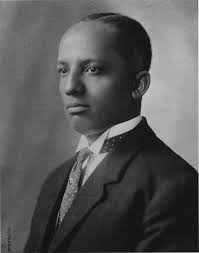
The man who invented Black History Month was a coal miner until he was twenty.
He started high school at twenty, finished it in under two years, and became the second Black American ever to earn a doctorate from Harvard.
Carter G. Woodson. He was born in Virginia in 1875 to parents who had both been enslaved. There were nine children.
He taught himself most of what he knew while working the family farm and then in the coal mines of West Virginia, where an older Black miner who could read used to have the newspapers read aloud to the men.
He went to school properly at twenty. He then taught, took degrees at Berea and Chicago, and in 1912 took a PhD at Harvard, the second Black American to do so after Du Bois.
And he came out of it with a specific complaint: that American history was being written as though Black people had done nothing in it, and that this was not an oversight but a method.
In 1915 he founded the Association for the Study of Negro Life and History. In 1916 he started a scholarly journal. He published books, and he paid for much of it himself.
And in February 1926 he launched Negro History Week — deliberately set in the week containing Frederick Douglass's and Abraham Lincoln's birthdays, so that it was already in people's calendars.
It became Black History Month in 1976.
He never married, had no children, and lived in a house in Washington that was also his office and his publishing operation.
His line, which this page runs on: if a race has no recorded history, its achievements will be forgotten and it will come to be regarded as a negligible factor in the thought of the world.
He started in a coal mine. He ended up building the thing that keeps the record.
@guineapig66 We have a great balladeer in our local group, who tells amusing and often telling stories, and others who are so confessional and edgy that they leave me with scars😊