Java never stands still. ⚡
This #JavaOne session with Nicolai Parlog looked at the most important changes between Java 21 and 25 before taking a closer look at Java 26. https://t.co/oMCkQqgrNK
We look at common scenarios in which final fields are mutated through reflection and what alternatives exist for each of them.
Since these scenarios can appear in frameworks, libraries, and applications, this article addresses developers of all such projects. 🤝 https://t.co/Q0ft7Trlc1
Help Duke get an A! 🎓
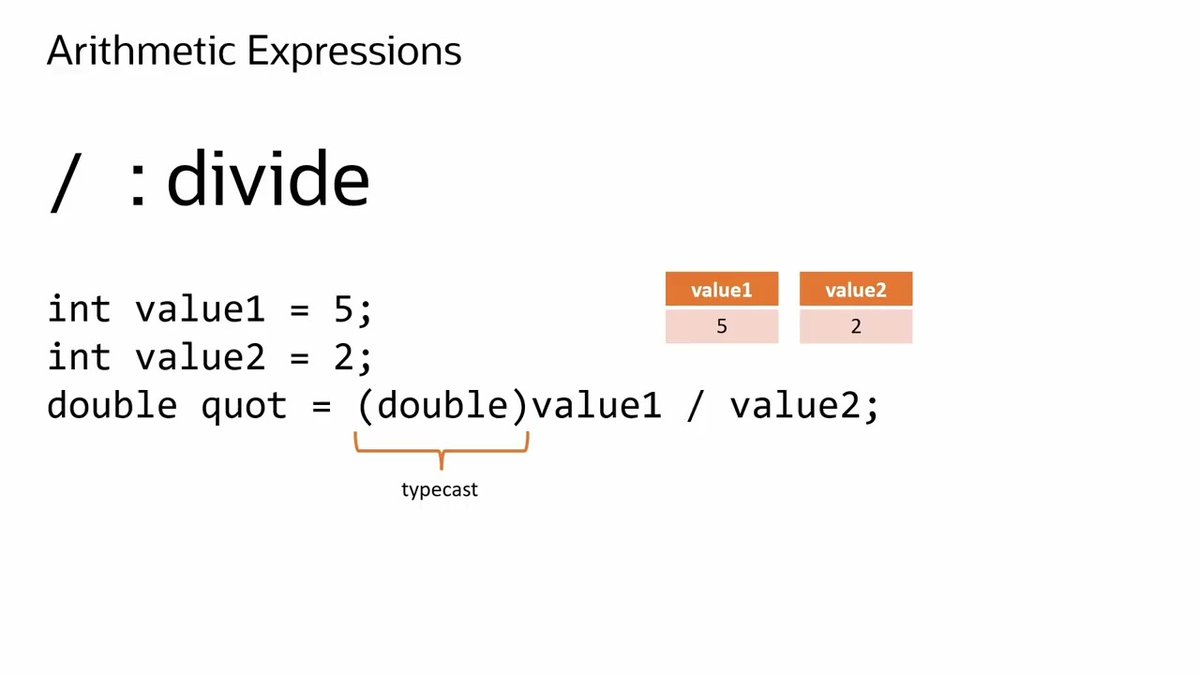
Understand the key difference between integer division and double (floating-point) division in Java—and learn how casting conversions can change your results. https://t.co/rQTUtvfLj4
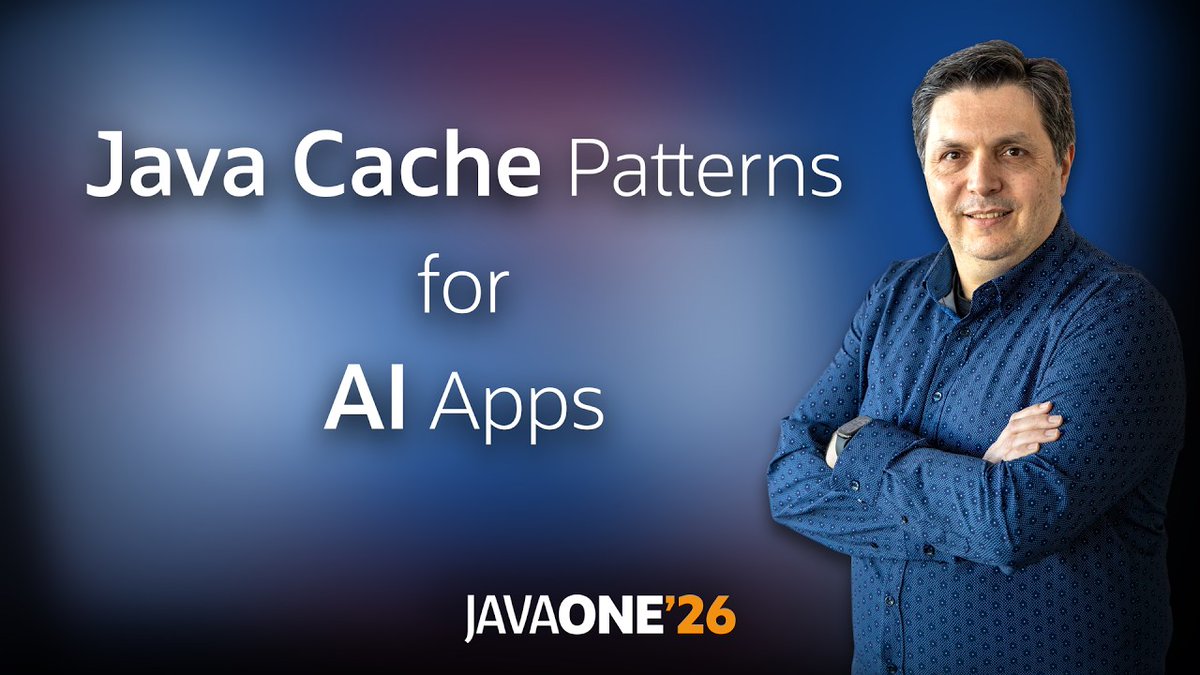
This #JavaOne talk breaks down how Java applications can layer internal, distributed, and semantic caches. We'll explore in-process caching with Caffeine for ultra-low-latency access, distributed caching with Redisson and Valkey for shared cache and semantic caching using Vector Similarity Search to reduce latency and cost while scaling LLM access. https://t.co/HAlcrlVv5q
Meet Briana Morrison—Associate Professor at the University of Virginia and our May Teacher Spotlight.
Learn about Briana’s work, her advice for students, and the exciting ways hands-on projects can shape future careers. https://t.co/A8Azd3JuoE
codebysophy shows you how to run Java in your browser without installing anything—part of her resource drop series.
Save this for when someone says: "I'd learn Java, but the setup takes forever." 😏
Try out some code today at the Java Playground: https://t.co/3w0RWmWEZV
In 1995, a small team of engineers unveiled a new programming language designed for flexibility, portability, and robustness. That language was Java. And three decades later, it remains one of the most influential technologies in the software world.
Thank you for helping us celebrate #30YearsOfJava this past year. We look forward to many, many more years of pushing the boundaries of innovation and the pursuit of developer excellence. ❤️
Get a beginner-friendly introduction to enums in Java and learn why they’re useful in real-world programming.
We’ll break down what an enum is, how it differs from regular variables, and when you should use one in your code. https://t.co/RL0ytNsCBy
JDK 25 is the first release that includes the FFM API and has broad long-term support. Learn how this allows us to avoid the previously slow, brittle, and complex process of using JNI and ByteBuffers.
Whether you're an architect rethinking cross-platform integration or eager to conduct AI inference in Java, this #JavaOne talk is for you. https://t.co/L3tBo4z4sI
Learn how to join (concatenate) strings in Java using the + operator—one of the most basic and commonly used techniques in Java programming.
We’ll walk through simple examples to show how string concatenation works, how Java handles combining text and variables, and what happens behind the scenes when you use the + operator. https://t.co/YPVoFHJqNA
This #JavaOne session highlights the progress of JEP 528, which brings core dump and minidump support to jcmd.
Watch now for a deep dive into the future of JVM crash analysis and post-mortem diagnostics. https://t.co/pMzBQmdPG9
Is your tutorial still using public class HelloWorld and 50-line POJOs? You may be learning a version of Java that's a decade old.
codebysophy shows us what #Java26 actually looks like in 2026.
With JDK 27 introducing hybrid key exchange schemes that combine ML-KEM with traditional ECDHE algorithms, Java applications can gain TLS-layer protection against the _harvest-now, decrypt-later_ threat without rewriting business logic.
In this episode of the Inside Java Newscast, @ammbra1508 explains post-quantum hybrid key exchange for TLS 1.3 and demonstrates how a Java application can take advantage of it. https://t.co/c7XTbU79o0
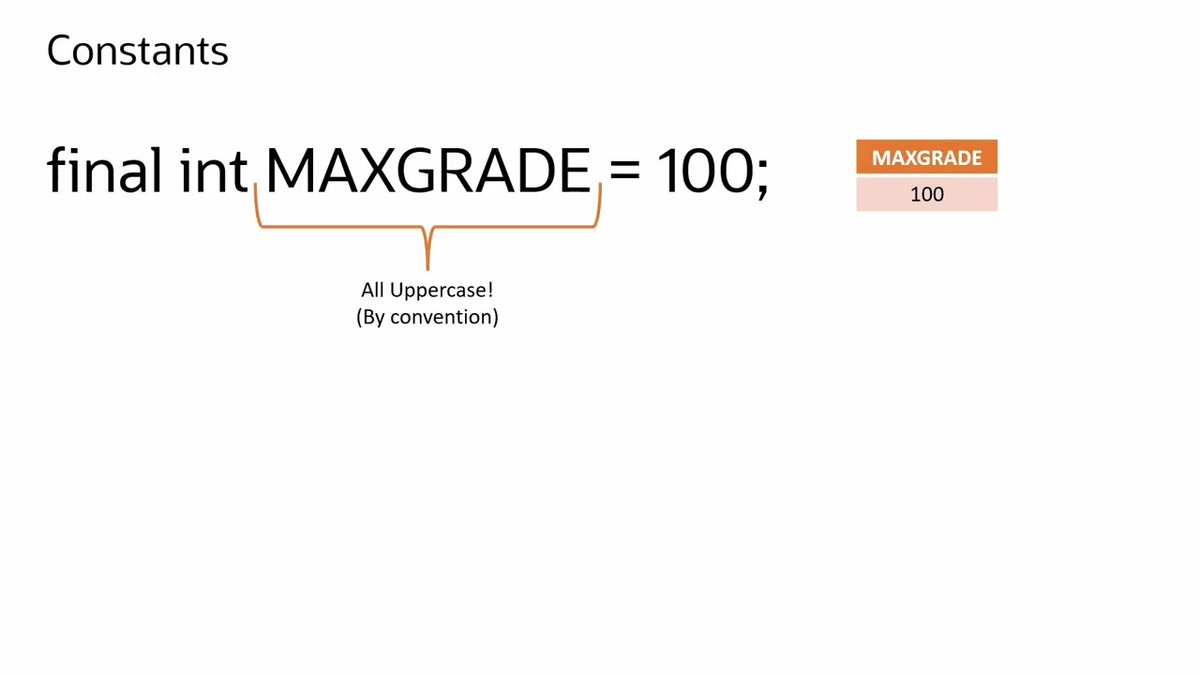
Learn what constants are in Java and how to use them effectively in your programs. We’ll focus on the final keyword, which allows you to create variables whose values cannot be changed once assigned.
This tutorial is perfect for beginners who want to build a strong foundation in Java and write cleaner, more reliable code. 🤓 https://t.co/cburpBrFDu
To help minimize operational risk, streamline license management, and continue its focus on innovation, Samsung Electronics is adopting our Java SE Universal Subscription. Learn more: https://t.co/GkHwTI1F1e
Then: A small team convinced the world was about to change
Now: 30 years strong of the most consequential programming language ever written
If you haven't already, check out the trailer for @CultRepo's Java documentary: https://t.co/5zGE0hELQt
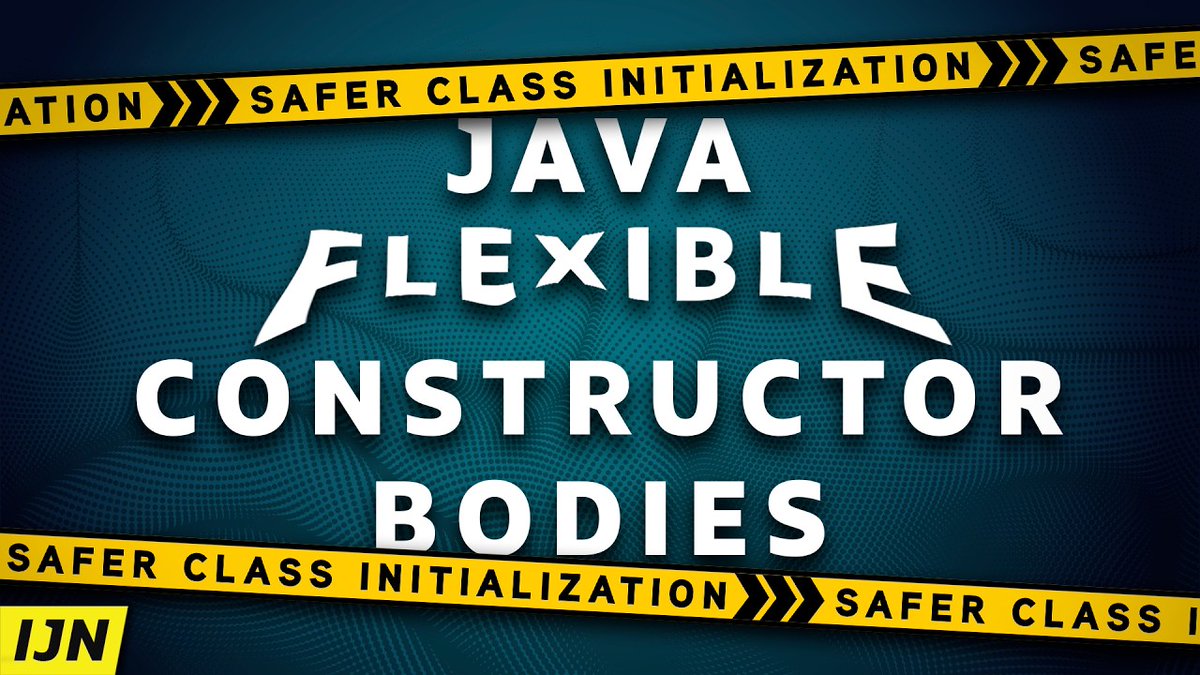
In this episode of the Inside Java Newscast, @billykorando reviews the issues with how constructors used to work before Java 25—either forcing developers to write convoluted code, or in some cases undermining the safety and integrity of child classes.
He'll then cover how Flexible Constructor Bodies address these issues and how Java developers can use them to write safer code and better designed applications. https://t.co/4IUhDBXxbP