EMS providers put their bodies through a lot. Are they training for the physical demands of the job?
Dr. Morey Kolber and Rick Binder discuss physical readiness, injury prevention, dynamic warmups, and practical ways EMS providers can protect their bodies:
https://t.co/MZwd8g9J0A
WEBINAR November 24, 12:00 pm ET: https://t.co/IzqL1vXy6V
Beyond Rapid Transport: Rethinking Obstetric Emergencies in EMS
- with Jenna M. B. White, MD and Christopher Zahn, MD, FACOG
The American College of Obstetricians & Gynecologists (ACOG) recently published EMS guidelines for the treatment of elevated blood pressure in pregnancy and the postpartum period, eclampsia, and postpartum hemorrhage. Drs. Jenna White, an EMS physician, and Christopher Zahn, an ob-gyn, join JEMS Development Editor Mike Brown to discuss these recommendations, how to implement them in practice, and the critical physiological changes that occur during pregnancy and the postpartum period.
Live webinar participants are eligible to earn 1 CME of F5 VILT CAPCE credit upon achieving a minimum passing score of 80%. Credit will only be given when you are logged into your personal device. On-demand viewers are not eligible for CAPCE credit.
For many students, the medical director is a distant figure—someone they may feel is unapproachable or intimidating. Many organizations have emphasized the importance of having an involved medical director in strengthening education and mentorship within EMS programs. At the Paramedic Sciences Program at Indianapolis EMS, monthly Audit and Review lectures given by the medical director were incorporated to help overcome that stigma and create stronger interactions between students and medical leadership.
These Audit and Review sessions provide valuable face time between students and the medical director. They allow the medical director to directly assess student knowledge, identify educational strengths and weaknesses, and recommend improvements to the program based on firsthand observation. Just as importantly, the sessions help students see the medical director not as a looming authority figure, but as someone approachable and invested in their success. Students become more comfortable asking questions, participating in discussions, and learning from mistakes without feeling judged.
By combining case review, critical thinking, and interactive learning, these sessions have become an effective way to strengthen both student education and the relationship between future paramedics and medical leadership.
Read more from "Medical Directors in the Classroom": https://t.co/ViToSNDoBs
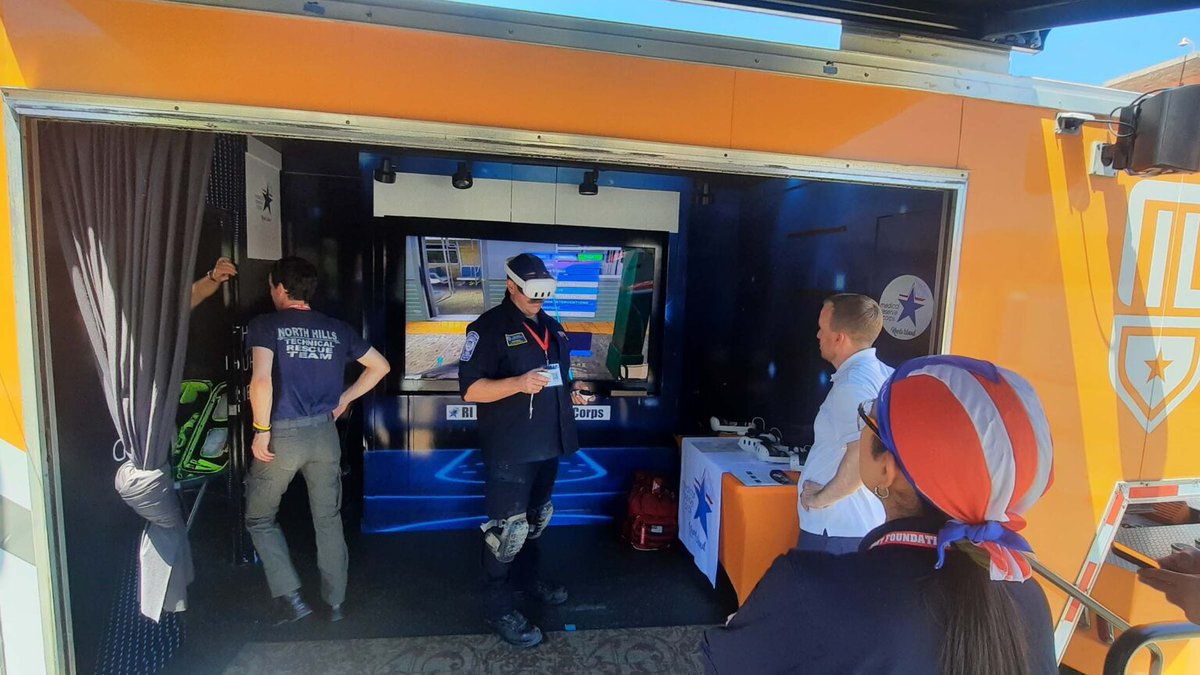
The origins of the modern Rhode Island Medical Reserve Corps, like so much in modern large scale emergency medical response, date back to a specific date and incident -the September 11 terrorist attack.
Soon after the attack, health care professionals from around the state spontaneously came forth to offer their services. Unfortunately, a common response was to either refuse their help outright or explain the need for delaying verification of credentials and a thorough background check. And often there was no mechanism in place to do this verification and background check at rapid speed in an emergency.
The value of having both a network and record of healthcare providers who were willing to volunteer and could be called upon in the event of a large-scale emergency or other widespread health crisis became clear.
This lesson was reinforced and the need declared official nationwide in President George W. Bush’s 2002 call for Americans to volunteer and help the nation. Soon a national network of medical reserve corps was created by the federal government. The Office of the Medical Reserve Corp (OMRC) is part of the Center for Preparedness (CP), Administration for Strategic Preparedness and Response (ASPR), with the U.S. Department of Health and Human Services (HHS).
Read more: https://t.co/UNcWV2Wzn1
Real ambulance design innovation starts with the voices of those on the front lines. Discover how paramedic feedback drives practical improvements in Crestline’s fleet for better care and comfort. Your insights matter. Read more: https://t.co/ayN124oyCn
Simulation Is Essential, But Is It Enough? What EMS Training Can and Cannot Reproduce: https://t.co/U1x8pe4fLy
Actual patients are inherently variable. One paramedic may encounter a straightforward airway, another may face contamination and difficult positioning, and a third may have no airway encounter at all. Those experiences are clinically valuable, but they do not provide a consistent basis for determining whether every clinician can meet the same expectations.
A standardized simulation can.
Each paramedic can receive the same patient presentation, equipment, physiologic changes, and operational constraints. Expected critical actions can be defined in advance and performance can be evaluated using consistent criteria.
“They don’t want me.”
That was the response when an EMS provider encouraged an unhoused individual with a severe wound to go to the hospital.
The encounter exposed a much bigger issue: a lack of trust in a healthcare system that some people don't believe is there for them.
In this article, Daniel "Wesley" Brookshear shares how an outreach program at American Medical Response in Knoxville, TN, is working to change that through consistent patient contact, wound care, community partnerships, and connections to ongoing healthcare: https://t.co/XcUTJIqMUC
His biggest fear wasn't that another call like it would happen. It was that he wouldn't be able to handle it.
Paramedic Robert B. Ravndal reflects on the lasting impact of a critical incident involving the drowning death of a child.
Watch the full episode on YouTube: https://t.co/DX1yrZJhWh
More than half of EMS personnel report severe mental or physical fatigue while working.
Fatigued EMS providers have 1.9 times greater odds of occupational injury.
- They have 2.2 times greater odds of medical errors or adverse events.
- They have 3.6 times greater odds of engaging in safety-compromising behaviors.
Fatigue in emergency medical services is not simply an individual vulnerability—it is a system-level safety hazard. The NASEMSO/NHTSA evidence-based guidelines identify five operational countermeasures that EMS agencies can implement to reduce fatigue-related risk: https://t.co/rmM3HybHTL
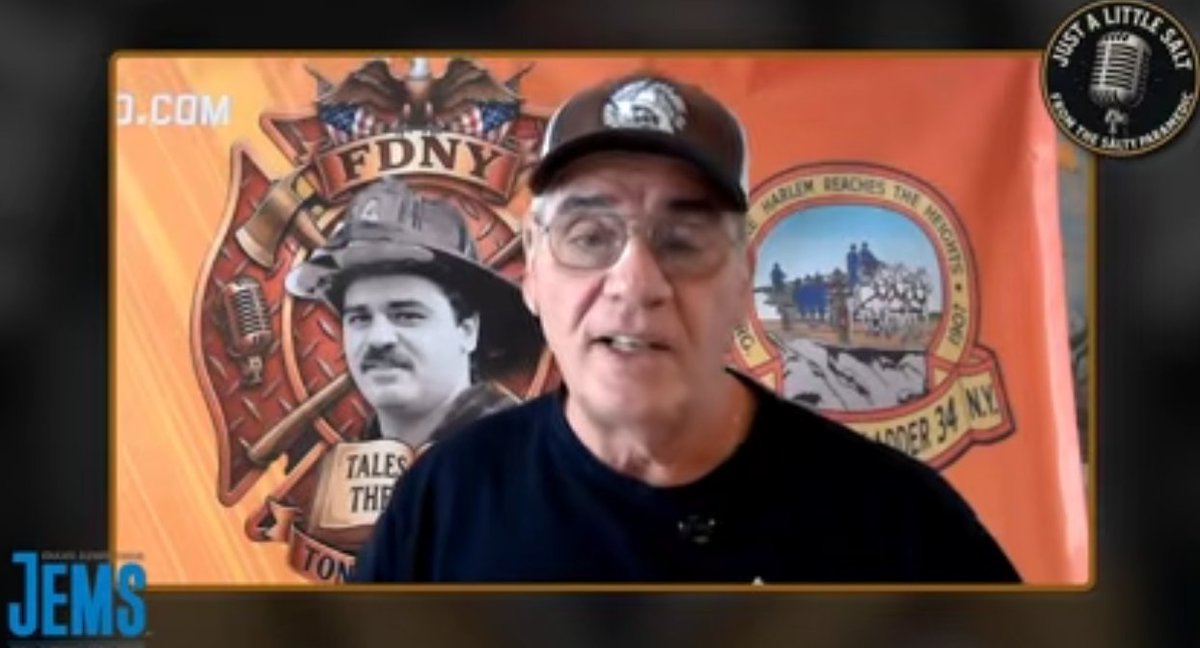
Step back in time to the gritty, high-stakes era of 1980s and 1990s New York City with retired FDNY firefighter Tony Bonfiglio. In this episode of Just A Little Salt, Bonfiglio shares his unexpected path from working in a meat factory to riding the rig in Washington Heights with Ladder 34.
He details the intense reality of running calls in a high-volume district, navigating firehouse pranks, and confronting the emotional toll of tragic losses, including the devastating events of September 11. Listeners get a raw look at the brotherhood, the dark humor, and the sheer resilience required to survive decades on the front lines: https://t.co/SKORSShN0H
Could AI help 911 dispatchers make better decisions?
Researchers are using machine learning to analyze emergency calls and predict critical patient care needs, from CPR and airway management to ALS vs. BLS resources.
What could this mean for EMS response and patient care?
Watch more from JEMS: https://t.co/pLjeGg6JQl
Immune Checkpoint Inhibitor Reactions in the Out-of-Hospital Setting: https://t.co/Ab28hT3Pmc
Immune-related adverse events should become an important consideration when treating patients receiving or who have been exposed to immune checkpoint inhibitors (especially in the last 1 year) who present with unexplained symptoms. Immune-related adverse events may occur weeks to months after initiation of therapy and, in some cases, even after treatment discontinuation.
Unlike traditional chemotherapy toxicities or acute allergic infusion reactions, immune-related adverse events result from dysregulated immune activation against native, healthy tissue. The affected system does not need to be related to the underlying cancer; symptoms may have been triggered by an unregulated response to an environmental exposure (lung, GI, skin).
Treatment guidelines recommend early consultation with the patient’s oncology team, symptom management, and glucocorticoids for patients with moderate to severe symptoms.
Given the increasing prevalence of ICI therapy and irAEs, EMS systems are encouraged to develop protocols to treat patients with life-threatening ICI presentations.
Consensus guidelines recommend prednisone 0.5-1 mg/km for moderate symptoms and 1-2 mg/km for severe symptoms. Dexamethasone 8-10 mg IV is a reasonable bridge to definitive care.
Some days are chaos. Some calls stick with you.
Still, you suit up, hit the streets, and do the work that nobody else can.
It’s not easy, and today we recognize the grit, skill, and heart you bring to every call.
Implementation of Prehospital ECMO at the New York City Marathon: https://t.co/wYkb7Yd0Gj
As participation in marathons and half-marathons continues to climb, rates of cardiac arrest among long distance male runners have increased this decade. Last fall, more than 59,000 runners participated in one of the world’s largest races: the annual TCS New York City Marathon.
While non-emergent issues, such musculoskeletal complaints and minor trauma predominate, a 2025 JAMA publication revealed that rates of sudden cardiac arrest (SCA) in male runners completing full or half-marathons increased significantly between 2020 to 2023 compared with prior decades.
Extracorporeal membrane oxygenation (ECMO) addresses this significant limitation of ACLS by providing maximal percutaneous circulatory and metabolic support.
Could CPR training be too complicated?
Cardiac arrest researcher Tommaso Scquizzato, MD, says training should prioritize recognition and action over unnecessary complexity.
When someone collapses, hesitation matters.
Hear more on the podcast: https://t.co/7foEoGCURa
EMS personnel are likely to encounter organ transplant recipients more frequently in the future because of advancements in medical science. In the prehospital environment, distinguishing bacterial, viral, and/or fungal infections from organ rejection in a transplant recipient is extremely difficult because these conditions often present with overlapping and nonspecific symptoms. Understanding the unique presentations and treatment needs of this growing patient population can help guide appropriate prehospital care: https://t.co/YKrPODfmoK
The Effect of Peak Demand Units on Urban Emergency Medical Services Operations: https://t.co/VGtnfNzqLY
In 2024, over 14,000 emergency medical services (EMS) agencies across the United States responded to 60.3 million incidents, including 911 responses, interfacility and critical care transports, and standby events. Of this 60.3 million, at least 39.5 million incidents were located in urban areas, which was roughly 65% of EMS incident volume. For EMS agencies located in urban counties or townships, this level of incident volume means that unit efficiency is paramount to providing life-saving interventions as soon as possible and maintaining community satisfaction.
Balancing the need for unit efficiency and the incidence of employee fatigue can be a difficult, but crucial, task for urban EMS agencies. This narrative review discusses one option for urban EMS agencies seeking to improve efficiency and reduce employee fatigue: the peak demand unit (PDU). PDUs typically operate during a high incident volume portion of the day or week, but they may also operate in a geographical area that has a high incident volume compared to the rest of the agency’s territory. PDUs include transport-capable ambulances and non-transport EMS units.
In the United States, 4.5 million people live in a service desert, which means that they are 25 minutes or more away from a station. And, that statistic does not consider how far they are from hospitals or primary care providers. Service deserts and rural areas make it challenging for residents to access healthcare, both in emergency and non-emergency situations.
Community paramedicine will not become a permanent healthcare fixture by accident. It will only happen if healthcare leaders, EMS agencies, and policymakers actively treat it like the essential service it already is. This shift will not happen overnight, but with a few thoughtful steps, we can champion community paramedicine and experience its benefits throughout the country: https://t.co/yWbxdolFfr
When a patient shows signs of a medical emergency, EMS providers have a responsibility to advocate for the care they need.
In the case of Lester Isbill, an elderly retired preacher in Tennessee, missed clinical red flags and failures in patient advocacy raise difficult questions about EMS decision making when medical care and law enforcement involvement collide.
Paramedics Mike Brown and Adam LaChappelle discuss what providers can learn from this case, including recognizing altered mental status, assessing patient capacity, and knowing when to push for transport.
Watch the full episode on YouTube: https://t.co/LChZv1z3JZ