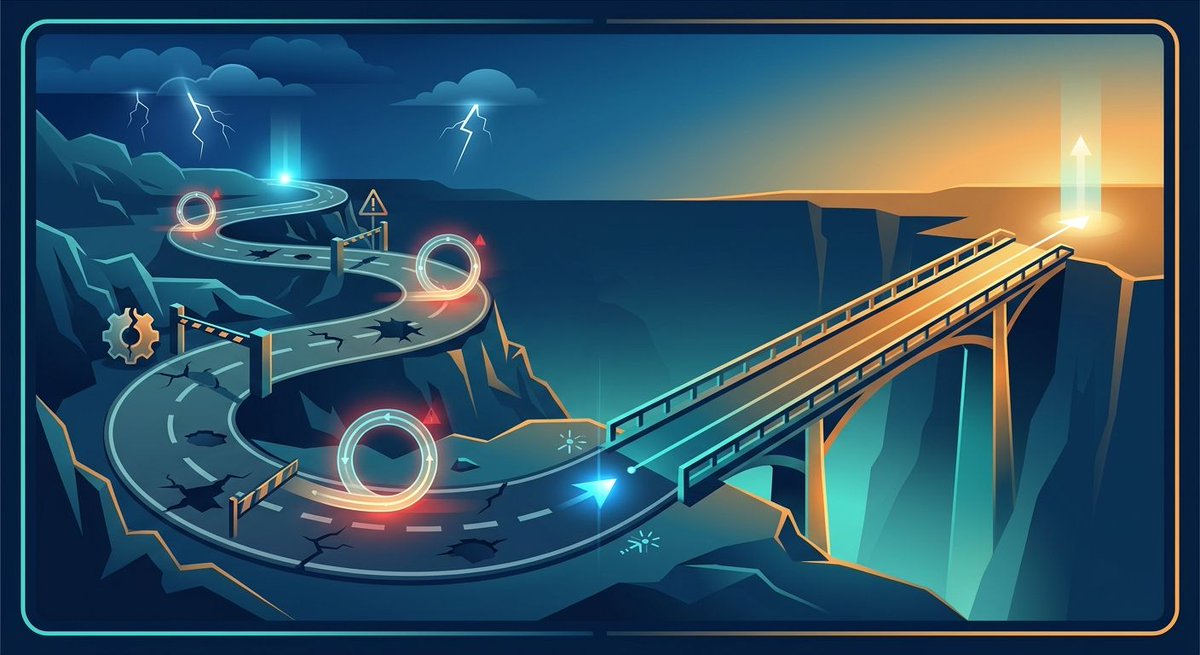
Java on AWS, C# on Azure: locality is a deployment choice.
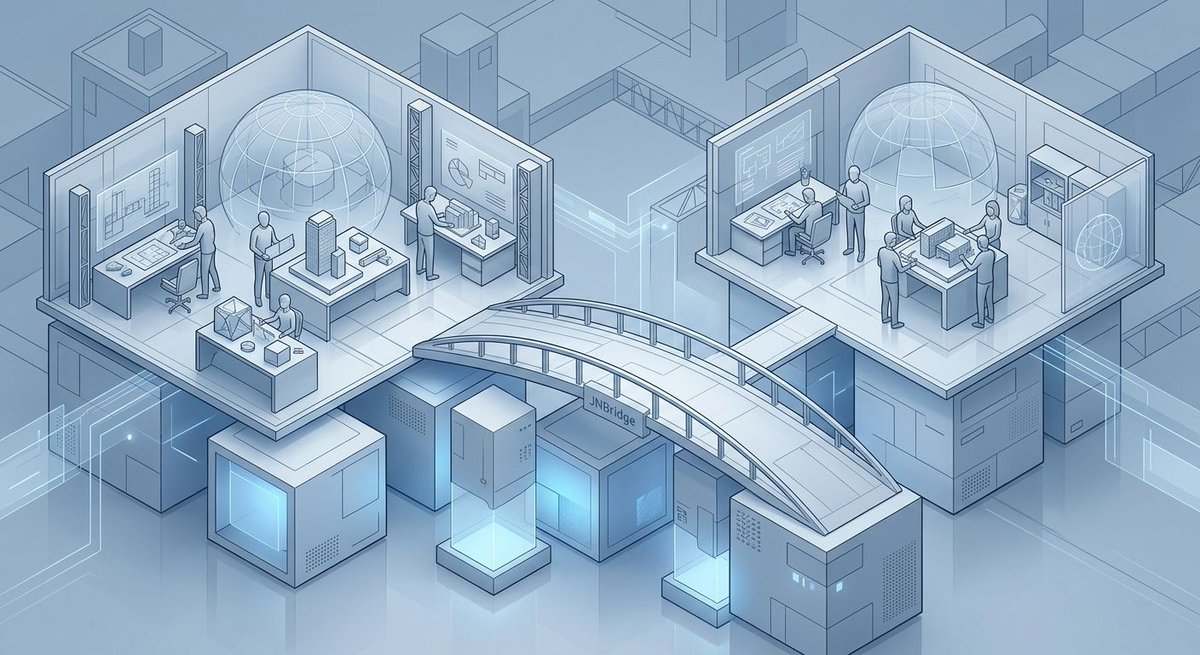
A bridge does not erase a network between hosts.
Evaluate co-location before choosing in-process interop; keep remote calls explicit when you cannot.
Your Java expert should review business behavior, not translate it into C#.
JNBridgePro lets the .NET caller use the Java capability while expertise stays with its owner.
Assign a boundary owner before adding code.
AI-generated bridge config still needs review.
Use the JNBridgePro v12.1 demo folder, README + config files as the baseline.
Have Claude Code explain every proposed change before you run the Java/.NET example.
A .NET upgrade is not a Java migration.
JNBridgePro v12.1 supports .NET 8/9/10, so start with the caller you actually ship.
Pin both runtimes in CI and test the bridge before changing production.
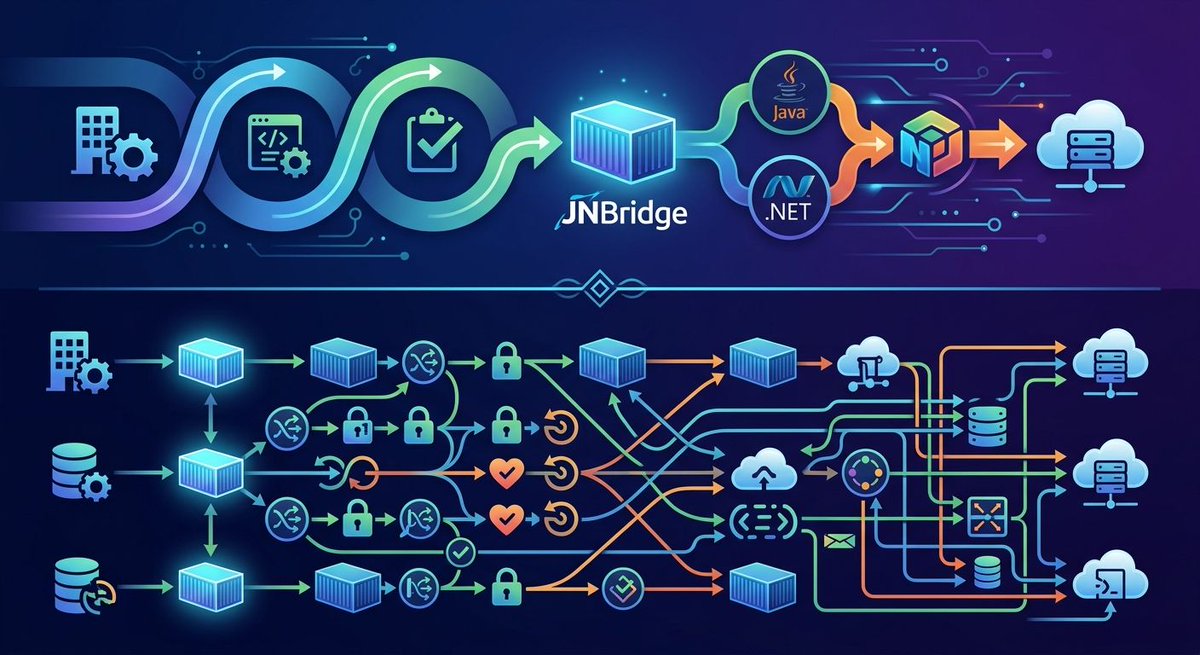
Your CI pipeline should not deploy an API just to call a local Java library.
That extra service adds an image, ingress rules, secrets, health checks, and rollback logic.
Bridge in-process and ship one application boundary.
Configuration drift is where AI-assisted setup breaks.
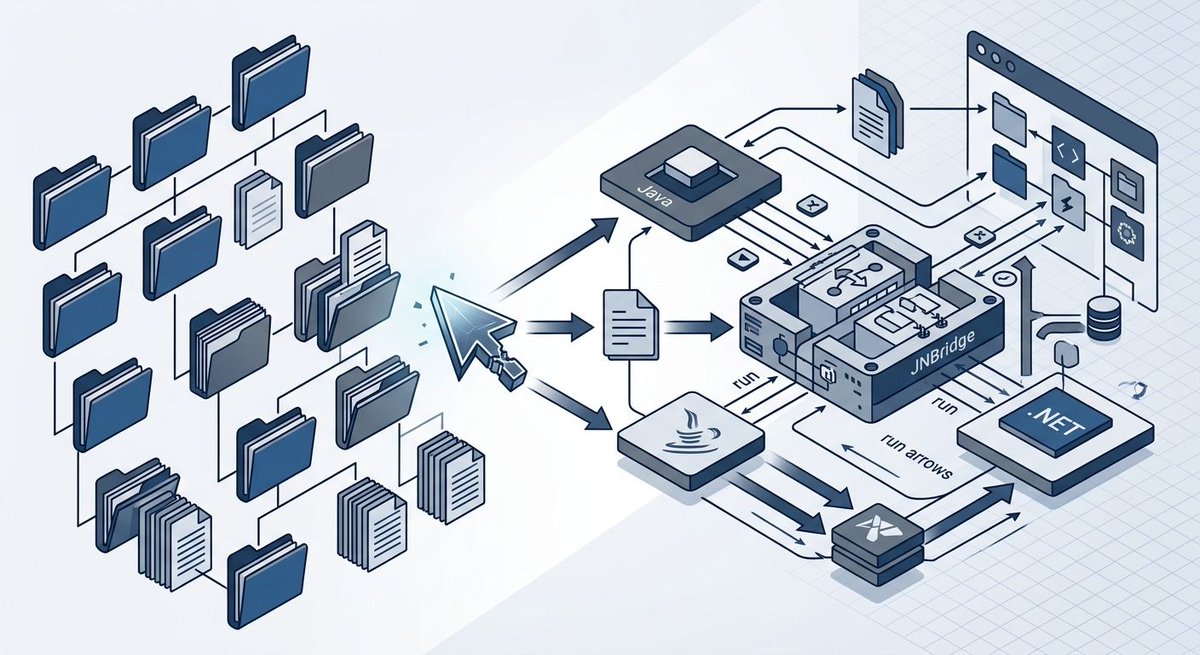
A README without matching config files is stale context. The JNBridgePro v12.1 demo folder keeps instructions, configuration, and runnable code together.
Point your AI there.
JDK 25 on one side. .NET 10 on the other.
The integration layer should not force both teams onto the same upgrade calendar. JNBridgePro v12.1 supports current Java and .NET runtimes.
Decouple the schedule.
A rewrite replaces working code with a new test matrix.
Behavior parity, cutover, rollback, and the long bug tail become your delivery problem.
If the Java capability still works, bridge it first. Modernize on your timeline.
AI cannot infer a Java/.NET bridge from tribal knowledge.
Give it a runnable demo, README, and config files instead. The v12.1 demo folder gives Claude Code concrete context for setup.
Start from evidence, not guesses.
Do not turn language preference into a rewrite mandate.
Java teams can keep Java. .NET teams can keep .NET. Bridge the boundary, ship the business change, and revisit replacement with evidence.
https://t.co/cH9OuQLIMa
A local Java call should not inherit cross-cloud latency.
Service extraction adds serialization, network variance, retries, and failure modes. Keep the boundary local when distribution buys nothing.
https://t.co/cH9OuQLIMa
A runnable example beats a page of architecture prose.
The v12.1 demo folder shows the bridge, configuration, and call path together—so assistants can reason from working code.
https://t.co/cH9OuQLIMa
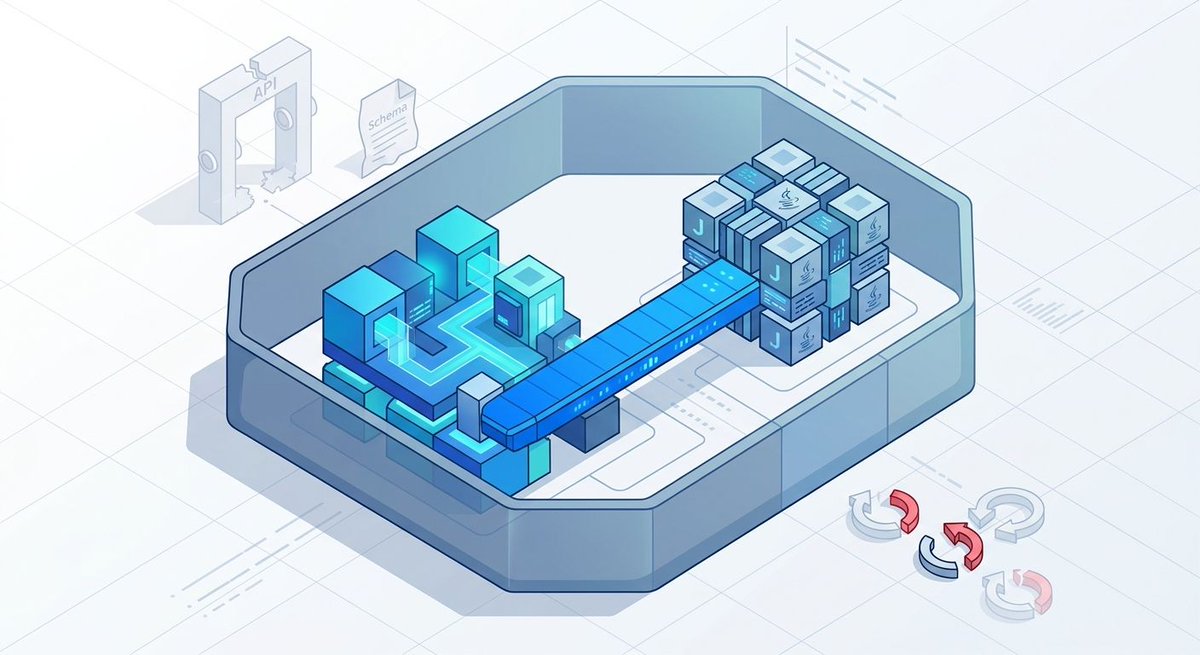
A REST wrapper creates a second delivery system.
Now you own another build, deployment, health check, trace, retry policy, and on-call path. In-process Java/.NET calls keep CI/CD smaller.
https://t.co/cH9OuQLIMa
Prompting harder does not fix missing integration context.
Give the coding assistant the actual README, config files, and runnable bridge examples. That is the practical AI advantage in v12.1.
https://t.co/cH9OuQLIMa
Siemens TIA Portal’s Openness API is .NET-based. What if the engineering layer is Java?
We built it: Java created a TIA project, added an S7-1516 controller and PLC tags, saved, then read the result back.
https://t.co/t0Ah1jF1ub
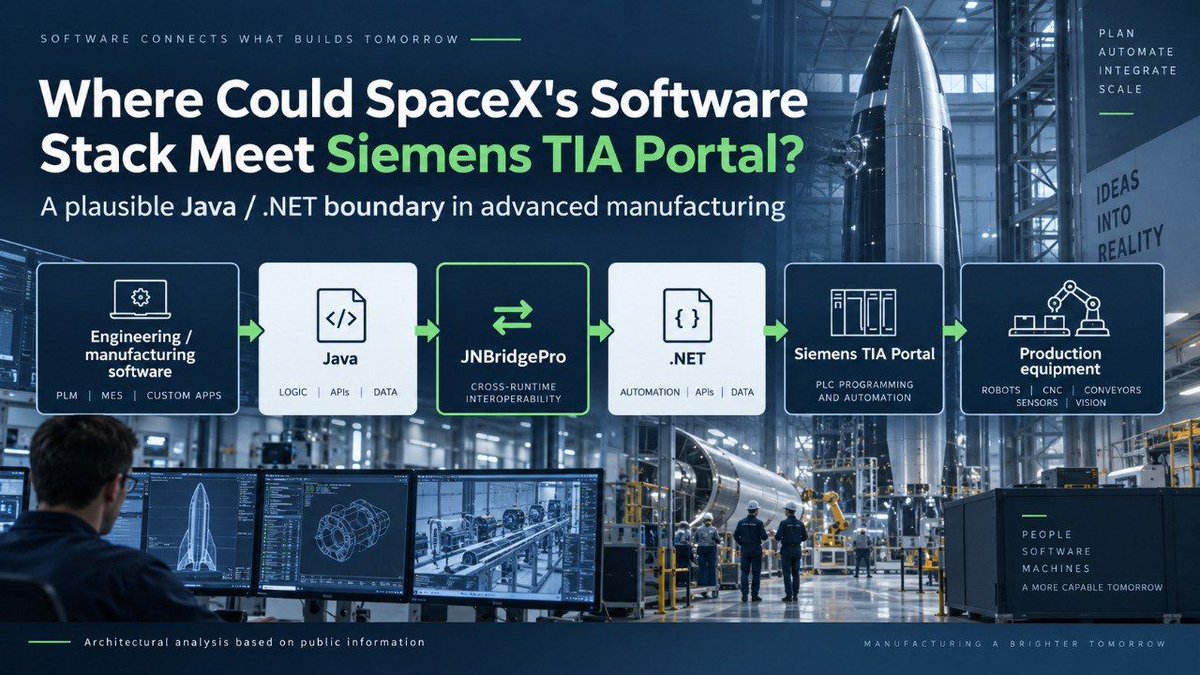
SpaceX discusses software/manufacturing integration and Siemens TIA Portal.
Where could Java meet TIA’s .NET Openness API?
A public-information hypothesis—not a claim about SpaceX’s actual stack:
https://t.co/0D6w8Gmegp
.NET 10 is already here. Your Java/.NET boundary should not freeze the runtime plan.
JNBridgePro v12.1 supports .NET 10 today, alongside current Java and Jakarta EE environments.
https://t.co/cH9OuQLIMa
A rewrite needs more than feature parity.
It needs parallel validation, cutover, rollback, and a plan for the bug tail. If the Java code works, bridge it first and retire it on your timeline.
https://t.co/cH9OuQLIMa