@MorganHaigh Absolutely. To make such a cynical and casual link between Die Brücke and National Socialism, when we consider how deeply Kirchner suffered in his life because of the Nazis, is not just stupid, but sinister.
It is illiterate gibberish on the part of the Tate — and, as you say, an outrage that one of the greatest British artworks of the 20th century is deliberately withheld from public view. I remember being in the Tate Modern last year and reading the description of Kirchner’s “Bathers at Moritzburg”, which cynically suggested a link between the painting and Nazi ideals of racial purity. Yet Kirchner’s work was in fact banned by the Nazis for being degenerate! It is a sinister way for a national museum to twist art history in the way — and I’m pleased to see you and others pushing back against this stuff.
I understand. We have ascertained that you disagree with Thatcher’s position on this (her belief in “sound money”), that you disagree with the Howe budgets of the early 80s (which were broadly seen as pro-individual and liberalising), and that you might disagree also with Hayek. In other words, you disagree with an established tradition of mainstream free market thinking in favour of a sort of libertarian anarchism more in line with the tradition of Rand, Friedman and Rees Mogg — which believes that the “sovereign individual” should be free to do what he wants, as long as it does not impinge on the basic rights of property and the physical safety of others, and that there is a moral dimension to this freedom.
That all makes sense. But what does not make sense to me is that when you argued against FOBT restrictions ten years ago, you did so by arguing that it would lead to consumers migrating online, where you said operators “remain offshore and untaxed”. So you saw that state regulation has a role to play in influencing consumer behaviour, and higher taxation would be a desired outcome of that state intervention. There was a degree of Thatcherite paternalism to your position back then. Does this mean your view has now changed, and that back then you were “wrong”? In my view that would be a brittle and uncharitable way of interpreting your position. Or would you instead agree that these things are complex and that it is inevitable and natural that views will evolve over time?
You also said that “taxpayers will have to fork out £400 million to fill the gap in the treasury’s balance sheet” — but this gap has now been more than filled thanks to the increase in tax on the very online products that you previously said were undertaxed. Does this mean that you agree with last year’s increase to RGD?
The problem with social media is that it creates caricatures of us all. It might surprise you that I actually have a good deal of respect for you, despite how rude you’ve sometimes been in the past. I think your work rate is phenomenal, you are clearly deeply committed to your economic worldview and I know you take the big ideas seriously. When I wrote my essay on Hayek a few years ago we had a good exchange. I have not engaged in the usual cheap shots people make about “who funds the IEA”. I try to listen to criticism — hence my evolving view of affordability.
But what I will never understand Chris is why you would choose slots as something to defend in the way you do. It makes no sense to me. As I’ve said before, even Thatcher hated that stuff — and Howe increased tax on it. If anything, my position is consistent with British free market thinking of the post-War era.
I understand it must irritate you that someone who you say is “wrong” all the time has had a role in shaping the regulatory and fiscal trajectory of a debate that you yourself want to control.
As for theology, you will surely know that markets and morals cannot be divorced from each other. This goes right back to Adam Smith. Once upon a time the IEA, which used to be an intellectual institution hosting important thinkers and interesting debates, took the question of markets and morals — and even religion — seriously. For example, the 1998 Hayek lecture by Jonathan Sacks was on this topic of religion and economics. You should read it. He talks a bit about Weber and capitalism, which I find interesting because I wrote my own PhD on that very subject.
Let’s keep the debate elevated, Chris. It might serve you better than the mudslinging of the past few years has.
I listen to what you and others are saying. I have then spoken to my contacts and colleagues in racing and they tell me that they simply do not agree with this analysis — and that even if part of it were true, it would not be a desirable or sustainable business model either for bookmakers or for racing. They want change, a new way of doing things. I trust their judgement in this matter and I support them.
This is very good. The Digital Services Tax should be properly enforced and significantly raised — in line with the precedent that Treasury set last year when it increased Remote Gaming Duty — and the revenue should be redistributed to support relief for local pubs and high street shops.
🚨 NEW: Andy Burnham has pledged to scrap business rates for shops, cafes and hairdressers - and reduce them by 20% for pubs
It would be funded by increasing taxes on online tech giants and their British warehouses
[@Telegraph]
The inconsistency of neoliberal logic: Bush and Blair’s war on Iraq in 2003 was justified by (falsely) claiming that Saddam Hussein was harbouring Weapons of Mass Destruction. Yet few would take seriously the idea of military action against Milei’s deregulatory Argentina, even though several AI pioneers (Hinton, Bengio, Amodei) have repeatedly stated that unchecked AI could lead to “civilisation-level” damage
Peter Thiel said Pope Leo was the antichrist for wanting to regulate A.I. He bought a mansion in Buenos Aires and met Argentine president Javier Milei. Now Milei in FT pitches Argentina as the home of unregulated A.I., creating a new legal framework, the “nonhuman corporation”.
Pretty much everyone agrees that British politics is rotten. And yet in Westminster, a revolving door continues to exist whereby regulators, legislators, businesses and journalists exchange jobs between each other in a self-enriching merry-go-round which has become accepted as normal.
Everyone knows it is happening yet few people speak out against it because if they do, they risk being ostracised from the cosy little club and find that their job options suddenly become limited. And who would be brave enough to do that, when they have mouths to feed?
And so it goes on. A ex-MP joins a company board, a journalist becomes a lobbyist, a lobbyist becomes a Lord. Gifts and favours exchanged. The impact on the parliamentary process is corrosive. Trust in politics continues to fall. And yet the revolving door carries on.
Johnson’s three-TV set up in the Oval Office, and right, in his room at Bethesda Naval Hospital on December 18th 1968 (he’d been admitted for an upper respiratory infection).
At the White House, LBJ’s TVs were kept on all day so that he didn’t have to wait for them to warm up.
JUST IN: Vatican releases Pope Leo XIV’s first encyclical, Magnifica Humanitas, on safeguarding the human person in the time of AI. https://t.co/6Zn5OMJvdn
On Transhumanism and Posthumanism, Pope Leo XIV writes:
“If the human being is treated as something to be perfected or surpassed, it becomes easier to accept that some lives are less useful, less desirable or less worthy. In the name of progress, ‘necessary sacrifices’ may begin to be justified, placing the burden on the most vulnerable in pursuit of a supposed optimization of the species. … For this reason, a clear distinction must be made. It is one thing to integrate technology within a human-centered, relational vision; it is quite another to be guided by an outlook that devalues human limits and promises a purely technical form of ‘salvation.’”
Read the encyclical here: https://t.co/6Zn5OMJvdn
Finally got round to seeing Project Hail Mary. I enjoyed it — especially this gunboat karaoke scene with Sandra Hüller
“Do you believe in God?”
— “It beats the alternative”
“We spotted nine Polymarket accounts, all connected, who made, collectively,$2.4 million betting almost exclusively on U.S. military operations,” says Nicolas Vaiman, co-founder of the small data analytics firm Bubblemaps.
“And now here's the crazy part: 98% win rate.” https://t.co/T79aYM48ZI
I love DI’s writing but there’s no battle of ideas. People just babbling words in Labourese. And ignoring political and economic realities. There’s no thinking from first principles on philosophy (and therefore none on political economy). Saying “growth” a lot isn’t an agenda.
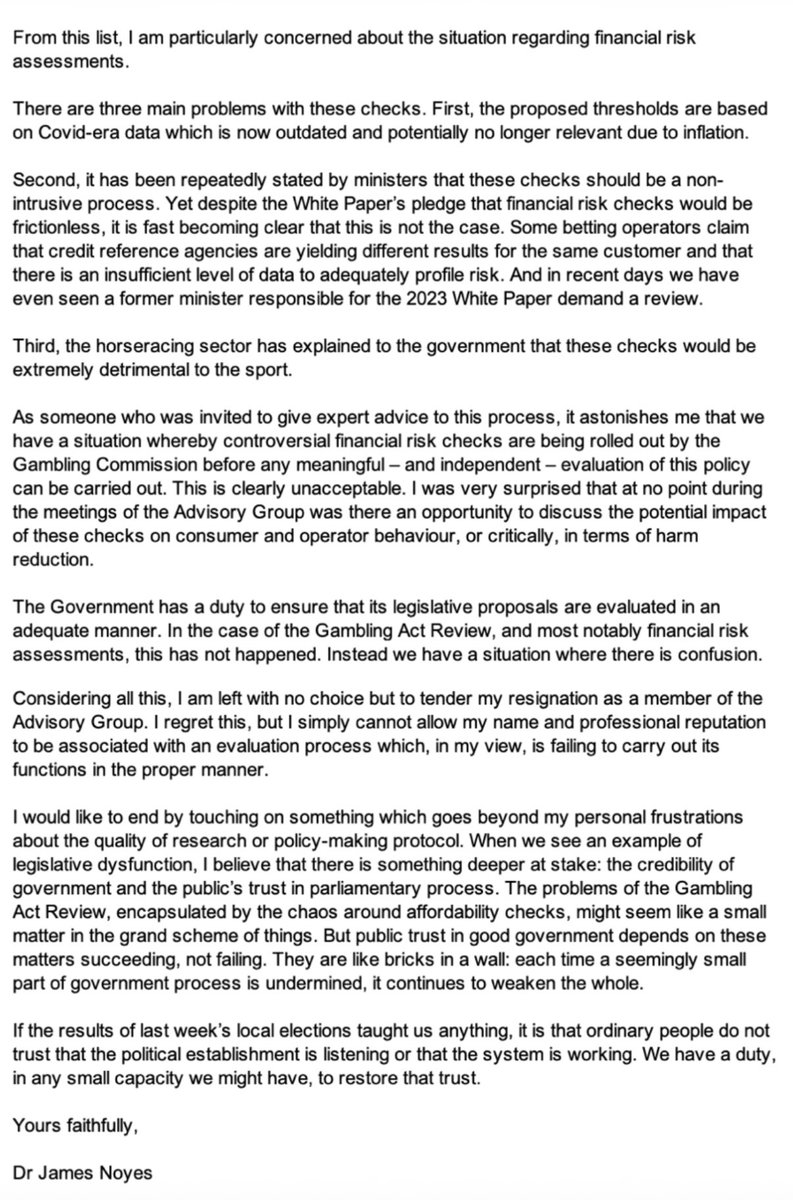
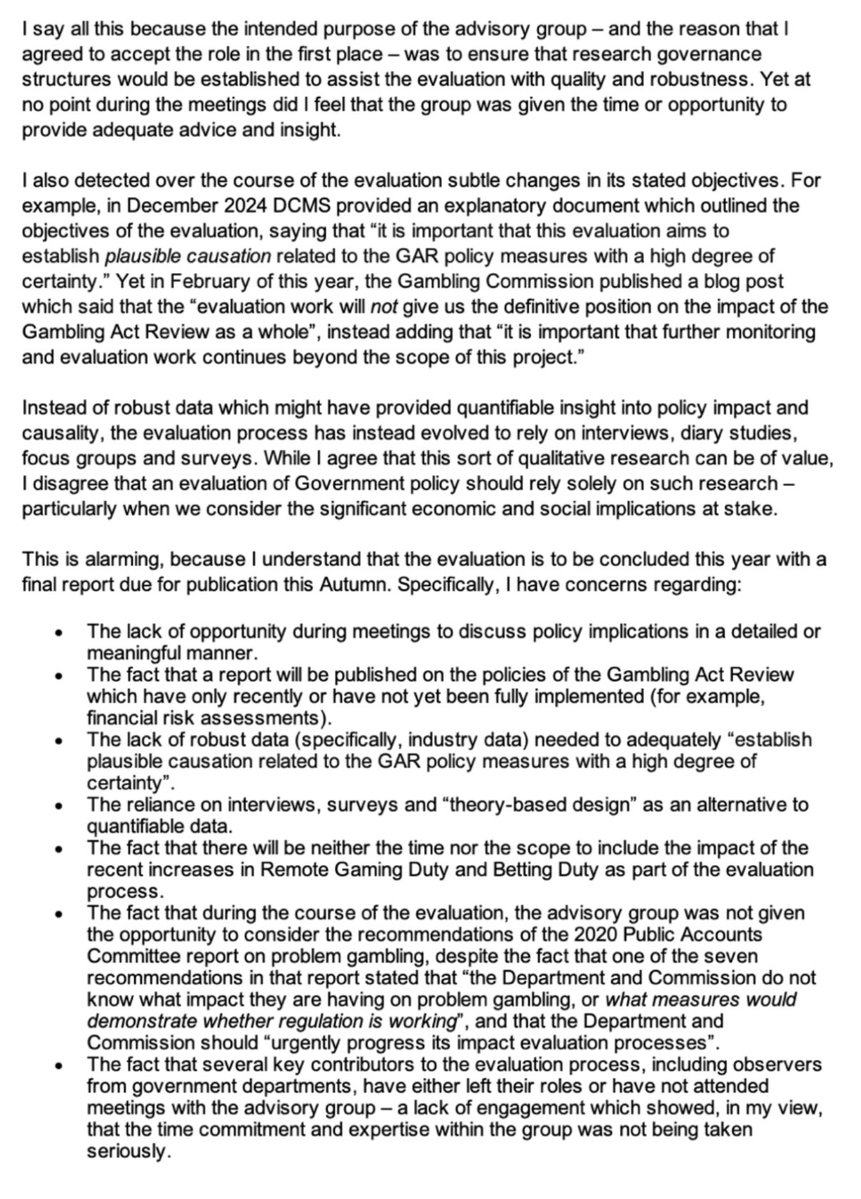
Last week I resigned from an evaluation panel looking at the DCMS Gambling Act Review. Selected parts of my resignation note were leaked to the Sun newspaper and have since been covered by various news outlets.
Because of this, it no longer makes sense to keep the resignation note private — so I am making it available in full.