Get instant access to a list of reliable providers offering free AI API keys today. This video guides you through the best platforms to build your projects without upfront costs, featuring resources from Google AI Studio, NVIDIA, and Cloudflare Workers AI. Whether you need free AI models for development or testing, this repository simplifies your search.
Comment "API" below if you want the link to the full repository. #AI #ClaudeCode #Shorts
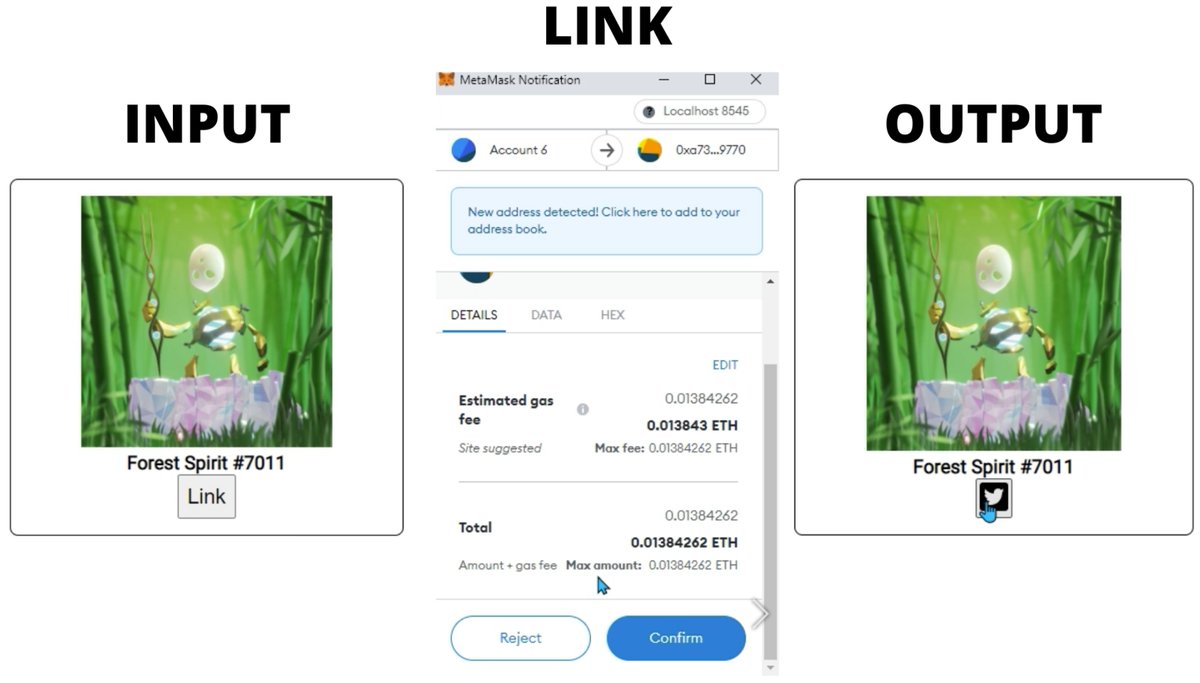
In October 2022 I published a paper on how to prove who's real online. ChatGPT launched five weeks later.
I used NFTs. I know how that sounds now.
The app was called Connect2NFT. You'd link your Twitter account to an NFT you owned, so anyone looking at it could see the actual person behind it instead of a wallet address that could belong to anyone. That was the whole point. Take the NFT part out and what I was really poking at was whether you could prove a real human made a thing.
I hacked it together. There was no vibe coding back then, no Claude Code, no Cursor, nothing writing my smart contracts for me, so I spent a lot of nights reading ERC721 specs I only half understood and breaking things I'd just got working.
At the time nobody cared. Who's behind a piece of content just wasn't a question people were asking.
Then AI happened.
And now it's the question. Is this real, did a person make this, who am I actually talking to? There are whole standards bodies working on it now. Content credentials, provenance, proof-of-humanity.
I bet on the wrong tool. NFTs weren't the answer and I'm not going to sit here and tell you they're coming back. I also didn't predict AI. I'd love to say I saw it coming but I didn't.
I think I was looking at the right problem with the wrong thing strapped to it.
That's the bit I keep coming back to. The tool dates fast. The problem doesn't.
NFTs were done in about 18 months. "How do we know what's real" is bigger now than it's ever been.
So what actually earns trust in an internet this full of generated content? I don't have a good answer. Curious if anyone building in this space does.
Paper's here if you're curious - https://t.co/xYbXkYCWr8
Most podcasts fail to scale because they rely on full-length uploads, but @tbpn proved that slicing long streams into bite-sized clips is the fastest way to build massive reach. This video breaks down the specific distribution tactics that caught the attention of AI giants and why traditional media models are losing out to micro-content.
Follow for more dives into how modern media companies win.
#AI #TBPN #ContentStrategy #Shorts
Floating AI data centers are raising $140M to fix the energy crisis.
This startup @_panthalassa is moving server farms onto the open ocean, leveraging wave power and natural cooling to bypass traditional grid constraints. We analyze the feasibility of this wireless transmission model for future computing needs.
Follow for more updates on the future of sustainable tech infrastructure.
Comment “Demo” |
Claude Opus 5 just launched - here’s what people one-shot built with it in the first 48 hours, plus the skepticism worth knowing about before you believe the hype.
Comment “Demo” for the full list.
#ClaudeOpus5#AI#Shorts
Everyone rates AI tools by hype. I’ve built with them for 100K+ users.
Here’s what the output actually looks like on 9 of them:
✓ Claude Code, Cursor — real work
✓ Nano Banana, NotebookLM — underrated
✗ Midjourney, Sora — passed their moment
✗ Lovable — great demo. terrible production
Hyperagent runs my whole channel. Nobody’s talking about it.
👉 Comment “STACK” and I’ll DM you all 25 tools I actually use in 2026.
Everyone rates AI tools by hype. I’ve built with them for 100K+ users.
Here’s what the output actually looks like on 9 of them:
✓ Claude Code, Cursor — real work
✓ Nano Banana, NotebookLM — underrated
✗ Midjourney, Sora — passed their moment
✗ Lovable — great demo. terrible production
Hyperagent runs my whole channel. Nobody’s talking about it.
👉 Comment “STACK” and I’ll DM you all 25 tools I actually use in 2026.
Everyone rates AI tools by hype. I’ve built with them for 100K+ users.
Here’s what the output actually looks like on 9 of them:
✓ Claude Code, Cursor — real work
✓ Nano Banana, NotebookLM — underrated
✗ Midjourney, Sora — passed their moment
✗ Lovable — great demo. terrible production
Hyperagent runs my whole channel. Nobody’s talking about it.
👉 Comment “STACK” and I’ll DM you all 25 tools I actually use in 2026.
I open this dashboard every morning. My Apple Watch tracks my sleep, HRV, resting heart rate and workouts overnight, and Claude Code turns all of it into one thing: what I should actually do today. If I slept badly, it tells me to back off and rebuilds the plan around it.
I built the whole thing in about an hour, and you don't need to be a developer to copy it. This video walks through every layer and every prompt - all free in the links below.
I filmed this on 5.5 hours of sleep (I got up at 1:45am to watch the Boks beat Wales), so the dashboard came back at 17% readiness and told me to take it easy. Real data, real bad day - which is kind of the whole point.
HOW IT WORKS
• Layer 1 - Health Auto Export sends your Apple Watch data to an iCloud folder automatically every morning (free)
• Layer 2 - Claude Code reads it, applies your rules from a plain-English CLAUDE.md file, and generates the dashboard
• Your workouts - pull them from Hevy (or just paste them in) so the plan knows what you actually train
https://t.co/ePadeAfHyC
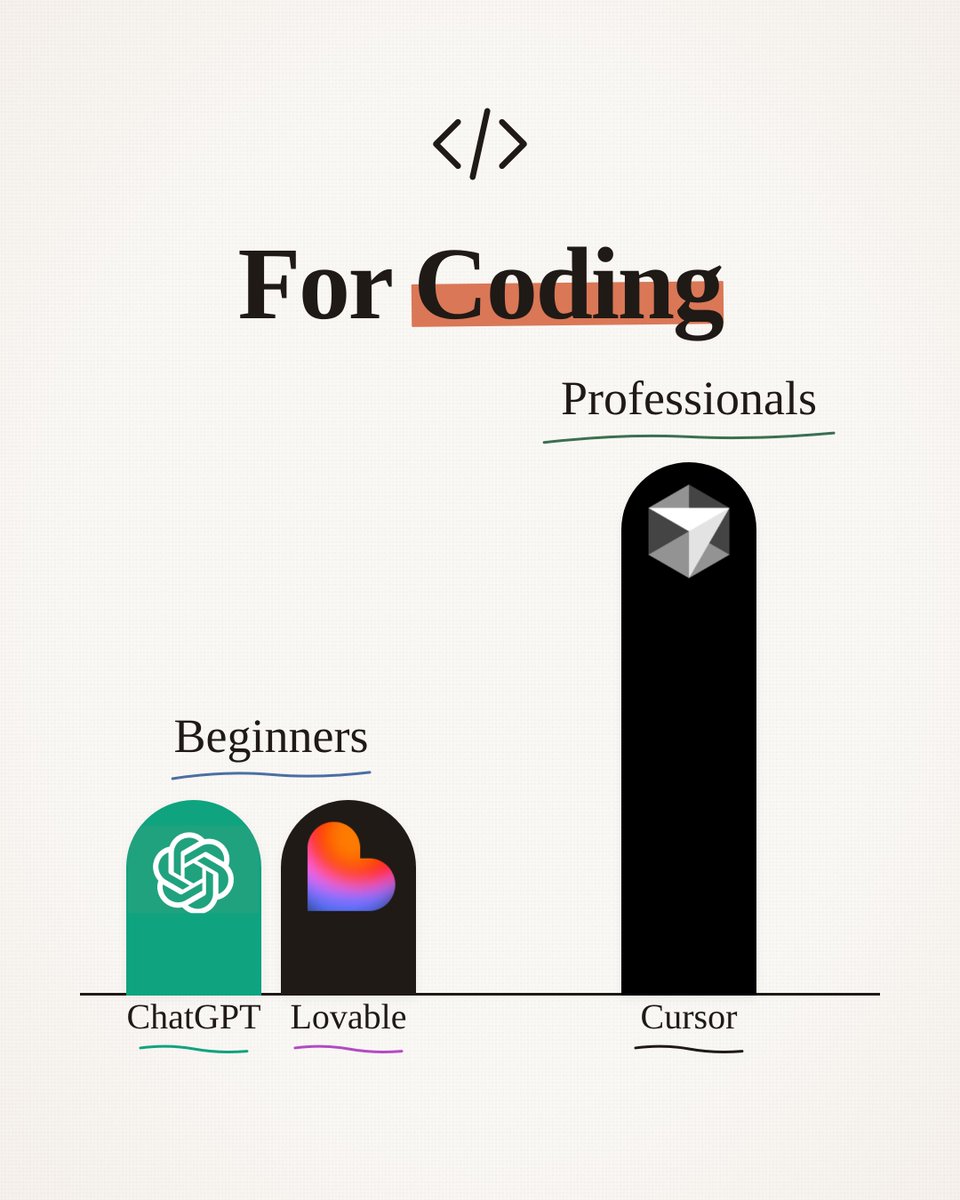
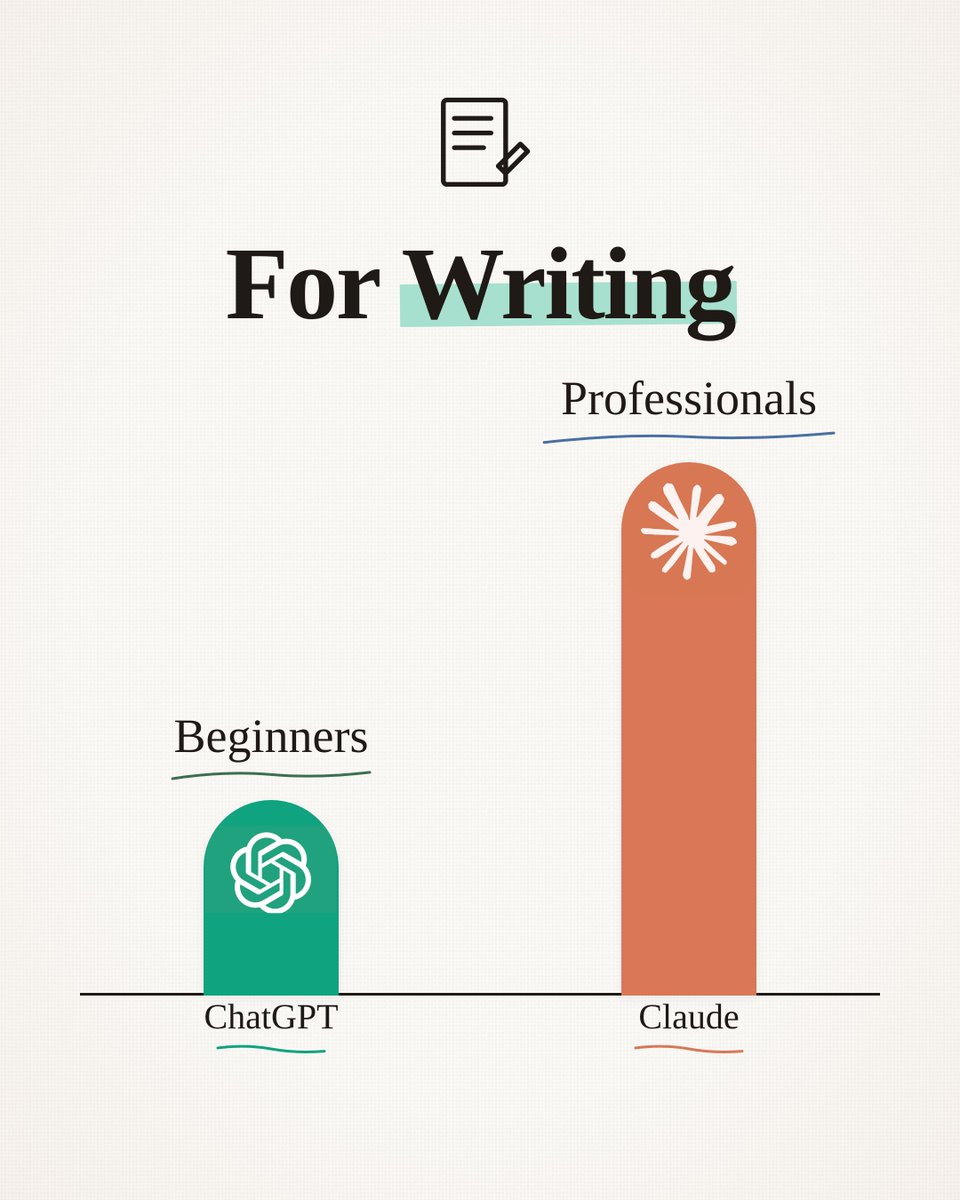
Everyone asks me "what AI tool should I use for X?"
After building AI products for 100K+ users, here's my honest 6-category answer:
– Writing → @claudeai (not @ChatGPTapp)
– Coding → @cursor_ai (@ChatGPTapp + @Lovable are fine to start)
– Research → @perplexity_ai
– Images → Nano Banana (@midjourney had its moment)
– Video → @higgsfield if you want AI-generative
– Agents → @hyperagentapp (it's the one that runs my channel)
Not every tool needs to be one tool.
How to become an AI native company:
1. Create a single MCP/API gateway. Let your team connect to your systems.
2. Create a company brain
- Connect your static context ("Who are we", "guidelines", "product docs" )
- Connect your hot context (meeting notes, emails, slack, active projects)
3. Create a company harness. Instruct AI on how to interact with your company brain and systems.
4. Onboard your team into the harness. Create a self-improving loop. Let it learn from their work.
5. Create a model-routing layer. Evaluate and distribute work to the right model, at the right time. Remove vendor risk.
6. Build autonomous agents on top of your company harness.
For the small teams with big plans: Claude Team plans now start at just 2 seats instead of 5.
Get shared projects, admin controls, centralized billing, SSO, and enterprise search across all your team's tools, all under one plan.
The 30-page PRD is dead.
The spec is now a conversation you have with the model.
But we didn't delete the hard part... we moved it downstream.
When anyone can generate the build, the scarce skill becomes knowing what "good" looks like.
Verification is the new bottleneck, not creation.
As engineering, product, design, DS, etc. melt into a new kind of role, I was reflecting on what roles might look like in the future. For example, when I look at the Claude Code team I see what I think is five archetypes:
1. Prototyper: comes up with brand new ideas; churns out many ideas, most of which don't ship
2. Builder: quickly turns a prototype/idea into production-grade product/infra
3. Sweeper: cleans up the UI, simplifies the code and system, unships, optimizes performance
4. Grower: takes a product that has been built and iterates on it to improve Product-Market Fit
5. Maintainer: owns a mature system to make it secure, reliable, fast, and efficient as it scales
Many people span across 2 roles, and sometimes 3 roles. I also notice that these roles are not really tied to job function -- eg. across Anthropic, some designers match category 1, some 2, some 3; same for engineers, PM, DS.
A healthy team needs a mix of these, depending on the product:
- A product that is new and pre-PMF needs people that are strong at 1+2+3
- A product that is growing and has found PMF needs 2+3+4 and some 5
- A product that has strong PMF needs 3+4+5 and some 2
Maybe product roles of the future will look more like this, and less like the domain-specific roles of today?
It’s Sunday, you’ve got 4 minutes and a coffee. Perfect.
This week: China unveiled the biggest open AI model on the planet, Meta is in talks to rent $10 billion of computing power to a rival, and OpenAI’s newest model learned to sniff out security holes in your web browser. One of these means Silicon Valley no longer runs the show. Let’s sort which.
https://t.co/zK5hz28wwx
After teaching over 8,500 people to build with AI, the biggest thing I've learned isn't technical.
I stay close to my community of students. We talk a lot. And the line that keeps coming back, over and over, is some version of: "I didn't think someone like me could build this."
Most had never written a line of code. Now they're shipping real things.
That's the shift we're living through. AI is turning almost anyone into a builder. It lines up with what Adam Mosseri's been saying... teams shrinking into small generalist pods, roles blurring, everyone picking up more. The technical barrier is falling away.
Which means the thing that separates people now isn't skill. It's taste... knowing what's worth building in the first place.
The cost jump from is 3-4x per mil output tokens. The 1M context window is useful .. I replaced 3 separate workflows by putting everything in at once. But the model selection question isn't 'do I have access this week.' It's 'does my task actually justify the cost.' Most don't.
Quick PSA for anyone using Claude:
Fable 5 is back, but it's ONLY included through July 7.
After that it moves to pay-per-use credits at $10/$50 per million tokens, the most expensive model Anthropic sells.
And even during this window, it eats your usage roughly 2x faster than Opus and only runs up to 50% of your weekly limit. So if you're serious about testing it (I would be, I'll explain why below), the $200 Max 20x plan is the one that actually gives you room to work before you hit the wall.
Here's how I'd think about it.
Fable 5 is kinda like fine china. You don't pull it out to reheat leftovers. You save it for the meal that matters.
I'd run your everyday stuff on Sonnet or Opus and point Fable at the one thing that actually needs the best model on earth.
2 tips so you don't waste the window:
1) Use the 1M context. That's Fable's real superpower and it's the default, not an upgrade. Dump your entire codebase, a stack of contracts, or months of customer transcripts into one prompt and ask for the analysis you'd normally have to chop into ten pieces.
2) Front-load the expensive jobs now. The big refactor, the deep research report, the thing you'd hate to pay per-token for after July 8. Do those this weekend, not next.
The good china is on the table until July 7. Hence my little PSA in case it's helpful.
Build your wildest idea while it's still included. Fable to me feels as good as it was before the ban. Pretty amazing stuff.
I'm rooting for you.
this OpenClaw bot finds restaurants with ugly menus, rebuilds them as live web menus, and mails the owner a postcard...on autopilot.
here's how agencies can land recurring contracts with this system:
- scrapes every restaurant in a city in real time
- filters by review count + rating + last menu update + photo quality
- pulls the real menu items from the official site, PDF, or Google reviews
- samples the brand palette from the restaurant's own visual identity
- renders a 9:16 brand-matched menu, hosted live at a QR-accessible URL
- writes a personalized postcard referencing a real reviewer and a real dish
- mails it to the registered office addressed to the owner by first name
every step from discovery to brand-matching to outreach is automated.
reply "MENU" + RT and i'll send you a free guide so you can build this too