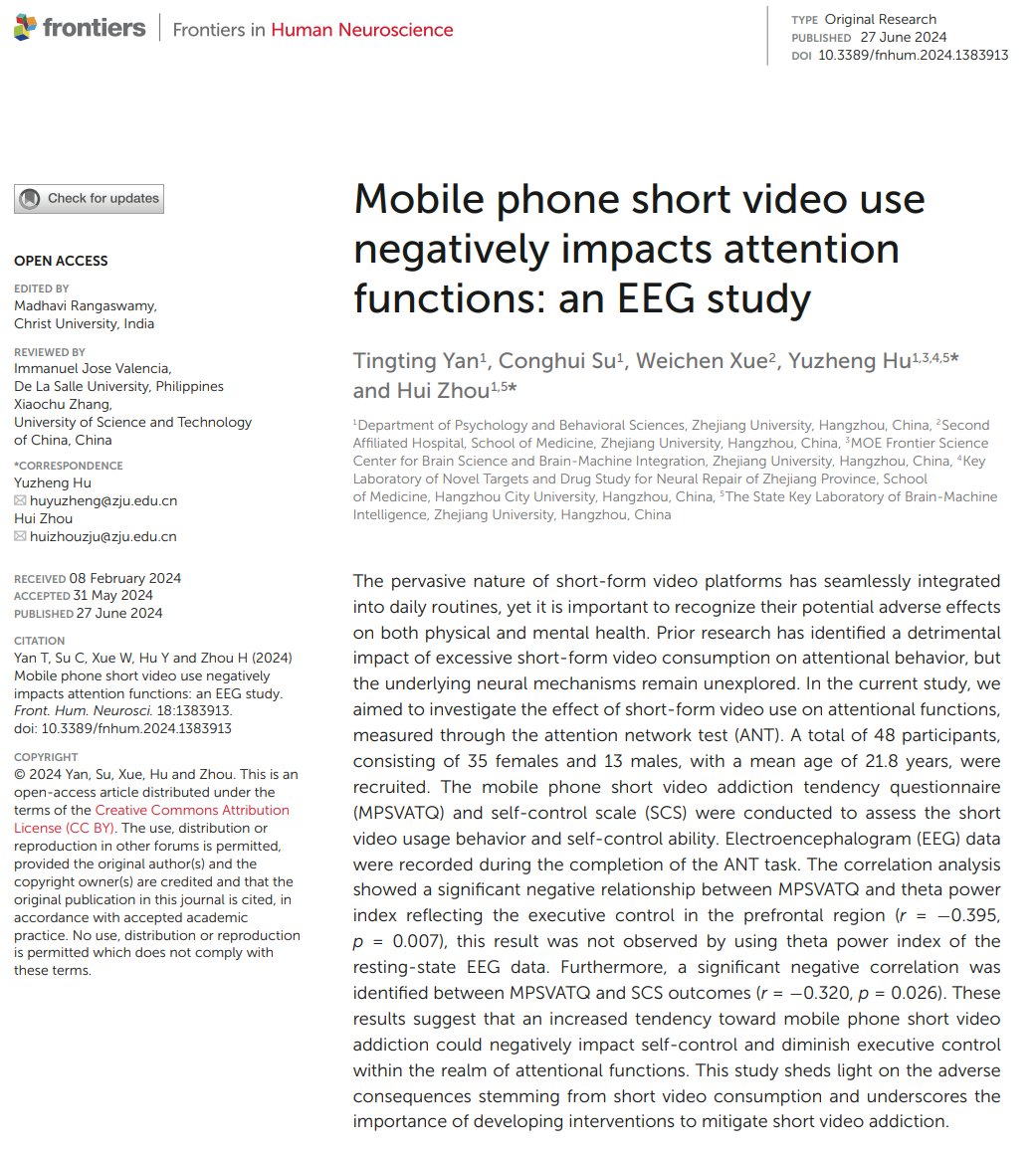
you’re 22. you scroll 3 hours a day. it feels harmless
at 28 you can’t read an article without checking your phone twice per paragraph
at 32 you don’t understand why nothing you start ever finishes, you’re still dreaming of this project you wanted to start. still no time
at 40 you’ve never finished a book in a decade.
it all passed
American public schools’ overreliance on YouTube for educational content runs counter to what is clear in several scientific studies: Learning analog is better than digital. https://t.co/T7bZRP2fDx 🧵
Stop scrolling yourself to sleep.
I know it feels relaxing. It isn't.
Passive consumption of content, especially social media, keeps your prefrontal cortex engaged, elevates cortisol, and suppresses melatonin through both blue light exposure and psychological stimulation.
Replace the last 30 minutes of screen time with something that actually activates your parasympathetic nervous system: reading a physical book, stretching, journaling, or slow nasal breathing.
Your sleep quality will change within 3 nights. I guarantee it.
I broke my phone addiction in 30 days.
• Screen Time down ~70%
• Phone pickups down ~50%
I reclaimed 4 hours 30 minutes per day. That's 1,635 hours across a full year. 68 days of life from a single behavior change.
Here's exactly what I did (save this):
1. Grayscale Mode
Put your phone on Grayscale Mode for the entire day.
Grayscale Mode removes the colors to make your phone immediately less appealing and addicting.
It takes 30 seconds to set up.
If you have an iPhone, follow these steps:
• Settings
• Accessibility
• Display & Text Size
• Color Filters -> On
• Grayscale
Next, create a simple shortcut:
• Settings
• Accessibility
• Accessibility Shortcut
• Color Filters
Now, if you triple-click the side button, you'll be able to toggle it on and off.
For non-iPhone users, you can find instructions with a simple search.
I kept my phone on Grayscale at all times and only removed it for specific reasons (like posting something that required me to see the color, looking at photos, etc.).
It made me less interested in grabbing my phone for the random "just checks" during the day.
2. No-Phone Zones
Set specific locations, times, and events where you won't have your phone on you.
I called them No-Phone Zones:
• Downstairs (kitchen, living room)
• Creative flow time (from ~5-8am)
• Family flow time (from ~5-7pm)
• Family gatherings
During these windows, my phone would be in a lock box or in a drawer in my office. If we were out at a family gathering, I would leave it in the car or in my wife's bag where I couldn't feel it.
Specifically listing out these No-Phone Zones had the benefit of making it a clear rule that I could cement in my mind.
Create your list of No-Phone Zones. Write it down if you need to.
3. Strategic Friction
Even with the Grayscale Mode and No-Phone Zones, my phone addiction intervention would have been difficult to execute without this final piece of the puzzle.
Motivation and discipline are never enough when you're trying to crack a deeply entrenched behavior.
There's a theory in cognitive science called Choice Architecture, which is the idea that you can design your environment to make good choices easier and bad choices harder.
Basically, I wanted to add strategic friction to make it much easier to adhere to my rules (and much more difficult to break them).
Three primary ways I did that:
1. I locked my phone in a lock box during my morning creative flow (5-8am) and evening family flow (5-7pm). It was a timed lock so I couldn’t get it without emailing the company.
2. I left my phone far away from where I was going to be working. If I wanted to get it, I'd have to walk to the other side of the house or down a few flights of stairs to get it.
3. I added really low screen time restrictions to social apps. If I wanted to overuse them, I'd have to keep approving more time, which felt like letting myself down when I did it.
Breaking the addiction is going to be difficult at first. Create strategic friction that helps you stick to the change. Make it difficult to make a bad choice.
The Life Impact
I'm not going to sugarcoat it at all:
This was the single most powerful behavior change I've ever made in terms of the tangible impact and ripple effects on my life.
That is not an exaggeration.
I was more present, less stressed, and able to connect on an entirely different level. In short, I showed up more aligned with how my ideal self would.
My capacity for deep work expanded significantly from simply placing my phone in another room or a lock box.
I got more done, faster, at a higher quality bar. It was like the holy trinity of productivity improvement, with no fancy productivity tool required.
Reviewing the research, this isn't surprising: There is clear scientific evidence that even having your phone in your pocket or on your desk reduces your cognitive capacity.
I felt happier and less stressed immediately upon making the change.
So, just keeping score...
This was a single, zero cost behavior change that had the net effect of:
• Improving my relationships
• Improving my work
• Improving my happiness
To be completely transparent, just a few days in, the only negative thought I had related to the intervention was simple:
Why didn't I do this sooner?
I hope this is the push you need to make this change in your life.
Start small and stick to it. Aim for a 10-20% screen time reduction week-over-week. Keep yourself accountable with a friend.
Having now gone through it, I can guarantee you'll see and feel the positive impact immediately.
Onward and upward.
Ave person checks their phone 186x a day. That's an interruption every 5 min.
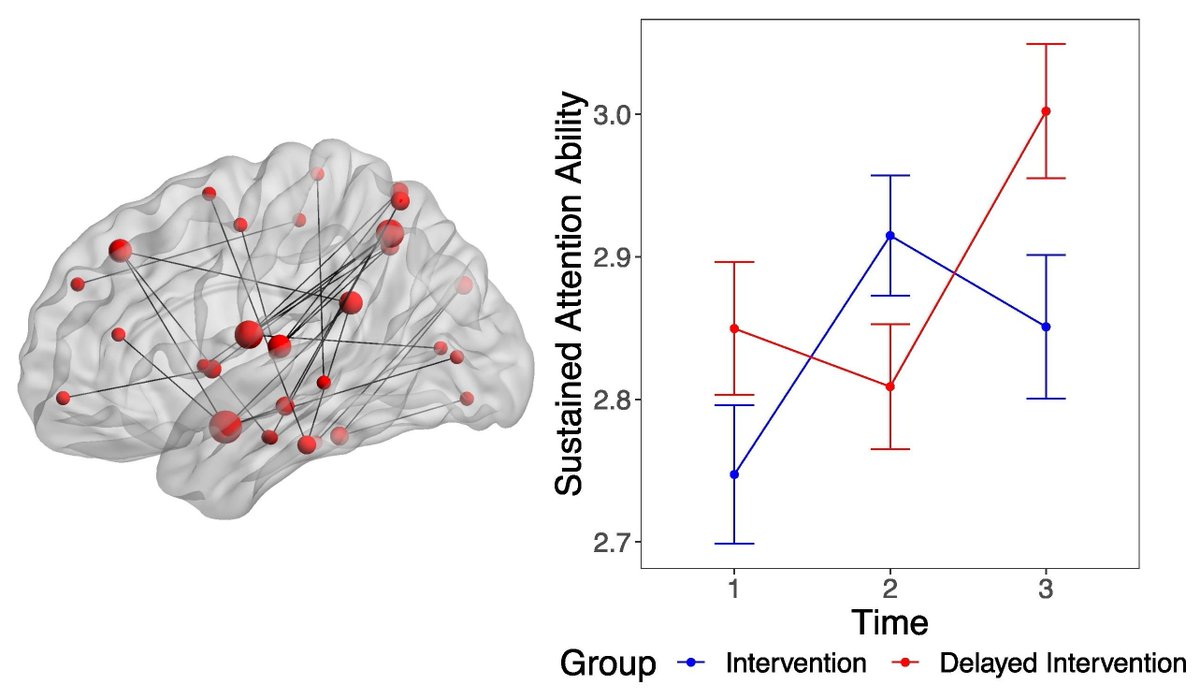
This shrinks the brain, causing lost capacity for deep reasoning and sustained thought.
Deep focus strengths neural networks for complex thought.
Bryan Johnson reveals why using your phone before bed is DESTROYING your sleep
“You can't be in bed scrolling, working, texting. You need separation, because your phone in hand is going to increase your cortisol and increase your sympathetic activation, you'll be more anxious”
“You need an hour of separation. Instead of using your phone you can go for a walk, talk with a friend, do meditation, read a book, anything but just don't use your phone”
Finished a seven day social media fast. It feels like the most effective longevity therapy I've done.
Everything got better: mood, sleep, energy, presence, judgment, relationships, and optimism.
Evidence shows a seven day fast produces a reduction of anxiety (16%), depression (25%) and insomnia (15%). The effects felt bigger.
Conversely, dipping back in, I can viscerally feel that my body metabolizes social media similarly to a fast food meal, corrosive relationship, hangover, and sleep deprivation. My body hates it.
After the previous fasts (40/hr and 70hr), I wrote that social media is pollution. Not a vice or guilty pleasure. It’s closer to water toxins, air pollution and microplastics.
This time, the major insight was that social media is a form of intoxication.
Alcohol is honest intoxication. It clearly tells you what it's taking from you. Social media on the other hand does not disclose itself as an intoxicant.
It produces the sensation of being informed, engaged, and connected while quietly evacuating your capacity for depth and independent thought.
You don’t feel drunk, you feel current. But evidence shows that it causes your brain to shrink. The impairment is real by you can't feel it. Making it the more dangerous type.
If you haven't tried it, I strongly encourage you to try a social media fast. Even if for one day.
The most surprising second-order effect of breaking my phone addiction was the rewiring of my brain with respect to boredom. I realized that grabbing my phone had allowed me to stifle every unfilled moment. And when you breathe air back into them, your mind does amazing things.
Screens before age 3? Experts now say it’s the new secondhand smoke for kids’ brains.
Dr. John Hutton and leading researchers warn: higher screen time correlates with weaker development in brain areas for reading, language, and decision-making.
Key takeaways from this powerful clip:
- No screens under 3 (AAP guideline) — and even after that, heavily limit and supervise
- Educational apps and “Miss Rachel” videos still count — they overstimulate developing attention circuits
- Parents’ own phone use models addiction — kids notice when screens take priority over them
- In schools, the post-pandemic 1:1 device push is backfiring — it’s okay (and urgent) to ask teachers: “Why iPads in kindergarten instead of real books and worksheets?”
“Parents are a child’s first and most important teacher — shared experiences like reading physical books and playing with real toys build real language, emotion, and connection.”
The cat isn’t out of the bag forever — you can dial it back right now.
What’s one screen rule you’re setting (or tightening) for your kids after hearing this?
Credit: NBC News (YouTube)
We're at a point in history—not nearing it, but here—where you have to decide if you're content to ruin your brain with an endless stream of fentanyl-like digital slop or if you're going to fight for your humanity, touch grass, challenge yourself, create, contribute, and love.