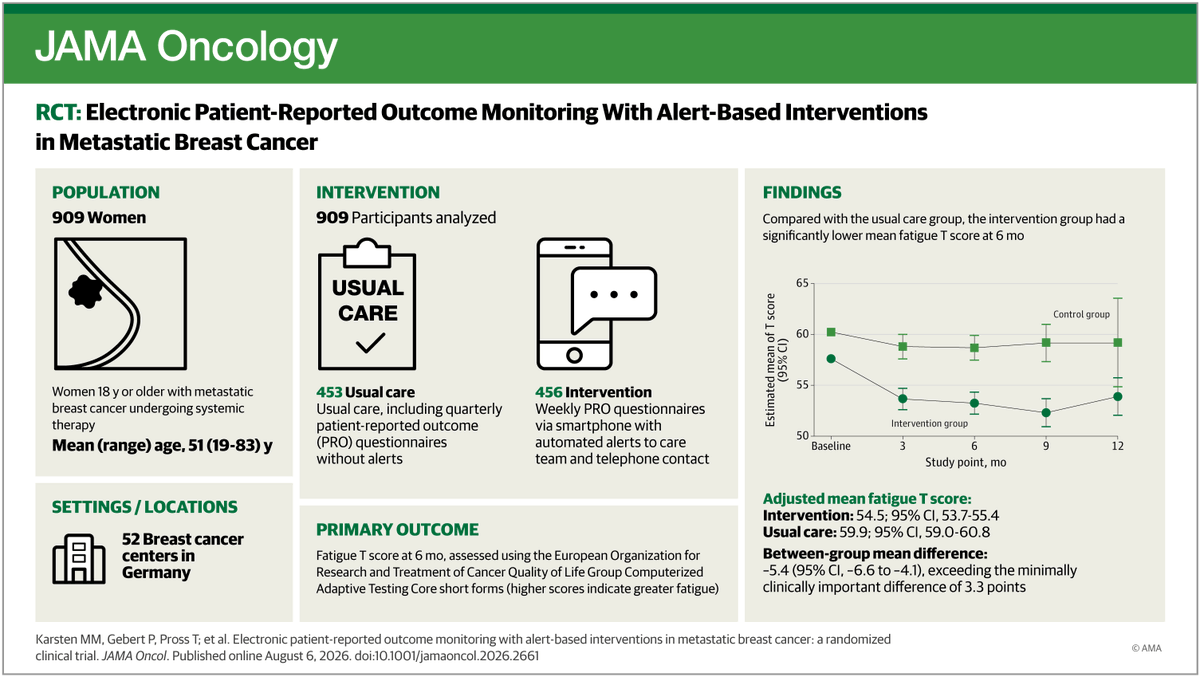
Among patients with metastatic #BreastCancer, alert-based digital patient-reported outcome monitoring was associated with lower fatigue at 6 months vs usual care, with improvement exceeding the minimal clinically important difference.
https://t.co/bLQytXYDyi
In patients with #ProstateCancer receiving #AdaptiveTherapy, mathematical biomarkers from first-cycle prostate-specific antigen (#PSA) dynamics predicted time to progression and overall survival better than standard PSA metrics.
https://t.co/7kKFlELVVC
💬 Editorial: The TORCH trial confirms that sequential TACE and thermal ablation improved survival vs TACE alone for intermediate-stage #HCC, with the greatest benefit for low to moderate tumor burden.
https://t.co/ZRJCgyWDgP
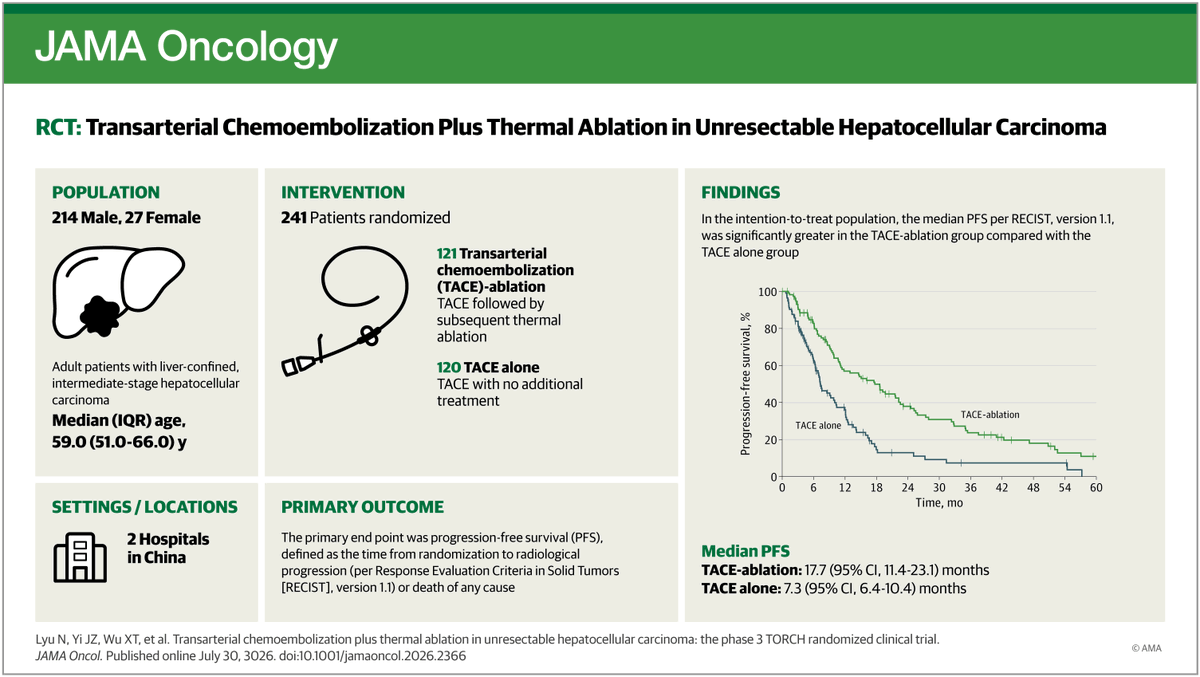
A phase 3 trial found that sequential transarterial chemoembolization followed by thermal ablation significantly improved progression-free and overall survival vs TACE alone for unresectable, liver-confined #HCC.
https://t.co/c4qPGj1EJL
Receipt of prostate-specific membrane antigen positron emission tomography for #ProstateCancer staging was associated with higher initiation rates of androgen receptor pathway inhibitor therapy and increased use of systemic treatment. https://t.co/uyT3Tta91s
This Review examines the clinical utility of circulating tumor DNA assays for detecting minimal residual disease in patients with early-stage #BreastCancer.
https://t.co/Ip4FnqKiH5
Relabeling grade group 1 #ProstateCancer as precancerous was predicted to decrease US mortality, with six times more deaths avoided through increased screening than caused by reduced surveillance adherence. https://t.co/PJc3S6Sy9W
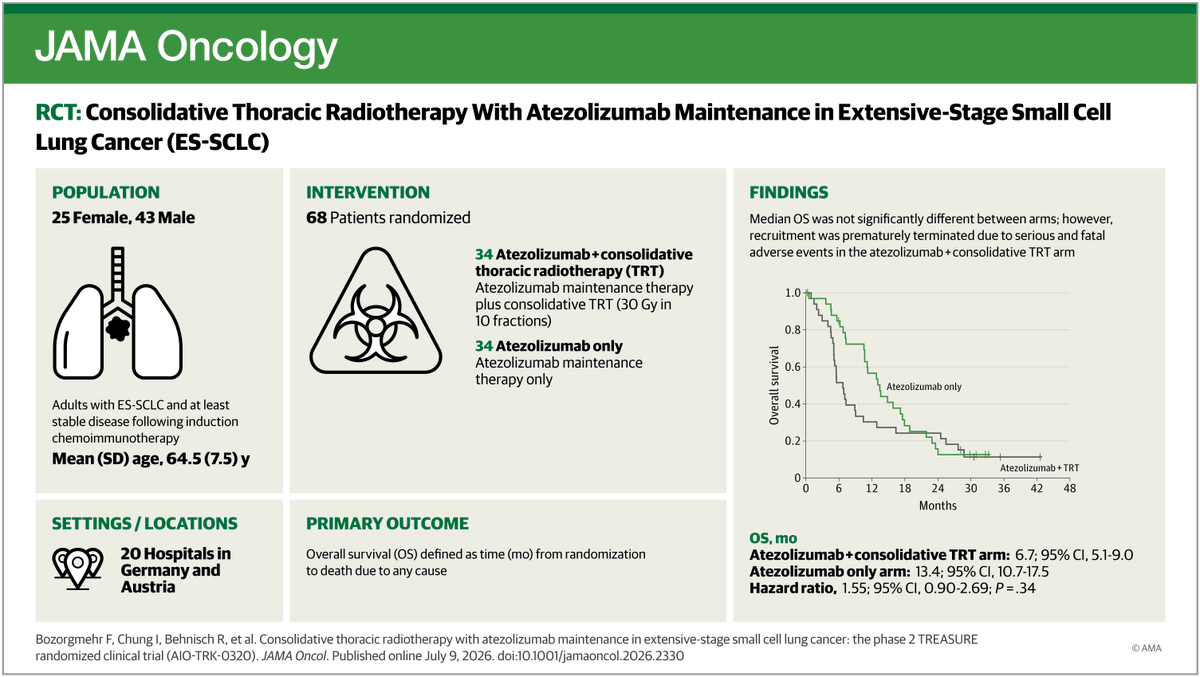
Adding consolidative thoracic radiotherapy to atezolizumab maintenance for extensive-stage small cell lung cancer led to more severe toxic effects, mainly infections, without survival benefit compared to atezolizumab alone.
https://t.co/0BYZKJCoIp
💬 Viewpoint: In #Oncology, payment incentives may shape the context of care recommendations, and directional disclosure of those incentives deserves consideration as part of informed consent.
https://t.co/1xyDqCY3xO
In a phase 1 trial of ultralow-dose IL-10–expressing CD19 CAR T cells for diffuse large B-cell lymphoma, 92% of adults had objective responses and most toxicities were grade 1-2, supporting further evaluation of cytokine-engineered CAR T strategies.
https://t.co/yniSGnWnUa
Early-stage #LungCancer diagnoses increased nationally and in all states after screening recommendations in 2013, but fewer than 1 in 5 eligible adults are up to date with screening. https://t.co/Qmh9G6WGuj
A meta-analysis found first-line chemoimmunotherapy provided longer overall and progression-free survival than PD-(L)1 inhibitor monotherapy in advanced #NSCLC with high #PDL1, though with greater toxicity. https://t.co/s2w8r25UEA
Study of veterans with cancer identified high rates of suicidal self-directed violence, with greatest risk in younger, female, American Indian or Alaska Native, and those with central nervous system, pancreas, liver, thyroid, or head and neck cancer. https://t.co/9aI7XxF6Xv
Adding intraperitoneal paclitaxel to intravenous paclitaxel plus S-1 improved overall survival for #GastricCancer with peritoneal metastasis, with safety profiles comparable to intravenous-only therapy. https://t.co/SEdMaxsSvt
Among patients with early age–onset #ColorectalCancer in Texas, treatment delays longer than six weeks were associated with reduced survival, and language barriers represented a major risk factor contributing to delayed initiation of definitive therapy. https://t.co/w0SXFPN1CU
High modifiable risk factors were more strongly associated with #PancreaticCancer for adults aged <60 years, especially those with high genetic risk, supporting early-life prevention strategies. https://t.co/3h6EHFcPJz
Nearly half of older adults with metastatic #LungCancer did not receive systemic therapy, and treatment rates changed minimally from 2006 to 2021. https://t.co/XOWgEbNJDp
Tumor-infiltrating clonal hematopoiesis was detected in 18% of patients with solid tumors and associated with older age, prior cytotoxic chemotherapy, and reduced overall survival, especially in breast cancer. https://t.co/v2ExF7dOx1
A 56-year-old man had a 10year history of recurrent, generalized violaceous papules and firm nodules. What is your diagnosis? ➡️ Take the JAMA Oncology Clinical Challenge: https://t.co/3Ri0tGDzjy