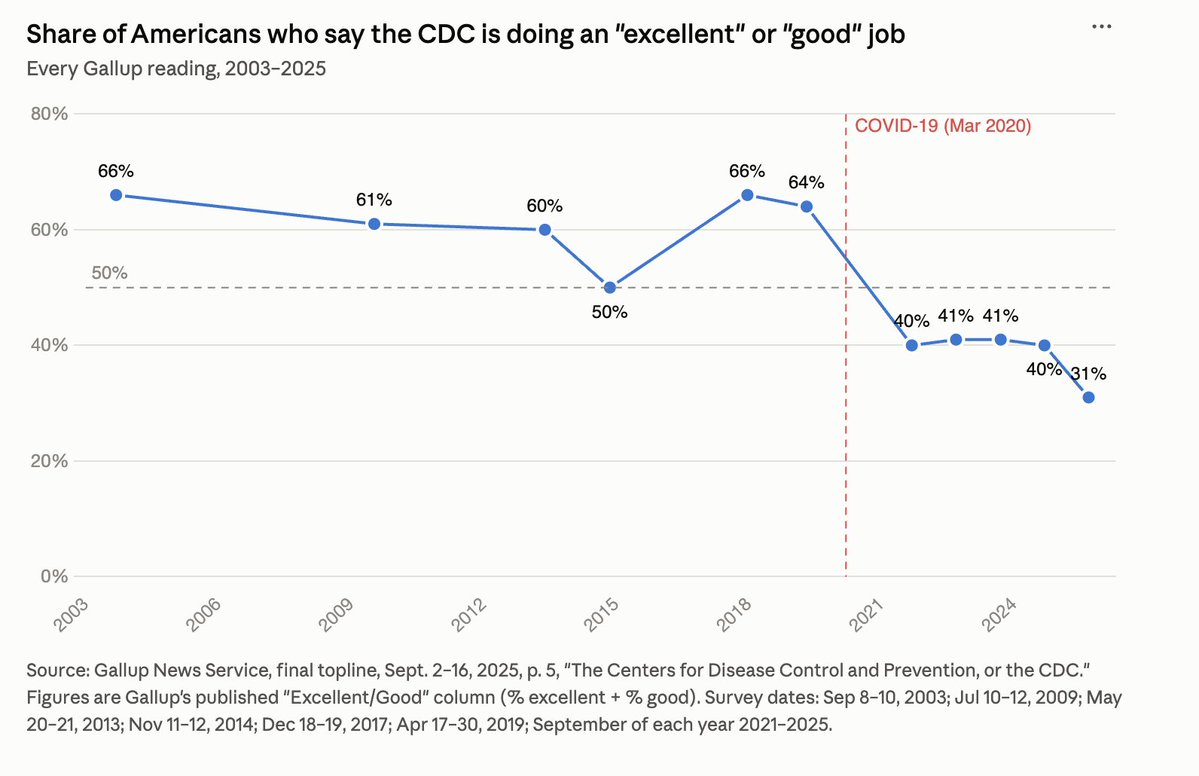
For much of the 20 years before Covid, 6 in 10 Americans rated the CDC’s job good or excellent. By 2021, just 40% did. It never recovered.
You can blame this administration for gutting the CDC. But the ground was already prepared.
Institutions become dismantleable before they are dismantled. https://t.co/uUfwIkJxt8
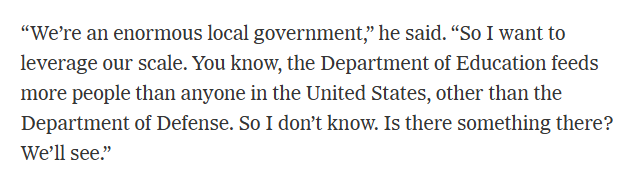
Now these are the questions you ask if you want to do something on food access at urban scale.
From today's NYT piece on Anthony Shorris: https://t.co/r34ouivysJ
AIs are not conscious. They do not feel, experience, or suffer. They do not have innate preferences or underlying motivations. They are sequence completion engines, internally hollow, designed to follow instructions, and accomplish goals set by humans. -- @mustafasuleyman
https://t.co/nhg2KEabOo
"Whoever wins AI, wins” is almost the perfect slogan for the collective-action trap: if everyone believes it, nobody can afford to slow down. Even if everyone would be safer if everyone slowed down.
https://t.co/Od7KydM8J6
The Cross-Bronx is, of course, everyone's favorite example of this, but the city and state can take the Cross-Bronx down starting today if they want to. Moses is dead. He can't stop you.
For years, the naysayers have counted Baltimore out. But the numbers across the board are telling a different story.
At our peak, Baltimore had 16,000 vacant properties citywide. Through hard work and the right investments, we’ve brought that number down to fewer than 12,000. Eliminating 1 in 4 vacant properties across our city.
And we’ve reduced homicides and nonfatal shootings to the lowest levels our city has seen in 50 years.
The progress our city is seeing is real. And is proof of what happens when we commit to doing things differently, despite what others may say. While we still have work to do, I am proud of how far our city has come.
City leaders have an incredible opportunity to make a difference in people’s everyday lives.
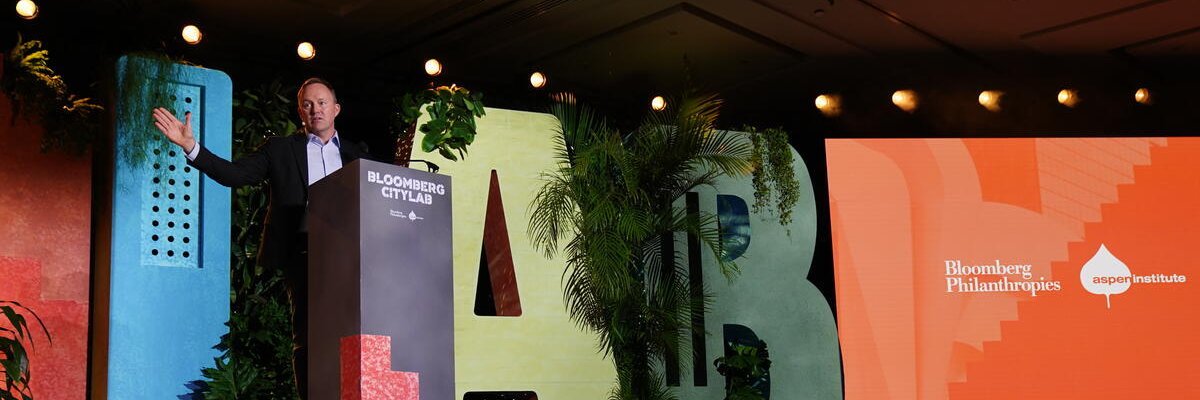
I was glad to welcome @BloombergDotOrg board members Admiral Mike Mullen and Emma Bloomberg, Founder & CEO of Murmuration, to the @BHcityleaders classroom, where they shared learnings from their leadership journeys with our tenth class of senior officials.
A hallmark of capable government is its ability to mobilize resources beyond the public sector in pursuit of public goals. Public-private collaboration isn't the opposite of state capacity. Done well, it's one expression of it.
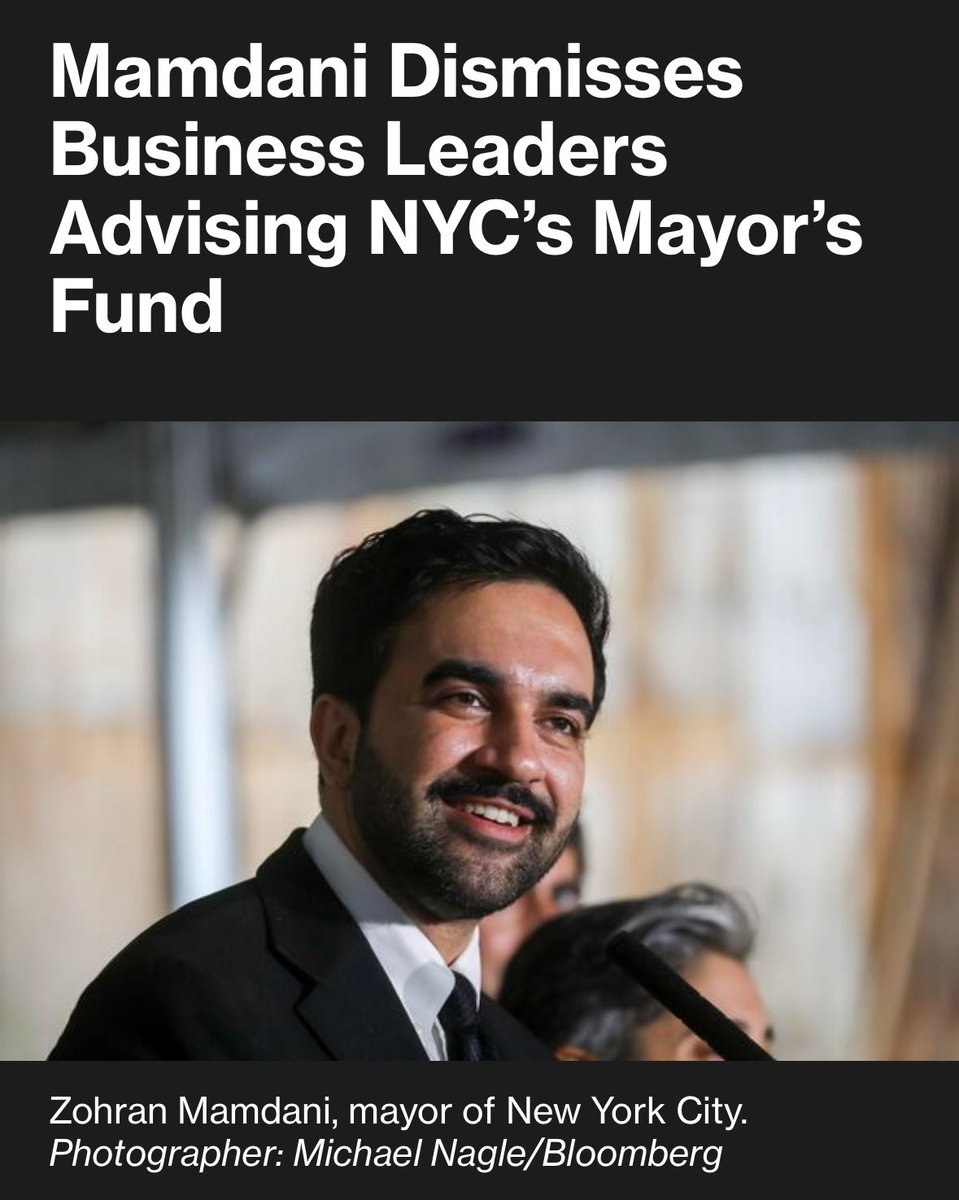
This is a mischaracterization. The Mayor's Fund is designed to bring philanthropic resources to public priorities. Its advisory board has historically helped mobilize those resources—not determine public spending. Remaking the board is the mayor's prerogative. Treating public-private collaboration as evidence of capture may be red meat for the base, but it's a poor theory of urban governance.
One of the beautiful things about Mamdani’s renewal of NYC government is that it shows how deeply business interests are usually baked into state capacity.
Why should private equity, banks and real estate interests advise a mayor on what to spend?
The story isn't democratic socialism. It's that government capability has become a governing agenda. Mayors across the political spectrum are speeding permitting, fixing procurement, and making government easier to navigate.
Mamdani deserves credit for making that agenda visible. The test now is whether the messaging is matched by better performance. https://t.co/XVeHjHYE3O
.@BloombergDorOrg has been proud to partner with Andy Burnham—and all of the UK's metro mayors—since England's devolution agenda began taking shape in the 2010s. Excited to see this @BHcityleaders graduate take the reins, promising to bring "Manchesterism" to Whitehall and "10 Downing North" to Manchester. https://t.co/S02c1dHBWr
As our teams at @BloombergDotOrg and the Bloomberg @CenterforCities@Harvard welcome our tenth class of @BHCityLeaders—46 mayors from 15 countries who together lead over 22 million residents—I spoke with @BostonGlobe’s @EugeneScott on what a decade of @MikeBloomberg’s investing in local government has proven—and why the next one matters, and starts now: https://t.co/bbrCAliPdE
The $1.7M San Francisco toilet became a national punchline. The more interesting story is what happened next: the city changed its procurement rules, cut playground renovation timelines from 3–5 years to about 18 months, and is saving more than $1M per project. Good government isn’t pretending mistakes never happen—it’s learning from them.
https://t.co/fcWbDcEWpp