BREAKING: The Supreme Court has rejected President Trump’s attempt to end birthright citizenship in the U.S. by executive order, reaffirming more than a century of legal precedent and national tradition that babies born on American soil are automatically American citizens.
https://t.co/hZX3ZV294P
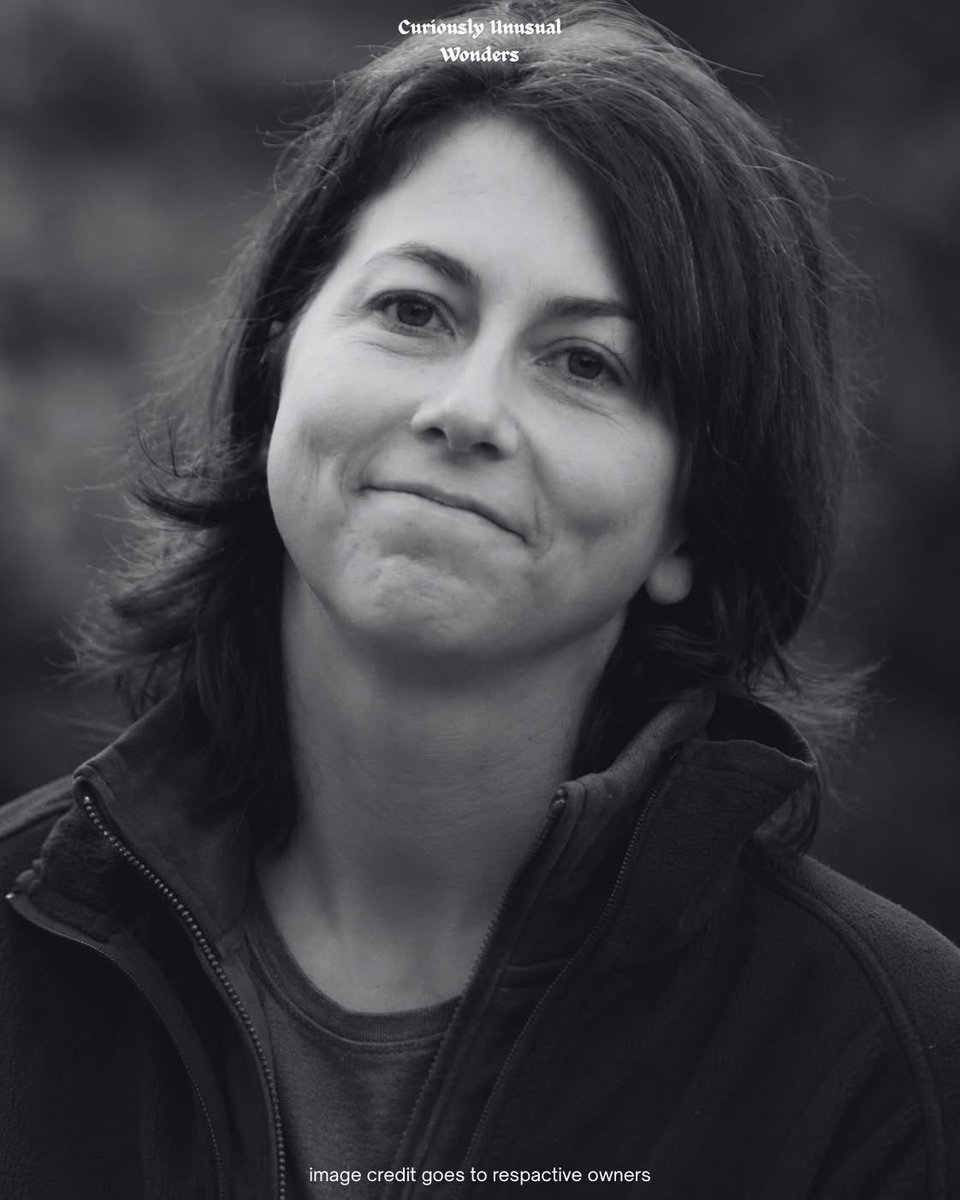
A young woman named MacKenzie Tuttle graduated from Princeton in 1992 with a degree in English. One of her professors was Toni Morrison, who later described her as one of the finest creative writing students she had ever taught.
After graduation, MacKenzie took a job at the New York investment firm D. E. Shaw. There she met a colleague named Jeff Bezos, who had an ambitious idea: selling books on the internet.
She didn’t laugh at the idea.
They married in 1993, and the following year drove across the country to the Seattle area to build what would become Amazon.
In the beginning, there was no global empire.
There was a garage.
MacKenzie handled accounting, wrote business materials, answered customer emails and phone calls, and packed orders alongside Jeff. Like many startups, everyone did whatever needed to be done.
As Amazon grew, MacKenzie stepped away from day-to-day operations to raise their four children while continuing to pursue her own passion for writing.
Her debut novel, The Testing of Luther Albright, won the American Book Award. She later published a second novel and quietly built a respected literary career.
Meanwhile, the story of Amazon became one of the most famous business stories ever told.
Jeff Bezos became one of the world’s most recognizable entrepreneurs.
MacKenzie’s role was rarely part of the public narrative.
She never seemed interested in changing that.
What many people don’t know is that she also knew financial hardship.
Her family filed for bankruptcy while she was still a student, and she has spoken about the kindness of people who helped her through difficult times—acts of generosity she never forgot.
In 2019, after her divorce, MacKenzie Scott received approximately 4% of Amazon’s shares.
Almost immediately, she made a decision that surprised the world.
She signed the Giving Pledge, promising to donate the majority of her wealth during her lifetime.
Then she did something even more unusual.
Instead of building a massive public foundation or attaching her name to buildings, she began giving away billions of dollars through large, unrestricted grants.
Universities.
Food banks.
Housing organizations.
Rural communities.
Women’s health initiatives.
Tribal colleges.
Climate organizations.
Small nonprofits that had never imagined receiving gifts of that size.
Many recipients reportedly thought the phone calls were scams.
They weren’t.
Since 2019, MacKenzie Scott has donated tens of billions of dollars to thousands of organizations, making her one of the most significant philanthropists of the modern era.
Despite giving away enormous sums, her fortune has remained substantial because of Amazon’s continued growth.
The woman who once packed Amazon’s first orders is now helping fund opportunities for millions of people she will probably never meet.
She never asked for buildings in her name.
She never demanded headlines.
Sometimes the greatest legacy isn’t the company you help build.
It’s what you choose to do with the success that follows.
Sharon Stone’s complicated grief: ‘It’s okay for me to feel free from my... https://t.co/GeYWLfC14E via @YouTube. This was the most extraordinary interview..
Breaking News: Clive Davis, a music industry titan who guided the careers of stars like Whitney Houston and Barry Manilow, died at 94. https://t.co/GPVbnHG9x7
Madonna's biopic movie was killed after a "falling out" with Universal Pictures over budget concerns, the music icon says.
“I was supposed to make a movie about my life. I worked on my script for two years and spent two years at Universal Studios with the line producers doing budgeting and casting. We had a falling out, me and Universal, regarding budget because I needed — I’ve had an extraordinary life. I’ve had a huge life, so I needed a big budget. You know what I mean? [I tried to find] a way to make it for less money in Serbia. Maybe they just didn’t believe in me. One of their first reactions was, ‘We don’t believe you’d stay in Serbia more than four days.’ And I said, ‘Did you read the script?’ My whole life has been survival. I’m not going there for a holiday. But anyway, I was in limbo when that fell apart, and then Netflix reached out to make a series. That was a whole other long process, because I couldn’t use the script I had with Universal unless I bought it from them for an extortionist’s price, even though I wrote it. Don’t ask.” (via Interview)
https://t.co/3qCmeSZmqq
#Afghanistan: We condemn the excessive use of force in Herat and arbitrary arrests of women for “violating dress code instructions”. The de facto authorities must respect international human rights obligations, including right to peaceful protest. The EU stands with Afghan women.
She woke up that morning with bronchitis. She almost didn't go to work. She decided to go anyway.
She made it to her desk on the 87th floor with a cup of tea in her hand. At 8:46 a.m., the building moved.
The tea went everywhere. She never made it back to that desk. Her name is Joanne Capestro.
This photograph was taken 56 minutes later.
She is an executive assistant at the May Davis Group. Floor 87. North Tower. World Trade Center. September 11, 2001.
At 8:46 a.m., American Airlines Flight 11 slams into the North Tower between floors 93 and 99 — 6 floors above her head. The impact feels like an earthquake. Ceiling tiles collapse. The smell of jet fuel fills the air instantly.
Joanne gets up off the floor.
She finds the emergency stairwell — the only 1 on her floor left intact after the impact. She begins to walk down. 87 floors. In her stocking feet, because her heels come off somewhere on the stairs and she leaves them behind.
Here's what she remembers about that stairwell: it is orderly. Civilians stay to the right. Firefighters and emergency responders move up on the left, carrying heavy equipment, heading toward the fire. Heading toward the floors she just came from.
She passes hundreds of them going up as she goes down.
She does not know yet that most of them will not come back.
The May Davis group begins to scatter during the descent. Coworkers separate in the crowd. Some go faster. Some slow down. The group that started together on floor 87 doesn't finish together.
She keeps moving.
9:03 a.m. While Joanne is still somewhere in the stairwell, United Airlines Flight 175 hits the South Tower. She doesn't know this yet. She can feel the building. She keeps moving.
She reaches street level.
The moment she steps outside, the South Tower collapses.
She runs. The cloud of dust and debris — a wall of pulverized concrete, glass, steel, and ash — swallows lower Manhattan whole. She shelters behind a vehicle near St. Paul's Chapel, a small 18th-century church that sits just 1 block from the World Trade Center and will, in the coming days, become a relief center for thousands of rescue workers. A firefighter helps her. Then she finds her coworker Dominique Davis.
They hold onto each other. They move.
A photographer named Phil Penman — 24 years old, working for Getty Images — has been running toward the towers since the first plane hit. He ducks into a music store on Park Row as the South Tower falls, watching through the window as the street disappears into grey. When the cloud thins enough to see, he walks back outside and starts shooting again.
He photographs Joanne Capestro and Dominique Davis walking through the ash.
That is this photograph.
Joanne is 39 years old in this picture. She has just walked down 87 flights of stairs through smoke, heat, and jet fuel fumes, in her stocking feet, while the building above her was on fire. She has just outrun the collapse of the South Tower. She is covered in the dust of a building in which 2,977 people will lose their lives today.
She doesn't know yet that her colleague Harry Ramos did not make it out. He stayed behind to help others evacuate. He was still inside when the North Tower fell at 10:28 a.m.
In the months that follow, Joanne lives with PTSD and survivor guilt. She carries both for years. She keeps the dust-covered shoes and clothing from that morning. They are now part of the permanent collection at the National September 11 Memorial & Museum.
2015. The museum holds an exhibition of Phil Penman's photographs from that day. A curator recognizes the woman in the ash. Joanne and Phil meet for the first time — 14 years after he took her picture.
They become close friends.
2018. Phil Penman photographs Joanne Capestro's wedding — 17 years after photographing her survival.
The man who captured the worst moment of her life is there for one of the best.
Look at this photograph again. She is pointing. She is moving. She is not stopping. She walked down 87 floors and came out the other side and kept walking, even when the world was grey and she couldn't see where she was going.
That is all any of us can do.
Share this with someone who needs to know — that survival is not the end of the story. It is just the beginning of a different one.
Follow us You should see this
Breaking News: The House voted to end the war in Iran, as four Republicans sided with Democrats in a striking rebuke to President Trump. https://t.co/Oeeox0iq9q
A CARNEGIE MELLON PROFESSOR WAS TOLD HE HAD 3 TO 6 MONTHS TO LIVE.
One month later he walked into a packed auditorium.
His name was Randy Pausch.
He was 46 years old.
He had terminal pancreatic cancer.
He had three children under the age of 6.
And he stood on that stage and gave the most joyful lecture ever recorded.
He did not talk about dying.
He did not talk about regret.
He did not talk about the unfairness of what was happening to him.
He talked about achieving childhood dreams.
He did one-armed push-ups on stage to prove he was still strong.
He made the audience laugh for 76 minutes straight.
He said: "We cannot change the cards we are dealt. Just how we play the hand."
The video hit 20 million views overnight.
Oprah called.
Congress called.
He testified before the Senate about pancreatic cancer funding.
He got a cameo in Star Trek because the director heard his story and personally invited him.
He wrote a book that sold 5 million copies in 48 languages.
He died 10 months after the lecture.
He was 47 years old.
The bridge connecting computer science and the arts at Carnegie Mellon is named after him.
Because Randy Pausch spent his entire career connecting the two.
Watch the lecture tonight.
4 minutes that will permanently change how you think about time.
Bookmark this.
Follow @cyrilXBT for more stories about people who used their time better than anyone else alive.






![Variety's tweet photo. Madonna's biopic movie was killed after a "falling out" with Universal Pictures over budget concerns, the music icon says.
“I was supposed to make a movie about my life. I worked on my script for two years and spent two years at Universal Studios with the line producers doing budgeting and casting. We had a falling out, me and Universal, regarding budget because I needed — I’ve had an extraordinary life. I’ve had a huge life, so I needed a big budget. You know what I mean? [I tried to find] a way to make it for less money in Serbia. Maybe they just didn’t believe in me. One of their first reactions was, ‘We don’t believe you’d stay in Serbia more than four days.’ And I said, ‘Did you read the script?’ My whole life has been survival. I’m not going there for a holiday. But anyway, I was in limbo when that fell apart, and then Netflix reached out to make a series. That was a whole other long process, because I couldn’t use the script I had with Universal unless I bought it from them for an extortionist’s price, even though I wrote it. Don’t ask.” (via Interview)
https://t.co/3qCmeSZmqq](https://pbs.twimg.com/media/HLb2DXGXYAAO5Ev.png)





