Research Article by IM Hauge-Iversen et al. (@Oslounivsykehus) High-precision #aorticbanding with O-rings: a versatile model for studying #heartfailure mechanisms in rats
https://t.co/LH0sg3ZY9r
A new look at physiology and biology is coming to light as we support the growing #transgender community, Systemic Vascular and Organ Functions in Transgender Women Receiving Feminizing #Hormone Therapy #ArticleinPress (Daroonwan Suksom et al.):
https://t.co/yxKunV0Anc
#APSselect | BR Rønnestad et al. Heat training augments hemoglobin mass during a moderate-altitude training camp in well-trained endurance athletes (https://t.co/lOXOX117YN) 🥵
Research Article by SE Mascone (@elefferts09 @WesLefferts) #Age moderates the association between #handgrip#strength and #largearterystiffness in women
https://t.co/KND0d0vyCs
From our Cerebrovascular Control in Health and Disease collection comes today's #ThrowbackThursday piece, Lower diastolic velocity in the internal carotid artery mediates lower cerebral blood flow with #age (John Ashley et al. @UTSWMedCenter):
https://t.co/Utqim7qhyY
Research Article by RS Ghitter (@MartinMacinnis) #Sexdifferences in the power-duration relationship for dynamic #knee extension are largely explained by #muscle size
https://t.co/kh0YyyrKNP
Today we have a fascinating #ArticleinPress about skeletal muscle development differences, Increasing intramuscular fluid volume increases passive tension in #mammalian skeletal muscle (Samantha Falcone et al. @BrownMedicine):
https://t.co/pWmvdri6O0
Call for Papers: The #Physiology of Exercise Limitation in Chronic Obstructive Pulmonary Disease (https://t.co/Af6NvapiWd). Submit your work on understanding mechanisms of #exerciselimitation in #COPD! The Editors are considering submissions through January 2027. 🫁
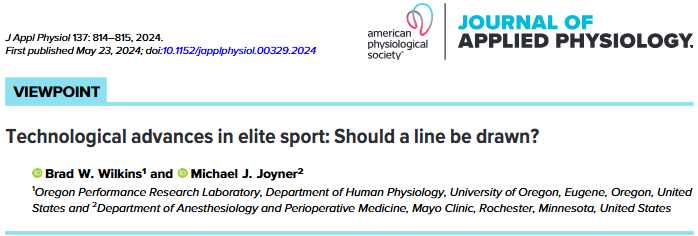
🏅 Top Cited Article by BW Wilkins (@OPRL_UO) and MJ Joyner (@DrMJoyner): Technological advances in elite sport: Should a line be drawn?
https://t.co/pViXxJ6zBh
Today's #ThrowbackThursday comes from our Physiological Responses collection, Greater negative affective responsivity to daily #stressors is positively related to urinary norepinephrine excretion in #middle-aged adults (Elana Gloger et al. @pennstatehhd):
https://t.co/uGCnplBVpL