You’re never too busy to show kindness to a child.
When this preschooler showed up for a race (on his pedal-less strider bike) at the local BMX park, his family discovered that he was the only one in his age group to attend.
A group of teenagers there to compete in their own age bracket provided some “competition.” And, would you believe it… the little guy won.
Be like these kids. Such goodness on display.
This lovely film via thethriftedmini on IG.
At the TDSB, we do not tell students who they should be, but welcome them as they are. Please read our statement ahead of planned demonstrations this week: https://t.co/krBd1f8sxO
Okay: my brilliant grade 9 literary sleuths have found AM/PM and have shifted their inquiry away from plane crashes and towards the question of “what’s in the box?” Great fun for a Friday afternoon: thanks again
@GrayAmelia my students are reading “AM:103” and want to know if the title refers to the air disaster: they are very engaged by your story…thanks! They would love to hear from its creator. All the best.
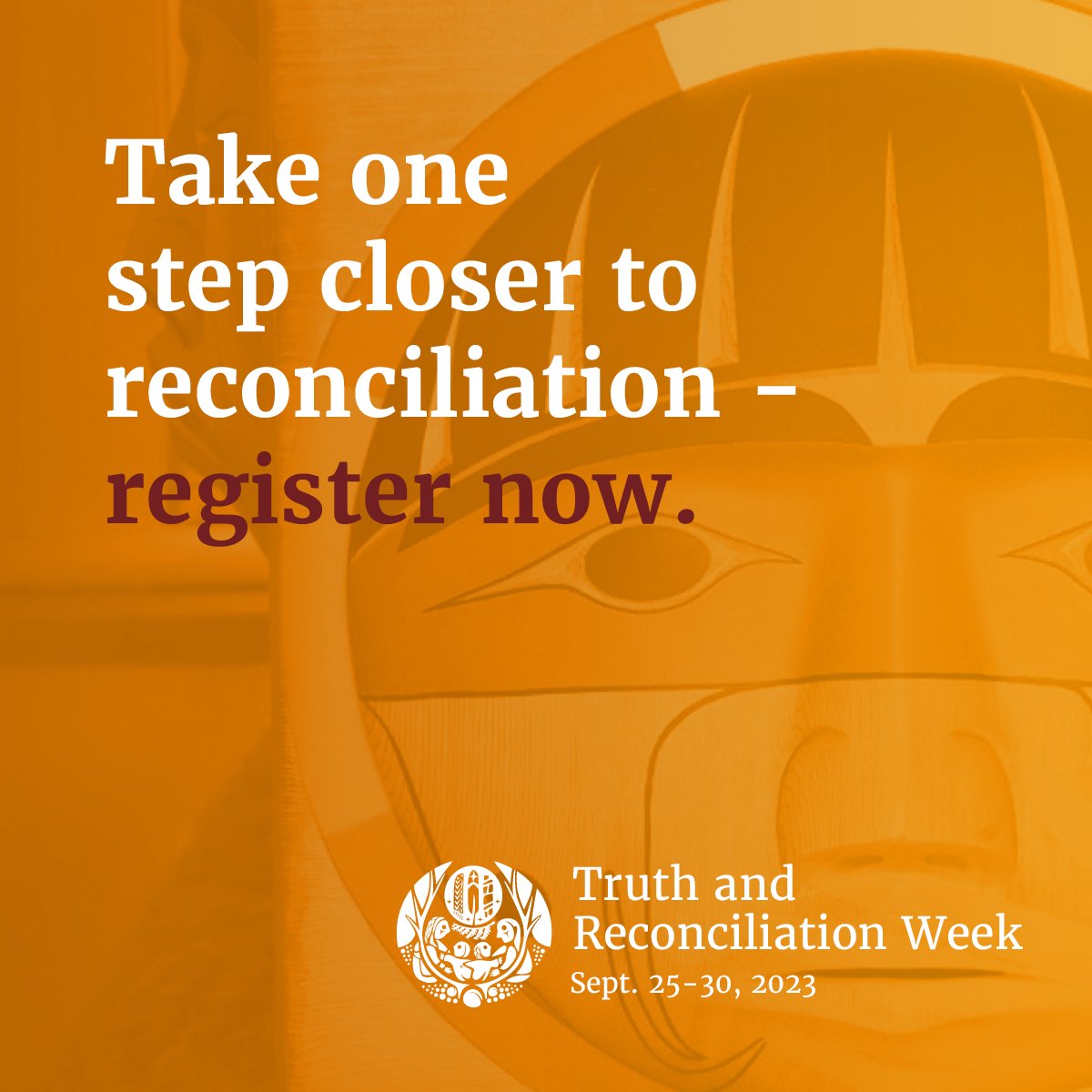
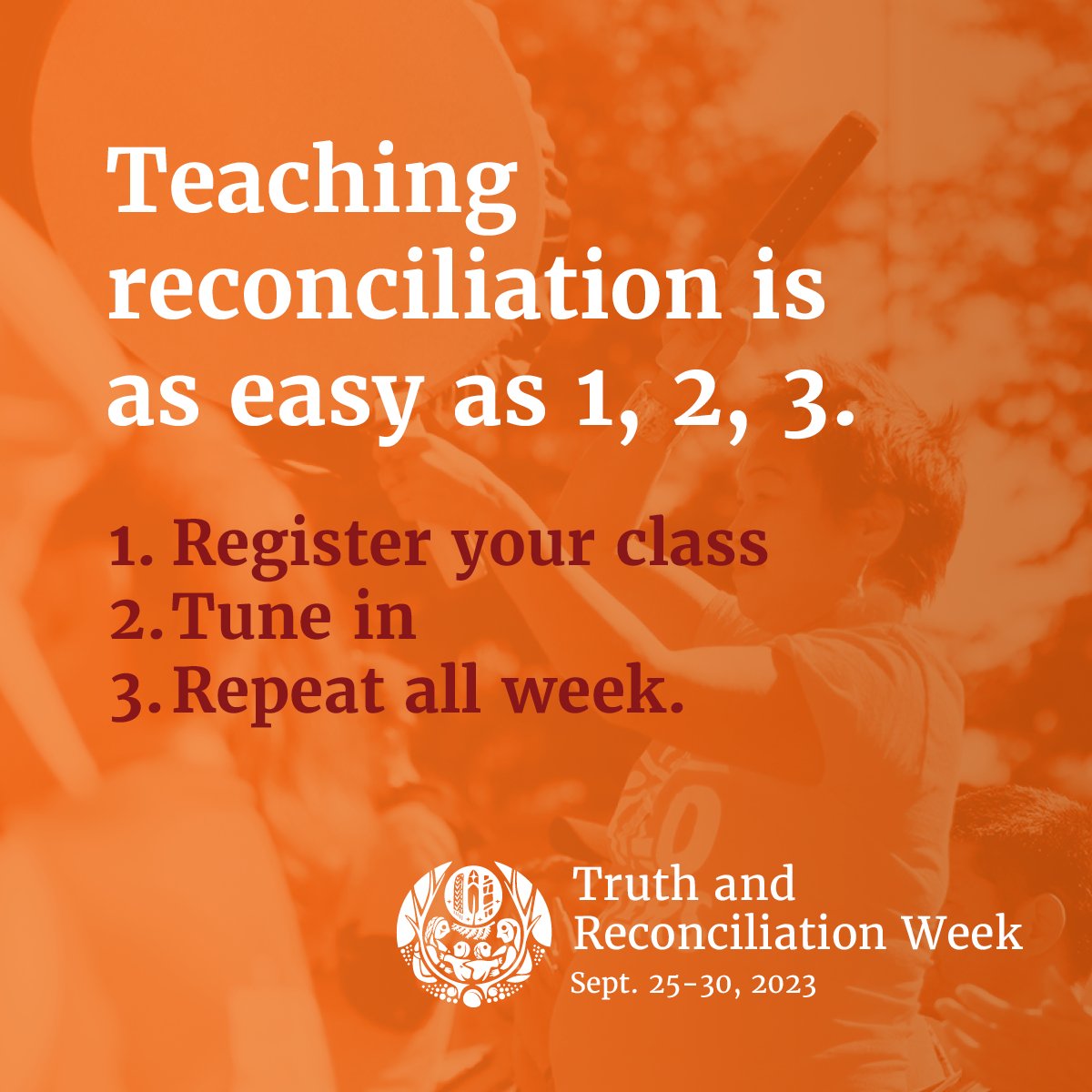
Enrich your students' understanding of #TruthAndReconciliation during #ReconciliationWeek 2023. This 5-day education series supports education curriculums, is age-appropriate and free for grades 1-12. Expand knowledge and create conversations. Register at https://t.co/xf27eSJTXp
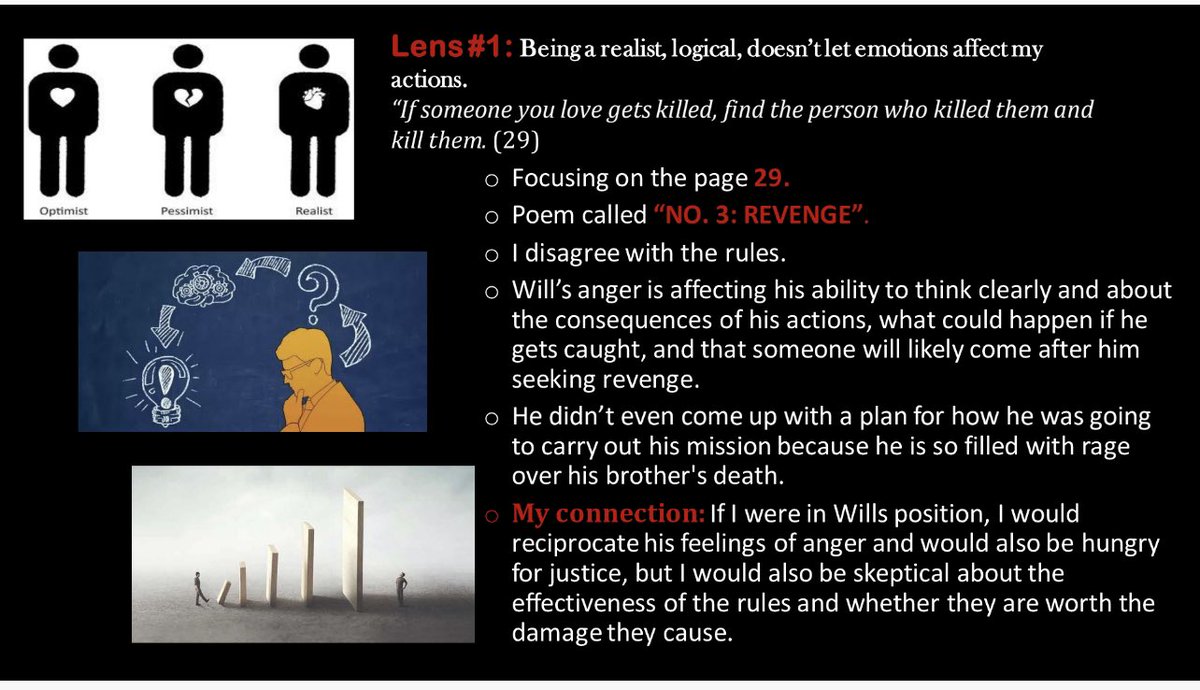
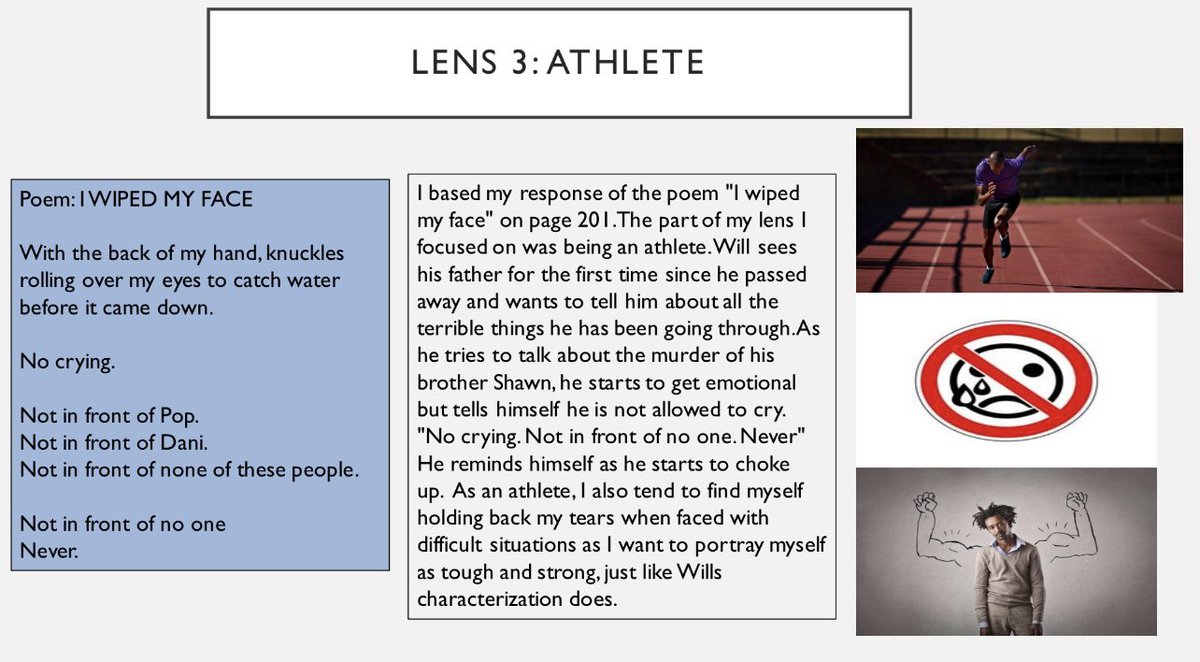
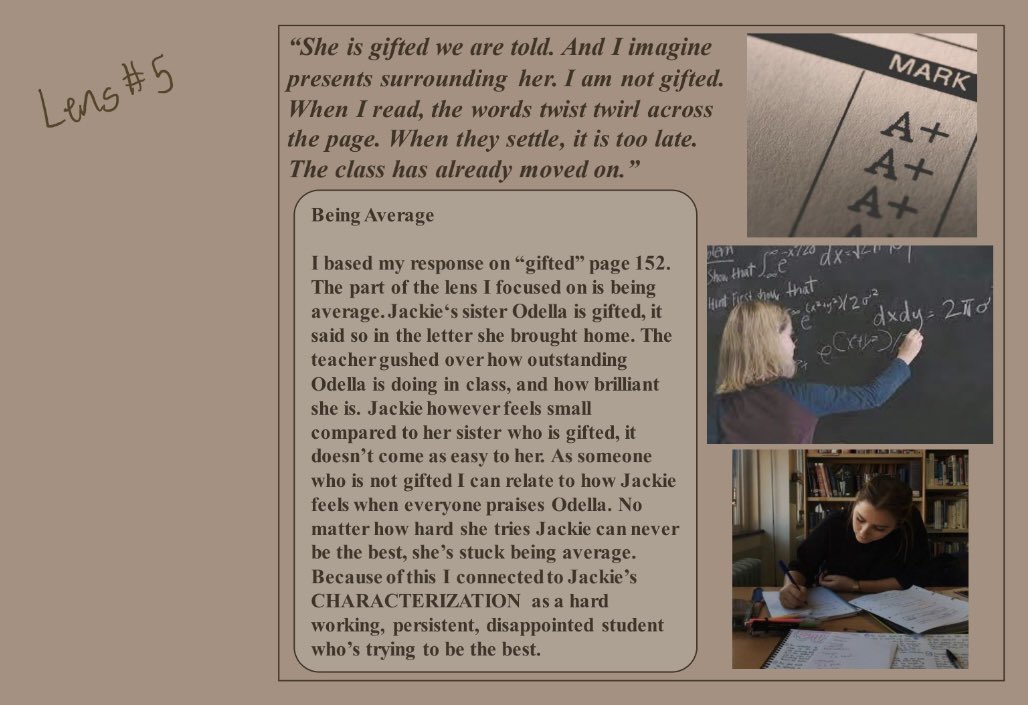
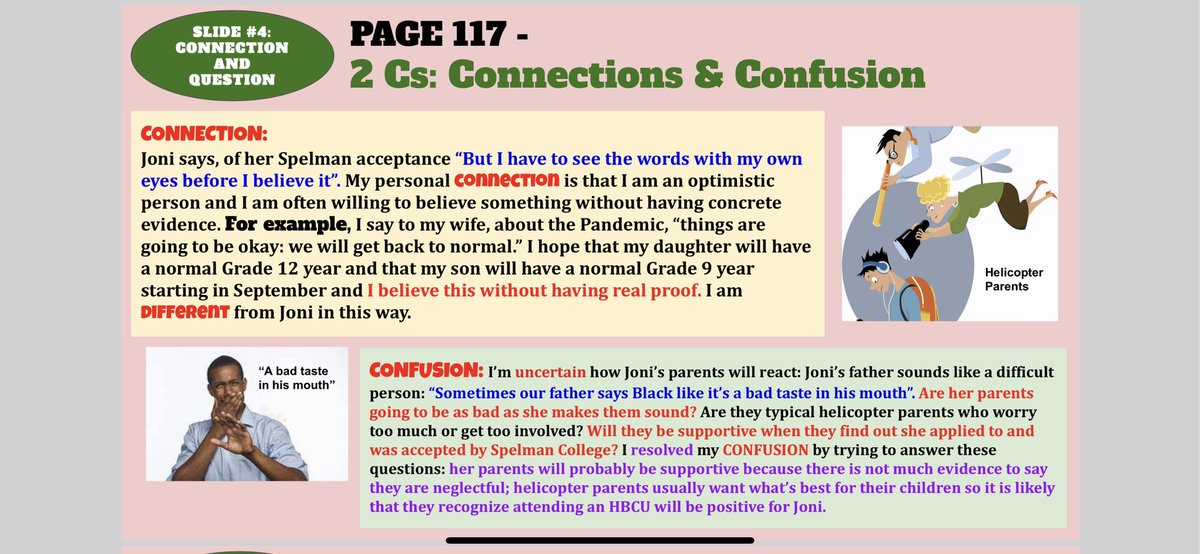
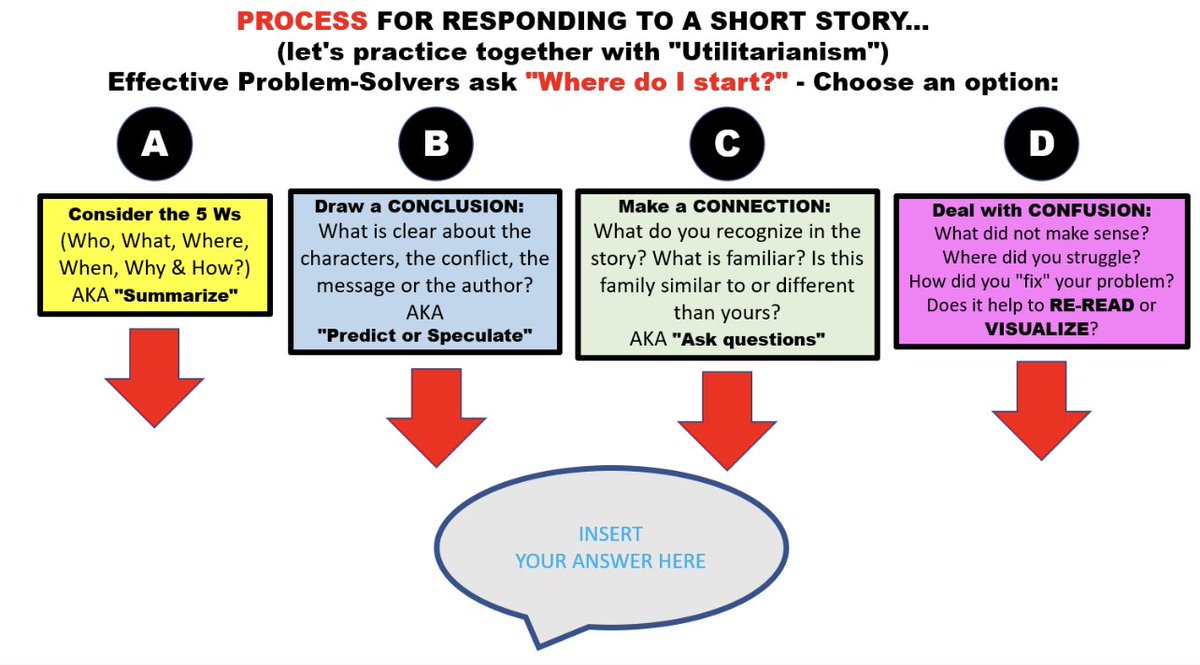
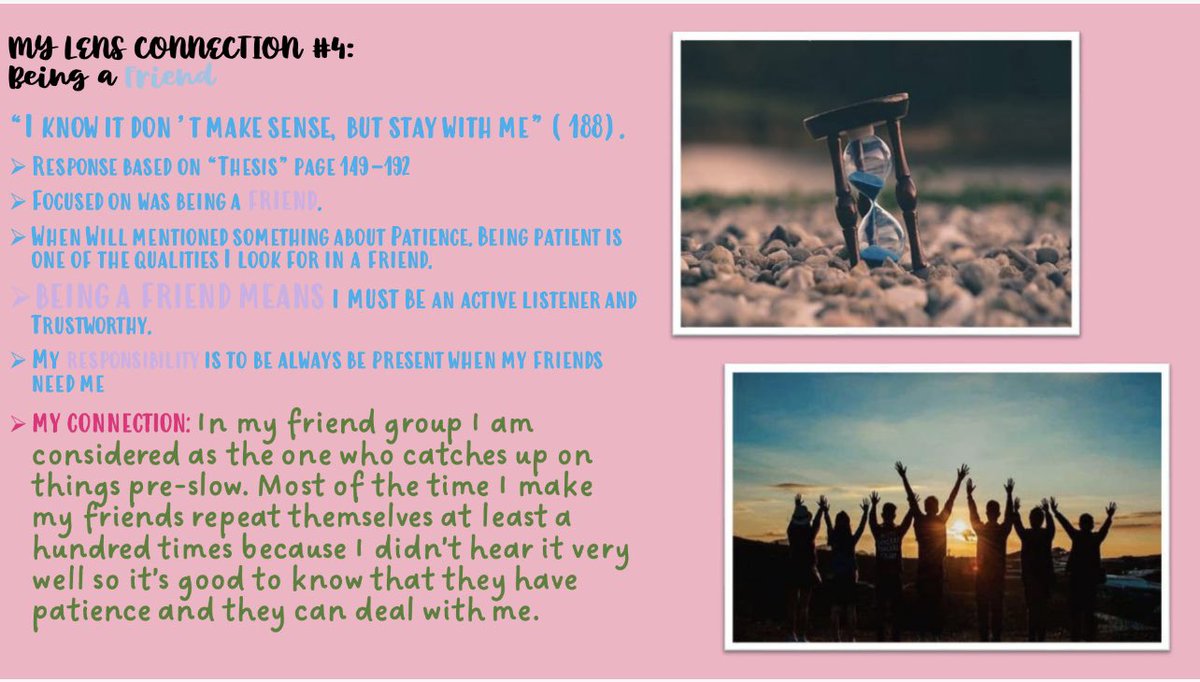
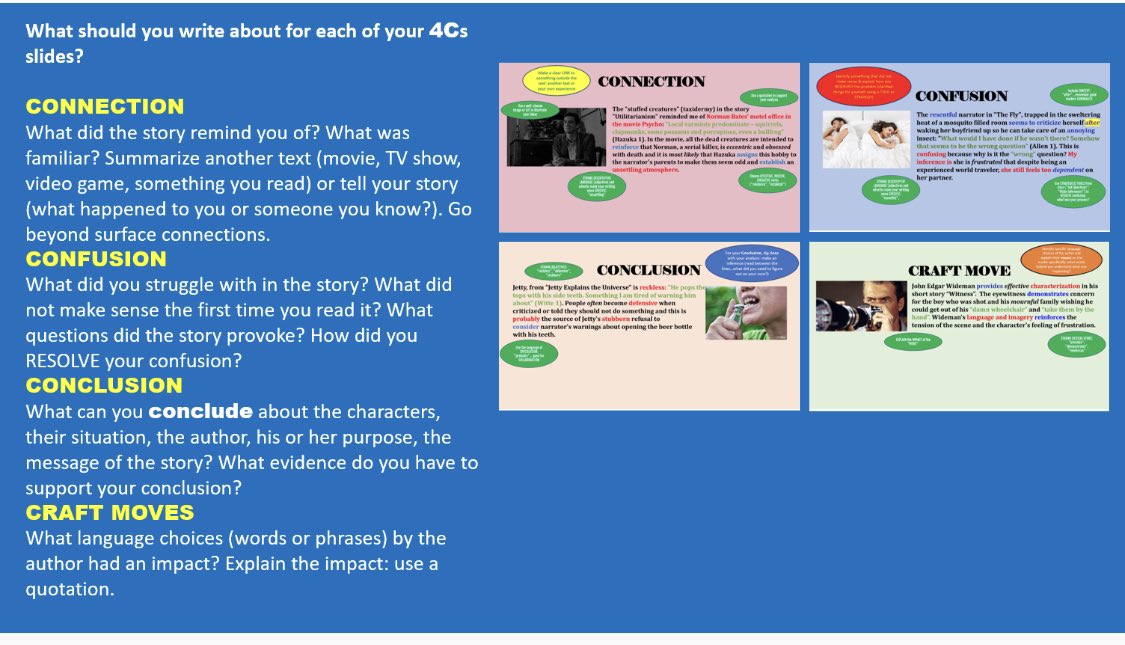
@heidi_allum I created the 4 Cs response for my students to give them a place to start when reflecting on what they’ve read: Connection, Confusion, Conclusion and from @pennykittle Craft Move #educhat
As you're thinking about classroom assessments next year, remember that we grade against criteria for standards, outcomes, learning goals, i.e., evidence of learning, NOT the vehicle used to deliver that evidence. So, unless we're teaching the assessment format itself, whether or not students do a project, test, paper, demonstration, etc is irrelevant: It's whether or not they presented evidence of their proficiency. This blows the hinges off the doors on the way to success as it opens new and meaningful ways to demonstrate mastery. There's a lot of agency here, which leads to students owning their learning. For some units of study, teachers can even ask students for proposals for how they will demonstrate the evidence of the standard. Then, as with most assessments, ask students to prove their evidence, to explain how the standard is manifested in their presentation. Gosh, this makes learning -- and teaching -- way more fun, and for students, more substantive.
A3 #WhenKidsCantRead is directed by IF-But-Then thinking: IF students can do this, BUT need help with this, THEN help them with this and read these chapters . . .
#liftingliteracy#g2great
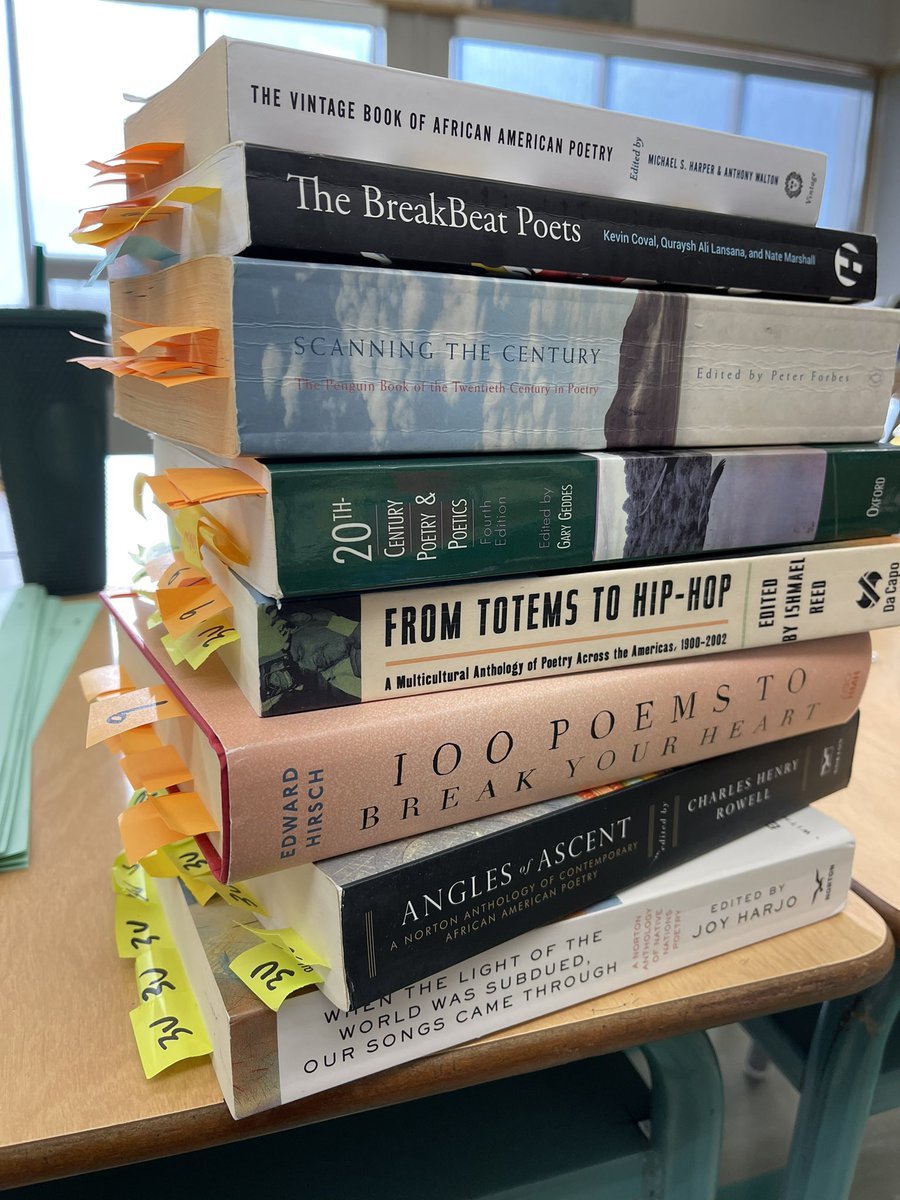
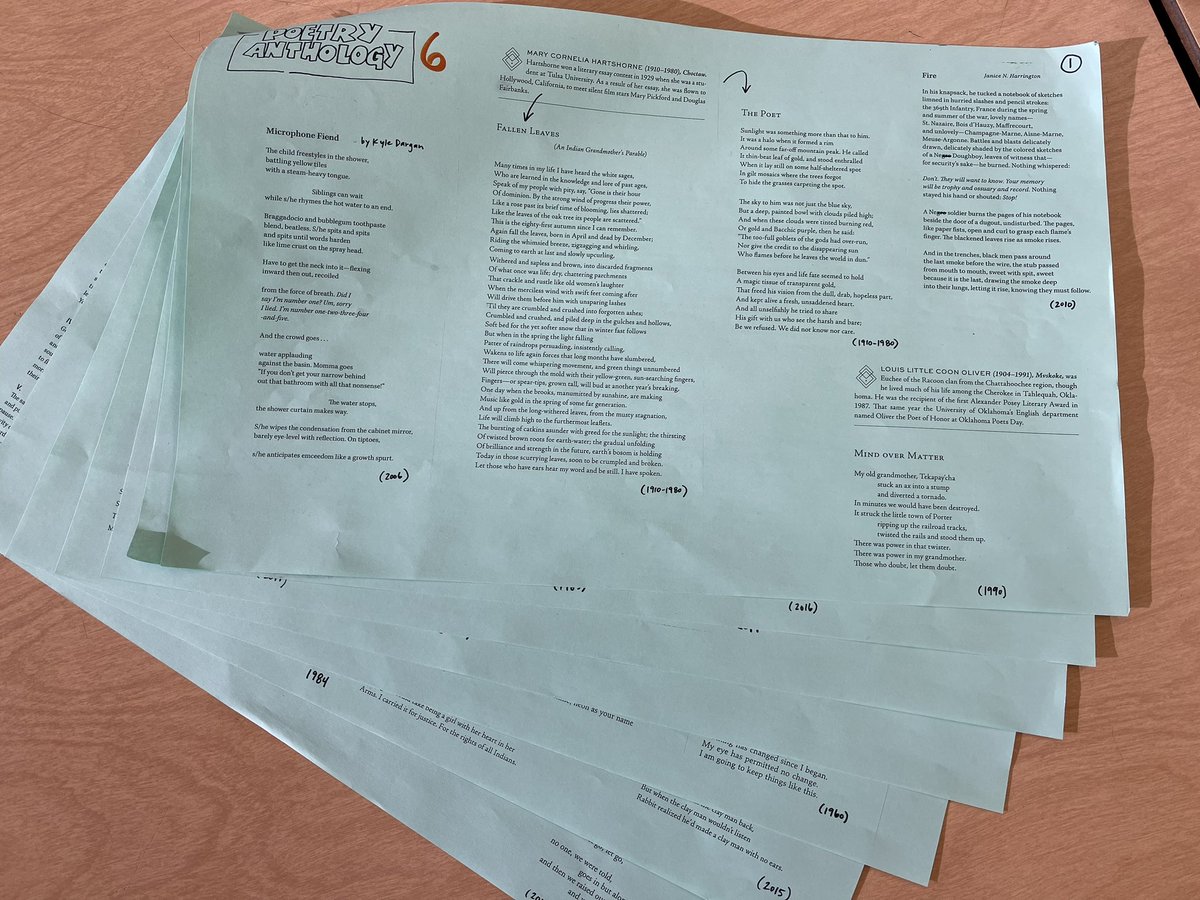
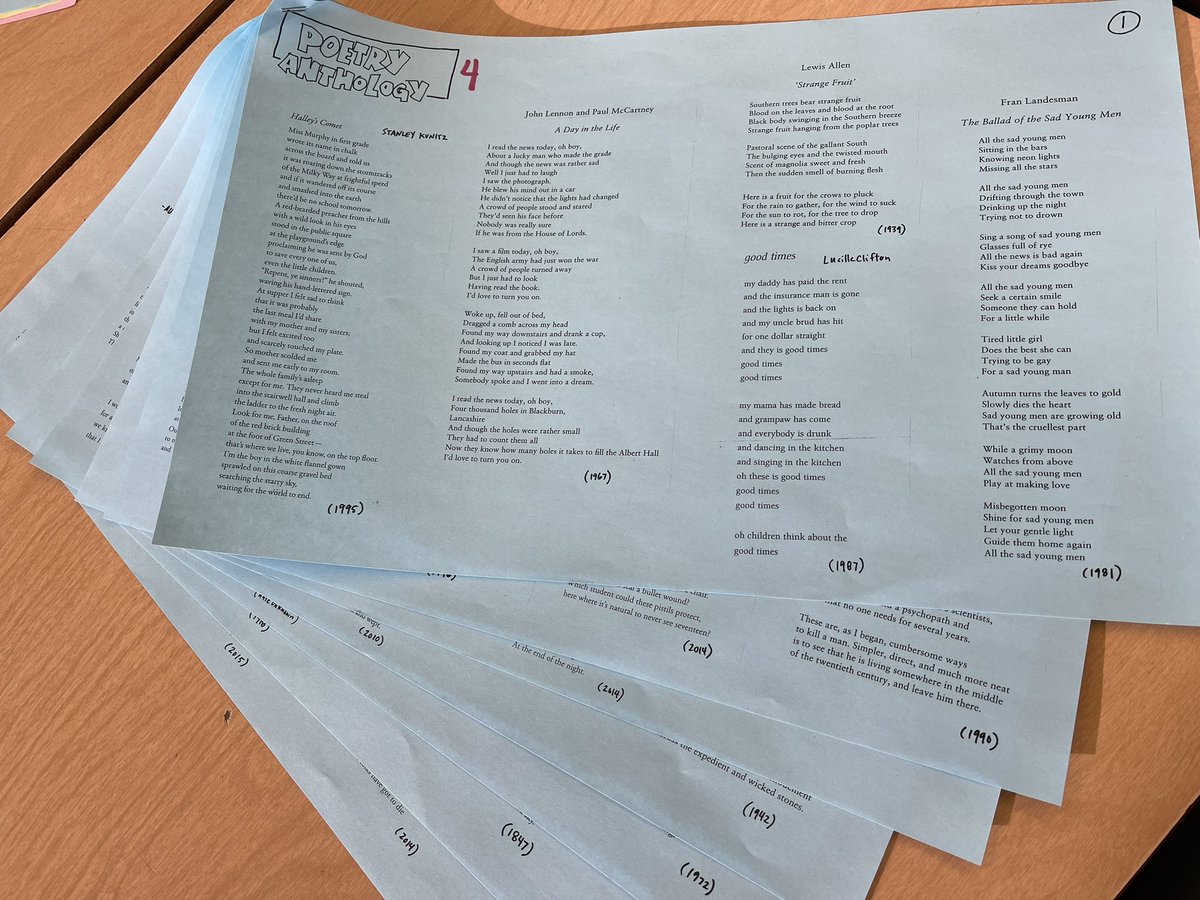
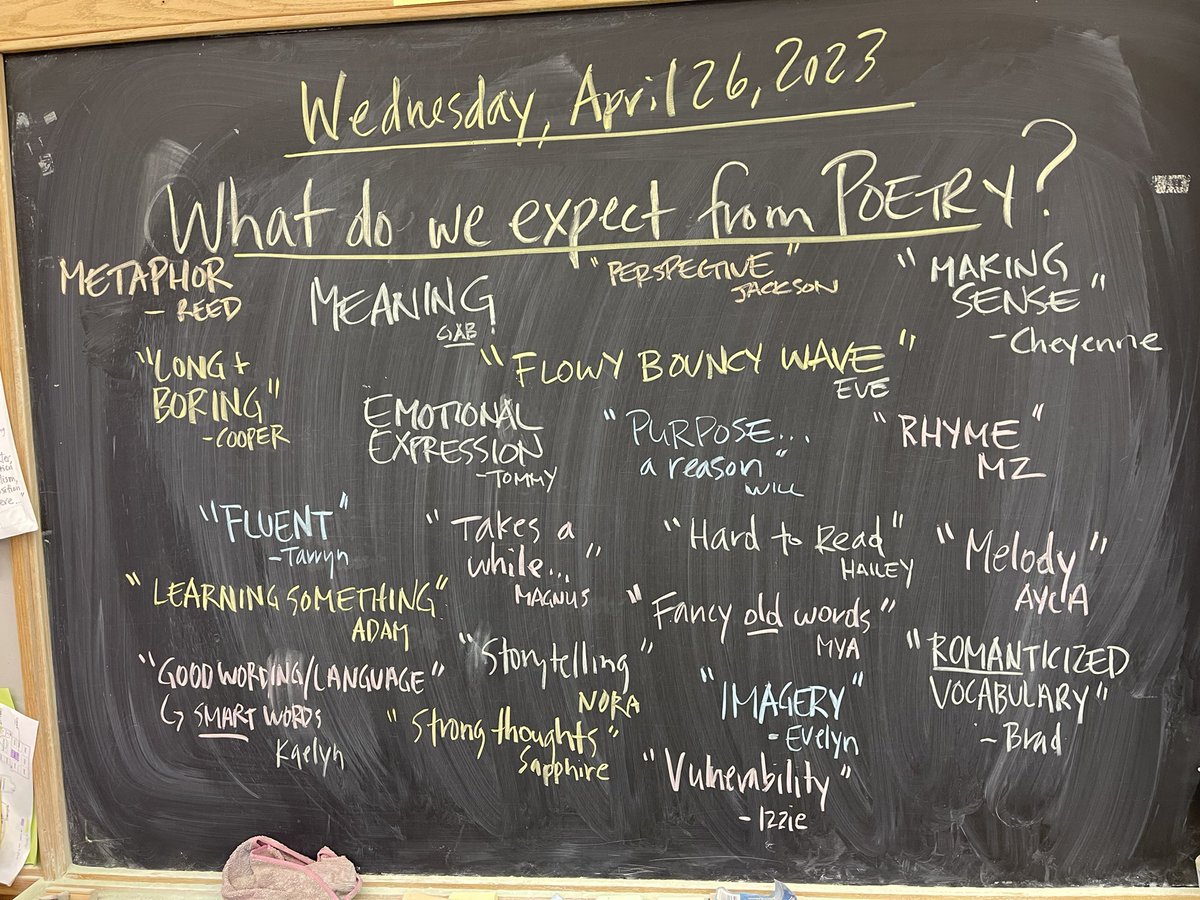
Finding poetry for my students as fun as hunting for the next great short story: centring voices traditionally marginalized with an occasional bone shaker like Emily Dickinson or Philip Larkin…#studentvoice defines what we expect to find when reading poems #educhat
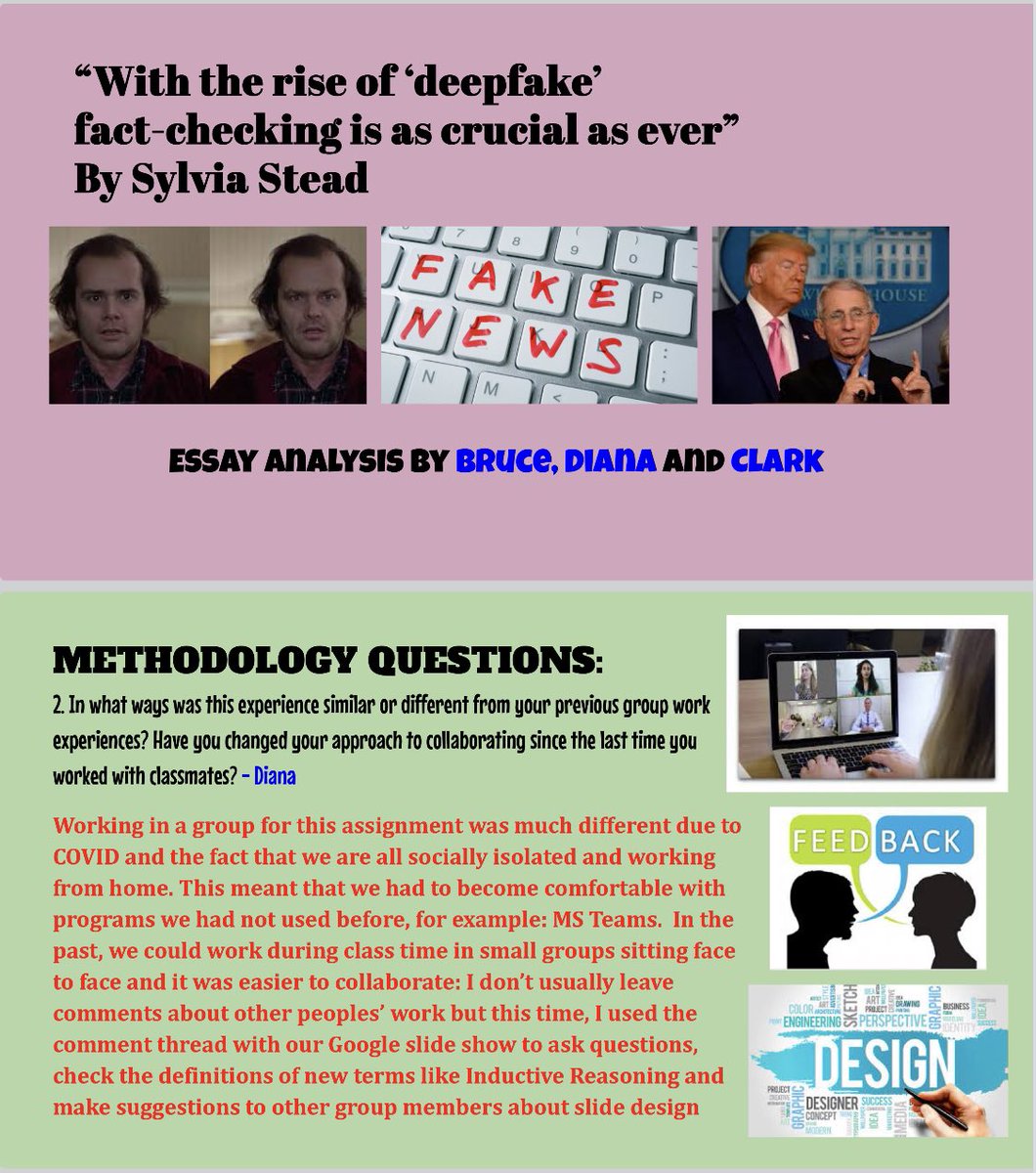
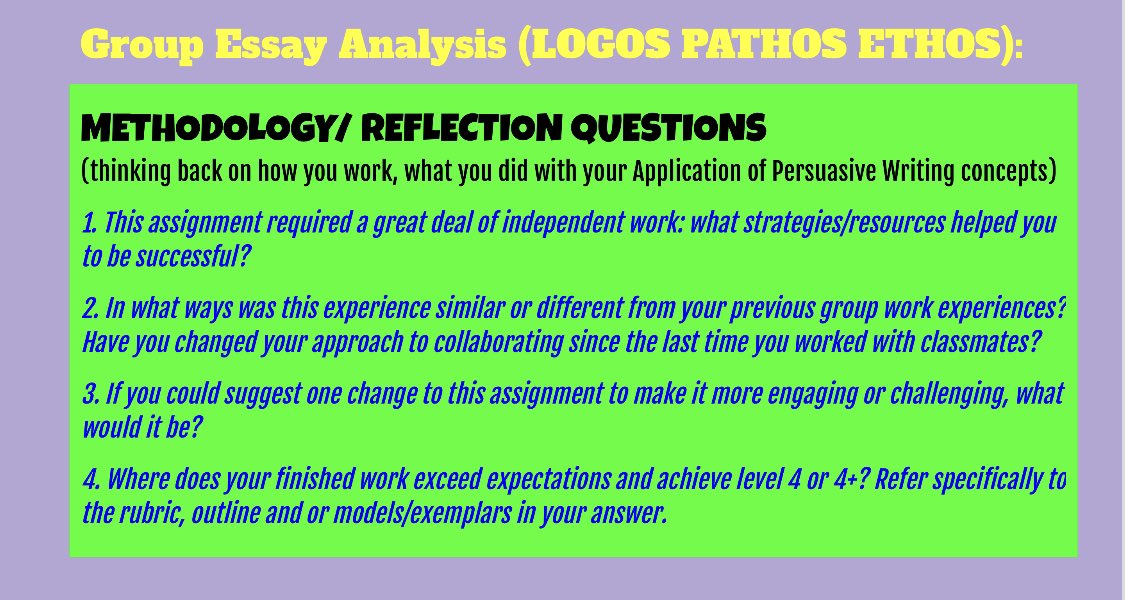
Very excited to start essay analysis with my Grade 11s today: topics including Trans Panic, Indigenous Land Rights, Cancel Culture, Athletes’ Voice, Assisted Death, Deep Fakes and Parenting #educhat
@AngelaStockman We use “the 4 Cs” (Connection, Confusion, Conclusion, Craft Move) as a starting point…identifying a moment in the article that caused them Confusion normalizes struggle (part of it includes explaining their process for resolving the confusion)