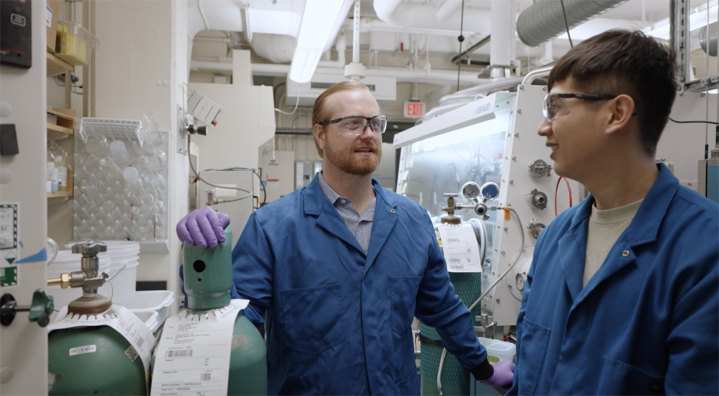
I'm really excited about the work we're doing on #carboncapture in the @MITCSConsortium. This video is a great summary of that work and the fantastic people involved.
The MCSC’s work in its #CarbonCapture & Storage focus area has brought together, and leveraged, a vast network of #MIT faculty and researchers. Hear more from @JunorGlen, whose leadership propelled this work forward: https://t.co/0irevwEXbx
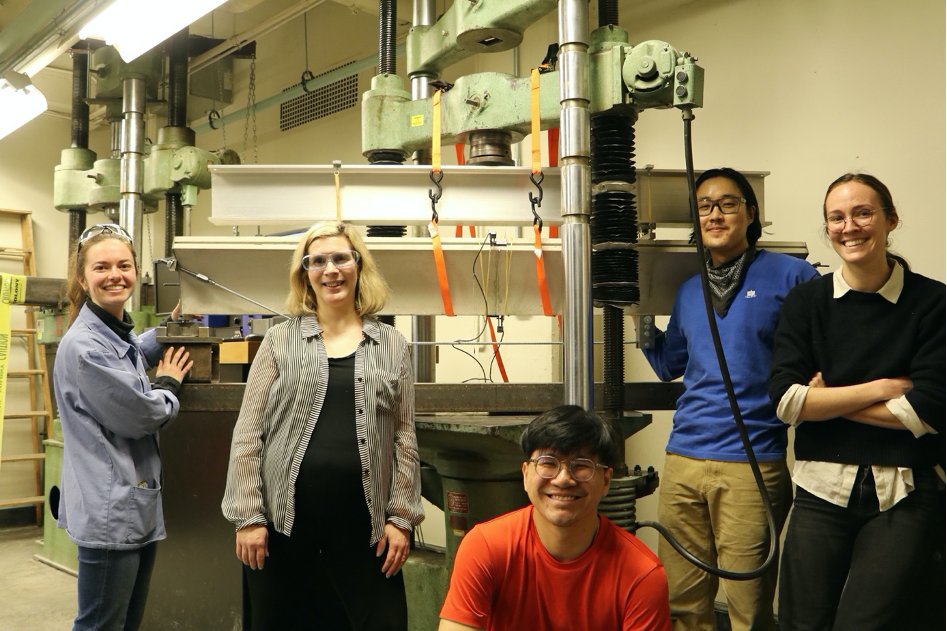
This is some innovative work led by Prof. Caitlin Mueller on reusable concrete structural components. It could really change the way we think about circularity in buildings.
A team of MIT researchers, led by Caitlin Mueller, in collaboration with @Holcim and @Prologis (MCSC member companies), are developing a system to reduce the material footprint of products through material recovery and efficient material use.
https://t.co/EIgSklQGdX
I'm glad that our president is listening to the @MIT community's desire to take bold action on climate change. Having her support puts more wind in our sails!
@karanbhuwalka@WSJ@Gladwell Great recommendation! I heard that episode when it came out and was on team cold water before because I knew about the life cycle assessment results, but it was good confirmation. But as they say in the WSJ article, behavior change is tough.
Electrification of buildings is a priority, but it likely will not be practical in many instances. This solution of capturing CO2 from boilers and then using the CO2 to make concrete blocks is a good one that I hope expands to other areas. https://t.co/oxzrd03lY7
We recently hosted a study group at the @MITCSConsortium on Voluntary Carbon Markets with an expert panel from @MITSloan, @MITdusp, and @BBVA. @SydneySroka, @AneilT, and I wrote a topic brief highlighting issues discussed by the panel: https://t.co/humxD0iI1p
You can hear directly from @MITCSConsortium members about some of the great work they are doing with the @MIT community to rapidly scale climate and sustainability solutions.
The MCSC's 2022 Symposium brought together experts from our member companies and the @MIT community to collaborate on developing global #climate and #sustainability solutions.
https://t.co/8nxVpLM2xR
The MCSC’s 2022 symposium showcased the benefits of academia-industry collaboration over #climate and #sustainability topics. An emergent theme was that the best way for various sectors to reach sustainability goals is to work together:
https://t.co/5N4Lbf6M2e
This increased transparency should be used for better interpretation of ESG ratings. We're in the early days of ESG measurement and their insights can help us improve the systems and our use of them for impact investing.
I really liked this article "The Signal in the Noise" about the challenges and opportunities in the #ESG rating space by @berg_florian, @jasonjjay, Julian Kölbel, & @RobertoRigobon from the @MITSloanSusty. They have some great insights. 🧵
https://t.co/rVCQ1RcM0H
They've done some in-depth analyses of ESG ratings and show that there is indeed quite a bit of noise, but that does not mean that the ratings are worthless. Rather, there should be more transparency around measurement and weighting approaches.
This resonates with me because of what I hear from students: they want to work for companies that are doing work that matters. Companies should be prepared to compete for top talent by demonstrating positive impact and commitment to climate goals. https://t.co/H0q0RuiDTi
While we're well aware of the impacts of materials and energy used in vehicles, this important study from @MIT researchers highlights the impacts of computing for autonomous vehicles. This is the iceberg below the surface that we need to monitor.
https://t.co/X4avoNOKMe
While it is heartening to see companies investing millions of dollars in regenerative ag, there are significant challenges getting farmers to change their practices. Another case of behavior change and finance being critical to enabling mitigation. https://t.co/JcZt284hpA
In my experience, behavior change is more important than technological solutions to address most sustainability challenges. Central Ohio is using behavioral science principles to increase food composting rates. We need more of this. https://t.co/IjBX0WANM6