🚨 New working paper alert!! 🚨
In work w/ @JocelynWikle and @1rileywilson, we study the policy that’s been the most prominent form of public education investment in young children—full-day kindergarten expansions—over last 3 decades in the U.S.
https://t.co/f8AeiElYEp
1/13
🚨🚨
@EarlyLearnNatn & @The74 say our full-day K study - w/ @JocelynWikle & @1rileywilson - is a MUST READ from the 2024 research on child care and early learning!
Also: insights from Christ Herbst & @JHB_econ, research from Aaron Sojourner & coauthors
https://t.co/Wm3uIeOTfF
I was delighted to see the BYU News article about our full-day K study (with @1rileywilson & @JocelynWikle, both at BYU) was one of 2024's most read!
We couldn't beat the story about the new creamery on campus though. 1/3
https://t.co/nZtoFO9d7B
Our new work on full-day kindergarten expansions has been getting a lot of attention in Utah, and not just because my fantastic coauthors @JocelynWikle and @1rileywilson are at BYU…
Check out this thread from my coauthor @chloergibbs! We study how one of the most wide spread public education investments -the transition to full-day K- affects maternal labor supply and family decisions in the US. It has been great to work with @chloergibbs and @JocelynWikle!
This is one of the most exciting and important papers I’ve seen in a good long while. Looking forward to digging in! Variation in policy exposure, long term outcomes, and intuitive data visualizations to really motivate the intuition
Got one of my favorite recent research facts that can make you interesting* at dinner parties when I saw Chloe present this paper:
For as much as we (rightly) talk abt pre-k, growth in full-day K has been a much, much bigger source of childcare expansion
*definitions may vary
"full-day kindergarten expansions were responsible for as much as 24 percent of the growth in employment of mothers with kindergarten-aged children in this time frame" #edpolicy#scipol#workingmoms
My daughter just took a career aptitude test. Much to her dismay, the test said she would be an excellent . . . economist. And to add insult to injury, the second suggestion was an economics professor. I guess the invisible hand doesn't fall far from the tree.
It's funny to me that so many economists are children of economists. My children are like, 1) everyone's parent is an economist, and 2) economics sounds *so* boring.
Brookings has launched the State Safety Net Interactive tool, based on the calculator I developed with @LShoreSheppard and @taraelizwatson :
https://t.co/7st4eQn38X
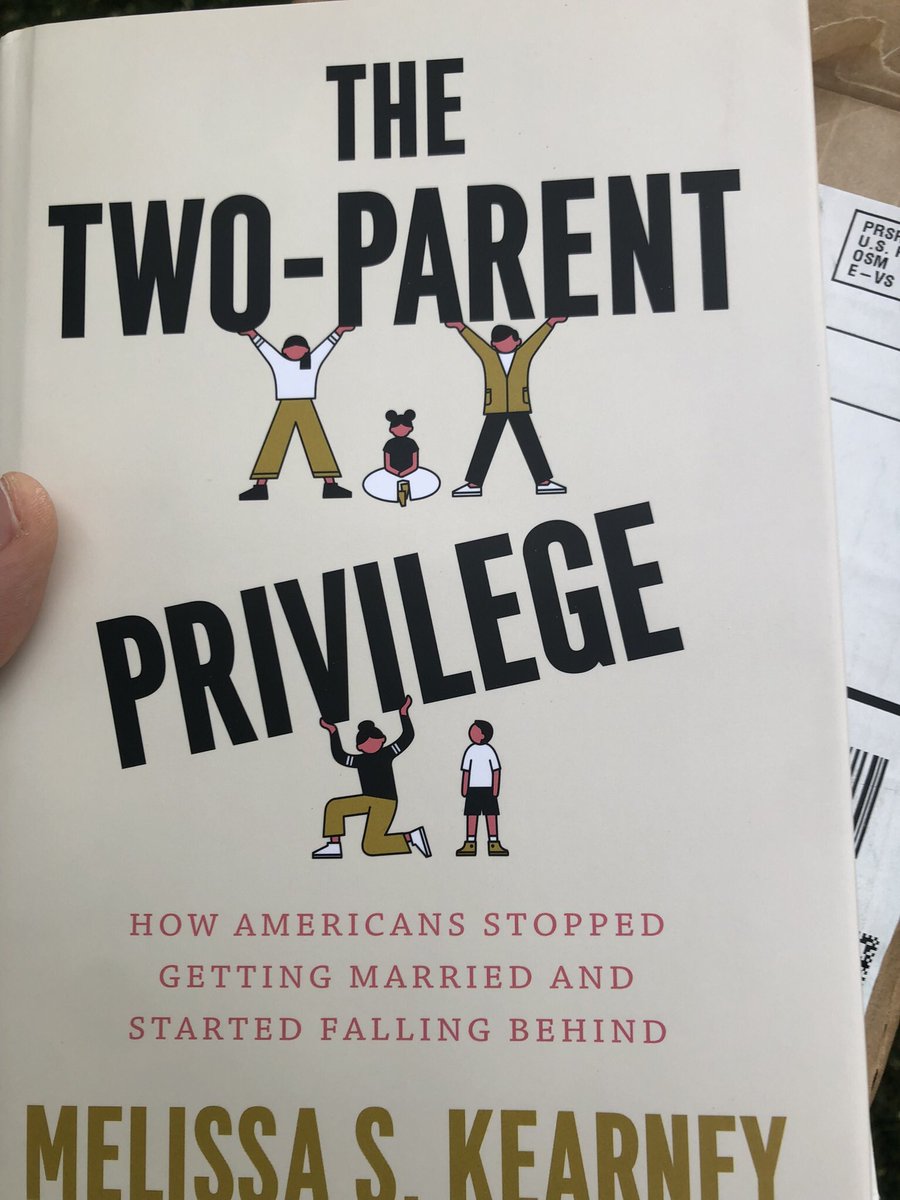
Took me a long time but finally finished @kearney_melissa’s “The Two-parent Privilege”. Wow. Such a valuable contribution to help us think about unequal resources for kids. She has started a needed conversation of how society can foster more resources (time and money) for kids!