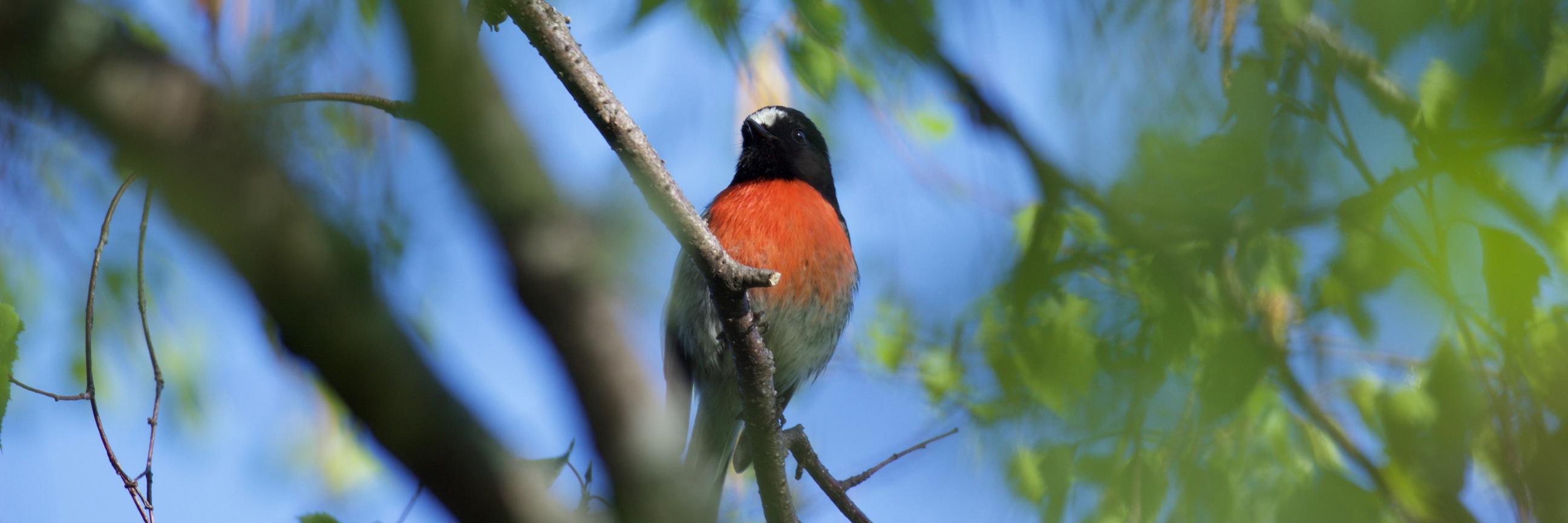
We were on ABC TV! Allison joined host Dr. @jones_ann and friend of the Fairywren Project, Mark Eatwell to visit Mark’s friendly Splendid Fairywrens in the Perth hills. If you missed the program you can catch it on iview - episode 4: https://t.co/JMhQHMq6Xa
We won again! Thanks @NYFestivals for the nod and congrats to @jones_ann and team. You watch this exploration of the physics of sound in nature on ABC iview.
Eight new Pacific masked bees just dropped 🐝! What’s really cool about these bees is that (i) they’re mostly restricted to forest canopies, (iii) prefer for red flowers, and (ii) resolve how Hylaeus tuamotuensis got to French Polynesia!
1/16
https://t.co/pbBxsKF1aD
@_iamthefran Oh! That is a great hypothesis. I think the eye position means that they have patches of vision that is bad - but I'm not sure if an object as big as a car would be impacted by that.
I was wondering if they just underestimate the speed of the car!?
Listen to weird facts about the animals we found in our Brisbane house (out of 1,000+ species!) on @ABCscience podcast with @jones_ann 👉 https://t.co/QjSm0g1yhI My brother says her's is better than the version we wrote 😂😅 👉https://t.co/xqpCHWYnjv pic 👇by Andrew Rogers
Incredible to watch tens of thousands of Grey-headed Flying-fox megabats (Pteropus poliocephalus 🦇) leave their roost at sunset to forage for nectar overnight - so many that they're accidentally mapped as rain on the @BOM_au weather radar! 🤯 #wildoz
A pair of brown falcons nest over in the neighbour's pine tree and one just flew over the house with a decent sized snake in its talons.
Now I can hear much happy screeching from the tree top
Penguins + fire = bad news.
So we’re changing the habitat in the world’s largest little penguin colony, making it more resilient to climate change. https://t.co/3oiZICxiT0
Did you know that only one species of Christmas Beetle is found in Tassie? It's called the A. suturalis. So we need as many people as possible to tell us when they spot one. Find out more at https://t.co/Qu5Sjt3mUU #Tasmania#christmasbeetlecount#invertebratesaustralia
A few weeks back @jones_ann asked me a seemingly straightforward question which immediately sent me into a spiral.
Come wade into the muddy waters with us as we attempt to answer the question “what is a species?”
https://t.co/GEdFOMH693
So it’s 2023 and the Bengal florican isn’t extinct. Individual birds like this gorgeous little chick have the species’ future riding on thier survival.
Stream Project Wild: Cambodia on @abctv for more of this cutey.
Watch—-> https://t.co/P6Rbt0CGai
The Bengal florican, a large grassland bird found in Asia, was predicted to go extinct by 2023. It’s now 2023, so what happened? #ProjectWildABC
Bengal floricans like to live in tall grass. But grasslands also happen to be one of the easiest places for humans to develop…
With fewer than 800 wild individuals left, the Angkor Centre for Conservation of Biodiversity thought they’d attempt a world first. They’ve setup a Bengal florican assurance colony in Cambodia.