I figured this would eventually happen, but not as quickly as it seems to be happening and, for this, Paul Krugman should get credit. For years mainstream economists were unable to understand how trade and globalization work because they were locked into trade models that implicitly assumed that trade was balanced (except, occasionally, over short time periods) and that capital flowed towards its most productive use. That is why their understanding of trade had no relevance to the actual world of trade that emerged in the 1970s and 1980s.
But this couldn't last. As the problem of unbalanced trade became more obvious , and as policymakers were increasingly forced to ignore the advice of their economists and respond to real problems, mainstream economists would eventually begin to recognize how, in an unevenly globalized world, countries that aggressively intervene in their domestic economies and externalize the costs through trade surpluses are also effectively intervening in the domestic economies of countries that supposedly remain committed to "free trade".
Most economists still don't understand trade. But with Krugman now acknowledging that tariffs and other forms of trade intervention can be expansionary under some conditions and contractionary under others (as Ragnar Nurkse explained as long ago as in his 1944 book), I suspect that younger economists will develop a completely different understanding of trade, and one that is perhaps a little more realistic.
“The danger of umbrellas is that they turn rain into a matter of private comfort. Those who can pay escape getting wet, while the public world becomes soggier, more unequal, and less livable. Moral thinking must begin outside the dry zone.”
We tax cigarettes to reduce smoking.
We tax alcohol to reduce drinking.
We tax fuel to reduce driving.
What do you think happens when you tax employing people and running a business?
Today, we are releasing Rampart: a 14.7MB machine learning model designed to protect citizens’ privacy by redacting personal information directly in your browser before it gets sent to any server
ARTIODACTYLA, from the video: https://t.co/VqeicoLIG5 including also Cetaceans 🐋 Poster available for prints and more at mariolanzas.redbubble. com 🐫🦌🐏🐂 #artiodactyla#paleoart#prehistoricanimals
It’s becoming increasingly clear to me that what we’re watching is a modern social media auto-da-fé. This time, the town square is digital, the crowd is global, and the ritual unfolds in real time before millions. Scott Wiener is simply the latest prominent target.
Unlike the Spanish and Portuguese Inquisitions, we are no longer limited to describing the spectacle. We now have decades of research on how the brain forms beliefs, adopts identities, conforms to groups, and makes moral judgments. Add to that nearly four decades of psychotherapy, including patients from across Los Angeles’s political spectrum, and I think we’re finally in a position to understand the psychology of the crowd that embraces them.
We’re making a mistake if we think propaganda is only an information problem. Especially within the emotional incentive structure of social media, it is also an intense psychological state.
Moral intoxication is the culmination of the psychological model I’m developing to explain how propaganda takes hold in the brain. I’ll be presenting the complete model at the Contemporary Antisemitism Conference at the University of Haifa in July. The emergence of this psychological state helps explain why repeating certain narratives becomes psychologically rewarding and self-reinforcing, why moral certainty eclipses moral consistency, and why public rituals of denunciation become so resistant to evidence.
A social media auto-da-fé is not necessarily fueled by cruelty. It is fueled by the psychological rewards of feeling moral. The ritual itself becomes rewarding. For some, it produces the exhilaration of moral superiority. For others, it offers moral absolution. Either way, participating becomes proof that they are among the righteous.
From that state, increasingly extreme behaviors can begin to feel not only justified, but morally necessary. Public shaming, ostracism, discrimination, and even violence can become expressions of moral intoxication. We saw the same psychology in the online celebration of the murder of UnitedHealthcare CEO Brian Thompson. Different target. Same moral-intoxicated reward structure.
Social media has become the modern mechanism for accelerating the auto-da-fé.
What is shocking to me is that he is so passive, because if I was being confronted by a braying racist goon, I would not react this way.
What is not shocking to me is that barely anyone is speaking out against this on the left. It’s indisputably endemic & it’s disgusting.
Total pre-IPO investment in Tesla (debt and equity) was something like $700 million. With an m, not a b. For SpaceX, it was ~$12 billion. Look at what those investments did to the world. You can see the results all around you, in every city in America, and in space. Over 9 million electric cars on the road. Breakthroughs in battery design. Internet access in every remote corner of the planet. Cost of launch dropped by more than an order of magnitude. What has her $26 billion done?
There are entire mountain ranges of empirical research about the negative effects of rent control. Saying “let’s see how it goes” is like saying “Could leeches be effective medicine? We’re finally going to find out!”
Had we not killed nuclear tech in the 70s, today we'd have 100 million people on the moon and 4 billion on Mars
The cost of today's standard of living would be ~1/50th, and people would feel wealthy.
But no, we allowed socialists to kill nuclear.
😪
Half the land area of Boston, a quarter of NYC, and 15% of San Francisco were raised from the sea before 1970.
Since then, land values have grown by 30x but land reclamation has ground to a halt.
This failure follows the spread environmental law around the world rather than any geographic, technological, or economic constraint.
Thus, our lack of land reclamation and the severe land constraints in our most important cities are self-imposed and avoidable. We should make more land!
https://t.co/J9zghvLkz2
Land reclamation was common practice in American cities in the 19th and 20th centuries. Seattle, Chicago, Boston, Charleston, San Francisco, New York, Philadelphia, Norfolk, DC, Oakland, and LA all had major land reclamation projects that extended residential living space or infrastructure or both.
The Bay Area alone reclaimed an area of land equivalent to ten Manhattans between 1850 and 1957, at an inflation-adjusted cost of $330,000 per acre. Today, an acre of single-family-zoned land in San Francisco County averages $24 million. Even if the cost of land reclamation grew faster than inflation, despite technological leaps in dredging and construction technology, there should be plenty of room for profitable arbitrage.
And yet, land reclamation is extinct in the Bay Area as well as in every other American city. This isn’t because we ran out of good spots to reclaim: Two thirds of the San Francisco Bay is shallower than Boston’s Back Bay was when it was reclaimed in the 1860s. Nor is it because of better transportation: We’ve used up all of the easy suburban expansions enabled by the train and the automobile so prices are rising even in outlying suburbs.
Instead, land reclamation’s death is due to environmental law. Evidence for this claim shows up in the coincident timing of land reclamation’s demise across dozens of cities in the US and in the environmental compliance process of the few reclamation projects still inching along today, but the best evidence is found internationally.
No country has more experience or more reason to reclaim land than the Netherlands. The Dutch built 5% of their country out of the sea over the first half of the 20th century and by 1975 they had another artificial lake in the Zuiderzee ready to drain at the flip of a switch, which would have made tens of thousands of acres of land just east of Amsterdam. But a 1969 environmental review law, similar to NEPA in the US, stopped the project before it was finished and the site is now a protected bird sanctuary. Their one major reclamation since, the Maasvlakte 2 extension of the port of Rotterdam, took 11 years and 6,000 pages of environmental review before construction began.
Inversely, countries without these laws, like China, Singapore, and Japan have continued major land reclamation projects into the 21st century. China has reclaimed over 5,000 square kilometers since 2000, including a city of half a million outside Shanghai and Singapore has grown by a quarter since 1975.
Every major American city has a land shortage. But we have more than enough shallow water, dredging capacity, and market incentive to make more land, just like we did 150 years ago. The only obstacle is our own choice to make making land illegal. The benefits of more land in our most productive cities are large enough to justify the effort of reforming the laws that currently prevent it. Let’s make more land!
I am.
I’m someone who was once a practicing Muslim, I know Islam intimately, from the inside. And right now, I’m deeply, genuinely alarmed.
What breaks my heart is that almost no one truly understands what I’m saying… except those who’ve lived it. The actual victims of this ideology.
It’s a lonely, painful thing, watching something so destructive unfold in plain sight, while the people around you remain completely oblivious.
You see the warning signs so clearly, yet most just smile, nod, and keep scrolling.
That silence and denial is exhausting.
Even worse, some twist the knife by trying to make you feel stupid, like you’re overreacting, paranoid, or imagining something that isn’t even happening.
NEW BOOK ALERT
28 page sci-fi bestiary styled as a vintage naturalist book. if you're a fan of Pikmin, speculative biology, or just looking at little beasties, you may enjoy Observations of a Small Boulder in Hantu Forest
digital release only for now, check the l!nk in my bio!
Neat!
The White House now wants to go after anti-competitive hospital contracts.
They estimate that doing so would "reduce hospital and affiliated-physician prices by 18%", or about "$4,100 per inpatient admission" in the affected markets.
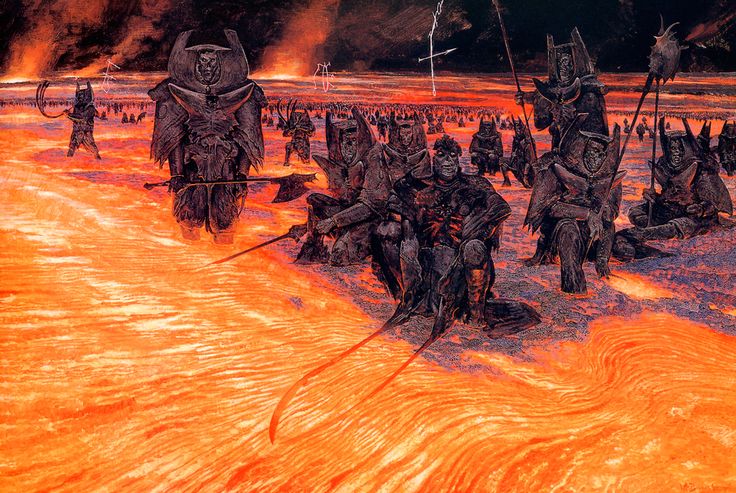
People saying pacific rim almost had them fighting demons are missing out on the artist (Wayne Barlow) own rendition of hell itself, which is even more wicked.
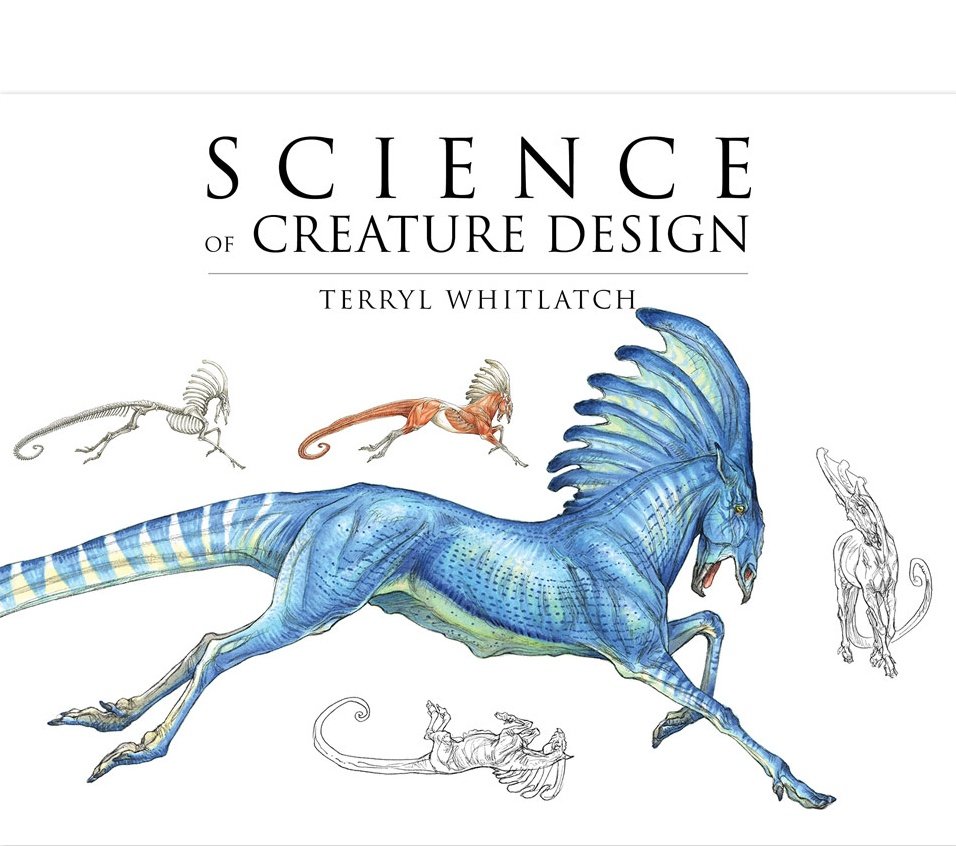
If you're a fantasy author/game designer and want to create interesting and biologically believable worlds without resorting to tired Tolkienisms like dwarves, halflings or horses, you need to be reading 'Science of Creature Design' and 'Animals Real and Imagined,' by Terryl Whitlatch.
She served as the lead creature designer on Star Wars Episode I: The Phantom Menace and created most of the iconic aliens and animal designs we see in that film.
Fantasy fiction is a realm of limitless imagination. You should have no excuse not to create original creatures rather than endlessly importing borrowed ones.
Little test with Pixzels software, the 3D version is generated via the 3 textures, It's possible to edit it manually, but I limited myself to the generated result.