If you’re writing dual POV and one of the voices sounds like the other but with a hat on—go back. POV is perspective. Let them see the world in completely different ways. #AmWriting#CraftTip
One thing I’ve learned as a therapist is that behavior *always* makes sense from the person’s perspective.
If the behavior didn’t make sense to them, they wouldn’t DO it.
So instead of getting mad… find out *why* it makes sense to them.
Many authors query far before their manuscript is actually ready.
Remember: agents don’t usually sign authors based on potential alone—they need to see strong execution. So how do you know if your story is ready to query?
Ask yourself these 5 questions before you hit send.
Watching The Ritual (2017) movie last night when 30 minutes in I said I’ve watched enough and husband asks me if I’m scared and I scoff and say no and then proceed to sleep with the lights on.
#ritualmovie#scarednotscared
No more secrets! I'm so excited to announce that I'm a literary agent with @roseclifflit, and I'm open to queries on Friday! Huge thanks to Jessica Berg for the encouragement and mentorship! MSWL below!
Five years ago, I helped my cousin promote the Violins of Hope event she was coordinating at a shul in Miami Beach. It was a beautiful, meaningful evening.
I’m excited for your book 💙
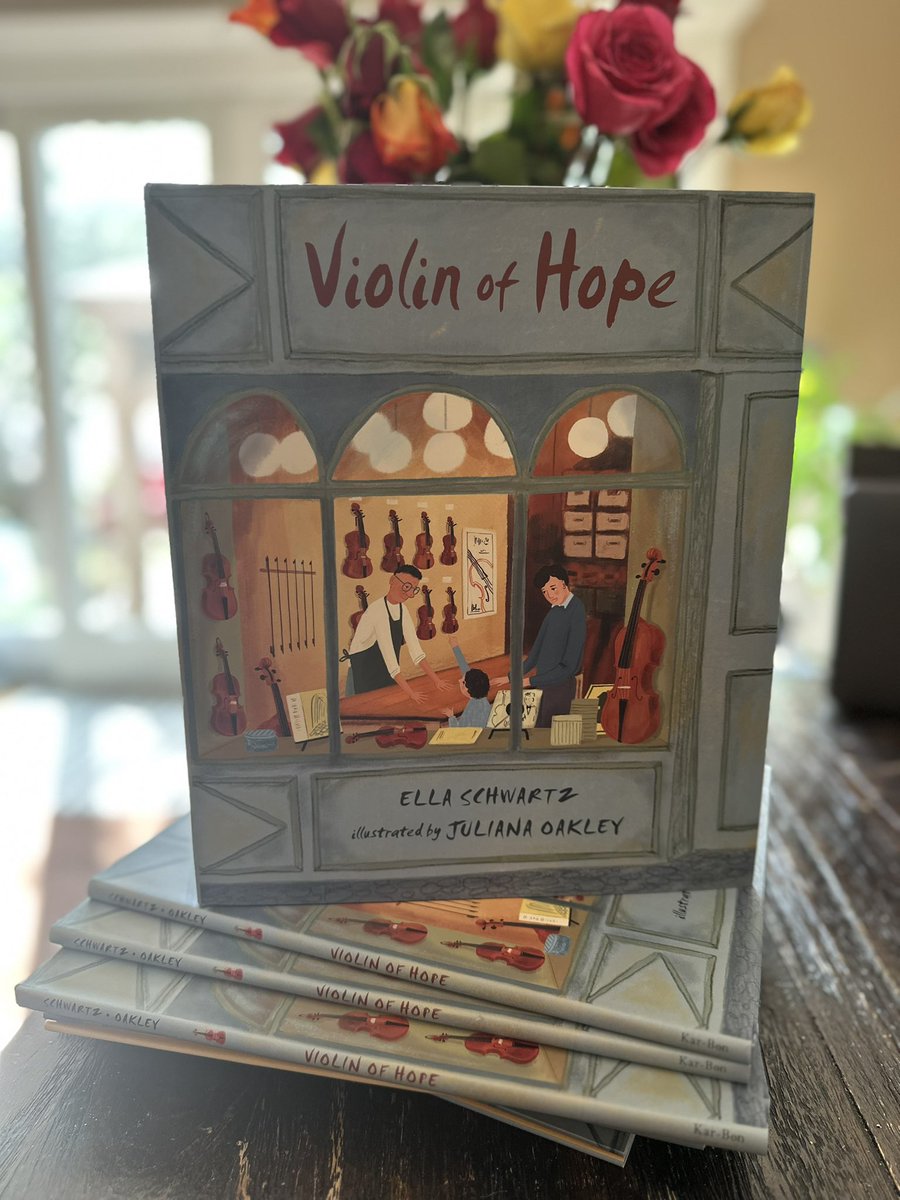
Violin of Hope publishes on Nov 5.
It is about hope for the future. Hope after despair. This has been a dark year for #Jews. Part of me is nervous releasing a #JewishJoy book in this #antisemitic climate. But in no small irony, the book publishes on #ElectionDay. A sign? #Vote
If you're writing an MG or YA manuscript in first-person POV, I would encourage you to write it in present tense rather than past tense. Why? Two major reasons:
Reason #1: Writing the story in past tense suggests that the narrator made it through the ordeal safe and sound. Young readers stay more engaged when the outcome is uncertain.
There's science behind this. The prefrontal cortex, which is responsible for impulse control and future planning, doesn't develop fully until the mid-20s. Because of this, teens experience heightened emotional reactivity (not that you'd any official scientific studies to notice). That means teenagers often let immediate feelings take precedence over rational consideration of any future consequences, which leads to impulsive choices.
Social science also shows that the influence of peer pressure is stronger in teens than in other age groups, which means a lot of their decision-making is geared toward enhancing social connections. Predictably, these decisions are often short-sighted.
All of this is to say that a narrator looking back at an event is doing so with the wisdom of experience. It suggests that the narrative is being told in a way that maximizes an adult perspective (a.k.a. "Past Tense"). Writing in present tense highlights impulsivity and keeps the characters' actions framed by short-term goals. Adult brains are different from adolescent brains, and writing in present tense is a better match for a story ostensibly being told by a teenager (even when it's being written by an adult).
Reason #2: There's a chance that young readers will interpret past tense POV as the voice of an adult recounting a story from childhood. Adult narrators in kids' books can come off as preachy and unrelatable. Present tense assures young readers that they're reading a story from the perspective a fellow kid.
If a young person feels like there's a moral to the story, or that the book has been crafted to give perspective to the mistakes of adolescence instead of just living through them in real-time without judgment, they will struggle to invest. Adults can pass judgment on poor decision-making. Another kid, though, will look right past it. In short, present tense creates a more trustworthy narrator for a young reader.
Are kids making these observations consciously? Of course not. But can authors make conscious decisions about which types of narration they use? Of course we can :)
As a lifelong South Floridian, I’ve heard this question multiple times. The following thread details some obvious reasons and some of the more nuanced ones. If you’re curious why some people don’t evacuate before a hurricane, @Lyons_Pen does an excellent job explaining it.
"Why don't they just leave???"
When I was a kid, I recall a sort of media campaign aimed at making people who don't evacuate during hurricanes seem stupid--to create the narrative that they deserve whatever happens because they didn't leave.
I continue to see the remnants🧵