AI-powered attacks don’t wait. Neither can detection.
Our CEO @e_kaspersky is on the Cyber Stage at #GITEXGLOBAL, Dec 8, 1:05 p.m. Dubai time: “The Attackers Have AI: Surviving the ‘Speed of Light’ Era of Cyberthreats.”
For #infosec watchers: attacks that run themselves, the risks of insecure AI adoption, and how AI-driven defense can handle routine incidents while human experts stay in control.
When attackers have AI, can defenders keep pace? Kaspersky's Eugene Kaspersky at GITEX GLOBAL.
Register: https://t.co/HAkPNfvaXM
📅 7 Dec 2026: Summit | 📍 Dubai World Trade Centre
📅 8-11 Dec 2026: Expo | 📍DEC, Expo City Dubai
🔗 https://t.co/Q3r3YYjeWs
#GITEXGLOBAL#Dubai
1/3 Between January and October 2026, Kaspersky blocked 19,063,077 phishing attempts targeting online shoppers, banking and payment users. That's up 198.1% on the same period in 2025.
Online shoppers took the biggest share: 44.5%.
Sales-themed spam spiked too: 220,071 messages in the first two weeks of November, 50.2% more than in 2025.
Seeing more lures landing in your inbox? #BlackFriday 🧵
2/3 "Because many people reuse passwords, one stolen store login often opens access to email, banking and payment accounts far beyond the original site." Olga Altukhova, Senior Web Content Analyst at #Kaspersky.
AI agents inherit their users’ permissions, and attackers can steer them with plain text instead of malware.
Most of the defence runs on controls you already have. Six attack paths and how to close them: https://t.co/IJhyDM0Iat
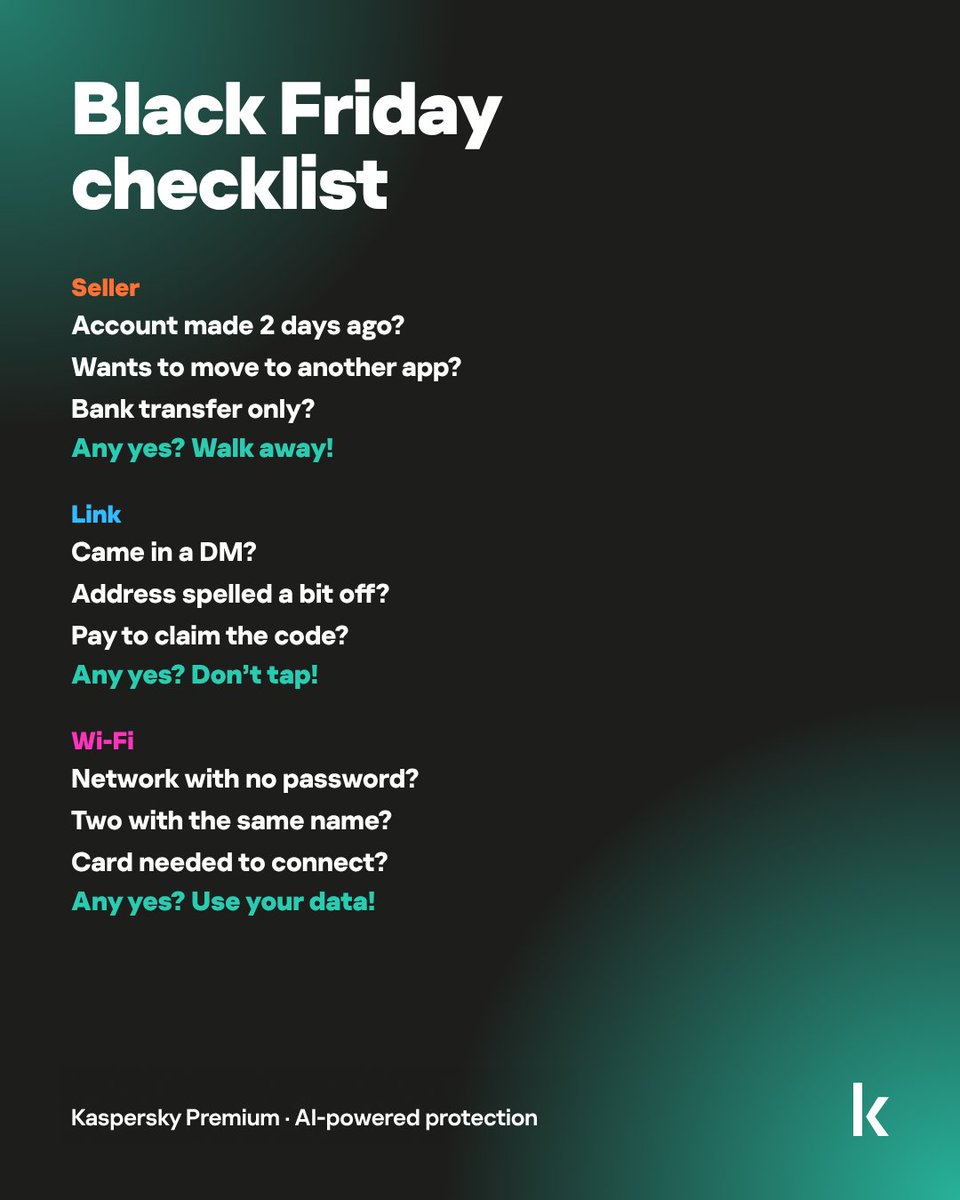
The #BlackFriday deals are real.
🚩Not every seller, link or Wi-Fi network is, though.
9 red flags to check before you pay. Any of them? Walk away.
Which one would you miss first?
Fake Wi-Fi doesn’t look fake. It looks free.
No password. Twin network names. Card details just to connect. Pay on mobile data instead.
Would you check out on mall Wi-Fi? #BlackFriday
A bigger SIEM rule count doesn’t mean better detection. What matters is which rules your event sources can actually feed. The new Kaspersky SIEM knowledge base helps you check, with rule filters, a source-based Builder and a MITRE ATT&CK coverage view. https://t.co/Y1mxNyEIbS
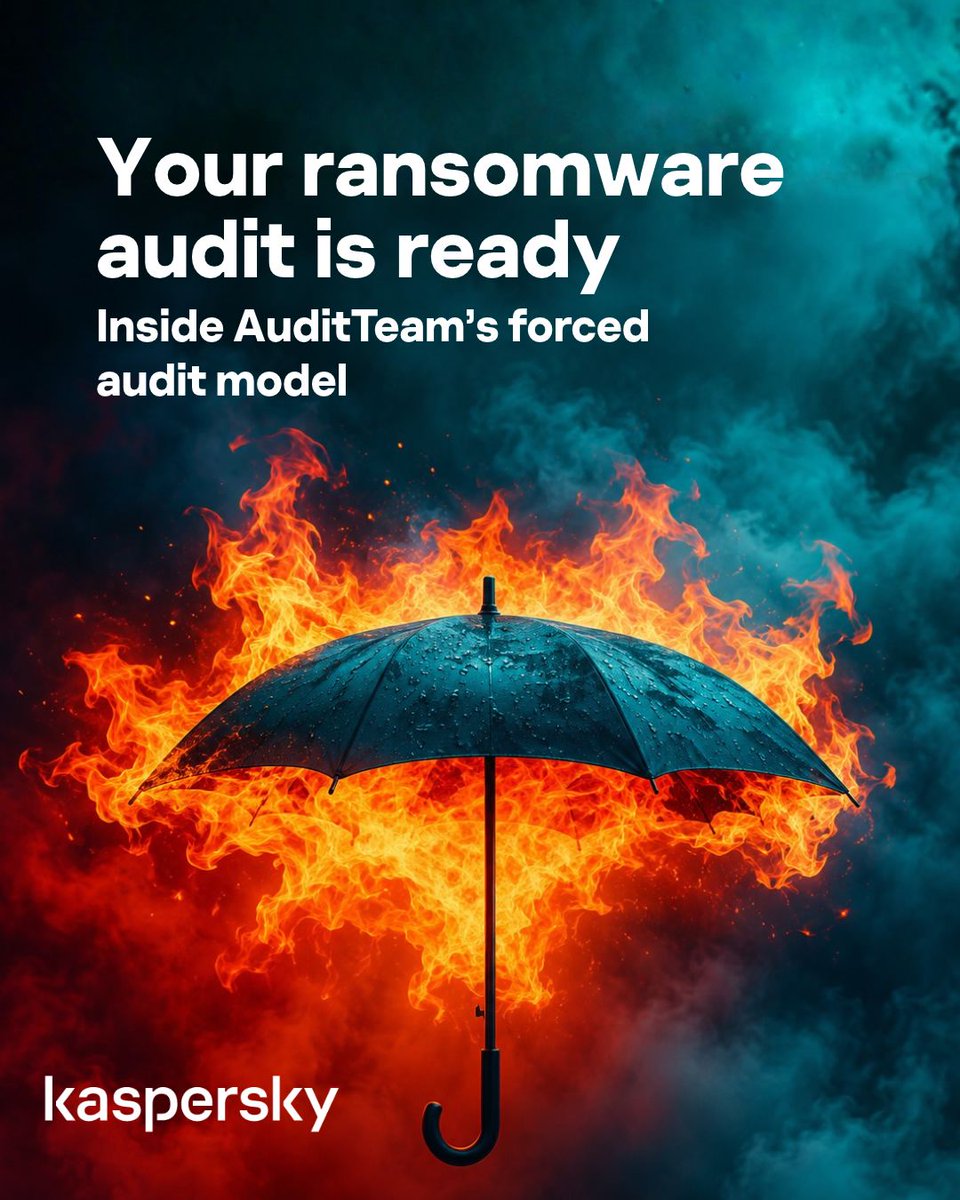
A ransom note formatted as an audit log, asking for an “Audit & Consulting fee”. Our GReAT experts break down AuditTeam and its OpsAgent implant, now rewritten in Rust: https://t.co/smD5NPtQjO
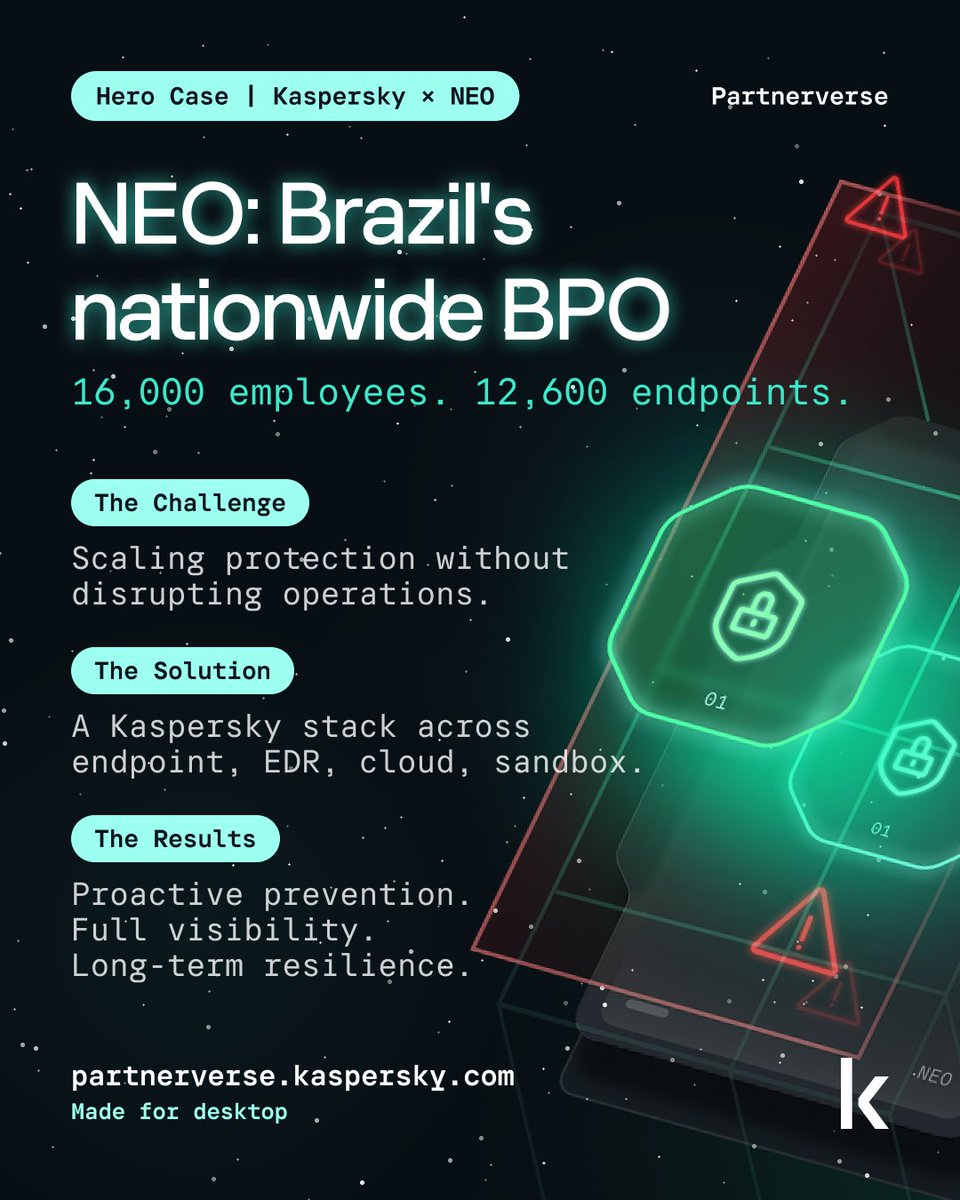
2/3 Meet NEO, a Brazilian BPO with 16,000 employees, delivering AI-driven customer experience across multiple industries. Together with our channel partners, we built a Kaspersky stack across endpoint, EDR, cloud and sandbox. Proactive prevention, full visibility, long-term resilience.
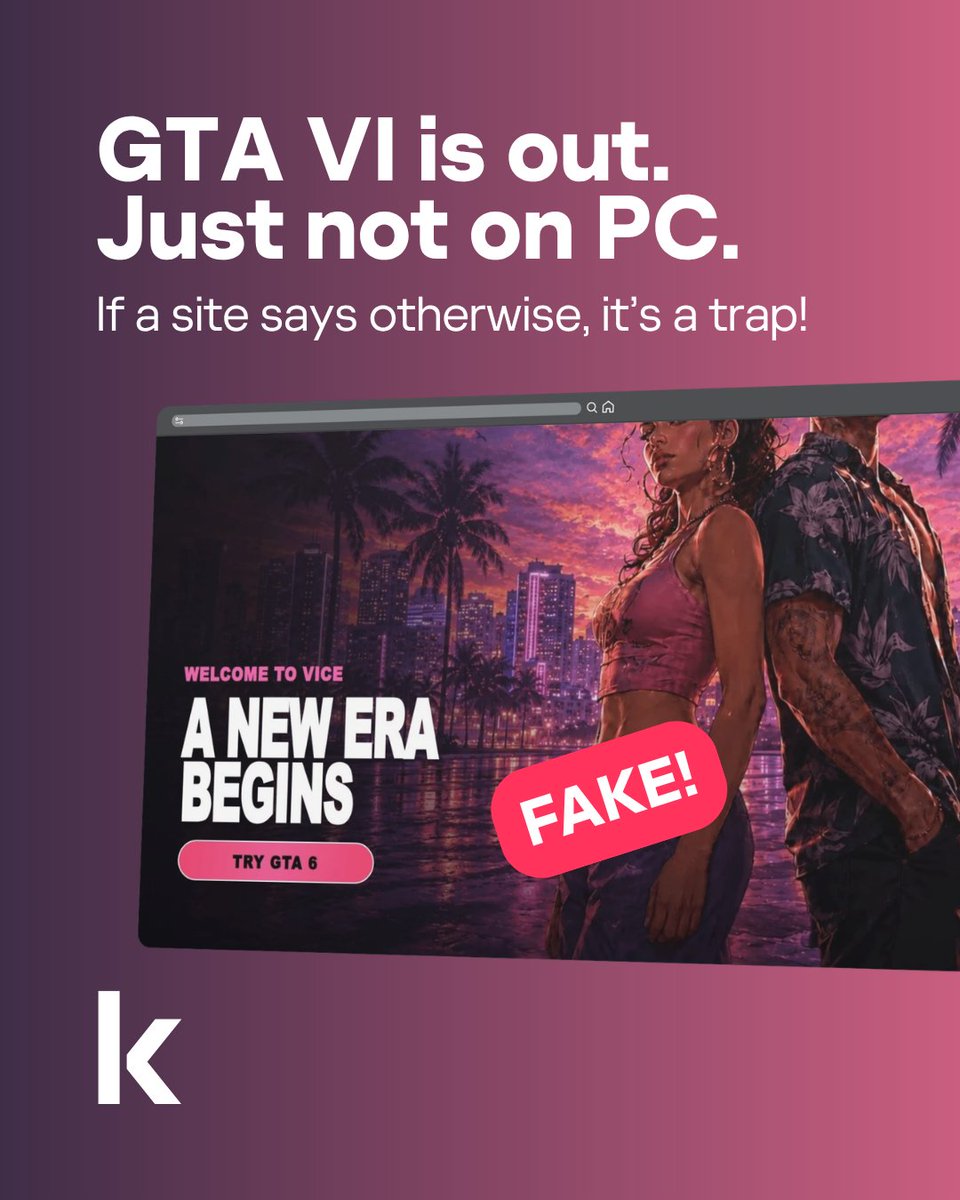
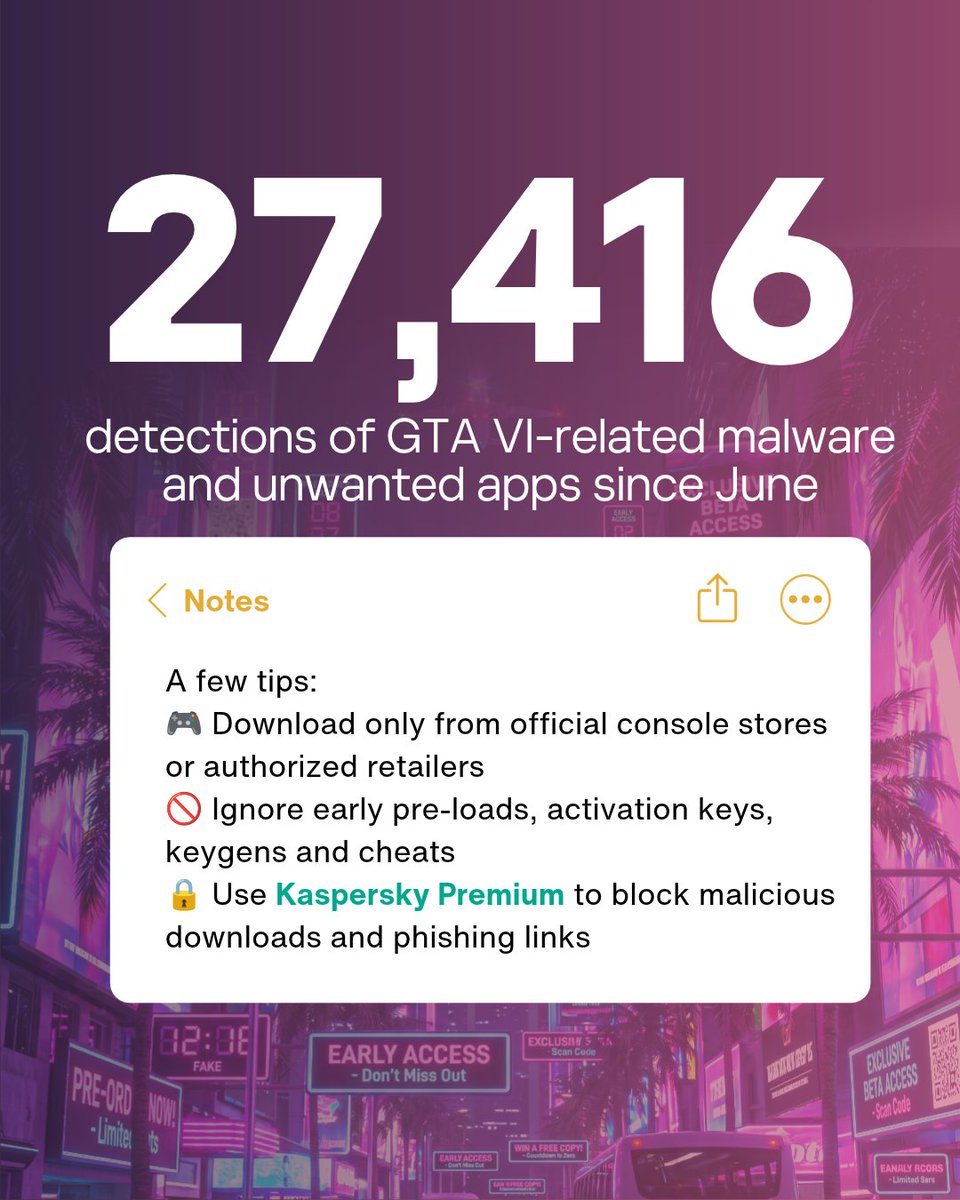
GTA VI just launched, on consoles only 🎮 Any “PC download”, early pre-load or activation key is fake. We’ve recorded 27,416 detections of GTA VI-related malware and unwanted apps since June. Stick to official console stores.
The hard part: updating Java everywhere it runs. That includes enterprise applications, container images and appliance software and firmware. After updating, verify that each running application is actually on the patched OpenJDK release.
Java4Shell (CVE-2026-114938): who patches first.
→ Java 17, 21, 25 or 27
→ x86-64 CPU with AVX-512 VBMI and BW (Intel Ice Lake and later, AMD Zen 4/5)
→ Internet-facing service
All three? That server goes first. Oracle has released updates. 🧵
#Java4Shell
Cyberespionage hiding in normal cloud traffic.
Operation ShadowCloud targets government networks in Asia and Africa with two new backdoors that use GitHub and SharePoint as C2.
Breakdown from our researchers @SaurabhSha15 and @NoushinShbb:
Operation ShadowCloud: Uncovering a Cloud-Abusing Cyberespionage Campaign
We (myself and @NoushinShbb ) uncovered an active espionage campaign hitting government networks in Asia and Africa. The attackers route command-and-control traffic through legitimate cloud services (GitHub, SharePoint and Ably), so it looks like normal enterprise traffic.
How it works
🔹 The entry point is unclear, but the attackers abuse the legitimate MeshCentral/MeshAgent remote-management tool to drop their payloads.
🔹 Trusted binaries (Sandboxie, Python, ZoomIt, OpenJDK) side-load malicious DLLs, which decrypt a hidden payload in memory.
🔹 Two new backdoors then take over:
GitDoor uses GitHub repositories and issues as its C2.
GraphDoor uses the Microsoft Graph API and SharePoint, authenticating as a rogue app registration.
🔹 Both pull plug-ins on demand: keylogging, screenshots, process listing, and proxy tunnels built on a modified Erfrp client and Ably messaging.
🔹 The operators can also push shellcode that does recording keystrokes, capturing screenshots, moving, searching, uploading, and downloading files. They can also execute commands, manage Windows services, network connections, and firewall rules, manipulate processes and registry, extract credentials from memory, and search for WhatsApp database decryption keys.
Attribution
We can’t pin this on one group yet. But GitDoor staging overlaps in time and location with FamousSparrow and CopperTurtle activity, which points to a Chinese-speaking actor. The GitHub infrastructure suggests preparation started in late 2024.
Takeaways for defenders
✅ Treat unexpected MeshCentral/MeshAgent installs as suspicious.
✅ Watch for odd Graph API, GitHub API and Ably traffic from endpoints that have no business making those calls.
✅ Monitor for DLL side-loading from trusted-but-unusual executables.
✅ Audit Entra ID app registrations and client secrets.
✅ Hunt for the IOCs in the reports.
📖 Part 1 : https://t.co/NqOg17HttA
📖 Part 2 : https://t.co/CbPMFqtT8f
18% of people find deals in messaging apps. Fake deal links travel the same way.
Sent by DM. Address spelled a bit off. Pay to claim a code. Any one of those? Don’t tap. Open the shop’s app instead.
Ever got a deal link from someone you don’t follow? #BlackFriday
Two ransomware attacks on ESXi and Proxmox. No VM escape needed, just misconfigurations: a reused root credential in a monitoring tool and root passwords saved in plaintext notes.
How it happened and how to harden your hypervisors: https://t.co/W8rYrh04dA
Microsoft 365 is back up. The phishing that used the outage as cover is still going.
Emails titled “Outlook is disconnected after the Microsoft 365 outage” send people to a fake sign-in page that steals their codes and passwords.
How it works 👇
https://t.co/NrERPyjNGb
𝗪𝗵𝗮𝘁 𝘀𝗵𝗼𝘂𝗹𝗱 𝘆𝗼𝘂 𝗱𝗼?
For now, our recommendation is simple: 𝗮𝘃𝗼𝗶𝗱 𝗹𝗮𝘂𝗻𝗰𝗵𝗶𝗻𝗴 𝗧𝗲𝗹𝗲𝗴𝗿𝗮𝗺 𝘄𝗶𝗱𝗴𝗲𝘁𝘀 𝘂𝗻𝘁𝗶𝗹 𝘁𝗵𝗲 𝗶𝘀𝘀𝘂𝗲 𝗶𝘀 𝗳𝘂𝗹𝗹𝘆 𝗿𝗲𝘀𝗼𝗹𝘃𝗲𝗱.
Our security solutions detect and block WebRAT.
More technical details about WebRAT and its previous distribution campaigns are available on Securelist: https://t.co/EQEOWQ1sSu
3/3
👀 A new Telegram feature may have already become an attack vector. 🧵
Our researchers at Kaspersky have detected malicious activity that we suspect is linked to a vulnerability in Telegram widgets. The concerning part? Visiting certain Telegram channels appeared to trigger a PowerShell script without the user's knowledge. The script then downloaded and executed 𝗪𝗲𝗯𝗥𝗔𝗧 (𝗦𝗮𝗹𝗮𝘁 𝗦𝘁𝗲𝗮𝗹𝗲𝗿), a Rust-based Trojan that can give attackers remote control over infected systems and steal cryptocurrency wallet and Telegram account data.
1/3