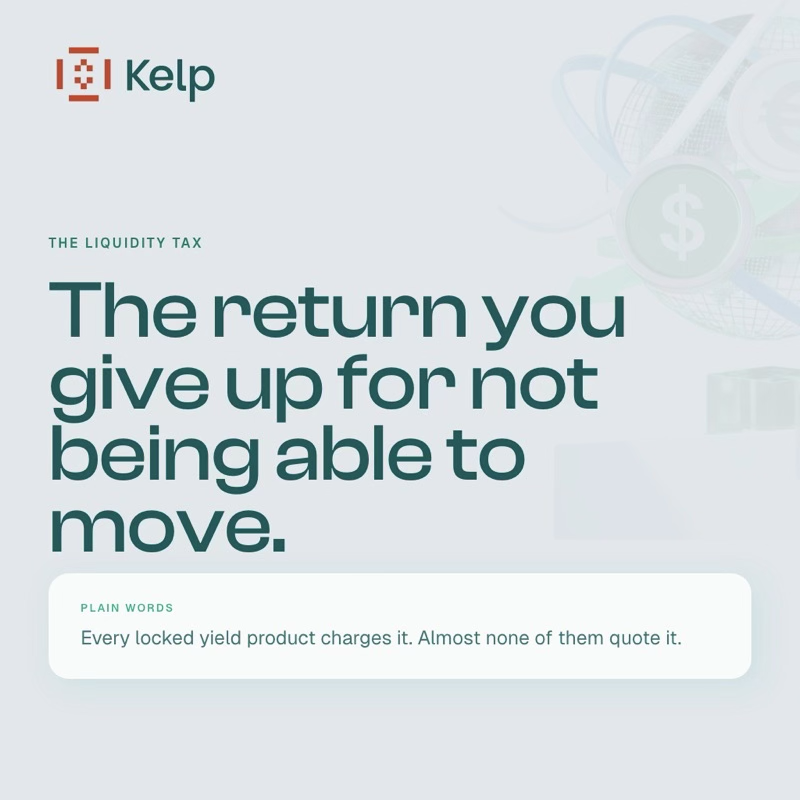
Locked yield has a price nobody quotes: everything you could not do while your capital was locked.
Call it the liquidity tax - the return you give up for not being able to move.
Most yield products charge it quietly. 🧵
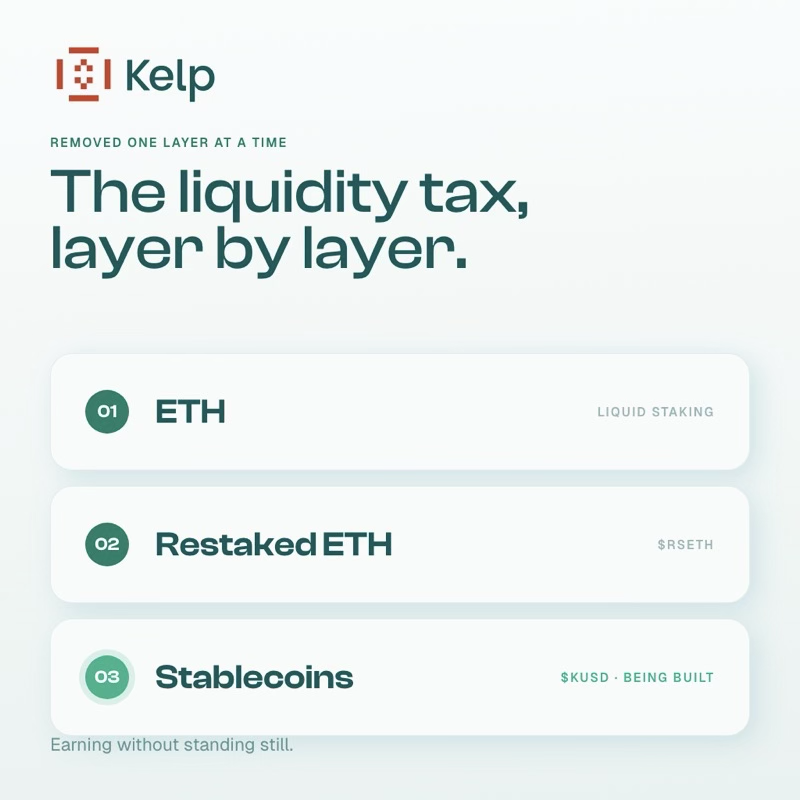
Liquid staking removed that tax for ETH. $rsETH removed it for restaked ETH.
The same idea is what $KUSD is being built around for stablecoins - earning without standing still.
https://t.co/KWpB7EGLch
An asset that just sits there is half an asset.
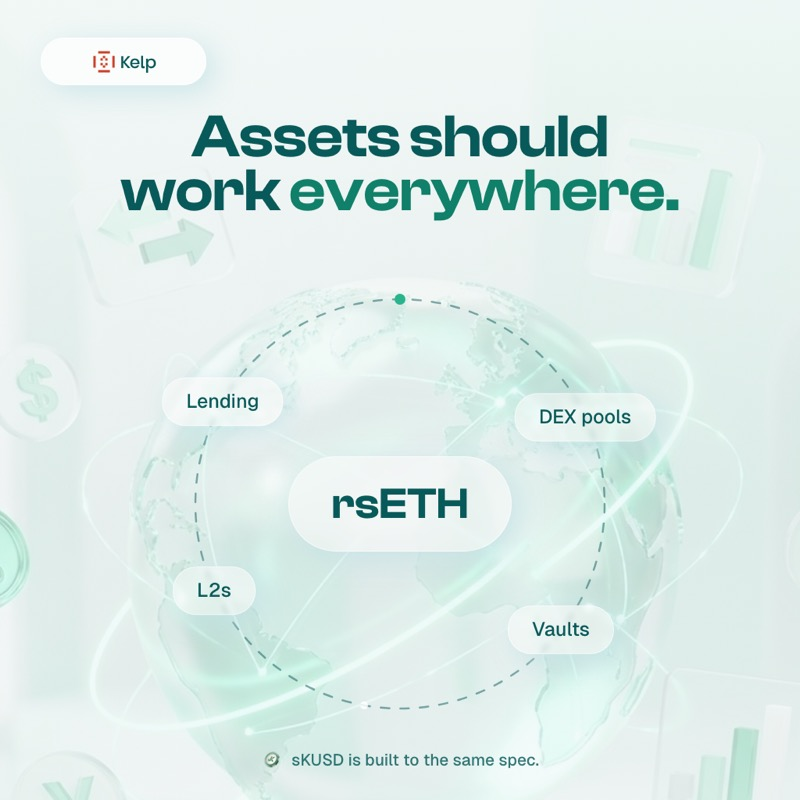
$rsETH works across lending markets, DEX pools, and L2s. sKUSD is built to the same spec: collateral-grade, composable, liquid.
Assets should work everywhere their holders do.
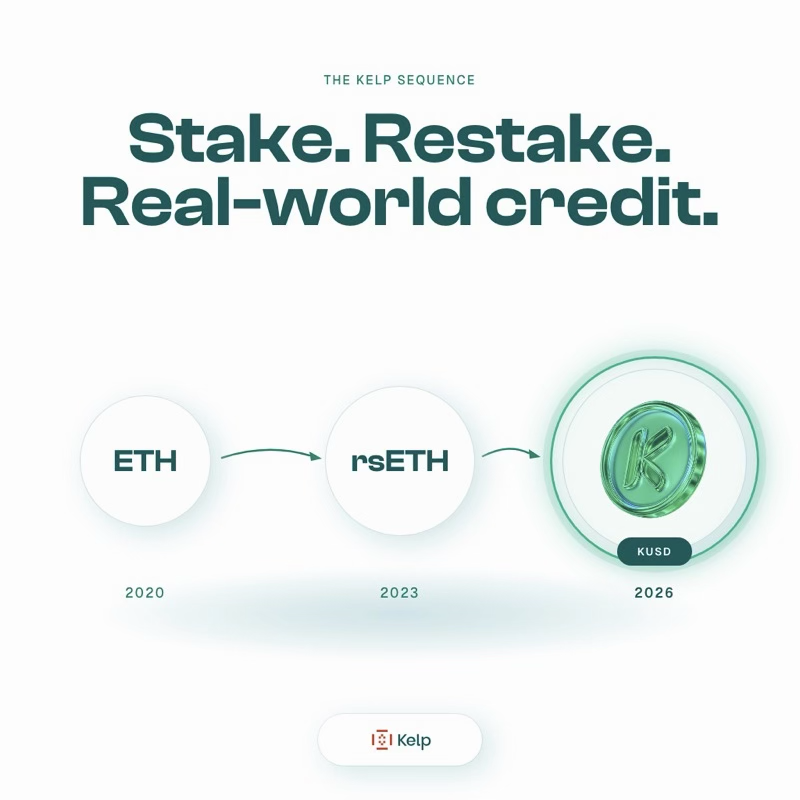
The Kelp sequence:
2023: $rsETH made restaking one click.
2026: $KUSD brings that same standard to trade and payment finance.
Same team, much larger market. Restaking was the proving ground
This is the credit $KUSD is built on:
Short-tenor trade and payment finance, receivables backed by credit insurance, cycled continuously.
Yield from commerce, with an insurer standing behind the invoice.
https://t.co/euLb12EZhE
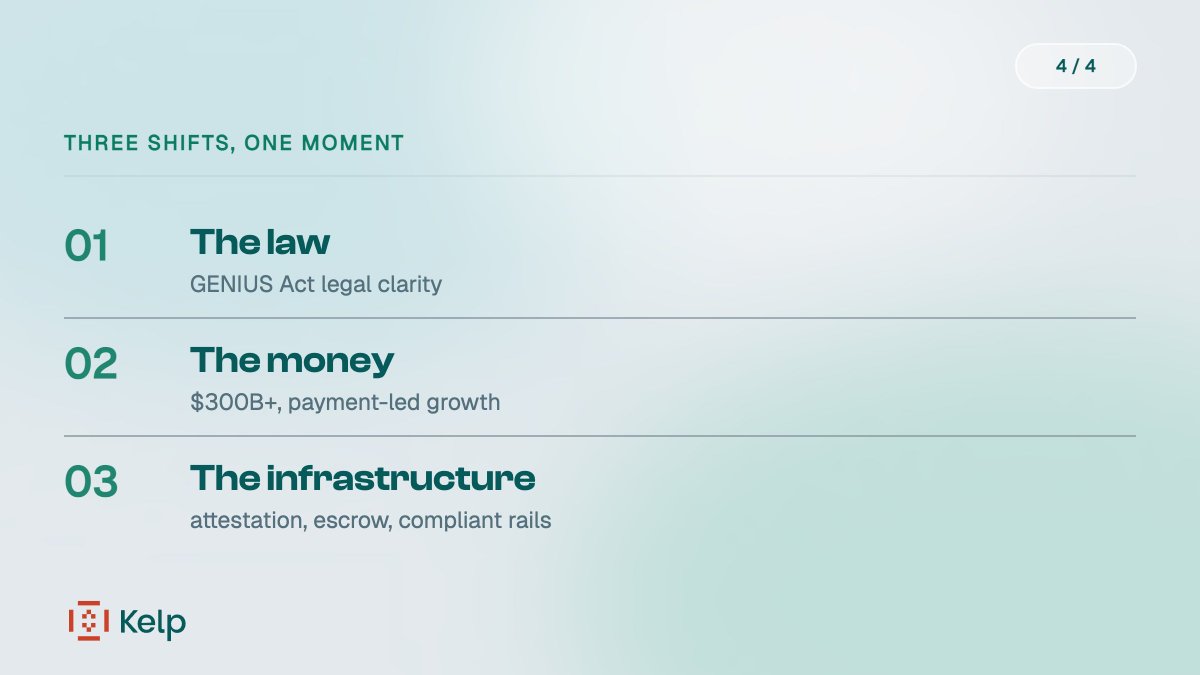
3. The infrastructure.
DeFi matured enough to carry TradFi-shaped flows: attestation, on-chain escrow, compliant rails. $KUSD is built on all three shifts at once. That's the moment we're in.
Three of those four rates are a function of how much money is chasing them.
Payment finance is a function of how much commerce needs settling.
That is the structural bet behind KUSD: yield from payments, not emissions.
https://t.co/euLb12EZhE
Payment finance
A business gets paid on T+2. It needs the money now. It pays a spread to close that gap.
That spread is set by invoices and settlement cycles — not by how much capital is parked in a pool.
This is the source KUSD is built on.