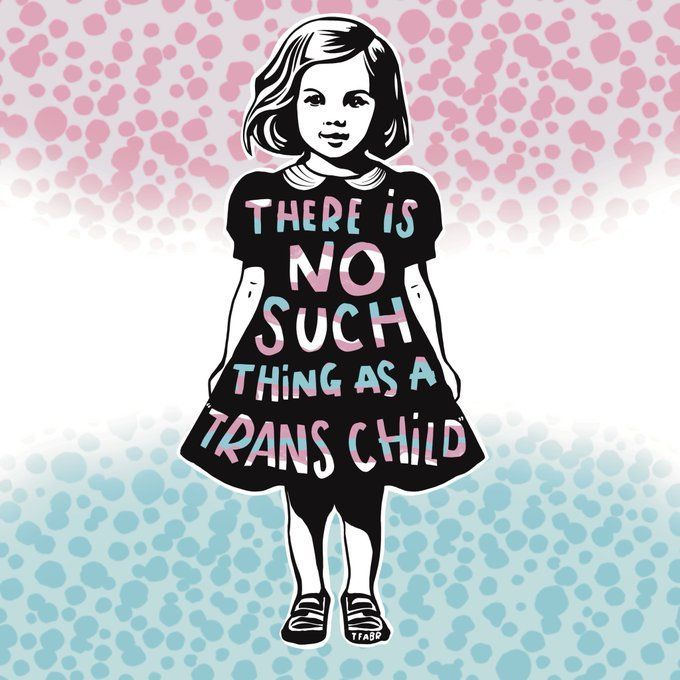
My firm fiercely advocates for clients by upholding their free speech, freedom of religion, health freedom, and right to practice their profession of choice.
According to Devyn Cousineau of the BC Human Rights Tribunal, this is hate speech and I am violating the BC Human Rights Code by posting this.
You will be too, if you repost this.
Will you let Cousineau's implicit threat of a massive fine scare you into silence?
Whatever the amount of the decline in public support for the courts in Canada, and I think it might be more than what is expressed here, it has been, sadly, well-earned.
There are many reasons for this, but I would offer one simple reason that I think may be the biggest. Left-learning judges are at least somewhat more willing to prioritize their ideology in their rullings than right-leaning judges. This, in turn, may be a function of left-wing ideology itself and the types of people who subscribe to left-wing ideology, both of which tend to take a more permissive attitude toward outcomes being ideology-driven.
People did not nearly so cynically and accurately predict right-wing type outcomes from Harper-appointed judges as we do left-wing type outcomes in the last few years with Trudeau-appointed judges.
I have found it almost too easy to predict the outcomes in my cases lately depending on who appointed the judge I have. That should not be happening.
Courts have become central players in some of Canada’s biggest political and moral debates—especially since the advent of the Charter.
That’s raised hard questions about their role, and how Canadians understand the place of the judicial branch within their system of government.
Like any other institution, courts depend on public trust which must be earned and sustained.
@McMasterU political science professor Andrea Lawlor has been tracking how Canadians perceive this institution. She joins Inside Policy Talks to discuss her findings.
Lawlor’s research, conducted with Acadia University’s Erin Crandall, finds that Canadians still generally trust the courts, but this confidence has shown signs of decline, and it appears attitudes are becoming more politicized.
On the podcast, Lawlor tells Peter Copeland (@CopelanPeter), deputy director of domestic policy at MLI, that her research found little shift in how Canadians on the political left perceive the courts. However, she has observed a moderate decline in support from those on the right—particularly tied to court decisions on moral issues like medical assistance in dying.
However, Lawlor says there is one type of court ruling that tends to register a public reaction across the political spectrum: criminal sentencing.
“Those tend to uniformly push public opinion,” says Lawlor. “I think there was some consensus across the political spectrum that Canadians were dissatisfied … and they certainly wanted the legislature to step in.”
Watch the full episode: https://t.co/2p5bWK3gUK
@CoryBMorgan you hit the nail on the head. I encourage you to also ask how it is that this case went before this particular judge. Did the Chief justice direct that she hear this case? Who was it that promoted the Chief Justice to his position. Is he also a Trudeau-appointee? Not all the judges on the King's Bench are Liberal-appointed or idelogically left-leaning. Why did this case, considering its importance, not go before a more experienced judge appointed by Harper? Why do so many important, politically sensetive cases go before recent Trudeau-appointed judges when one might expect such cases to go before the most senior judges on the bench.
The economic arguments in favour of independence are excellent, but perhaps even more important is taking back control over who appoints our judges and who those appointed judges are. https://t.co/CjG20furqH
The economic arguments in favour of independence are excellent, but perhaps even more important is taking back control over who appoints our judges and who those appointed judges are. https://t.co/CjG20furqH
"When the referendum is held this fall, the ruling by Justice Leonard will offer Alberta citizens one more example of why they must vote “Yes” to independence. It will free Alberta from the clutches of federally appointed Liberal judges"
Indeed.
https://t.co/CjG20furqH
FSUC Executive Director @LDBildy: “Targeting this family with social services interventions because they do not share the current progressive orthodoxy over land acknowledgments is reprehensible. Ms. Yates and her family have rightly interpreted this action as threatening and intimidating, meant to wield the power of the state in order to silence their political and ideological dissent.” @nationalpost
Support Lara Yates v. Sunshine Coast School District 46: https://t.co/ublWovm9wu
What we are witnessing with Chief Justice Richard Wagner's refusal to recuse himself from the Appeal on the Emergencies Act is an historical moment. I will write more on this later but my point is this: The age old adage - "Justice must not only be done but be seen to be done" - is facing its greatest challenge in Canada with this decision.
Consider the Chief Justice Bora Laskin dispute with Justice Thomas Berger in the 1980s (https://t.co/bh0TY0mv3A)
The National Post reports:
"Chief Justice Richard Wagner dismisses request to recuse from Emergencies Act appeal
Wagner called the Freedom Convoy protest the 'start of anarchy' and said participants took Ottawa residents 'hostage'"
"In a letter to parties on Wednesday, Supreme Court of Canada registrar Chantal Carbonneau said Wagner believed there was no legal reason for him to step aside from the case, which the top court is currently considering if it should hear.
...
“I am writing to advise that Chief Justice Wagner has considered the certificates and letter, and has concluded that there is no actual or reasonable apprehension of bias that would require his recusal under the applicable legal test,” Carbonneau responded to parties.
...
“In this respect, Chief Justice Wagner has advised that he did not, at any time, either directly or indirectly, comment on the Emergencies Act, RSC 1985, c 22 (4th Supp) or matters at issue in the proceedings,” she added.
Montreal-based newspaper Le Devoir, Wagner said in French that some participants in the Freedom Convoy protests were “remote-controlled” people looking to short-circuit the political system, something that “does not fill me with good feelings.”
“What we saw recently on Wellington Street, here, is the budding start of anarchy where some people decided to take other citizens hostage, to take the law into their own hands, to disregard the system … I find that worrying,” he said in French.
Canada’s top judge also argued that the occupation of downtown Ottawa was fuelled in part by a “certain ignorance” and a “bad understanding” of Canadian law, the newspaper reported.
Then in a press conference in June 2022, the chief justice described the impact of the Freedom Convoy’s blockades on many Ottawa business and individuals — particularly “the most vulnerable” — as “deplorable.”"
What do you think - any bias?
https://t.co/N4zwvi3PU0
Rexall Pharmacy Employee Takes COVID-19 Vaccination Dispute to Alberta Court of King’s Bench.
It has now been five years since the rollout of COVID 19 vaccines, and legal challenges tied to workplace vaccination policies continue to make their way through the courts, including a case involving a Rexall Pharmacies Ltd. employee now before Alberta’s Court of King’s Bench.
A judicial review application filed on April 8, 2026, in Medicine Hat, Alberta, asks the court to overturn a decision by the Alberta Human Rights Commission that dismissed a pharmacy employee’s religious discrimination complaint related to COVID 19 workplace policies.
Stacey Anderson, a pharmacy employee, argues the Commission improperly rejected her complaint, which alleges she was discriminated against on the basis of religion during the pandemic. Anderson is represented by her lawyer James Kitchen, with KITCHEN WELLS LLP.
Court documents show Anderson first filed her human rights complaint in September 2022. She claims Rexall’s vaccination policy adversely affected her employment because of her Christian beliefs, which she says prevent her from receiving COVID 19 vaccines.
The company introduced a policy in late 2021 requiring unvaccinated employees to undergo rapid antigen testing before each shift. While some workers with approved human rights exemptions were compensated for testing time, Anderson alleges she was not paid for the additional time required to comply.
Anderson, who remains employed with Rexall, claims the policy limited her employment opportunities, pointing to internal communications she says indicated vaccination status affected access to full time work and advancement.
In November 2021, she requested a religious exemption, citing biblical passages and stating that receiving the vaccine would violate her beliefs regarding bodily integrity and the sanctity of life.
According to the filing, she submitted additional supporting materials, including a declaration of faith, but never received a formal decision on her accommodation request from the employer. She continued to comply with testing requirements for months while awaiting a response.
The Alberta Human Rights Commission dismissed her complaint in January 2025, concluding it had no reasonable prospect of success. That decision was later upheld by a delegate of the Commission’s chief.
In her judicial review application, Anderson argues the Commission failed to properly assess the sincerity and scope of her religious beliefs and did not adequately consider whether Rexall met its duty to accommodate. Her legal brief claims decision makers overlooked key evidence, misapplied the legal test for religious discrimination, and failed to meaningfully engage with her arguments.
At the centre of the case is the legal threshold for religious protection under Canadian human rights law. The application references Supreme Court of Canada precedent confirming that individuals are not required to follow formal religious doctrine but must demonstrate a sincere belief that has a connection to religion.
The filing also alleges Rexall did not meet its procedural duty to accommodate, arguing there was no meaningful dialogue or individualized assessment of Anderson’s circumstances. Under Alberta human rights law, employers are required to accommodate protected grounds such as religion up to the point of undue hardship.
The case forms part of a wider series of legal disputes arising from workplace COVID 19 vaccination policies, which have forced courts across Canada to balance public health measures with individual rights in employment settings. A ruling in Anderson’s favour could provide further guidance on how religious accommodation claims linked to vaccination policies should be assessed by human rights tribunals.
Anderson has launched a GiveSendGo campaign to support her legal defence. Donations can be made through the fundraising page, with a link provided in the comments section.
To those in the legal world, the CBA’s open politicking signals what views are normal and acceptable, and hints at what is not. It would be logical for any lawyer hoping for a judicial appointment to refrain from openly taking opposite political stances because that could harm their prospects. In this way, the organization is isolated from criticism within the walls of the profession.
And so, with the appearance of consensus, the CBA is an important part of the legal culture of Canada. It uses that hand to push progressive talking points as though they are the objective products of expertise. And now, it’s going beyond its home turf to tell entirely different sectors how to operate.
In a recent episode of Freedom Feature, I sat down with former Chilliwack school trustee Barry Neufeld and his lawyer James Kitchen to discuss a case that raises urgent questions about freedom of speech, democratic disagreement, and the future of public debate in Canada.
At the centre of the conversation is the British Columbia Human Rights Tribunal’s decision in Chilliwack Teachers’ Association v. Neufeld, which resulted in a compensatory order of $750,000 against an elected trustee for public statements he made criticizing Sexual Orientation and Gender Identity (SOGI) curriculum and prevailing views on gender identity. Listeners will hear strong opinions in this discussion. Some will agree; many will not. But agreement is not the point.
What matters—and what this case forces us to confront—is whether persistent disagreement on contested public issues can now be treated as legal harm. That question goes to the heart of democratic life. When Disagreement Becomes “Hate”: by @barrywbussey https://t.co/25lIcy2x4G
The left has officially abandoned reality 🤡
If a father took his child to a doctor to surgically remove an eye so the child could “identify” with him, he would be arrested for even considering it. Yet, when it comes to permanent, life-altering "gender-affirming" surgeries and hormones for minors, the left calls it “healthcare,” which is not proven to benefit them in any way
It’s time to stop the madness. We are talking about the permanent disfigurement of children who don't really understand what's happening to them, based on zero conclusive long-term evidence. Instead, some deranged adults convince them through indoctrination. We need to press pause, protect kids, and return to common sense before more lives are irreversibly damaged
Enough is enough
In this episode of Talk Truth, Barry Neufeld and his lawyer James Kitchen break down the BC Human Rights Tribunal ruling ordering Barry to pay $750,000 over his criticism of SOGI 123 and gender ideology in schools. They discuss the tribunal’s reasoning, the impact on free speech in Canada, and their plan to appeal—along with what this case means for individual rights and speaking out. @KitchenWellsLaw
Talk Truth 03.27.26 - Barry Neufeld & James Kitchen - 9:30am & 7:30pm ET on Daystar Canada | https://t.co/OUp1tLrvVK | https://t.co/eXZ3UsnVDo
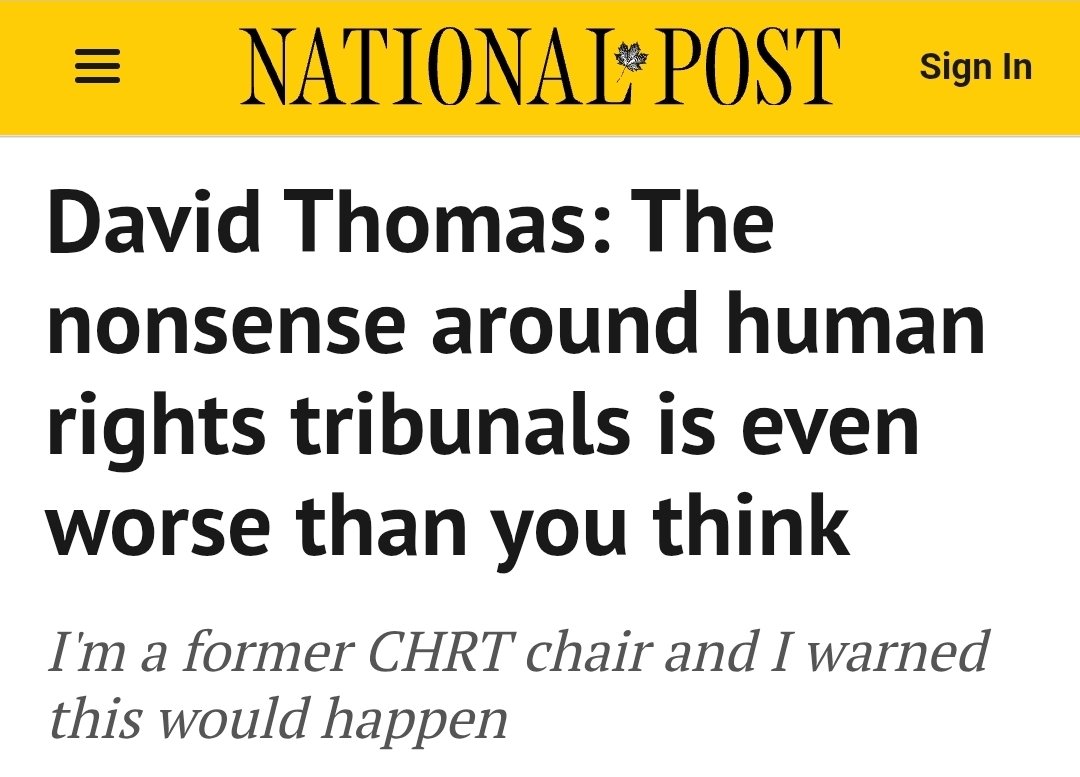
As someone who actually chaired the Canadian Human Rights Tribunal, Mr. Thomas has seen firsthand how these so-called "human rights" tribunals have morphed from a simple, quick way to deal with real discrimination into something far more dangerous: ideological enforcement bodies that punish ordinary Canadians for wrongthink.
The recent $750,000 judgment against Barry Neufeld is a perfect example of how out of control these kangaroo courts have become. An elected school trustee dared to publicly criticize the SOGI 123 curriculum and the push of gender ideology in our schools. For that, the BC Human Rights Tribunal decided he "poisoned" the workplace for teachers he never even worked with and ordered him to pay hundreds of thousands of dollars in damages for "injury to dignity."
Lets just call this what it is; this is state-sponsored intimidation.
These tribunals were never meant to police political opinions, parental concerns about what their kids are being taught, or debates over basic biology. They were supposed to handle straightforward cases of discrimination in jobs or housing, quickly, fairly, and without turning every disagreement into a financial catastrophe.
Instead, we've watched them become slow, expensive, one-sided processes where the deck is stacked against the respondent. No-costs awards mean even if you win, you lose thousands in legal fees. Frivolous complaints get used as leverage to force settlements. And "hate speech" or "discriminatory environment" claims are stretched so far that simply questioning the latest progressive orthodoxy on gender can ruin a person's life.
David Thomas warned this would happen years ago. He was right then, and he's right now. When tribunals stop reflecting broad Canadian values and start acting like activists with gavels, they lose all legitimacy.
That's why, when Independent MLA Tara Armstrong introduced the Human Rights Code Repeal Act, I and many of my colleagues supported giving it first reading. The tribunal system has strayed too far. It's time for serious reform or outright dismantling of these kangaroo courts
.
Real human rights deserve real due process: full rules of evidence, proper courts like the BC Supreme Court, and protections for free speech that actually mean something. Political debate, especially about what we teach our children, should never be treated as a human rights violation.
British Columbians are fed up with this nonsense. Parents should be able to speak out about their kids' education without fearing financial ruin. Businesses shouldn't be fined tens of thousands over pronoun disputes. And elected officials shouldn't be dragged before unelected adjudicators for expressing views shared by thousands of their constituents.
Enough is enough. We need to scrap the activist excesses, restore fairness, and protect the fundamental freedoms that make this province worth living in.
The baby has been thrown out with the bathwater long ago. It's time to drain the tub.
#cdnpoli #bcpoli
'Compelled pronouns?': Journalists push back against trans activist's legal complaints 🏳️⚧️
Western Standard’s @Dfildebrandt and National Post’s @BarbaraRKay join Rebel News' @DreaHumphrey to discuss Jessica/Jonathan Yaniv’s human rights threats and why complying with compelled pronouns is not ethical journalism.
A growing number of Canadian media figures and public voices are now facing legal threats from self proclaimed trans activist Jessica Simpson, formerly known as Jonathan Yaniv.
Simpson, who first made headlines as “the wax my balls guy” for dragging immigrant estheticians through B.C. Human Rights Tribunal proceedings because they refused to wax “her” male genitalia, is now using that same quasi judicial tribunal, accusing others of harm for not adhering to “preferred pronouns.”
Among those now in the crosshairs is the Western Standard, which has received formal notice of potential legal action, including a complaint to the British Columbia Human Rights Tribunal and the threat of a civil lawsuit.
The basis of the complaint? That referring to Yaniv with biologically sound pronouns rather than preferred pronouns exposes the activist to “hatred, contempt, and ridicule.”
But for many Canadians, Yaniv is not an unknown figure quietly seeking dignity or even respecting the rights of other humans.
The activist first made national headlines after filing multiple human rights complaints against female aestheticians, many of them immigrant women, who refused to perform waxing services on “her” male genitalia.
Yaniv has also been the subject of repeated controversy, including assaulting Rebel News journalists and going on a racist tirade against me before threatening my child.
In an interview with Rebel News, Western Standard CEO Derek Fildebrandt confirmed the complaint against his outlet stems directly from its editorial policy on gender identity in reporting.
Yaniv alleges that the Western Standard’s refusal to adopt preferred pronouns reflects a “systemic, editorial posture.”
Fildebrandt agrees with that characterization, but says it is deliberate and not hateful.
According to the Western Standard’s style guide:
“In stories where gender or gender identity is not relevant, the preferred pronouns of the subject should be used.” However, “in stories where gender or gender identity is relevant, the pronouns corresponding to their biological sex should be used. Reasonable exceptions can be made with the approval of a Senior Editor.”
Also speaking with Rebel News is National Post columnist Barbara Kay, who has long warned about the growing tension between compelled language and free expression in Canada.
At issue, she suggests, is whether human rights bodies are being used not just to address discrimination, but to enforce ideological conformity. Yaniv’s complaints are not limited to media outlets.
Others reportedly targeted include child protection activists “Billboard Chris” and OneBC leader, MLA, Dallas Brodie, both of whom have previously rejected the use of compelled pronouns.
In at least one complaint, the use of biologically based language is framed as contributing to an environment of “hatred” or “contempt,” terminology drawn directly from Section 7 of B.C.’s Human Rights Code.
That section prohibits publications deemed “likely to expose a person or group to hatred or contempt,” a threshold critics argue is vague, subjective, and increasingly weaponized.
The British Columbia Human Rights Tribunal has already accepted two of Yaniv’s complaints against Rebel News.
In BC, our institutions are going HARD to frighten us into silence so that we do not refer to males as males. We are ALL threatened with punishment via kangaroo court rulings that financially devastate individuals (like me and Barry Neufeld).
It is very important right now that all of us speak the truth. Keep speaking the plain truth. Men are not women. "Misgendering" is not a crime or discriminatory.
Do not relent to the tyrants. Stand up. Please.