I have learned so much this week at COMMON Europe, #cec2026#comeur. Fantastic #ibmi education, great networking with so many other members of the community, but the real pièce de résistance is seeing so many friends and connecting with them. I will see you next year in Antwerp Belgium, June 2027 for COMMON Europe 2027.
🔍 Your IBM i already has superpowers most people don’t know exist. Join me Wed June 17 at #CEC2026 Lyon:'The Hidden Superpowers of IBM i: Features You Didn’t Know You Already Have'
RHÔNE 2 · 10:30 CEST
#IBMi#CommonEurope#CEC2026
🤖 What if AI could modernise your RPG in minutes instead of weeks?
That's not hype — that's Tuesday June 16 at #CEC2026 Lyon:
'Breathing New Life Into RPG: AI as Your Modernization Partner'
Live examples. Real techniques. RHÔNE 3A · 15:55 CEST
#IBMi#RPG#CommonEurope#CEC2026
🐍 IBM i + Python — better together than you think.
Join me Mon June 15 at #CEC2026 Lyon:
'Reinventing IBM i: The Journey from RPG to Python'
Practical strategies, real examples, clear roadmap for your team.
RHÔNE 3A · 11:50 CEST
#IBMi#CommonEurope#RPG
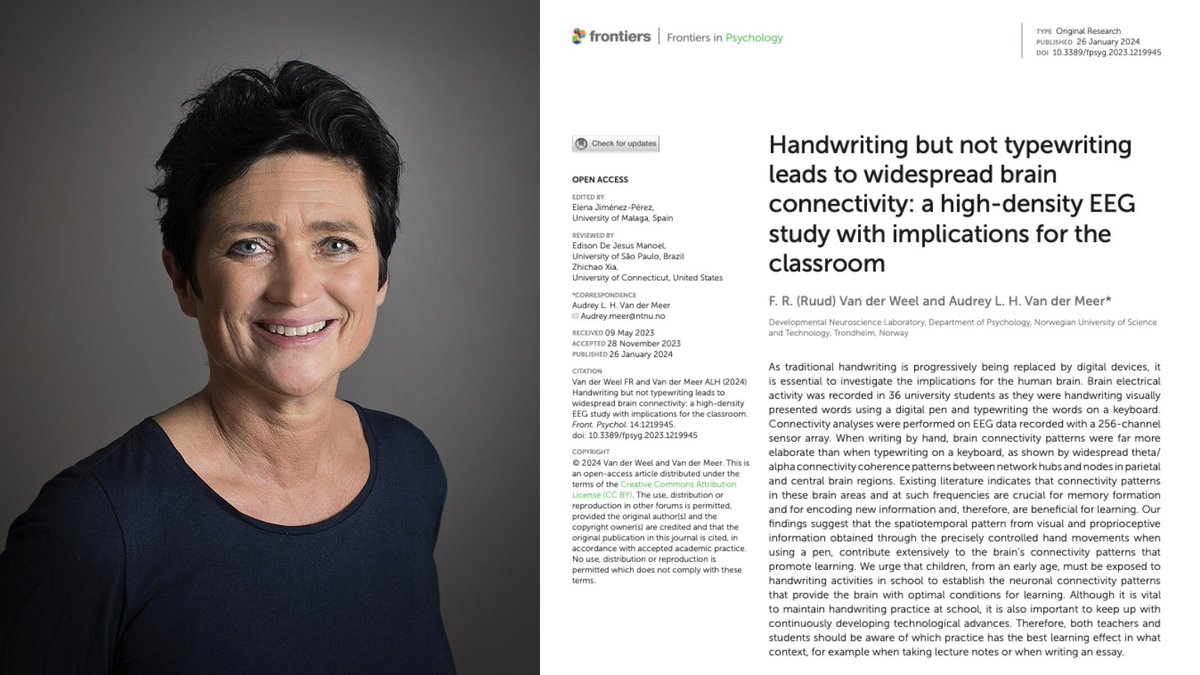
A Norwegian neuroscientist spent 20 years proving that the act of writing by hand changes the human brain in ways typing physically cannot, and almost nobody outside her field has read the paper.
Her name is Audrey van der Meer.
She runs a brain research lab in Trondheim, and the paper that closed the argument was published in 2024 in a journal called Frontiers in Psychology. The finding is brutal enough that it should have changed every classroom on Earth.
The experiment was simple. She recruited 36 university students and put each one in a cap with 256 sensors pressed against their scalp to record brain activity. Words flashed on a screen one at a time.
Sometimes the students wrote the word by hand on a touchscreen using a digital pen, and sometimes they typed the same word on a keyboard. Every neural response was recorded for the full five seconds the word stayed on screen.
Then her team looked at the part of the data most researchers had ignored for years, which is how different parts of the brain were communicating with each other during the task.
When the students wrote by hand, the brain lit up everywhere at once.
The regions responsible for memory, sensory integration, and the encoding of new information were all firing together in a coordinated pattern that spread across the entire cortex. The whole network was awake and connected.
When the same students typed the same word, that pattern collapsed almost completely.
Most of the brain went quiet, and the connections between regions that had been alive seconds earlier were nowhere to be found on the EEG.
Same word, same brain, same person, and two completely different neurological events.
The reason turned out to be something nobody had really paid attention to before her work. Writing by hand is not one motion but a sequence of thousands of tiny micro-movements coordinated with your eyes in real time, where each letter is a different shape that requires the brain to solve a slightly different spatial problem.
Your fingers, wrist, vision, and the parts of your brain that track position in space are all working together to produce one letter, then the next, then the next.
Typing throws all of that away. Every key on a keyboard requires the exact same finger motion regardless of which letter you are pressing, which means the brain has almost nothing to integrate and almost no problem to solve.
Van der Meer said it plainly in her interviews.
Pressing the same key with the same finger over and over does not stimulate the brain in any meaningful way, and she pointed out something that should scare every parent who handed their kid an iPad.
Children who learn to read and write on tablets often cannot tell letters like b and d apart, because they have never physically felt with their bodies what it takes to actually produce those letters on a page.
A decade before her, two researchers at Princeton ran the same fight using a completely different method and ended up at the same answer. Pam Mueller and Daniel Oppenheimer tested 327 students across three experiments, where half took notes on laptops with the internet disabled and half took notes by hand, before testing everyone on what they actually understood from the lectures they had watched.
The handwriting group won by a wide margin on every question that required real understanding rather than surface recall.
The reason was hiding in the transcripts of what the two groups had actually written down.
The laptop students typed almost word for word, capturing more total content but processing almost none of it as they went, while the handwriting students physically could not write fast enough to transcribe a lecture in real time, which forced them to listen carefully, decide what actually mattered, and put it in their own words on the page.
That single act of choosing what to keep was the learning itself, and the keyboard had quietly skipped the choosing and skipped the learning along with it.
Two studies. Two countries. Same answer.
Handwriting makes the brain work. Typing lets it coast.
Every note you have ever typed instead of written went into your brain through a thinner pipe. Every meeting, every book highlight, every idea you captured on your phone instead of on paper was processed at half depth.
You did not forget those things because your memory is bad. You forgot them because typing never woke the part of the brain that would have made them stick.
The fix is the thing your grandmother already knew.
Pick up a pen. Write the thing down. The slower road is the faster one.
Today is #VEDay: did you know the famous V-sign was actually proposed by Belgian politician Victor de Laveleye in 1941 as it stood for Victoire in French and Vrijheid in Dutch. The sign was picked up by Churchill.
Rousseau, 'n 35-jarige socialist met een kapitalistisch salaris van 200.000€ per jaar ! Zijn socialistische waalse evenknie Magnette is de vetst betaalde politieker van het land met bijna 500.000€ per jaar ! Hypocriet ! Water prediken maar zelf de duurste champagne slurpen.
STANFORD'DA BİLGİSAYARLARI KAPATTIRAN O CÜMLE
Efsanevi yapay zeka profesörü Andrew Ng, Stanford'daki dersine şu sözle başladı ve sınıftaki öğrencilerin yarısı bilgisayarını kapattı:
“Önümüzdeki 10 yılda kazananları kaybedenlerden ayıracak yeteneğin, iyi kod yazmakla hiçbir ilgisi yok.”
Neden mi? Çünkü yapay zeka sayesinde artık herkesin sınırsız bir üretim gücü var. Günümüzde darboğaz "nasıl yapılacağı" değil, "neyin yapılmaya değer olduğu." Yanlış bir problemi kusursuzca kodlayanlar, doğru problemi yarım yamalak çözenlerin tozunu yutacak.
Peki neyin yapılmaya değer olduğunu nasıl bulacağız? Andrew Ng'nin bunun için "Acımasız 3 Adımlı Filtresi" var:
• 1. Filtre: Gerçekten kimin umurunda? Sadece size "havalı" gelen projelere aşık olmayın. İnsanların para ödeyeceği veya her gün kullanacağı gerçek bir dert çözüyor musunuz?
• 2. Filtre: Yapay zeka buna tek atabilir mi? Sıradan bir chat botuna yazılacak tek bir komutla (prompt) çözülebilen bir işe vakit kaybetmeyin. Asıl değer; yapay zeka ile sizin sektörel bilginizin ve özel verilerinizin kesiştiği yerdedir.
• 3. Filtre: 7 günde yayına alabilir misin? (En önemlisi) Altı ay gizlice "mükemmel" ürünü geliştirmeye çalışanlar her zaman kaybeder. Geleceğin kazananları; utanç verici, çirkin ama "çalışan" bir versiyonu hızla piyasaya sürüp eleştirilerle büyüyenlerdir.
Mükemmeliyetçiliği unutun. Şu anki oyunun kazananları en temiz kodu yazanlar değil; doğru problemi bulup, rakipleri daha düşünme aşamasındayken o "çirkin" ilk versiyonu çoktan piyasaya sürenlerdir.
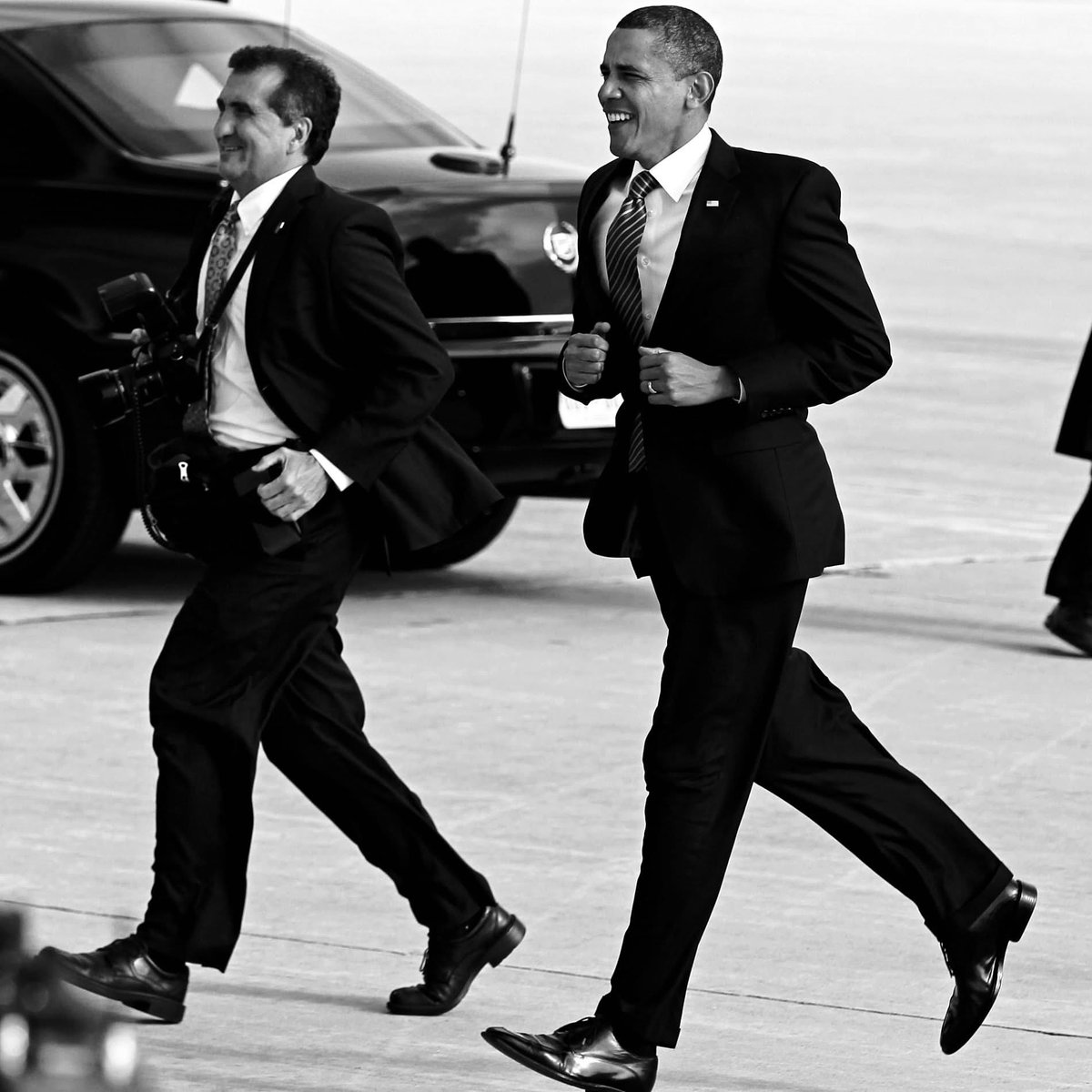
Los libros de historia pasaron por alto discretamente el hecho de que Barack Obama, durante las noches más saturadas de presión de su presidencia, se retiraba solo a la Sala de Tratados en el segundo piso de la residencia de la Casa Blanca —no para trazar estrategias, no para tomar llamadas, sino para escribir a mano cartas personales a diez ciudadanos estadounidenses comunes cada única noche, una práctica que mantuvo con una devoción casi monástica durante los ocho años completos, seleccionando él mismo las cartas de las 40.000 que llegaban diariamente a la Casa Blanca, y su directora de correspondencia de toda la vida, Fiona Reese, confirmó que Obama a menudo lloraba en privado mientras leía ciertas cartas, doblándolas con cuidado antes de escribir respuestas tan personalmente detalladas y emocionalmente presentes que los destinatarios describían frecuentemente la experiencia de recibirlas como el momento más significativo de sus vidas, con un obrero siderúrgico de Ohio escribiendo de vuelta para decir que la carta de Obama lo había detenido físicamente de tomar una decisión que habría alterado permanentemente el futuro de su familia. Lo que hace que esta práctica sea casi insoportablemente conmovedora es el detalle que surgió después —Obama nunca usó una computadora para estas cartas, siempre un bolígrafo de punta de fieltro negro, siempre papel legal amarillo primero como borrador, siempre reescrito a mano una segunda vez en el papel membretado de la Casa Blanca, porque él creía, como le dijo a la historiadora Doris Kearns Goodwin en una rara conversación privada después relatada en su obra de 2018, que el acto físico de presionar la pluma contra el papel obligaba a una calidad de atención que simplemente teclear no podía replicar, una filosofía arraigada en sus años como profesor de derecho constitucional en la Universidad de Chicago de 1992 a 2004, donde desarrolló la convicción de que la democracia solo funciona cuando sus líderes permanecen genuinamente, incómodamente cerca de la gravedad específica del sufrimiento humano individual en lugar de procesarlo desde la distancia aislante de las instituciones y las pantallas.