In today's video, we'll set up #Teleport, a modern #ZeroTrust access platform that provides a more secure alternative to traditional #SSH access. This guide contains everything you'll need to get started. https://t.co/nsZU7yFE1f @goteleport
Once a year we host Teleportopia, the in-person all-hands event for the entire company. This time the theme was "Unified Identity" for humans and machines. It is the correct way to contain and control agents running on production infrastructure. Agents, workloads and humans must be treated equally, there is no such thing as "agentic identity" or "NHI". And this approach not only protects your agents from being hacked, but also protects your existing systems and data from hallucinations.
And we had some fun too! The evidence is the video our Teleporters made trying to out-compete each other. Put your headphones on! Warning: it may not leave your head for a while :)
@kuppingercole Analysts evaluated 20 Zero Trust platforms and Teleport was named an Overall, Product, and Innovation Leader — recognized for our secretless architecture, machine identity governance, and AI agent access control via MCP. https://t.co/YCn2rK8Npa
The next time you’re feeling down, remember it's all about perspective. I got a friend who reads 2-3 books a week, works out twice a day, has no financial worries, & has people who want to have sex with him all the time & yet he constantly complains about how much he hates prison
“Zero Trust to Agent Trust” introduces how the principles of Zero Trust must be extended to accommodate the characteristics of AI agents that are different from humans and machines.
https://t.co/iDQAjPdMtI
Teleport won a Platinum Pinnacle Award for Zero Trust Solution of the Year, recognizing Infrastructure Identity's approach to giving AI agents the same cryptographic identity standard as humans, machines, and workloads. https://t.co/iQnj4sBL9Q
Your nodes get wiped on reboot. Your static credentials don't.
Gus Luxton, Principal Solutions Engineer at Teleport, on why static credentials break at GPU cloud scale.
https://t.co/KB7N6IQf5L
Catching a session at @Identiverse today?
Boris Kurktchiev is on the Tech Theater stage at 1:15pm — making the case that cryptographic identity is the foundation every AI deployment is missing.
Tech Theater 3 | 1:15–1:30pm
Agents have been running on production infrastructure with no identity, access control, or audit at the two points that matter most: what they're instructed to do and what they're permitted to access.
Today Teleport is addressing that with two new capabilities in the Beams public beta.
LLM Proxy sits between an agent and its inference endpoint so teams have enforcement before instructions are ever executed. Delegated Identity assigns each agent scoped privileges for a specific task rather than inheriting broad credentials or running with standing access.
Read the announcement → https://t.co/9XCFj0X3g7
An hour spent on Hacker News reminded me that skepticism towards something new is the lazy position to take. It requires little effort but allows one to sound smart. And yet it's also a cowardly position: it’s the easiest stance to take when your goal is take the stage with no responsibility whatsoever for being wrong. Unfortunately many smart people default to it. Boo.
@Noahpinion Just removing "for you" algorithmic feed and simply showing you the posts of people you follow in chronological order will be a significant improvement on that front.
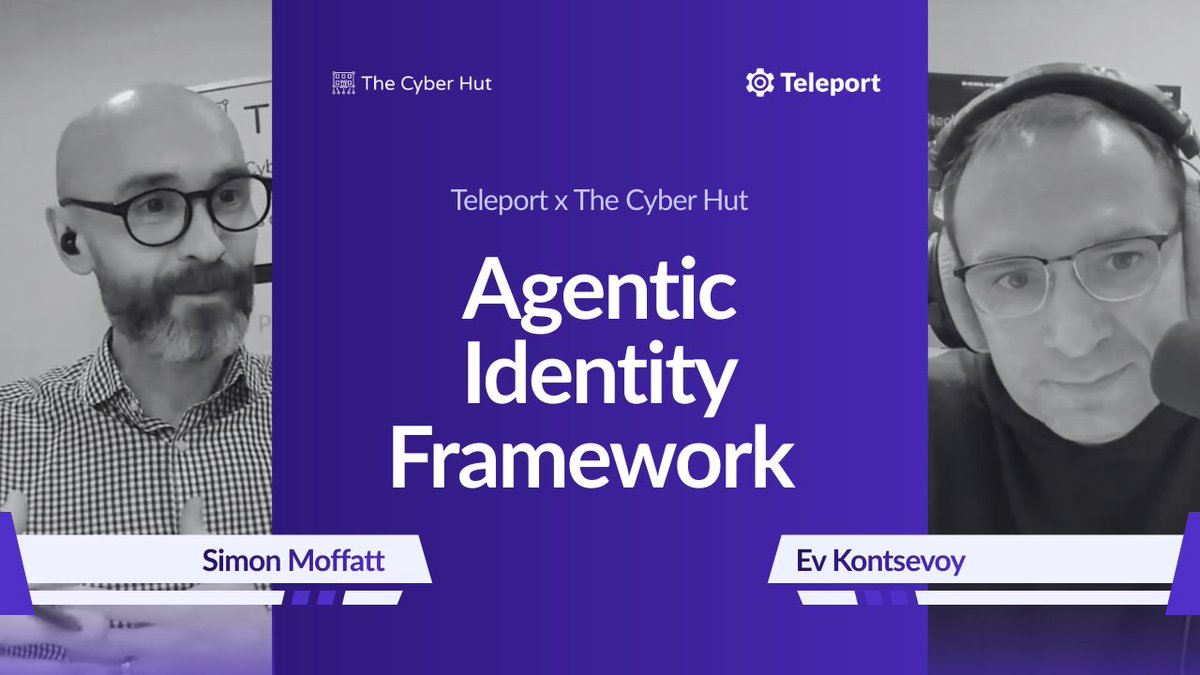
Over the past two weeks we've shared clips from a conversation between @kontsevoy and Simon Moffatt, Founder and Research Analyst at @thecyberhut. The full interview is now live. 🎥
If you've been following along, this is the full picture. If you're just joining us, this is the place to start. Watch now → https://t.co/ePsCXkVNK8
You should also consider time. There's a minuscule period between a civilization discovering radio and going extinct. This period, even if we assume a thousand years, it microscopic relative to an average lifespan of a star. Basically just a moment. And for us to hear these civilizations, their "radio moment" also must coincide with ours.
For the same reason we have online docs in addition to --help. Man pages are basically "static website generators" from before www. There are standardized headers, formatting, variables, built-in localization support (so other people can translate your man pages to their language and package with your software), and other similar benefits. If you want --help to be just as flexible, you'll effectively re-implement your own man.