⚡️Bitcoin is the first asset in modern history whose main product is refusing to die.
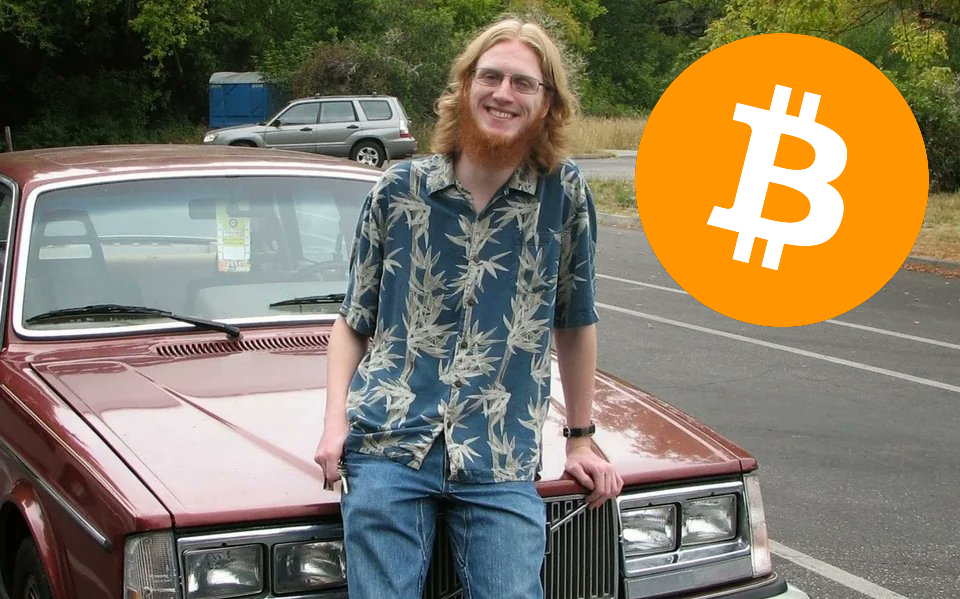
That is why Hal Finney’s line is so powerful.
He saw the actual mechanism before almost anyone else.
Bitcoin does not become valuable because someone promises yield, growth, dividends, guidance, or political backing.
Bitcoin becomes valuable because it keeps surviving every attempt to dismiss, ban, corrupt, fork, ridicule, financialize, and bury it.
Every day it survives, the world has to quietly update.
At $0.01, the bet was “this is probably a toy.”
At $15, the bet was “maybe this survives among weirdos.”
At $1,000, the bet was “maybe this becomes a speculative asset.”
At $20,000, the bet was “maybe this becomes digital gold.”
At $60,000+, the bet became “maybe this is a permanent monetary rail.”
The price is just the visible surface of that probability update.
Bitcoin’s real chart is not price. It is death probability collapsing over time.
That is what skeptics still do not understand.
They think Bitcoin has to keep proving itself with new arguments. It doesn’t. Time is the argument. Blocks are the argument. Halvings are the argument. Failed bans are the argument. Exchange collapses that fail to kill it are the argument. Bear markets that fail to erase it are the argument. Governments regulating it instead of destroying it are the argument. BlackRock packaging it is the argument. States discussing reserves are the argument.
Bitcoin wins by making disbelief more expensive each year.
The real genius of Bitcoin is that it turned survival into compounding credibility. Most assets need management teams to execute. Bitcoin needs the network to keep producing blocks and refusing invalid rules. That sounds simple, but simple is the point. It is a machine that converts time, energy, and consensus into monetary credibility.
Fiat credibility decays because humans keep modifying the promise.
Bitcoin credibility compounds because the promise keeps refusing modification.
That is the entire civilizational split.
Every fiat system eventually asks for trust again. Trust us through this emergency. Trust us through this deficit. Trust us through this war. Trust us through this bailout. Trust us through this inflation. Trust us through this temporary measure. Trust us through this debt spiral.
Bitcoin says: verify.
That is why it terrifies the old system. It exposes money as a credibility game and then offers a version where the rules do not need a priesthood.
The hardest truth: Bitcoin is no longer trying to become legitimate. Legitimacy is slowly being forced to route through Bitcoin.
That does not mean the path is clean. There will be crashes, confiscation attempts, custody failures, regulation, taxation, ETF paper games, political attacks, quantum fear cycles, and stupid leverage blowups. None of that changes the core. Those are stress tests.
The longer Bitcoin survives the stress tests, the more absurd the zero case becomes.
The zero case was plausible in 2010.
It is now mostly a psychological defense mechanism for people who missed the compounding of monetary credibility in real time.
Bitcoin is not just an asset anymore. It is a running referendum on whether trust in code-backed scarcity can outlast trust in political restraint.
And the answer keeps getting clearer.
Every block says the same thing:
The promise held again.
⚡️Schiff is defending a dead monetary map.
His entire argument depends on treating Bitcoin as an isolated object and asking whether it has value in a vacuum.
That is the wrong frame.
Monetary assets do not become important because they produce cash flow.
They become important because the surrounding system creates a need for coordination, collateral, settlement, escape, and trust-minimized ownership.
Gold did not win because it produced yield.
The dollar did not win because paper had intrinsic value.
Treasuries did not win because debt is sacred.
They won because a system formed around them.
Bitcoin is now forming a system around itself.
ETF rails. Custody rails. Brokerage access. Stablecoins. Tokenization. Treasury enforcement. CLARITY. Strategic reserve language. Corporate balance sheets. Bitcoin income wrappers. MSTR credit machinery. Prediction markets. Sovereign optionality. Sanctions pressure. Capital controls. Fiscal decay.
That is the thing Schiff refuses to see.
He sees price speculation and says “no value.”
The deeper structure says Bitcoin is being pulled into the core of financial power because the old system keeps producing the exact problems Bitcoin solves.
Debt keeps rising.
Money keeps getting politicized.
Banking access keeps becoming conditional.
Sanctions keep expanding.
Trust in sovereign balance sheets keeps weakening.
Neutral collateral keeps becoming more important.
Digital financial rails keep swallowing everything.
Bitcoin sits at the intersection of all of that.
Schiff’s mistake is not skepticism. Skepticism is useful. His mistake is category failure. He keeps judging Bitcoin like a bad stock, when it is competing to become digital collateral in a world where trust itself is fragmenting.
That is why he sounds right during crashes.
Crashes expose fraud, leverage, scams, false belief, bad tokens, dumb money, and overpromised narratives. Schiff points at the wreckage and says the whole structure is fake.
But the wreckage is the purification layer.
The internet bubble did not kill the internet. It killed the garbage built on top of it before the real architecture took over.
Crypto is going through the same separation.
Garbage dies.
Leverage dies.
Retail mania dies.
Fake decentralization dies.
Bitcoin survives.
Stablecoins survive.
Tokenization survives.
Prediction markets survive.
Custody survives.
Regulated rails survive.
The U.S. does not lose by becoming the crypto capital if it captures the surviving rails. It wins the jurisdictional layer. It owns the compliance perimeter, the custody stack, the ETF market, the legal definitions, the stablecoin dollar network, the institutional distribution rails, and the tax/reporting architecture.
That is power.
Schiff thinks America is becoming the bagholder.
The deeper read: America is trying to become the operating system.
That does not mean every token matters. Most do not. It does not mean every crypto holder wins. Many will get destroyed. It does not mean the process is clean. It will be ugly, political, surveilled, manipulated, and full of fraud before the surviving structure hardens.
But Bitcoin’s role is not disappearing.
The system is surrounding it.
That is the tell.
Worthless assets get ignored.
Threatening assets get attacked.
Useful strategic assets get absorbed.
Bitcoin is being absorbed.
Schiff’s gold framework cannot process that because gold already won its social authorization centuries ago. He treats old belief as reality and new belief as fantasy. That is the blind spot.
The real future is harsher than Bitcoin utopians wanted and far more bullish than Schiff can admit.
Bitcoin will not remain a pure outside-the-system rebellion asset.
It is becoming institutional collateral inside the system.
That transition will feel like betrayal to purists and like failure to bears.
It is neither.
It is power discovering how to use the thing it could not kill.
Big news! 🚨 Saylor University is now officially IACET accredited - joining the ranks of the Wharton School Continuing Ed program, UC Berkeley Extension, and Stanford's Center for Professional Development. Our 170+ free, self-paced courses now award recognized Continuing Education Units (CEUs). High-quality education is now even more valuable for your career - and still completely free.
https://t.co/hZaRFUmrcd
You start reading weird books.
You buy “The Bitcoin Standard” and then “The Fiat Standard” and then you accidentally end up reading Murray Rothbard, and then somehow you’re reading Mises, and then it’s 11:47 PM on a Tuesday and you’re 340 pages into “Human Action” and you’re highlighting passages about praxeology and your wife comes downstairs and asks if you’re coming to bed and you say “in a minute” but you don’t come to bed for two hours because you have just discovered that everything you were taught about economics in college was wrong, all of it, every single sentence, and now you can’t go back, you can never go back, you have been orange-pilled in a way that goes deeper than money, you have been epistemologically orange-pilled, you now believe that John Maynard Keynes was a charlatan and the gold standard was actually fine and the income tax is theft and you can never say any of this out loud at a dinner party ever again.
⚡️Extreme FIRE often optimizes the wrong scarce asset.
Money is not the final constraint. Usable life is.
A lot of FIRE math treats age 35, 50, 65, and 80 like they are just different cells in a spreadsheet.
They are not.
The human body is not a brokerage account.
Energy, desire, mobility, libido, risk tolerance, recovery speed, curiosity, and emotional openness all decay unevenly. The years are not fungible.
That is the hidden flaw.
Saving aggressively in your 20s, 30s, and 40s can be powerful. But living like a monk for decades just to buy freedom after your best vitality window has closed is a bad trade. It creates the illusion of control while quietly spending the one asset that cannot compound backward.
The FIRE community gets one thing deeply right: most people are financially enslaved by consumption, status, debt, and lifestyle inflation. Escaping that trap is noble. But the more neurotic wing of FIRE turns freedom into another prison. Every dinner becomes leakage. Every trip becomes guilt. Every present-tense joy gets subordinated to a future version of the self who may be tired, sick, risk-averse, or dead.
That is just fear with a spreadsheet.
The clean model is freedom-weighted spending. Spend heavily on things that create memory, health, relationships, skill, leverage, and aliveness. Cut brutally from status garbage, lazy consumption, recurring waste, debt traps, and purchases made to impress strangers. The goal is not maximum frugality.
The goal is maximum life-control per dollar.
The Reddit poster’s “study” is worthless as evidence, but the lived observation is true enough: late 70s and early 80s are not a reliable enjoyment window. Some people thrive there. Many do not. Building an entire life plan around “someday at 78” is insane.
The real enemy is not spending. The real enemy is unconscious spending.
A person who blows money on cars, subscriptions, restaurants, and ego signaling is trapped.
A person who refuses to take a meaningful trip with loved ones because the withdrawal rate model says wait another seven years is also trapped.
Different prison. Same master: fear.
Everyone talks about the guy who paid 10,000 bitcoin for two pizzas, but no one talks about the guy who received the 10,000 bitcoin.
Meet Jeremy Sturdivant, the man who got paid 10,000 BTC for selling two pizzas on this day in 2010.
“I had no idea how huge it would become” ✨
Drawing Bitcoin is a new online exhibition of mined blocks and transaction value using a web-based tool translated from a visual programming script.
Each block is treated as a kind of found object: a sealed composition of economic activity, timestamped and permanent. Transactions within the block are plotted on a logarithmic scale, then arranged through a radial distribution based on Bitcoin transaction size.
The result is part data visualization, part monetary anatomy, part digital painting.
Every block has its own character. Some appear dense and chaotic. Others are sparse, elegant, or strangely symmetrical. Large transactions pull the eye outward. Smaller movements gather like particles. What normally disappears into code becomes visible as shape.
The tool allows up to two blocks to be viewed side by side, creating a way to compare moments in Bitcoin’s history not just numerically, but visually. Blocks can be read as portraits of time: each one a brief, irreversible record of human decision, market energy, machine consensus, and mathematical finality.
In this sense, Drawing Bitcoin is not only a tool for analysis. It is an exhibit of the blockchain as an aesthetic object.
A block is usually understood as infrastructure.
Here, it becomes image.
A transaction is usually understood as accounting. This website makes it art. A ledger is usually understood as record. Here, it becomes composition.
Bitcoin is often described through price, politics, mining, or economics. This project approaches it differently: through looking. It asks what can be seen when value is drawn, when scarcity takes form, when a block becomes a field of marks.
https://t.co/iWJTt1M1Pb is live now.
It works best on desktop, with a simplified version available for mobile.
Come explore the blocks. Compare them. Study them. Let the chain draw itself.
@ProfitCircle_ Following Mr. P is the gift that keeps on giving. I can say more but if you don't see it, then you won't recognize it. So grateful for the valuable insights