What should we learn from the extraordinary Woman, Life, Freedom movement? And when I say “we,” I mean Iranians, both inside and outside Iran, but also Western democracies. This movement is rich in lessons, if only we take the time to reflect on what it has revealed.
https://t.co/Xx0ZqmrRAe
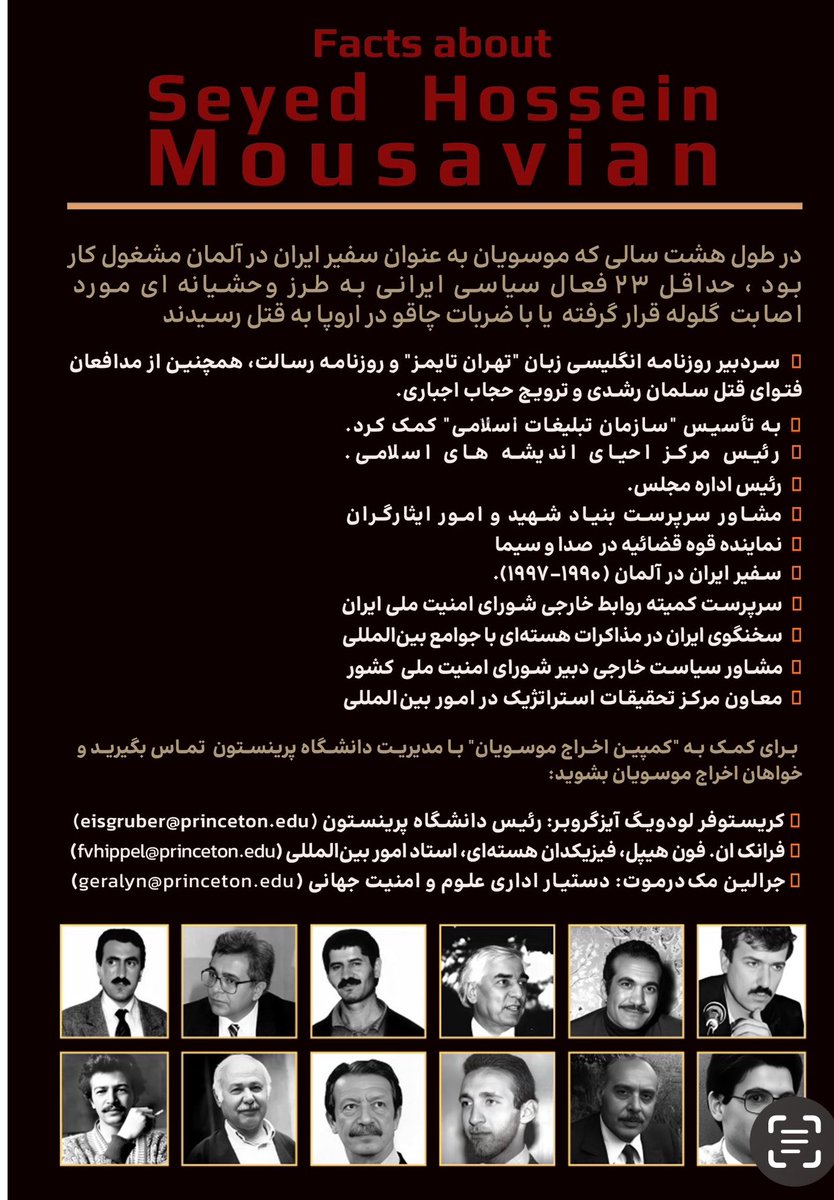
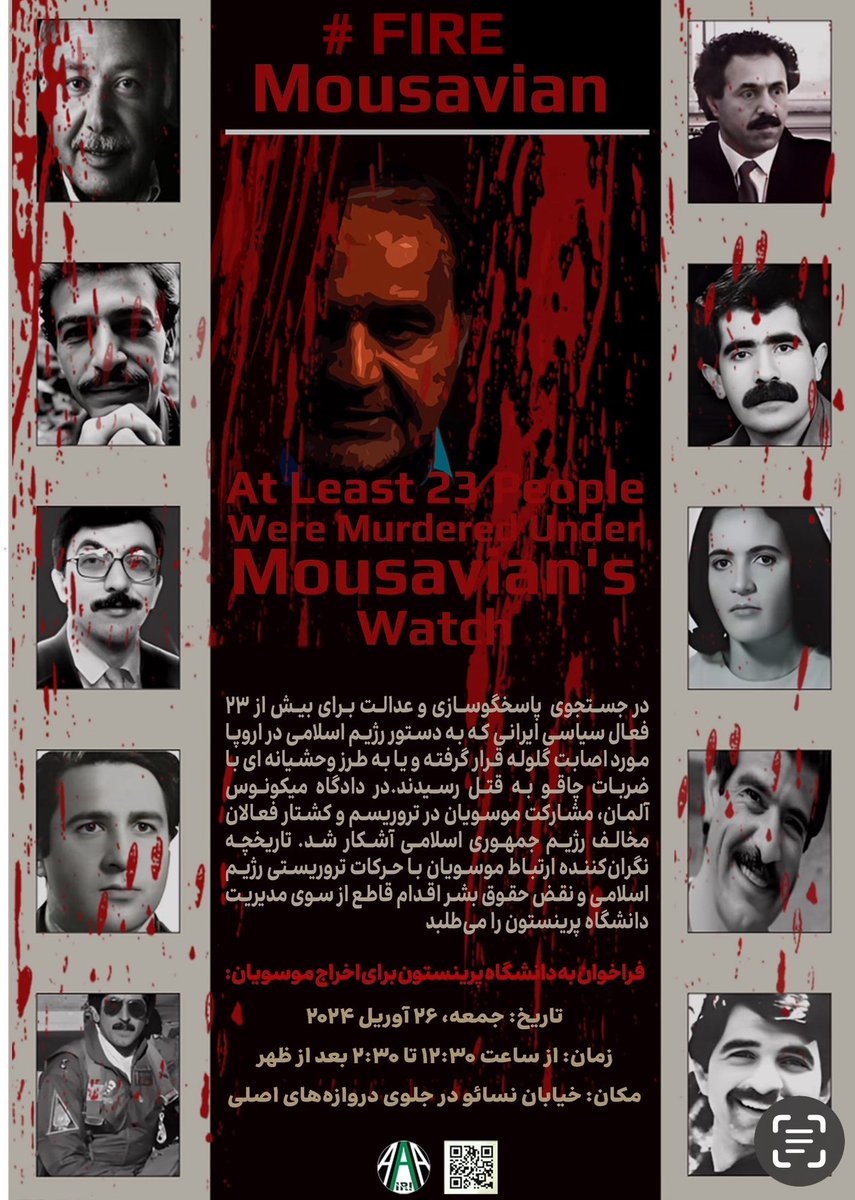
The irony is staggering. Seyed Hossein Mousavian represented the Islamic Republic in Germany during a period marked by the brutal assassinations of Iranian dissidents, including the Mykonos assassinations. A German court concluded that the Mykonos murders had been ordered at the highest levels of the Iranian state; evidence presented in the case also documented Iranian intelligence operations connected to diplomatic missions in Germany.
Mousavian also publicly defended Iran’s refusal to lift the fatwa against Salman Rushdie.
And now he is invited to discuss the protection of civilians? @ILA_official, did you examine his record before giving him this platform?
#FireMousavian
#StopIRILobby
Imagine living through a war. Streets, buildings and neighbourhoods are being bombed. You see a place reduced to ruins by a strike and take a photograph — to keep a record, to remember, or to share with others what is happening. In Iran today, that photograph can become part of a case that ends in a death sentence.
This is what happened to Hassan Amiri after a photograph of a bombed site found on his phone became part of the basis for a case that led to a death sentence. Hassan and his twin brother Hossein were arrested in March 2026. They were reportedly tortured into confessing that further footage existed on a laptop they did not even own. Tried by Branch 26 of Tehran’s Revolutionary Court on charges of “collaboration with Israel”, they were sentenced to death. They remain in Ghezel Hesar Prison.
Espionage for Israel was already punishable by death in Iran under a 2020 law, but the 2025 espionage law (Law on Intensification of Punishment for Espionage and Cooperation with the Zionist Regime and Hostile States Against National Security and Interests), rushed through parliament after the twelve-day war in June 2025, goes much further. It attaches the death penalty to vaguely defined ‘operational actions’, ‘intelligence activity’ and even ‘direct or indirect assistance’ deemed to benefit hostile states. It criminalises sending films, images or information to foreign media, and the possession of satellite internet devices such as Starlink. Since the beginning of 2026, at least 11 people have been executed under the espionage law, and others face imminent execution.
When criminal provisions are drafted in broad and ambiguous terms, their application becomes especially dangerous in politically charged times. No emergency, no conflict, no security claim can justify putting people to death for taking photographs or sharing information. And allegations of national-security offences do not suspend the requirements of evidence, due process, fair trial and protection from torture. Together with other UN experts, I have urged the Iranian authorities to suspend this law.
My mandate’s communication about Hasan and Hosein Amiri case:
https://t.co/JHp1VFNaMU
No response has yet been received from the Iranian authorities.
My mandate’s communication on the 2025 espionage law
https://t.co/z8CmbwxFKl
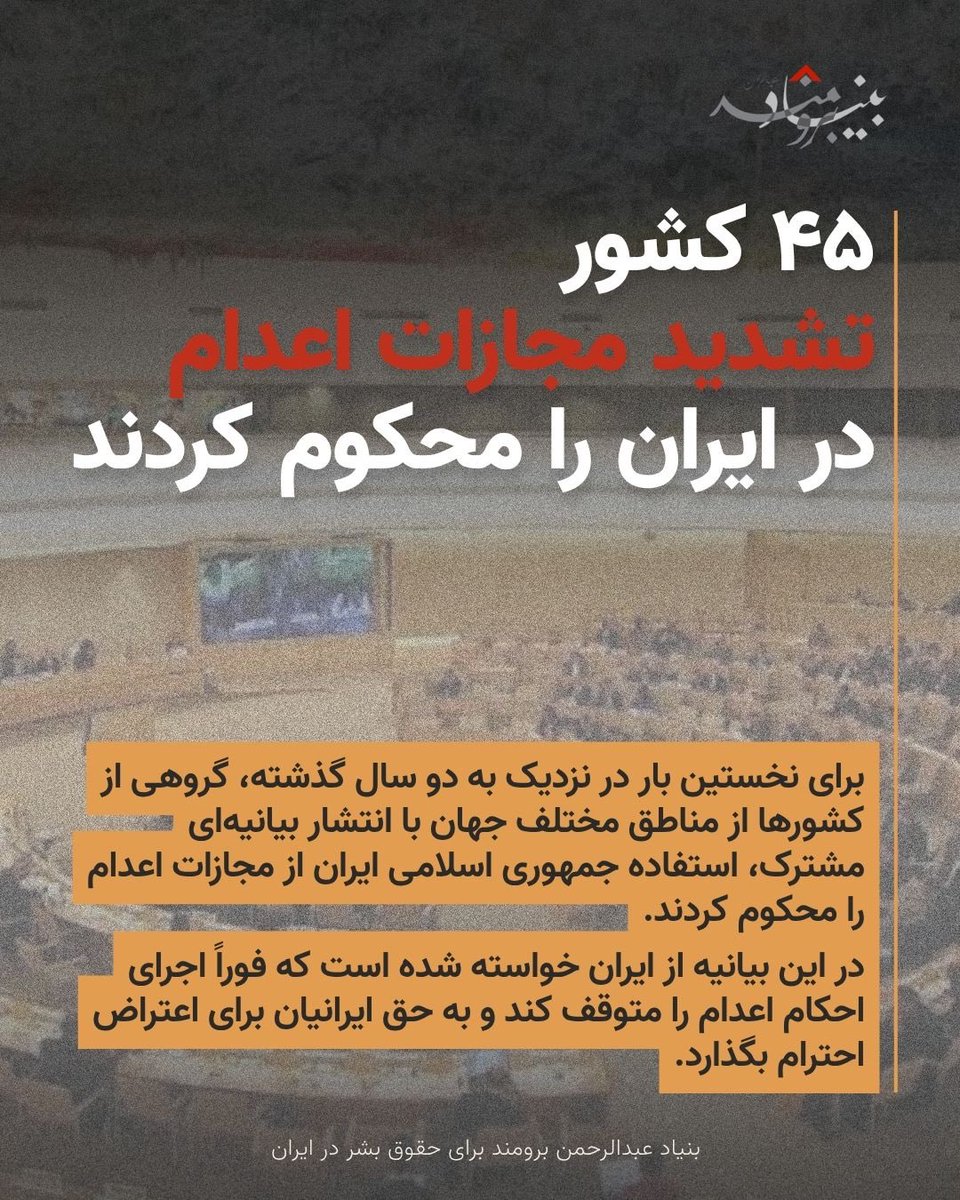
🔴برای نخستین بار در نزدیک به دو سال گذشته، کشورهایی از نقاط مختلف جهان در شورای حقوق بشر سازمان ملل متحد گرد هم آمدهاند تا تشدید استفاده جمهوری اسلامی ایران از مجازات اعدام را محکوم کنند.
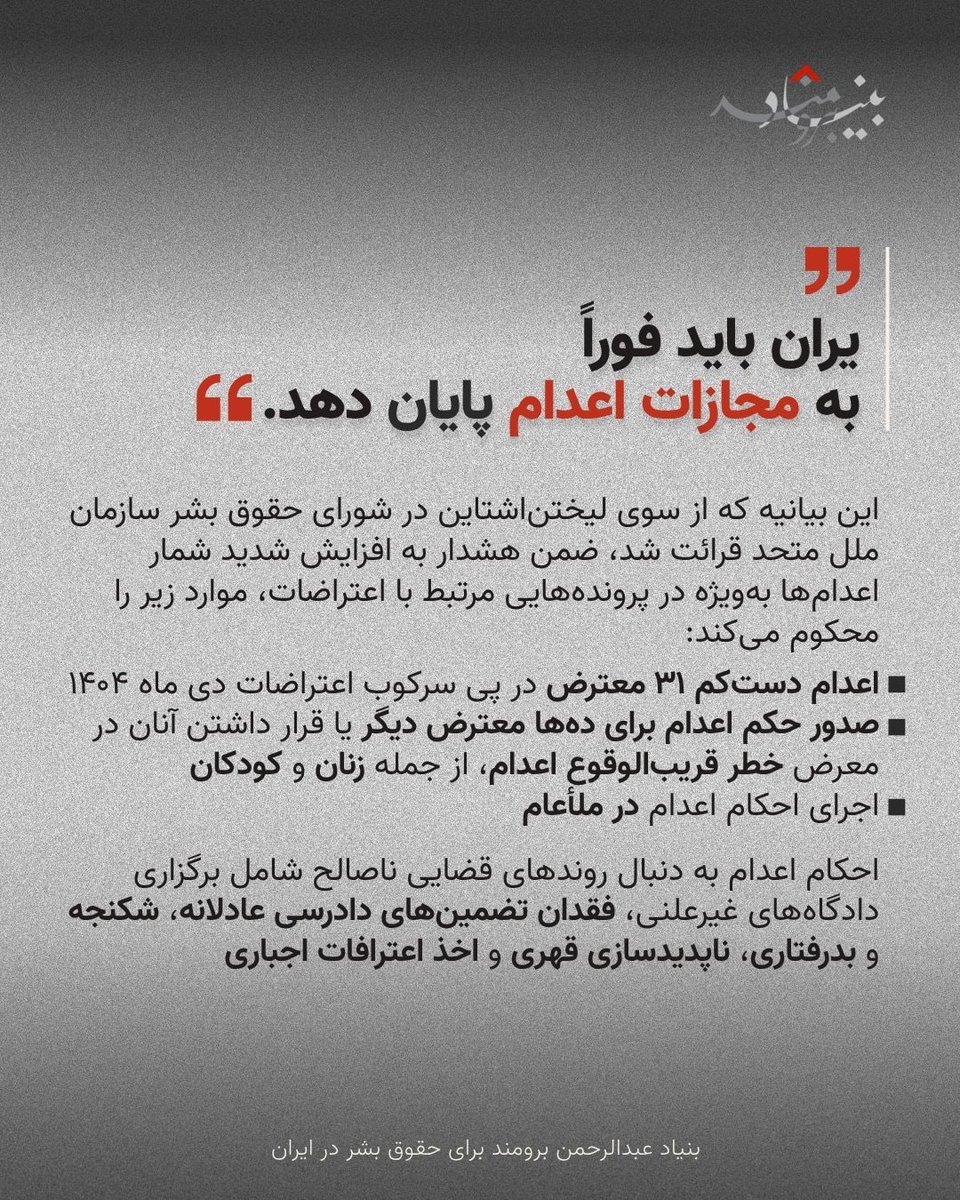
🔸در بیانیهای مشترک که از سوی لیختناشتاین قرائت شد، ۴۵ کشور نسبت به افزایش شدید اعدامها و صدور احکام اعدام در ایران هشدار دادند؛ بهویژه علیه معترضان و افرادی که از حقوق بنیادین خود استفاده میکنند.
این بیانیه در شرایطی منتشر شده که پس از اعتراضات ژانویه ۲۰۲۶، استفاده از مجازات اعدام به شکل نگرانکنندهای افزایش یافته است. دستکم ۳۱ معترض اعدام شدهاند و بنا بر گزارشها، دهها نفر دیگر به اعدام محکوم شده یا در معرض خطر قریبالوقوع اجرای حکم قرار دارند.
🔸این نخستین بیانیه مشترک فرامنطقهای درباره ایران از سپتامبر ۲۰۲۴ تاکنون است و بار دیگر توجه جمعی جامعه بینالمللی را به استفاده ایران از مجازات اعدام معطوف میکند.
🔸در شرایطی که اجرای احکام اعدام همچنان با نرخی نگرانکننده ادامه دارد، تداوم توجه و فشار بینالمللی اهمیت دارد.
«هیچکس نباید به دلیل استفاده از حقوق خود، با ترس از اعدام روبهرو شود.»
دوستان، لطفاً به این پست بروید ⬇️ و در زیر آن درباره کارنامه سید حسین موسویان و دوران مسئولیت او در جمهوری اسلامی بنویسید؛ از جمله دوره سفارت او در آلمان که با ترور میکونوس و دیگر اقدامات جمهوری اسلامی علیه مخالفان در اروپا همزمان بود. دادگاه میکونوس نیز مسئولیت این ترورها را متوجه بالاترین سطوح حاکمیت جمهوری اسلامی دانست.
از @ILA_official بخواهید درباره این سوابق پاسخگو باشد و در دعوت از موسویان برای سخنرانی درباره «حفاظت از غیرنظامیان در مخاصمات مسلحانه» تجدیدنظر کرده و دعوت او را پس بگیرد. صدای خانوادههای قربانیان و ایرانیانی باشید که سالها از سرکوب فرامرزی جمهوری اسلامی آسیب دیدهاند.
#FireMousavian
#StopIRILobby
For Kurds, Baluch, Ahwazi Arabs, Azerbaijani Turks and Turkmen, discrimination extends from restrictions on language rights to ethnic stereotyping in State media. Economic marginalization, land confiscation and environmental degradation have further deepened poverty in many minority regions. Many Baluch are denied a shenasnameh (identity booklet), limiting access to education, healthcare and formal employment. Kurdish kolbars and Baluch sukhtbars often rely on cross-border transport of goods and fuel for their livelihoods. Environmental mismanagement has displaced communities across minority regions, including Kurdish, Arab, Baluch, Turkmen and Gilak areas, while Azerbaijani Turks continue to experience the consequences of environmental degradation around Lake Urmia. Religious minorities face similar forms of exclusion. Baha'is are effectively barred from higher education and public employment and, like Christian converts, have long been portrayed as security threats. Sunni Muslims and Yarsan remain excluded from public office.
This broader context is essential to understanding death penalty cases involving minorities. Discrimination does not end at the gates of the criminal justice system; it can affect arrest, detention, trial and sentencing, including in capital cases.
Ethnic minorities facing capital charges often encounter additional barriers to a fair trial, including inadequate interpretation during interrogations and court proceedings, allegations of torture and other ill-treatment aimed at extracting confessions, and prosecutions on national security charges often unsupported by credible evidence.
The case of Farhad Baranzehi, a young Baluch man, reportedly sentenced to death for baghy without a lawyer present, raises concerns regarding allegations of torture and other serious fair trial violations. Hatem Özdemir, a Turkish national of Kurdish ethnicity, was reportedly denied interpretation during critical stages of proceedings that resulted in a death sentence for baghy. Yousef Ahmadi, a Kurdish man from Baneh, has alleged extremely violent torture and denial of medical care following his arrest. Similar concerns have been reported in the cases of Rauf Sheikh-Maroufi, Mohammad Faraji and Mohsen Eslamkhah, three Kurdish men sentenced to death in connection with the Woman, Life, Freedom protests. At the time of writing, none of these death sentences has been carried out, and the individuals concerned remain at imminent risk of executions.
Documented patterns of ethnic and religious discrimination, combined with recurring allegations of torture, coerced confessions and fair trial violations in individual cases, raise serious concerns about the application of the death penalty to minority groups in Iran. Capital cases already warrant the most exacting scrutiny under international human rights law. These factors demand compelling grounds for particularly rigorous scrutiny of capital cases involving members of ethnic and religious minorities.
My Mandate’s communication on Hatem Özdemir
https://t.co/Py3sEwKeoW
Government’s response: https://t.co/1SB6BOsY2L
My Mandate’s communication on Farhad Baranzehi
https://t.co/JHp1VFNaMU
Government’s response: not yet received
My Mandate’s communication on Yousef Ahmadi, Raouf Sheikh-Maroufi, Mohammad Faraji and Mohsen Eslamkhah
https://t.co/rqu2DgODb8
Government’s response: https://t.co/ONbSNWgafr
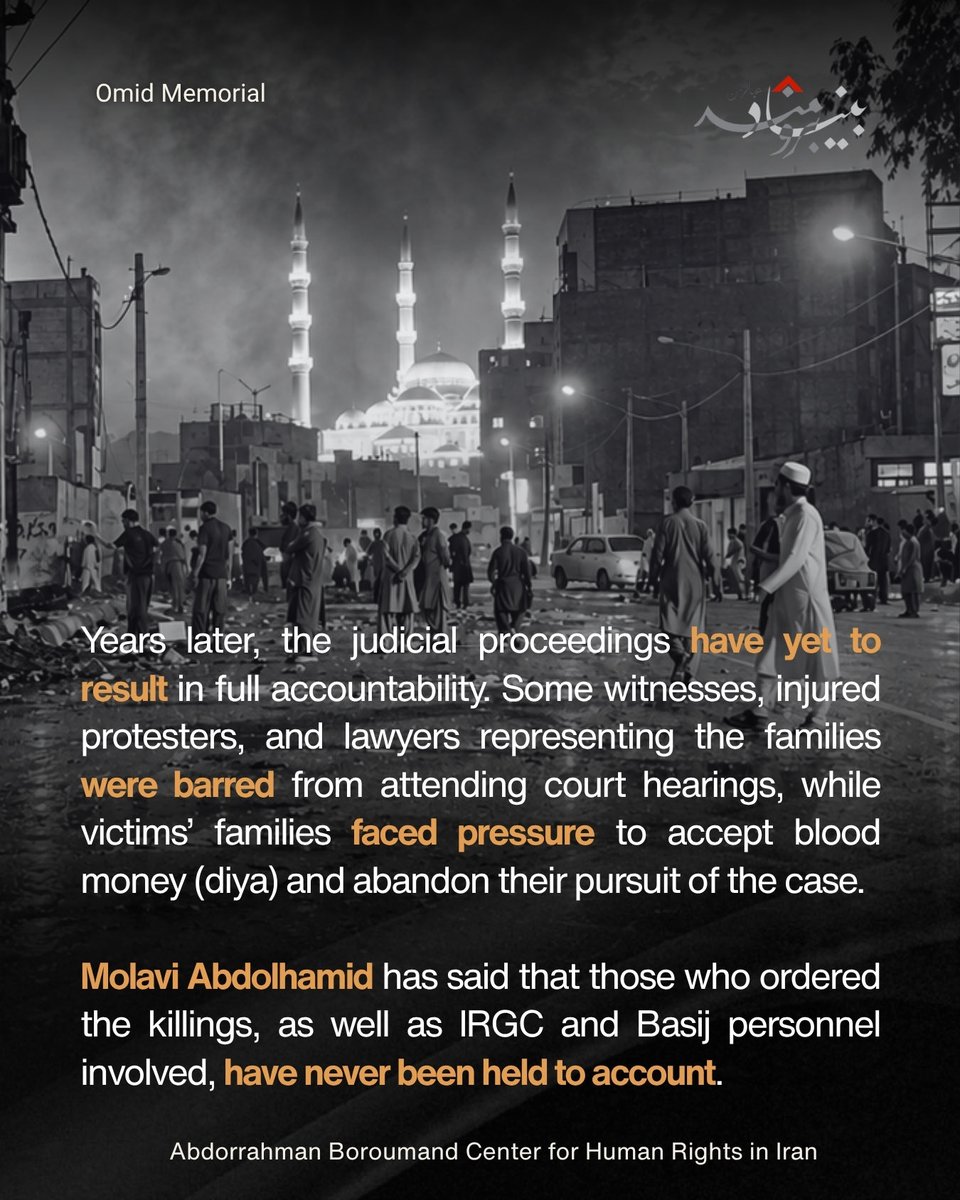
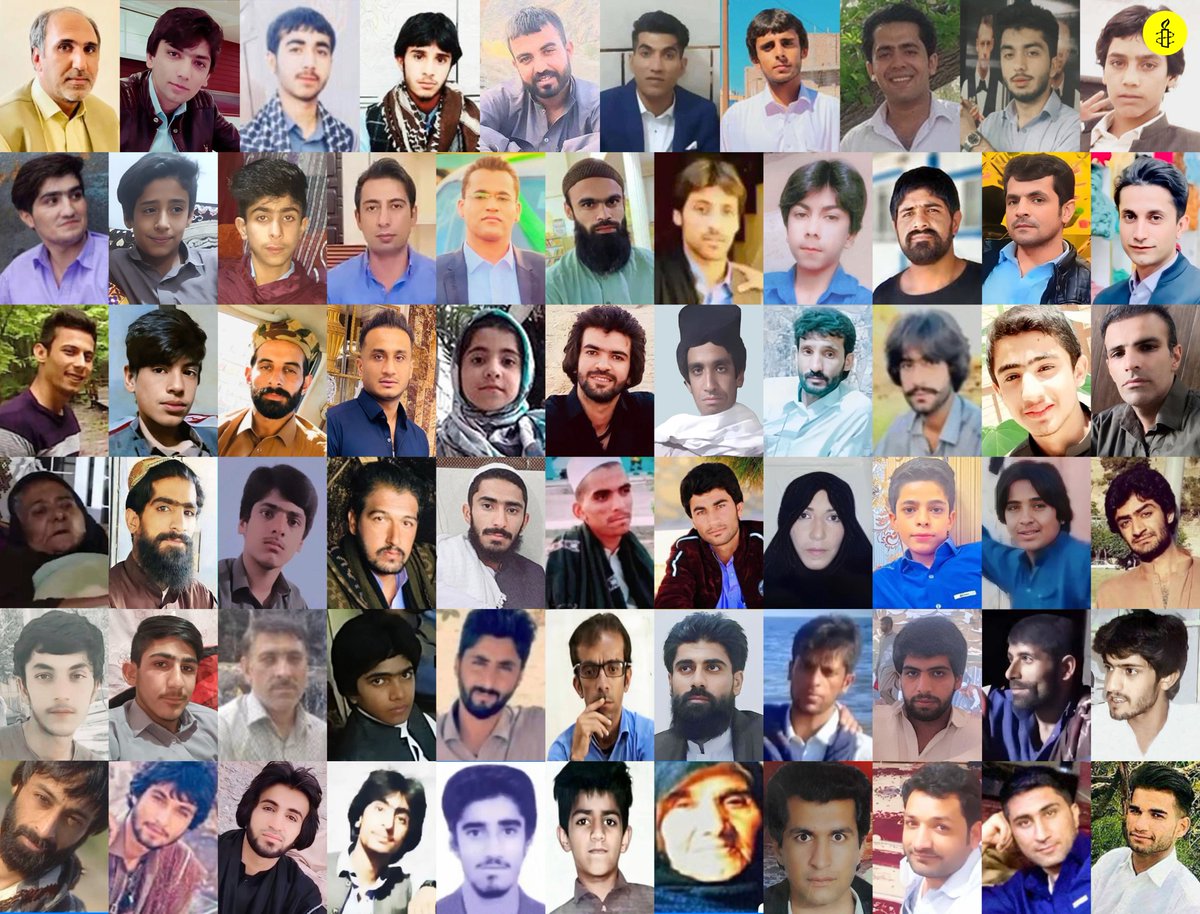
🔴Four years have passed since “Zahedan’s Bloody Friday,” a day when many families across Sistan and Baluchestan lost loved ones and hundreds of others were injured.
🔸In the years since the killings, victims’ families have sought not only to identify the officers who opened fire on protesters and worshippers, but also to hold accountable the officials who ordered the crackdown.
🔸Yet the judicial proceedings have been marked by restrictions on families, witnesses, and lawyers. According to Molavi Abdolhamid, those who ordered the killings, as well as members of the Islamic Revolutionary Guard Corps (IRGC) and Basij involved in the violence, have never been held to account.
While the media focuses on US comments to Iran's 7-point proposal to avert the resumption of war, this is the real war they are missing: the war from the state against the street and the massacring of Iranians for trying to be stewards of their own destiny.
Warning Regarding Fraudulent Emails
We have become aware that fraudulent emails have been sent to a number of individuals, activists and journalists under the fabricated name “Iran in 2035,” falsely claiming to represent Prince Reza Pahlavi.
No team, project or official initiative under this name has been established or authorized by Prince Reza Pahlavi or his Secretariat. Invitations to a purported private gathering are also fraudulent and unauthorized.
Recipients are advised not to respond, click any links, open attachments or provide the senders with any personal, financial or professional information.
All official invitations and communications will be issued exclusively through verified official channels.
Thank you @HNeumannMEP for standing by the people of Iran who cannot participate in Iran’s political life and elect their true representatives, unless they support the undemocratic tenets of the Islamic Republic.
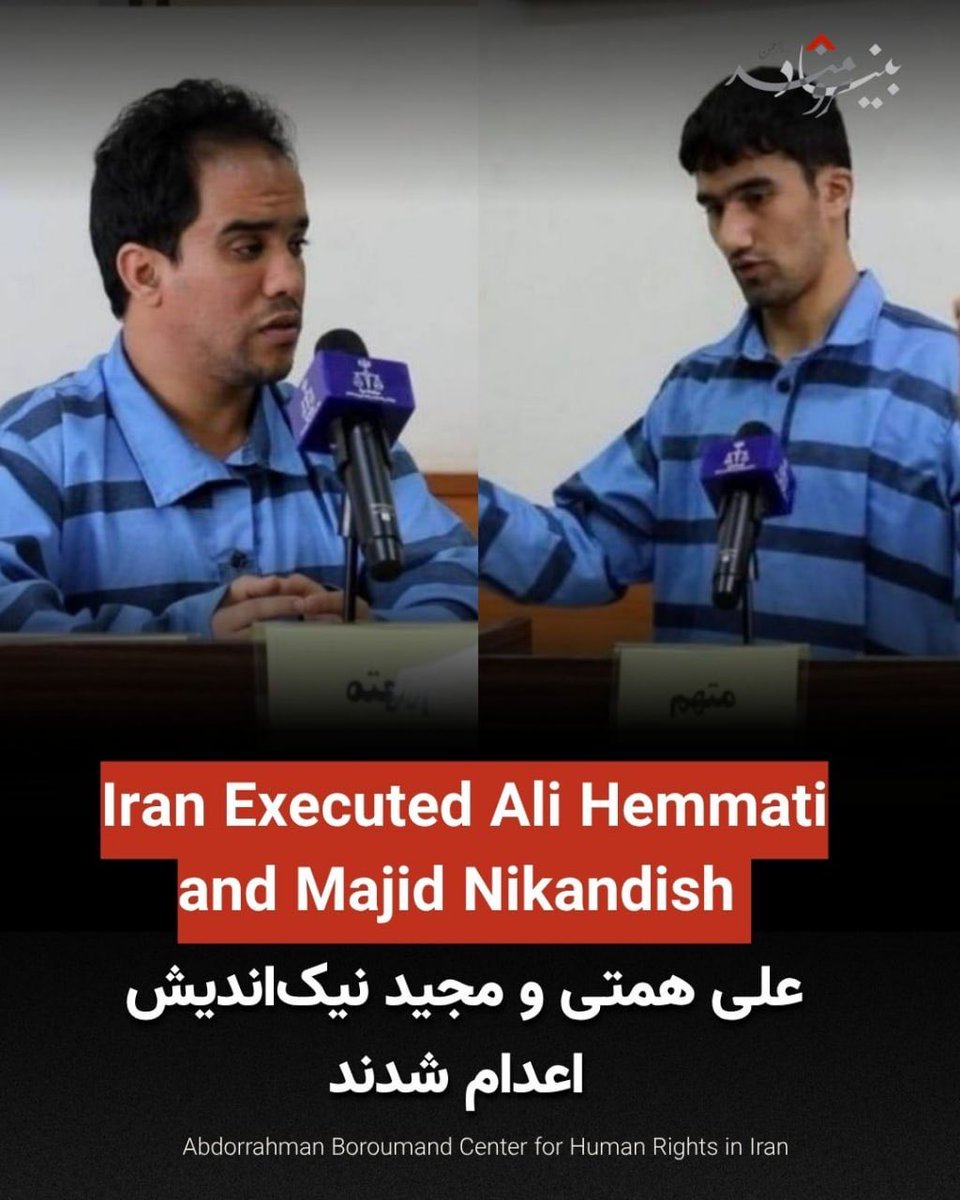
🔴Iran Executed Ali Hemmati Sistanian and Majid Nikandish
🔸The Islamic Republic’s judiciary announced the execution of Mr. Ali Hemmati Sistanian, son of Hassan, and Mr. Majid Nikandish, son of Mohammad Ebrahim, two individuals arrested in connection with the nationwide protests of Dey 1404 in Mashhad. Their death sentences were carried out early today after being upheld by the Supreme Court. The location of the executions was not disclosed.
🔸Citing what it described as the men’s “confessions,” the judiciary-affiliated media claimed that Mr. Ali Hemmati Sistanian and Mr. Majid Nikandish were involved in the protests of January 8, 2026, in the Tabarsi area of Mashhad. According to the judiciary, four security personnel were killed during those events.
🔸According to Mizan, following the completion of the investigation, the defendants were tried in the presence of their lawyers and sentenced to death, with the verdicts later upheld by the Supreme Court. However, no independent information has been published regarding the conditions of their interrogations, the circumstances under which the confessions wereobtained, the conduct of the court proceedings, their effective access to legal counsel, or the evidence relied upon by the court. The specific court that heard the case and the location of the executions have also not been disclosed, and the judiciary’s claims have not been independently verified.
Mohsen Eslamkhah, a Kurd from Bukan, was 16 when the Woman, Life, Freedom protests began in 2022. Like many other young people, he took to the streets to call for freedom, dignity and change. In February 2026 a Revolutionary Court sentenced him to death for moharebeh (enmity against God) for acts alleged to have taken place when he was a child. He remains on death row.
International law leaves no room here. Key treaties ratified by Iran prohibit the death penalty for offences committed under 18. Mohsen is not alone. My mandate has received reports of others facing execution for offences allegedly committed when they were children.
Four years on, many young people once again took to the streets, calling for a better future they felt was slipping away from them. Shervin Bagherian Jebeli was one of them. He had turned 18 days only days before security forces raided his home in Isfahan at night in January 2026. His family heard nothing for a week. Then State television aired his confession, recorded under interrogation, before any trial. In it, he is told he is charged with moharebeh. He does not appear to know what the word means. He was sentenced to death with 11 others in a single closed hearing, with no clarity as to what each is accused of doing. He remains on death row.
The rule on children exists because young people are developing and capable of change, and that does not stop on a birthday. The death sentences against Mohsen and the others who were children at the time are prohibited outright. Shervin’s case should make us deeply uneasy: a death sentence for a boy who had been an adult for a matter of days. But his age is not the only reason he should not be executed. A week of enforced disappearance, an apparently coerced confession broadcast before trial, and a closed hearing that never said what he personally is accused of having done are each reason enough.
Respecting the prohibition on executing children is the least Iranian authorities can do; halting these executions is what the authorities must do. A young person’s future should not end with a death sentence.
My Mandate’s Communication on Mohsen Eslamkhah
https://t.co/rqu2DgODb8
Response by the Iranian authorities
https://t.co/ONbSNWgafr
My Mandate’s communication on Shervin Bagherian Jebeli
https://t.co/xH7oBA1Av1
Response by the government received but not published yet. It will be available here later today - https://t.co/JJpsRdZ6Fp
زمانی که اعتراضات سراسری «زن، زندگی آزادی» در سال ۱۴۰۱ آغاز شد، محسن اسلامخواه، کرد و اهل بوکان، ۱۶ ساله بود. او نیز مانند بسیاری از جوانان دیگر با مطالبه آزادی، کرامت و تغییر به خیابانها آمد. در بهمن ۱۴۰۴، دادگاه انقلاب او را به اتهام محاربه به اعدام محکوم کرد. این اتهام مربوط به اقداماتی است که انتساب آنها به محسن مربوط به زمانی است که او کودک بوده است. محسن همچنان در انتظار اجرای حکم اعدام به سر میبرد.
حقوق بینالمل\ل در این زمینه جای هیچ ابهامی نمیگذارد. معاهدات کلیدی بینالمللی که ایران هم به آنها پیوسته است، اعدام افرادی را که جرم منتسب به آنان زمانی ارتکاب یافته که زیر ۱۸ داشتهاند، ممنوع میکند. محسن تنها نیست. ماموریت من گزارشهایی درباره افراد دیگری نیز دریافت کرده است که به دلیل جرایمی که در دوران کودکی مرتکب شدهاند، با خطر اعدام مواجهاند.
چهار سال بعد، بار دیگر بسیاری از جوانان به خیابانها آمدند و خواستار آیندهای بهتر شدند، آیندهای که احساس میکردند دارد از دستشان میرود. شروین باقریان جبلی، یکی از آنها بود. او تنها چند روز پیش از آنکه نیروهای امنیتی در دی ۱۴۰۴ شبانه به خانهاش در اصفهان یورش ببرند، ۱۸ ساله شده بود. خانوادهاش به مدت یک هفته هیچ خبری از او نداشتند. سپس تلویزیون دولتی اعترافات او را که در جریان بازجویی ضبط شده بود، پیش ازبرگزاری دادگاه پخش کرد. در این اعترافات به او گفته میشود که به محاربه متهم شده است. شروین حتی معنای این واژه را هم نمیدانست. او به همراه ۱۱ نفر دیگر در یک جلسه دادگاه غیرعلنی به اعدام محکوم شد. روشن نیست هریک از این افراد دقیقا به انجام چه عملی متهم شدهاند. شروین نیز همچنان در انتظار اجرای حکم اعدام است.
ممنوعیت اعدام کودکان به این دلیل است که جوانان در حال رشد هستند، و توانایی تغییر و اصلاح دارند. این مساله با رسیدن به یک روز مشخص درتقویم و تولد ۱۸ سالگی متوقف نمیشود. احکام اعدام صادر شده علیه محسن و دیگر افرادی که در زمان وقوع اعمال منتسب به آنان کودک بودهاند،مطلقا ممنوع است. حکم اعدام شروین هم باید همینقدر مورد توجه قرار گیرد: حکم اعدام برای پسری که تنها چند روز از بزرگسال شدن او گذشته بود. اما سن او تنها دلیلی نیست که نباید اعدام شود. یک هفته ناپدیدشدگی قهری، اعترافی که ظاهرا تحت اجبار گرفته شده و پیش از محاکمه از تلویزیونپخش شده است، و جلسه غیرعلنی دادگاه بدون شفافیت در مورد اقدام شخصی هر متهم، هریک به تنهایی دلیل کافی برای مخالفت با اجرای این حکم هستند.
رعایت ممنوعیت اعدام کودکان حداقل کاری است که ایران میتواند انجام دهد. ایران باید این اعدامها را متوقف کند.
آینده یک جوان نباید با حکم اعدام به پایان برسد.
مکاتبه من در مورد محسن اسلامخواه
https://t.co/rqu2DgODb8
پاسخ مقامات ایران
https://t.co/ONbSNWgafr
مکاتبه من در مورد شروین باقریان جبلی
https://t.co/xH7oBA1Av1
پاسخ مقامات ایران دریافت شده است، اما هنوز آماده انتشار نیست. به زودی در اینجا منتشر خواهد شد:
https://t.co/JJpsRdZ6Fp
Twin sisters Taraneh and Romina Rahimi turned 20 in prison. Arrested at their home about a week after the January 2026 protests in Isfahan, the sisters were reportedly subjected to enforced disappearance, with their family unaware of their whereabouts for more than a month. During detention they were allegedly beaten repeatedly and dragged by their hair between cells and interrogation rooms — to the extent that the family member who was eventually allowed to visit them, five months later, did not initially recognise them. In the past twenty-four hours, I have learned that Taraneh’s skull was fractured in detention and that the wound, left untreated, has become infected.
The abuse also took explicitly gendered forms. Taraneh was reportedly threatened that Romina would be subjected to sexual violence unless she confessed, and the sisters have described sexual assault and other ill-treatment in custody, filing a complaint concerning the sexual abuse. On 30 August 2026, Taraneh was sentenced to death for moharebeh (enmity against God) and Romina to 25 years in prison for aiding and abetting moharebeh, in a case involving 16 people, 10 of them sentenced to death, with no clarification of the acts attributed to each individual.
The majority of those facing the death penalty for national security offences are men. But since the January protests, there has been an increase in the number of women sentenced to death on security-related charges. Today, at least 12 women are facing the death penalty for broadly applied national security offences.
Pakhshan Azizi, a Kurdish social worker from Sanandaj, was arrested in 2023 and sentenced to death by a Revolutionary Court in 2024 for baghi (armed rebellion against the foundation of the Islamic Republic of Iran). She has remained imprisoned since her arrest, and her appeals and requests for retrial have all been rejected. The conduct cited in her case relates to her humanitarian work in Kurdistan and Syria during the war against ISIS, including her work with refugees and internally displaced people. Even her judgment contains no evidence of participation in armed operations. She is facing execution for a humanitarian response to a population living through war.
Zahra Shahbaz Tabari, a 67-year-old electrical engineer was sentenced to death for baghi by the Revolutionary Court in October 2025. The evidence against her consisted of a piece of cloth bearing the slogan Woman, Resistance, Freedom — which authorities claimed she planned to display in public — and an unpublished audio message. She suffers from chronic health conditions that have severely deteriorated in Lakan Prison, where she is held without adequate medical care.
Other women, including Varisheh Moradi, Arghavan Fallahi and Bita Hemmati, were sentenced to death on security-related charges before their convictions were overturned on appeal. They now face retrial — and the risk of being sentenced to death once again.
Gender can intersect with ethnicity, political activity, humanitarian work and other aspects of identity to produce distinct forms of discrimination, intimidation and abuse. Whether supporting people in war-torn regions or demanding basic rights, women are being sentenced to death — and the death penalty cannot be separated from the conditions under which these women are investigated, detained, interrogated and tried. This post has focused on women facing execution for national security offences; in the coming days, I will look at other gendered dimensions of capital punishment, including women sentenced to death under qisas and those facing execution for drug-related offences.
My Mandate’s communication on Pakhshan Azizi
https://t.co/WVVWsQTMl5
Response by the Iranian authorities
https://t.co/Dhm2fooCWF
https://t.co/NQdsoefTBu
My Mandate’s communication on Taraneh and Romina Rahimi
Communication not yet published but it will become available here:
https://t.co/PrjTYwYANg
My Mandate’s communication on Zahra Shahbaz Tabari
https://t.co/WZxm5KC2Hi
Response by the Iranian authorities
https://t.co/qtsNNtHZPV
https://t.co/DP7q0rj8ME
My Mandate’s communication on Varisheh Moradi
https://t.co/iOWsrFzPqo
Response by the Iranian authorities
https://t.co/NcTTUHSqXn
My Mandate’s communication on Arghavan Fallahi
https://t.co/JHp1VFNaMU
Response from government not yet received.
My Mandate’s communication on Bita Hemmati
https://t.co/rqu2DgODb8
Response by the Iranian authorities
https://t.co/ONbSNWgafr
خواهران دوقلو، ترانه و رومینا رحیمی در زندان ۲۰ ساله شدند. این دو خواهر، حدود یک هفته پس اعتراضات دی ۱۴۰۴ در اصفهان، در خانهشان بازداشت شدند. بنا بر گزارشها، آنها قربانی ناپدیدسازی فهری شدند و خانوادهشان بیش از یک ماه از محل نگهداری آنها بیخبر بود. در دوران بازداشت، آنها مورد ضرب و شتم قرار گرفتند و با کشیدن موهایشان بین سلولها و اتاق بازجویی جابجا شدند؛ تا جایی که یکی از اعضای خانواده که سرانجام پس از پنج ماه اجازه ملاقات پیدا کرد، در ابتدا نتوانست آنها را بشناسد. در ۲۴ ساعت گذشته به من خبر رسیده است که جمجمه ترانه در بازداشت شکسته، و به دلیل عدم رسیدگی دچار عفونت شده است.
این خشونت سویههایی جنسیتی هم داشت. بنا بر گزارشها، ترانه تهدید شده بود که اگر اعتراف نکند، رومینا مورد خشونت جنسی قرار خواهد گرفت. این دو خواهر در مورد تعرض جنسی و سایر آزارها در دوران بازداشت شکایتی هم ثبت کردهاند. روز ۸ شهریور ۱۴۰۵، ترانه به اتهام محاربه به اعدام، و رومینا به اتهام معاونت در محاربه به ۲۵ سال حبس محکوم شدند. این پرونده ۱۶ متهم دارد که ۱۰ نفر از آنان به اعدام محکوم شدهاند، بدون آنکه اعمال منتسب به هر فرد مشخص باشد.
مردان اکثریت افرادی را تشکیل میدهند که به دلیل جرایم امنیتی با اعدام روبرو هستند. اما از زمان اعتراضات دی، شمار زنانی که با اتهامات امنیتی به اعدام محکوم شدهاند افزایش یافته است. امروز دستکم ۱۲ زن به دلیل جرایم امنیتی با تعاریف بسیار کلی، به اعدام محکوم شدهاند.
پخشان عزیزی، مددکار اجتماعی کرد اهل سنندج، در سال ۱۴۰۲ بازداشت، و در سال ۱۴۰۳ توسط دادگاه انقلاب به اتهام بغی به اعدام محکوم شد. او از زمان بازداشت همچنان در زندان است و تمامی درخواستهای تجدیدنظر و اعاده دادرسی او رد شدهاند. اعمالی که مبنای اتهام وی قرار گرفتهاند، مربوط به فعالیتهای بشردوستانه او در کردستان و سوریه در جریان جنگ علیه داعش است؛ از جمله کار با پناهندگان و آوارگان در این کشورها. حتی در حکم دادگاه او هم هیچ مدرکی دال بر مشارکت او در عملیات مسلحانه وجود ندارد. او تنها به دلیل کمکهای بشردوستانه به مردم جنگزده با خطر اعدام مواجه است.
زهرا شهباز طبری، مهندس برق ۶۷ ساله، در آبان ۱۴۰۴ به اتهام بغی، توسط دادگاه انقلاب رشت به اعدام محکوم شد. مدارک ارائهشده علیه او شامل تکه پارچهای با شعار «زن، مقاومت، آزادی» بود که به گفته مقامات، وی قصد داشته آن را در ملأعام به نمایش بگذارد، و همچنین یک پیام صوتی منتشر نشده. زهرا از بیماری مزمن رنج میبرد که در زندان لاکان و بدون مراقبت پزشکی لازم، به شدت وخیمتر شده است.
زنان دیگری هم، از جمله وریشه مرادی، ارغوان فلاحی و بیتا همتی، با اتهامهای امنیتی به اعدام محکوم شدهاند. اما این احکام در مرحله تجدیدنظر یا اعاده دادرسی نقض شدهاند. این زنان با محاکمه مجدد و خطر صدور دوباره حکم اعدام مواجهاند.
جنسیت میتواند با قومیت، فعالیت سیاسی، کار بشردوستانه و دیگر جنبههای زندگی فرد تلاقی پیدا کند و اشکال متمایزی از تبعیض، ارعاب و آزار را رقم بزند. زنان، چه آنهایی که در مناطق جنگزده به مردم کمک میکنند و چه آنهایی که خواستار حقوق بنیادین خود هستند، به اعدام محکوم میشوند. نمیتوان مجازات اعدام را از شرایطی که این زنان در آن مورد بازداشت، بازجویی و محاکمه قرار گرفتهاند جدا کرد.
این پست بر زنانی تمرکز داشت که به دلیل جرایم امنیتی در معرض اعدام هستند. در روزهای آینده به دیگر ابعاد جنسیتی مجازات اعدام خواهم پرداخت، از جمله زنانی که به قصاص محکوم شدهاند و زنانی که به دلیل جرایم مرتبط با مواد مخدر به اعدام محکوم شدهاند.
مکاتبه من در مورد پخشان عزیزی:
https://t.co/WVVWsQTMl5
پاسخ مقامات ایرانی:
https://t.co/Dhm2fooCWF
https://t.co/NQdsoefTBu
مکاتبه من در مورد ترانه و رومینا رحیمی هنوز منتشر نشده است، و به زودی در اینجا در دسترس قرار خواهد گرفت:
https://t.co/PrjTYwYANg
مکاتبه من در مورد زهرا شهباز طبری:
https://t.co/WZxm5KC2Hi
پاسخ مقامات ایرانی:
https://t.co/qtsNNtHZPV
https://t.co/DP7q0rj8ME
مکاتبه من در مورد وریشه مرادی:
https://t.co/iOWsrFzPqo
پاسخ مقامات ایرانی:
https://t.co/NcTTUHSqXn
مکاتبه من در مورد ارغوان فلاحی:
https://t.co/JHp1VFNaMU
مقامات ایرانی تاکنون پاسخی ندادهاند.
مکاتبه من در مورد بیتا همتی:
https://t.co/rqu2DgODb8
پاسخ مقامات ایرانی:
https://t.co/ONbSNWgafr
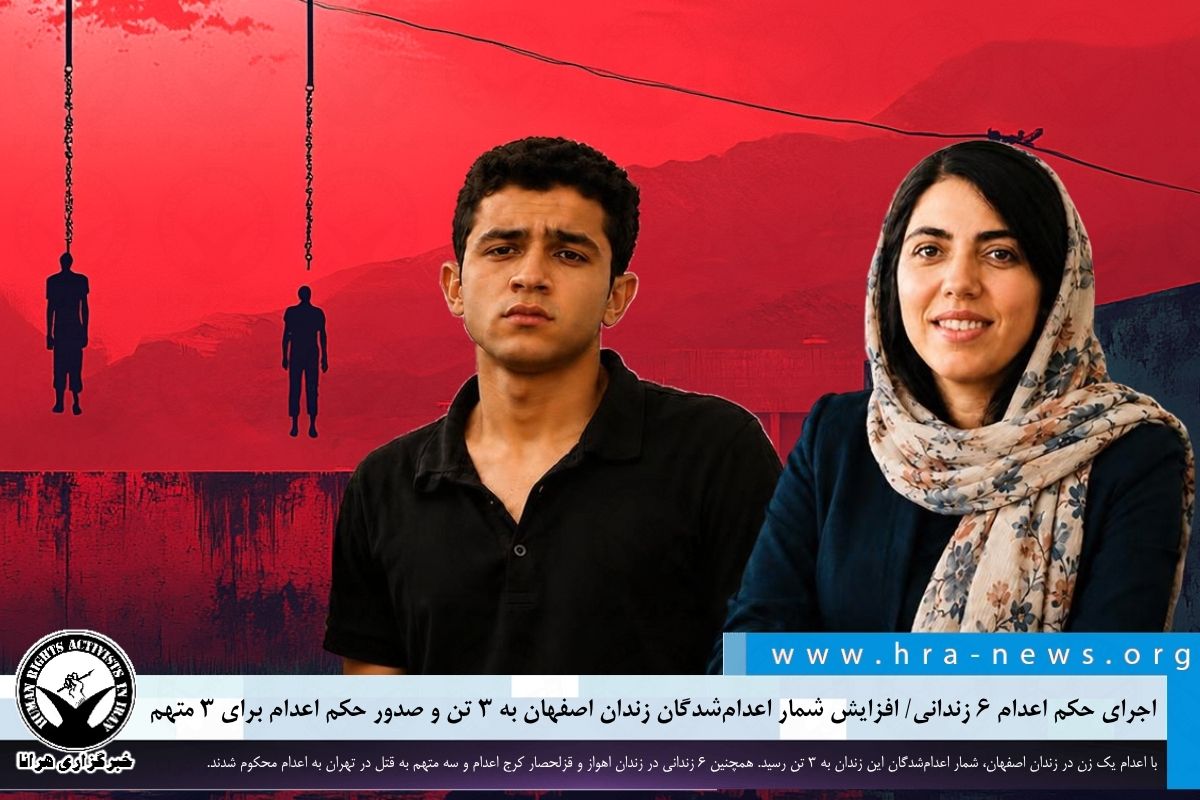
حکم اعدام یک کودک-مجرم در زندان سپیدار اهواز و پنج زندانی در زندان قزلحصار کرج به اجرا درآمد. همچنین، با احتساب اعدام یک زندانی زن در زندان دستگرد اصفهان، شمار اعدامشدگان این زندان طی روز دوشنبه ۶ مهرماه به سه تن افزایش یافت. از سوی دیگر، در دو پروندهی جداگانه در تهران، سه متهم به قتل توسط دادگاههای کیفری به #اعدام محکوم شدند.
#ماهرخ_میرزایی
#رقیه_میرزایی
#امید_مرادی
https://t.co/CA8BZRfOho
Four years ago today, security forces in Iran unlawfully killed 87 protesters and bystanders from the persecuted Baluchi ethnic minority in Zahedan in what became known as “Bloody Friday” during the 2022 Woman Life Freedom uprising. https://t.co/4yVYhORjkC 1/2