Planning gives organisations direction. Infrastructure gives them adaptability.
Markets evolve continuously, and strategies must evolve with them.
Infrastructure is what connects planning with execution, allowing organisations to respond to changing market conditions rather than simply measuring them after the fact.
Calculating is an integral part of FMCG.
Lost sales are easy to measure.
But lost trust is not. Neither is the lifetime value of customers who quietly disappeared after one too many empty shelves.
Despite decades of retail modernisation, traditional trade continues to account for up to 80% of grocery and consumer goods sales across many emerging markets.
The future of traditional trade is not replacement, but evolution.
Most AI in retail still focuses on analytics, layered on top of fragmented systems.
But retail is driven by constant change and volatility that reports alone cannot reflect.
Analytical AI helps businesses understand patterns. Operational AI helps businesses respond to them.
And successful AI adoption depends on infrastructure capable of connecting signals directly to action.
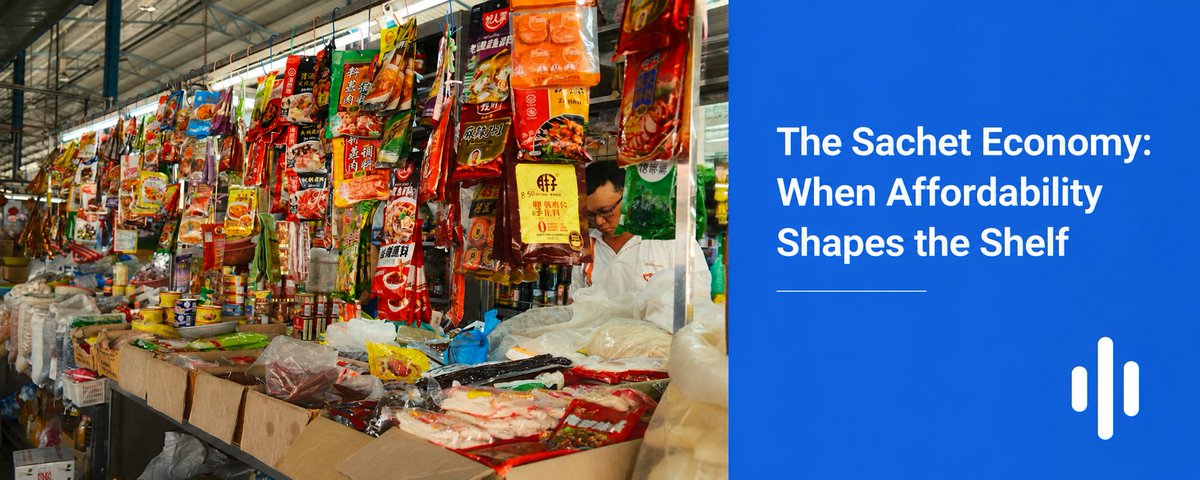
Across emerging markets, millions of consumers buy products one day at a time, not because they prefer smaller formats, but because they offer flexibility in uncertain economic conditions.
As inflation and pricing pressure reshape retail, the shelf is becoming a real-time reflection of consumer behaviour.
Retail decisions are still made far from where they actually matter.
Out-of-stocks. Delayed replenishment. Wrong product mix.
These aren’t isolated issues - they’re infrastructure failures.
The challenge isn’t visibility. It’s acting in real time when and where decision matter.
FMCG doesn’t have a data problem, it has an execution problem. Insights aren’t turned into decisions fast enough and sales are lost.
Revenue is driven by timely action and continuous store-level oversight.
The shift is already underway.
Supply chains have transformed.
Execution can’t keep up.
That gap is what keeps brands reactive, fixing problems after they happen instead of preventing them.
The problem isn’t strategy.
It’s the absence of flexible infrastructure, that enables real-time oversight and immediate action 👁️⚡
FMCG brands don’t lack data.
They lack timing.
👉 Most teams are still operating on delayed cycles
👉 And when products are missing, up to 64% of shoppers switch
This isn’t a data problem.
It’s an execution problem.
POS data shows what was sold, not what was missing or when competitors win 📉
In emerging markets, that gap is massive.
👉 Brands see sales, not reality.
That’s why Vision AI matters 👁️
Growth doesn’t come from more data.
It comes from seeing what’s happening in-store 🏪
Much of retail in emerging markets still runs on pen, paper, and ledger books.
For global brands, that means delayed audits, fragmented data, and limited visibility into what’s really happening on shelves.
Fixing retail execution starts with fixing the data layer.
In fragmented retail environments, execution depends on visibility.
The fastest way to scale retail data collection isn’t new software.
It’s improving the workflows people already use.
Messaging apps are quietly becoming the modern retail infrastructure in emerging markets.
Not because companies deployed them.
Because everyone was already using them.
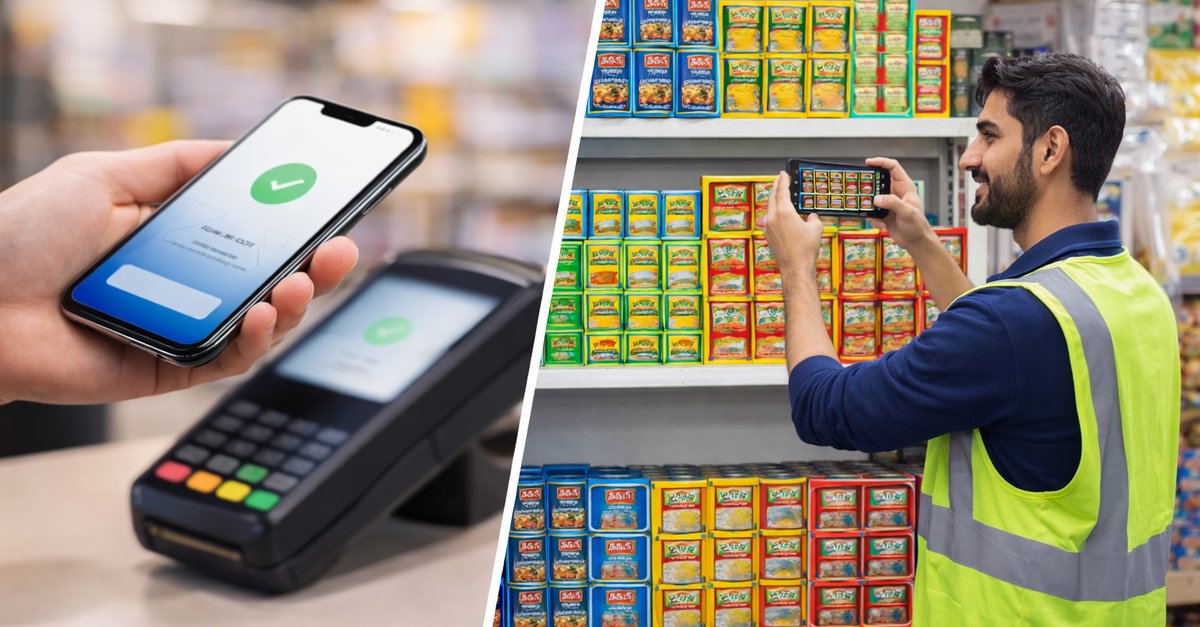
When messaging apps connect with automation and Vision AI, they become more than communication tools.
They become a real-time retail data pipeline, capturing shelf availability, compliance, and store conditions as they happen.
Emerging markets are expected to outpace developed economies in 2026, according to J.P. Morgan — driven by domestic demand and digital adoption.
For CPG brands, growth alone isn’t enough. Without real-time shelf visibility, rising demand can still turn into lost sales.
https://t.co/wD6xLRTkAy
As Indonesia moves into early 2026, consumer demand is picking up, helped by festive spending and supportive fiscal policy.
In a rising market, availability still decides winners: without real-time shelf visibility, brands can lose sales even when demand is strong.