The Origins of Democratic Thinking by Cynthia Farrar
Recovers from three Athenian thinkers a distinctive – and still relevant – democratic theory obscured by Plato and Aristotle's critique of Athens.
📘 https://t.co/J9eVppoqC0
#classicstwitter
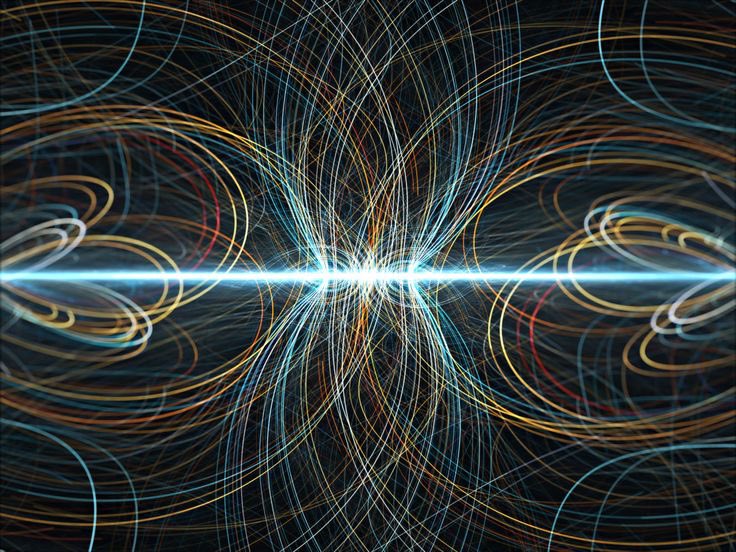
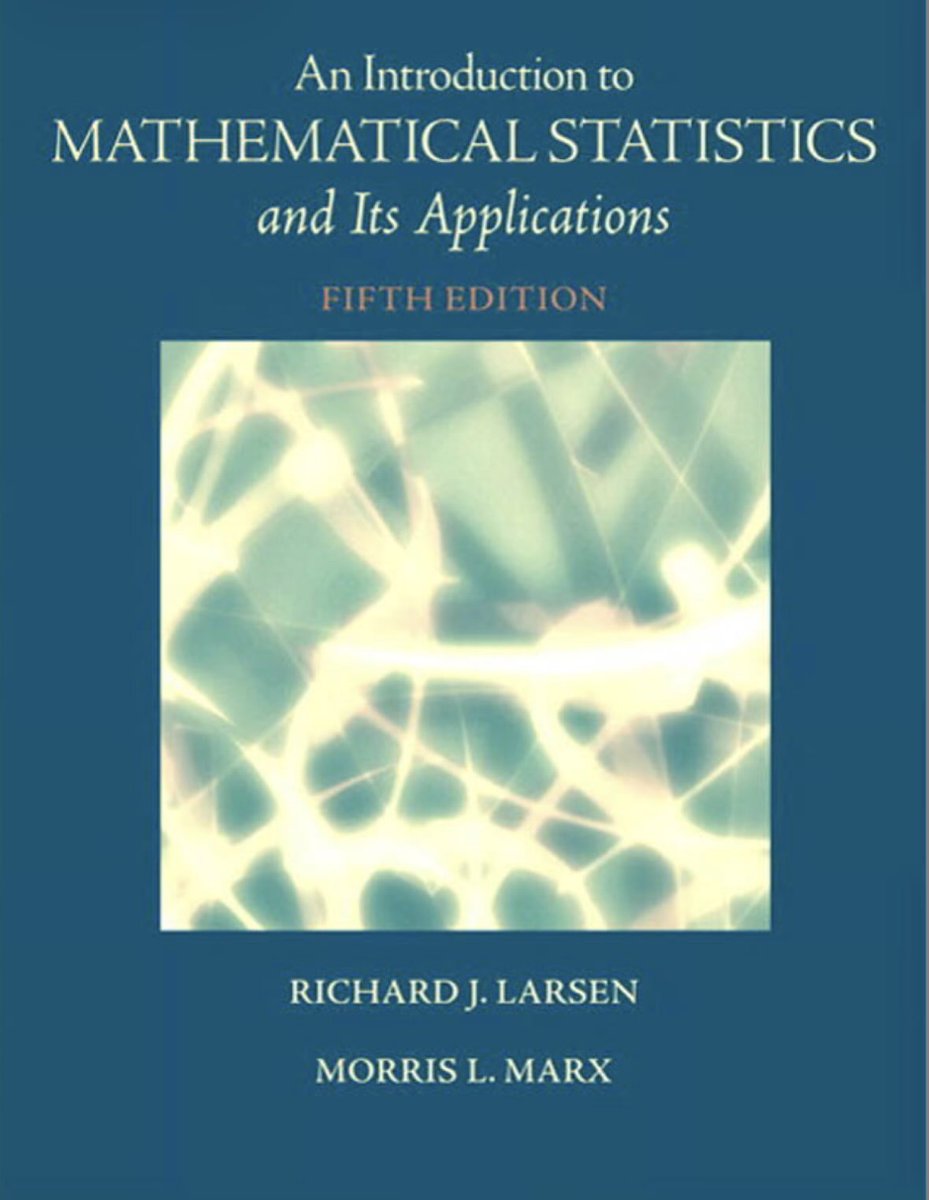
The Fisher Information Metric is a fundamental concept linking probability, statistics, and geometry. For a parametric model p(x;θ), it is defined as I(θ) = E[(∂/∂θ log p(x;θ))²], measuring how sensitive a distribution is to changes in θ. Geometrically, it induces a Riemannian metric on the space of probability distributions, forming the basis of information geometry. In statistics, it determines the Cramér–Rao lower bound, setting a limit on estimator variance. In machine learning, it appears in natural gradient descent, where updates are scaled by the inverse Fisher matrix, leading to more efficient optimization in deep models. In real life, it underpins signal processing, neuroscience (neural coding efficiency), and experimental design, where maximizing Fisher information ensures more informative data collection and better inference.
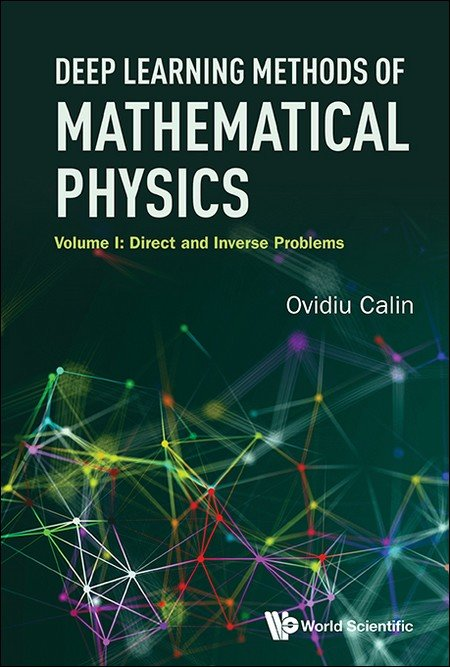
Very nice book in town this month. Highly recommended!
Deep Learning Methods of Mathematical Physics:
Volume I: Direct and Inverse Problems
Lots of short codes, do not need massive datasets nor GPU to run snippet NN codes.
https://t.co/yV1VMo5QtL
Rethinking The Foundations of Modern Political Thought
eds. Annabel Brett et al. Cambridge Univ Pr 2006
#OpenAccess Preliminary Material & Introduction: The context of The Foundations
PDF 🎯
https://t.co/NqhECHpQU5
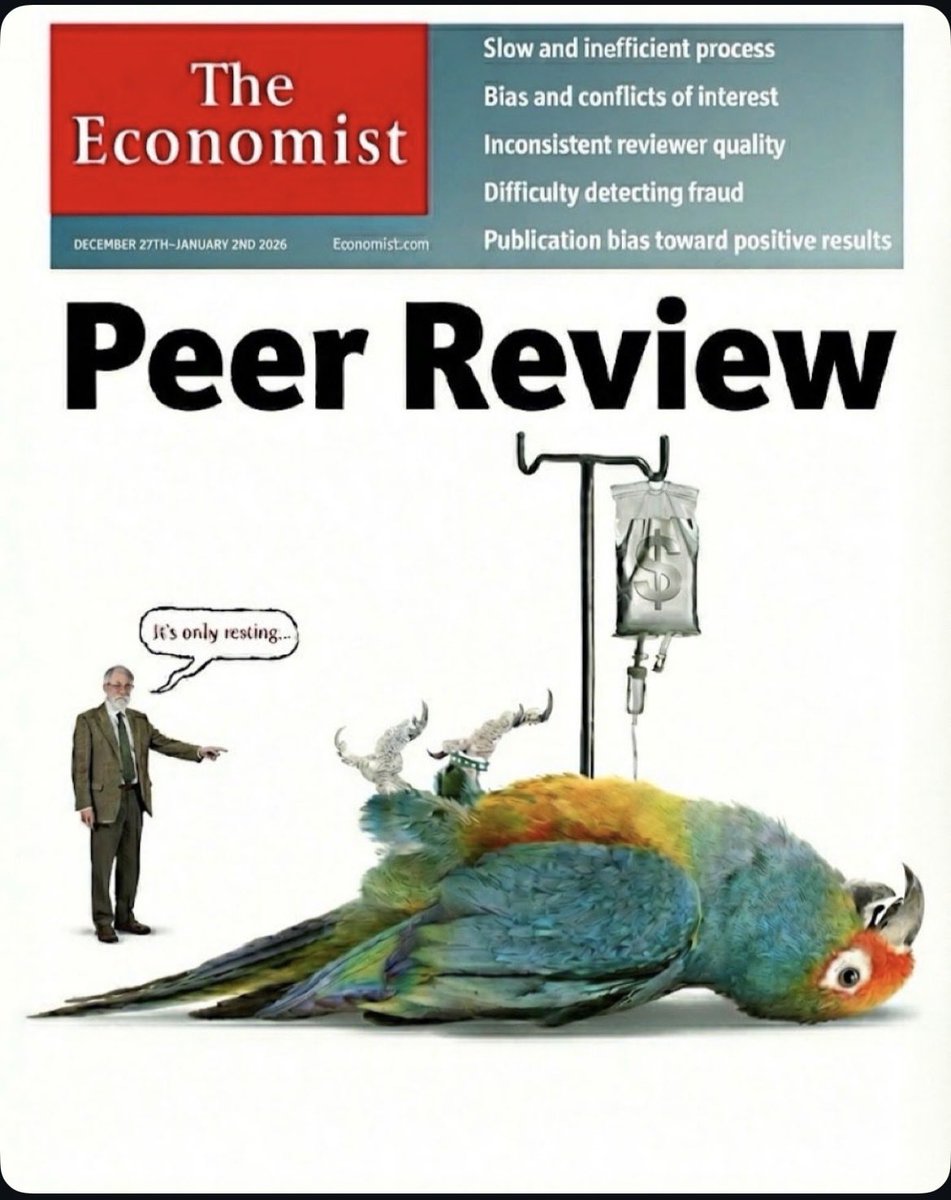
For decades, peer review has been treated as the gold standard of scientific validation.
Yet many scientists know the reality: the system is far from perfect. Peer review is broken and sometimes even corrupted.
The process can be slow, inconsistent, and vulnerable to bias. Reviewers are sometimes asked to judge work outside their true expertise. In other cases, they may be evaluating ideas that challenge the very paradigm in which they were trained. And occasionally, reviewers are simply competitors.
Ironically, the most prestigious journals can also be the most conservative. Truly new ideas are often met with skepticism, while safer work that fits the current narrative moves more easily through the system.
Increasingly, papers are judged less by the originality of the idea and more by the volume of data, the sophistication of statistics, and the beauty of the figures. Science risks becoming data-rich but idea-poor.
But there is an important reality to remember: journals do not ultimately decide the impact of scientific work. Impact is decided later, by the community. By the scientists who read it, test it, debate it, and cite it.
In the end, citations and ideas determine the legacy of a paper, not the impact factor of the journal that first published it.
Science has always advanced by questioning assumptions. Perhaps it is time we also question the system that filters scientific ideas.
"As far as the laws of mathematics refer to reality, they are not certain; and as far as they are certain, they do not refer to reality."
Albert Einstein shared this insight during a lecture titled "Geometry and Experience" at the Prussian Academy of Sciences in Berlin on January 27, 1921.
Want to learn mathematical analysis like a pro?
Here is the book that elite math programs in Russia (MSU) and China 🇨🇳 are using.
USSR math book (MSU).
#math
Physics. Mathematics. Reality. Universe.
Stephen Wolfram's "Theory of Everything" is free on line, as a 448-page PDF. Here is a sample figure, to intrigue you. Source: https://t.co/wYtI7zv4EH
The Vera C. Rubin Observatory high in the Chilean Andes is beginning its great project, surveying the sky with cutting-edge digital technology. Putting its findings together with historical astronomical photos could reveal a century-long movie of the sky above us. https://t.co/U9fv6nZsAO
Electricity trades across regions can save money, but market inefficiencies can erode those savings. A new study from @BerkeleyLab finds $1.23 billion a year in gross savings were offset by $551 million of uneconomic transactions. THREAD 1/x
The Dirac Equation is one of the most beautiful equations in the physics which is developed by Paul Dirac in 1928, it is a relativistic wave equation that merges quantum mechanics and special relativity, describing spin-½ particles like electrons and predicting antimatter (positrons) and electron spin, forming the foundation for Quantum Electrodynamics (QED) and the Standard Model. It elegantly explains electron behavior, the origin of its spin, and the existence of its antiparticle.
📈 Massive $VIX activity into the close as a $1.91M+ bullish call spike hit just 6 minutes before the bell targeting the $22 strike for the 2/18 expiry, roughly 47% OTM.
This was a sold_last print, meaning the trade reported late due to set consolidation.
A new Conservative Energy Network poll found that two-thirds of likely voters support more transmission lines to boost clean energy and grid reliability.
https://t.co/TZ5l1vWSrq






![probnstat's tweet photo. The Fisher Information Metric is a fundamental concept linking probability, statistics, and geometry. For a parametric model p(x;θ), it is defined as I(θ) = E[(∂/∂θ log p(x;θ))²], measuring how sensitive a distribution is to changes in θ. Geometrically, it induces a Riemannian metric on the space of probability distributions, forming the basis of information geometry. In statistics, it determines the Cramér–Rao lower bound, setting a limit on estimator variance. In machine learning, it appears in natural gradient descent, where updates are scaled by the inverse Fisher matrix, leading to more efficient optimization in deep models. In real life, it underpins signal processing, neuroscience (neural coding efficiency), and experimental design, where maximizing Fisher information ensures more informative data collection and better inference.](https://pbs.twimg.com/media/HEJ8sY7WoAAG27R.jpg)