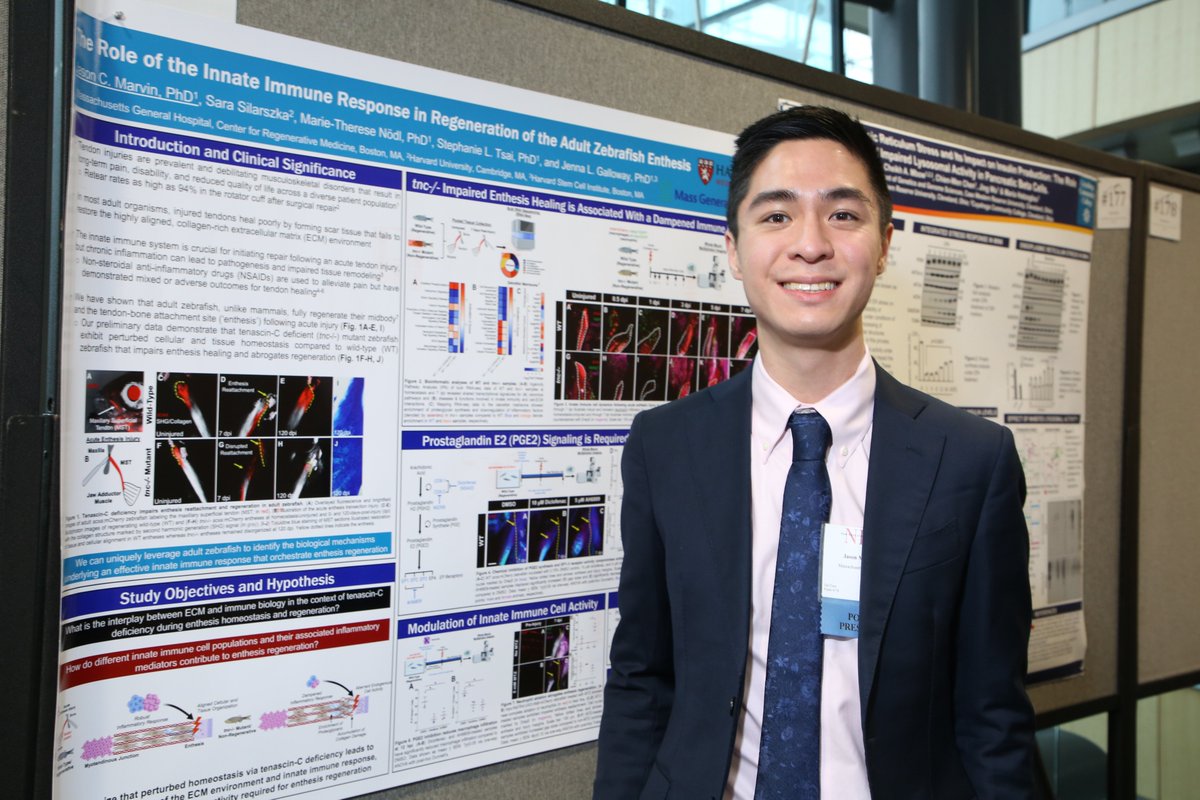
I highly recommend applying to this program if you are interested in gaining more science communication skills or just want to hone your craft.
Feel free to reach out if you have questions about it.
Are you a science researcher or medical student hoping to pursue a career in science communication? Or an early-stage science communicator looking to hone your craft?
It is with a very heavy heart that we write to you today to share the belated news of the passing of a beloved member of our community, GEM Fellow AdePeju (Peju) Oshodi, who passed away on Friday, December 20th.
Extremely clever new NGS tech from Roche 🧬
If it's hard to discriminate between nucleic acids accurately with a nanopore, why not synthesize a new polymer off a DNA template that is easier to sequence?
It's an intuitively simple idea, but took *a ton* of creative nucleic acid chemistry + enzyme engineering to design modified NTPs and create polymers of them.
It's been very interesting to see Roche move into the NGS market, and time will tell how this stacks up with the growing set of totally orthogonal approaches people are cooking up for sequencing tech.
It feels like we are entering another renaissance for biological measurement infrastructure—which is super important.
“Progress depends on the interplay of techniques, discoveries, and ideas, probably in that order." - Sydney Brenner
(These animations of sequencing tech will never get old to me. What a time to be a biologist!)
I am excited to share that I've accepted a full-time position as the Director of Outreach & Engagement at the American Institute for Medical & Biological Engineering (@AIMBE)!
Now more than ever, we need advocacy at the forefront of this evolving science policy landscape 📢🧪🧑🔬
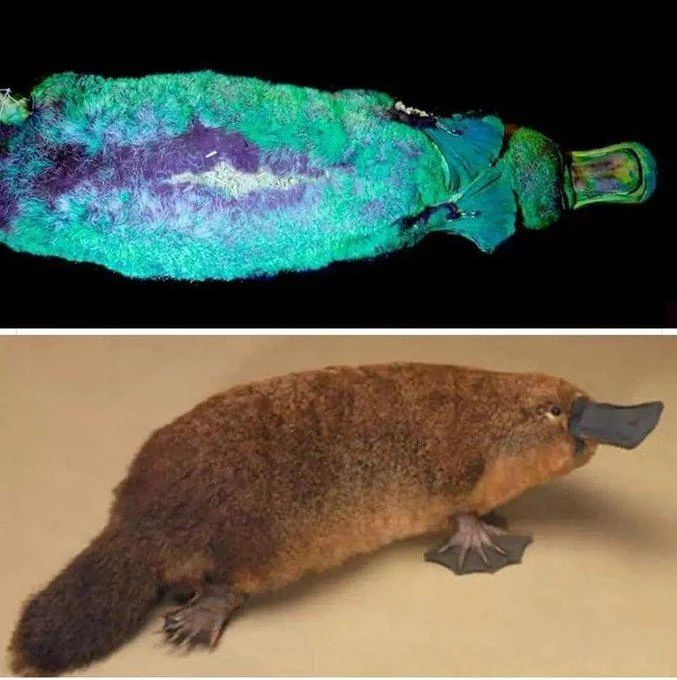
The platypus is possibly the weirdest animal: it's a mammal but lays eggs, its duck-billed, beaver-tailed, otter-footed and venomous. It has electroreceptors for locating prey, eyes with double cones, no stomach, and 26 pairs of chromosomes. It's fluorescent and glows under UV light.
Premature #thymic#eviction is the basis for #CD8Tcell tolerance and is the mechanism responsible for the appearance in the periphery of mature CD8 T cells bearing #autoreactive#TCRs that are absent from the thymus" https://t.co/cnxv8p4bOZ
In statistical modeling, particularly within the context of regression analysis and analysis of variance (ANOVA), fixed effects and random effects are two fundamental concepts that describe different types of variables or factors in a model. Here’s a straightforward explanation:
#Statistics #DataScience #Research #Science
Single-cell atlas of the human immune system reveals sex-specific dynamics of immunosenescence, including a female-specific cytotoxic CD8+ T cell subpopulation @marta_mele_m@aidarripoll@mariasopenarios
https://t.co/tAlabyudw5
🧵 Understanding Degrees of Freedom in Statistics
In statistics, degrees of freedom (d.f.) are the number of independent values that can vary in your data after certain constraints are applied.
#Statistics#DataScience#Research#Science
Understanding the difference between Standard Deviation (SD) and Standard Error (SE) is crucial for accurate data interpretation. SD measures the variability within your data, indicating how spread out the individual data points are from the mean.
In contrast, SE measures the uncertainty around the sample mean as an estimate of the population mean. It reflects the precision of the mean, with SE decreasing as the sample size increases, making your estimate more reliable.
The relationship between SD and SE is given by the formula: SE = SD / √(sample size). While SD remains relatively constant with larger samples, SE diminishes, highlighting the reduced uncertainty in the mean estimate.
A common mistake in research is using the “±” notation without specifying whether it refers to SD or SE, leading to potential misinterpretation of the data. Clear distinction is essential for transparency and accuracy in reporting.
Key Takeaways:
• Use SD to describe data variability.
• Use SE to indicate the precision of the mean.
• Always specify which measure you are reporting.
After 11 years in engineering/research, I'm excited but also bittersweet to share that I'm transitioning out of academia next year! 🫨
I fear that this career change is ill-timed, but I'm eagerly looking for opportunities in health, higher education, and/or science policy 😊
Come join us at Biomedical Sciences @Cornell!! Open position at ANY rank (assistant, associate, or full) in cancer biology, tumor microenvironment. See here for more about our department: https://t.co/1KzNEeakdD. We warmly invite your application here: https://t.co/xDXHLUOWUu
How do mitochondria, the cell’s energy-producing organelles, perform competing metabolic processes?
Segregation into distinct populations — one that makes energy-storing ATP molecules and one that does not — could explain it
https://t.co/McNw5KrKC6