We can never repay the brave men and women who laid down their lives for our freedom, but we can embrace the loved ones they left behind and honor their legacy with gratitude for the freedoms their sacrifice made possible. We remember and honor them this Memorial Day.
Following a two-part field hearing I hosted in Anchorage and Bethel to hear firsthand from Alaskans impacted by ex-Typhoon Halong, I spoke on the Senate floor about the storm’s ongoing impacts. Communities facing environmental threats and natural disasters shouldn’t have to navigate impossible choices alone. We need a federal disaster response system that is coordinated, easier to access, and built to serve people before, during, and after a crisis hits. Alaska’s communities, and communities across the country, deserve action, safety, and support.
As Chairman of the Indian Affairs Committee, I’m proud of the bipartisan progress we made this week in advancing these eight bills through committee to the Senate floor, including my bill the Southcentral Foundation Land Transfer Act of 2025. We are now one step closer to enactment, and therefore, enabling SCF to make the needed investments in Quyana Clubhouse to expand the delivery of mental health and social services.
Cape Fox was placed at an incredible disadvantage when it was forced to claim lands under ANCSA that offered little to no economic value to its village corporation. After decades of hard work, Cape Fox has finally overcome these obstacles and is now finally on track to complete its land entitlement. This is a testament to Cape Fox’s resilience, determination, and stewardship, and I congratulate them. I’m also grateful to my Senate colleagues for temporarily setting aside their differences on lands-related legislation to allow us to again pass this measure in the Senate, and to Senator Dan Sullivan and Congressman Nick Begich for their partnership in this effort. It is great to have this done and I look forward to the benefits it will provide in Southeast Alaska.
https://t.co/ENDpSvOhG4
Today I pressed DOJ on proposed cuts to law enforcement and violence prevention grants, including programs that support rural police departments, Tribal justice efforts, and survivors of domestic violence. Alaska’s communities already face enormous challenges with distance, cost, and a limited work force. They cannot afford to lose access to these critical resources.
I also raised concerns about the removal of the Not Invisible Act Commission report from DOJ and Interior websites. I’m monitoring these items closely and pushing to ensure Alaska’s rural and Native communities remain a priority.
This is one of the most significant achievements on the North Slope in decades and further cements the region’s renaissance. Pikka will help refill the Trans-Alaska Pipeline System, create great jobs for Alaskans, and bring billions to the state over its lifespan—benefitting all who live here. This is also just the start, with new phases of the project yet to come and additional development taking place across the Nanushuk formation. I heartily congratulate Santos, Repsol, their hard-working teams, and individuals like Bill Armstrong who made this happen—from the vision to explore and discover, to now firmly putting Alaska back on the map as the place to produce energy.
https://t.co/C2FbdB8NpR
Happy Birthday, Head Start! For 61 years, Head Start has helped more than 40 million children and families nationwide reach their full potential in school and in life. This year alone, more than 3,000 children and 2,500 families are participating in one of Alaska’s 17 Head Start programs across the state. I’m proud to support Head Start and Early Head Start programs that give young Alaskans opportunities to learn, thrive, and succeed while helping build stronger communities.
Today we celebrate 61 years of Head Start!
Millions of lives impacted.
Celebrate with us at https://t.co/OzEdMmzxsd
#HeadStart61#HappyBirthdayHeadStart
The impacts of Typhoon Halong are a stark reminder that disaster doesn’t end when the storm passes. Months later, Alaska Native communities are still displaced and facing the trauma and uncertainty of what comes next.
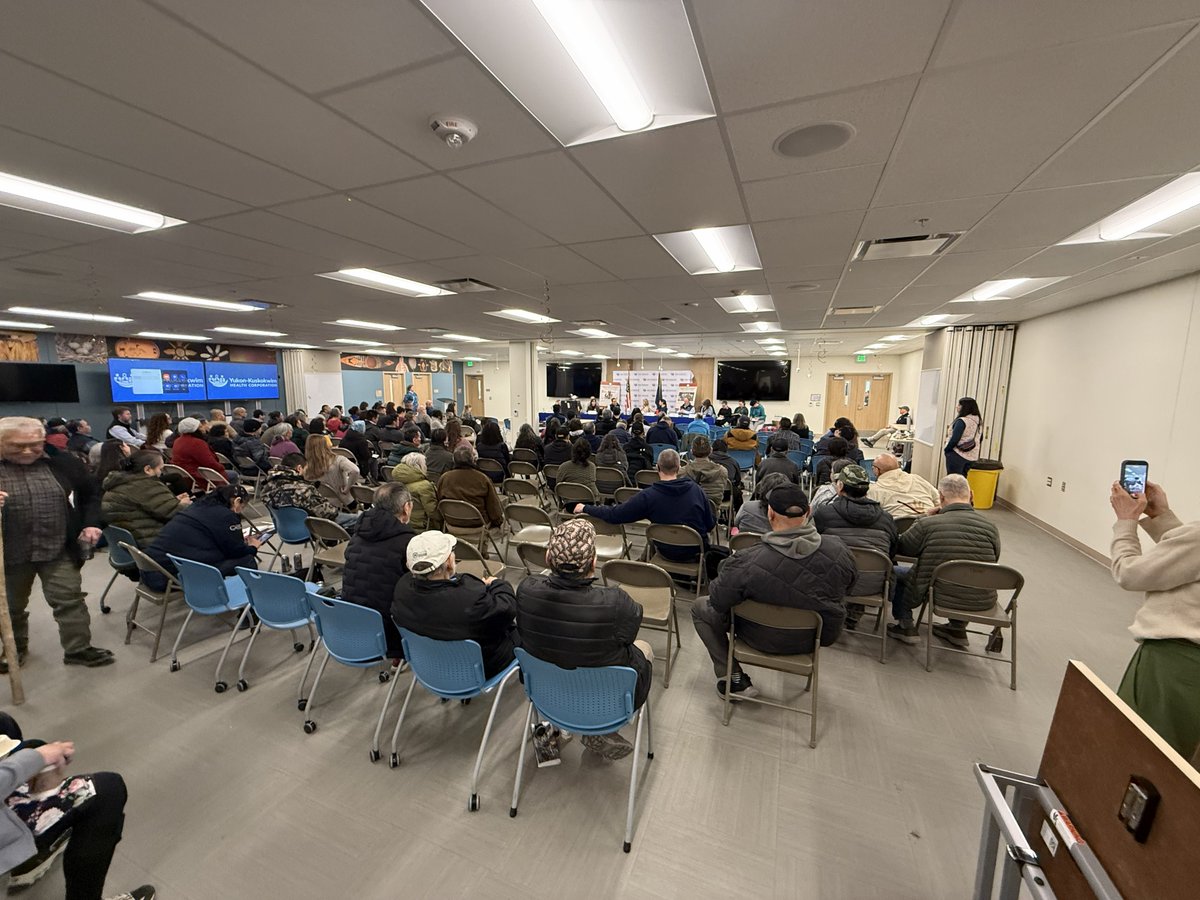
That’s why, as Chair of the Senate Committee on Indian Affairs, I hosted a two-part field hearing that included a roundtable in Anchorage and a hearing and Tribal leader listening session in Bethel. Direct input from Alaskans helps ensure communities receive the support and resources they need in the short term, while also helping us better prepare for future disasters.
Today, the Senate voted on a resolution directing the president to remove U.S. Armed Forces from hostilities in Iran, the eighth such resolution on this matter. I voted against the previous seven resolutions because I believed an abrupt withdrawal would endanger American forces and civilians in the region, but also because the president was operating within his constitutional authority under the 60-day threshold established by the War Powers Act.
Two elements have changed since those previous votes: we have now surpassed the 60-day limit for hostilities without congressional authorization, and the administration has asserted that hostilities have ended, despite the blockade and continued fire directed at members of the U.S. Armed Forces, as well as our assets, allies, and partners. The administration's own position removes any justification for keeping our servicemembers in harm's way without congressional authorization.
If U.S. forces are still required to operate in the region or hostilities are resumed, the administration is obligated to seek authorization from Congress and should come before this body, and the American people, making that case. I have been working with several colleagues on an authorization for the use of military force, but with the reported claim of ended hostilities, this course of action is not an effective means to manage this conflict. Should hostilities reignite and military action resume, I will reconsider the introduction of an AUMF.
Until then, I will support measures to officially end hostilities and bring our men and women home. I will oppose any effort to redefine 'hostilities' in ways that allow the president to wage war indefinitely without seeking congressional approval as outlined by the Constitution.
Last week marked a deeply meaningful moment as the U.S. Navy christened the USNS Solomon Atkinson, honoring one of Metlakatla’s proudest Tsimshian sons. The ceremony celebrated the extraordinary legacy of Sol Atkinson, one of the first Navy SEALs, a decorated veteran of Korea and Vietnam, and a dedicated leader who spent his life serving both his country and his community.
In a deeply personal honor, my staff in attendance placed my challenge coin in the ship’s mast-stepping ceremony, where it was sealed in steel and permanently welded into the mast. This centuries-old maritime tradition symbolizes protection and good fortune for the ship and all who serve aboard her. That coin will sail with the USNS Solomon Atkinson for as long as she serves.
Having a Navajo-class ship bear Sol Atkinson’s name ensures that his story will continue to inspire generations to come. I’m thankful his family could be there to see this remarkable tribute to his life and service.
We thank Dr. Means for coming before the committee. It’s clear she did not have the votes on committee or on the floor. No committee would hold a vote they knew would fail. We look forward to considering Dr. Saphier’s nomination.
The news of Kelly Hunt, an Alaska Native woman whose body was recently found in Anchorage, is absolutely heartbreaking. It’s unacceptable that cases like Kelly’s continue. Progress has been made in addressing the crisis of Missing and Murdered Indigenous Women, but there is much more to be done. The MMIW crisis is ongoing and it demands our attention and action. My deepest condolences go out to Kelly’s family and her entire community as they navigate this devastating loss.
https://t.co/A0CEOL0xkI
This commentary from Gwen Holdmann and Ben Mallott is timely and important. Much of rural Alaska depends on a fuel supply chain that is deeply strained by disruptions at the Strait of Hormuz. As fuel providers work overtime to meet community needs, higher prices are certain and outright shortages remain possible—highlighting the need for bridge solutions that will help households meet their basic needs.
https://t.co/Jy0lbZB2tm
I’m pleased that the Department of Justice Office of the Inspector General has initiated an audit of the DOJ’s compliance with the Epstein Files Transparency Act, following the letter Senator Blumenthal and I led in December.
This is a critical step toward the transparency and accountability survivors of Jeffrey Epstein’s horrific crimes both deserve and demand. In light of the continued stonewalling, an independent assessment of the DOJ’s apparent refusal to release the full Epstein files is vital. It is frustrating that Congress has been forced to continue pressing the Department to comply with the Epstein Files Transparency Act, but we will not rest until the survivors receive the justice they are entitled to.
https://t.co/lXdIA2Dgat
Over 160 communities in Alaska rely on one or two fuel deliveries annually, typically by barge, and price volatility is driving up costs for carriers and customers alike. I appreciated the opportunity to raise this with Secretary Burgum directly this morning, and will be working closely with the administration to help these Alaskans get their fuel on time and at the lowest possible prices.
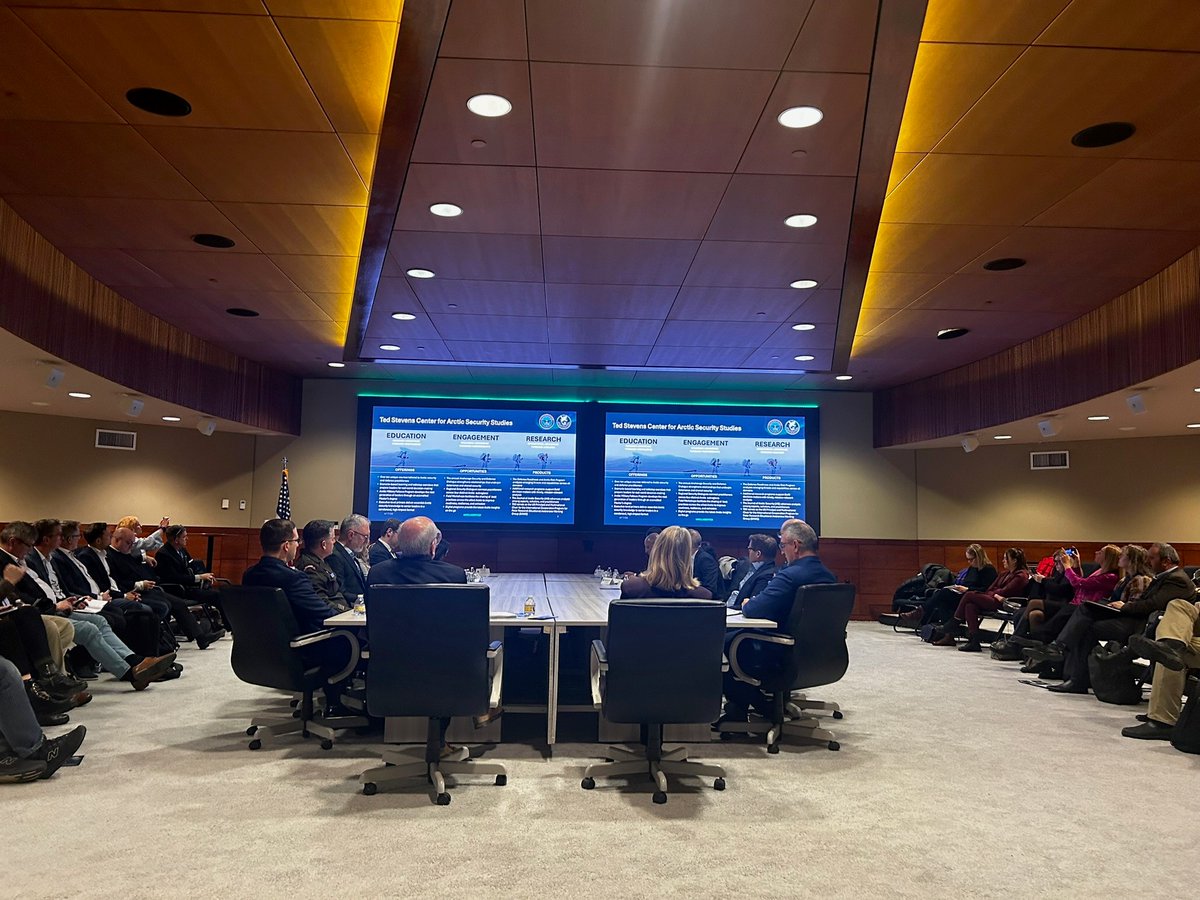
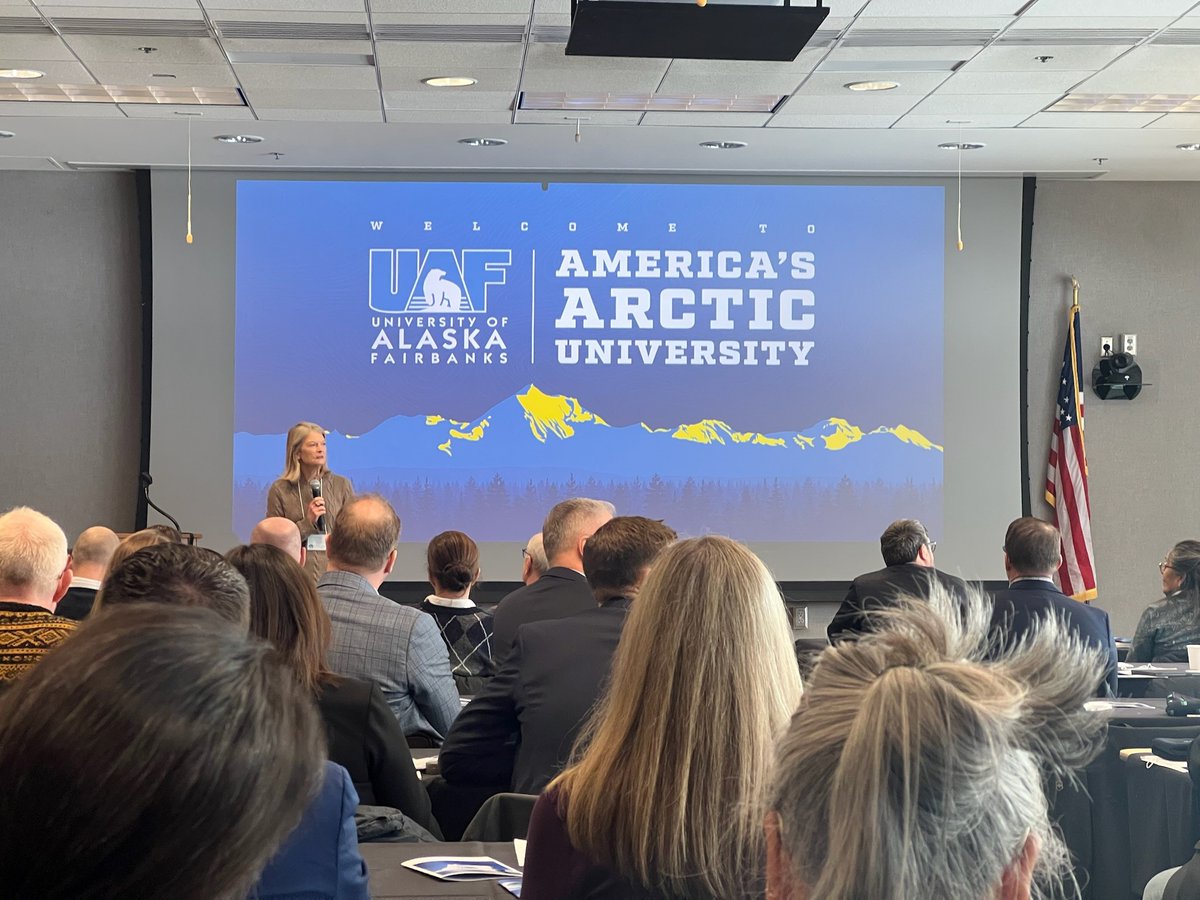
This weekend, @SenPeterWelch and I attended the @AESymposium in Anchorage before hosting the Conference of Parliamentarians of the Arctic Region in Fairbanks, where we were joined by seven parliamentary delegations, 22 parliamentarians, two regional parliamentary observers, and the permanent participants.
As the world increasingly focuses on the Arctic, gatherings like these are more important than ever, bringing together academics, scientists, diplomats, military, and industry leaders.
The shared challenges we face can only be addressed through cooperation. It was encouraging to work together on opportunities to strengthen energy security, scientific research, mutual defense, free trade, and more.
My thanks to everyone who traveled from across the Arctic to connect and collaborate—because in these turbulent times, our relationships matter more than ever.
Alaska has extraordinary potential to deliver a long-term supply of clean-burning natural gas that bolsters energy security for our nation and our partners across the Pacific. I appreciate @SecretaryWright’s continued focus on @AlaskaLNG and his commitment that @ENERGY “will not rest” until the project is completed. #buildtheline
Since my first days in Washington, I have been sounding the alarm about the need to recapitalize and expand our fleet of icebreakers. It feels good to say that we are finally beginning to realize that goal.
Today, with the announcement that the first two Arctic Security Cutters will be homeported in Alaska, it is becoming real. This news marks a turning point in America’s investment in the Arctic and will allow us to reassert our influence in the region—enhancing maritime commerce, strengthening cooperation with our allies, increasing deterrence against our adversaries, and ensuring our military can respond to emergencies in any environment.
I want to commend President Donald Trump for his commitment to these critical assets. When he came into office in 2016, one of my first conversations with him focused on the importance of investing in our infrastructure so we could compete in the Arctic in the 21st century. He listened and came through on his commitment to expanding our icebreaker capacity, and I appreciate his continued dedication to this issue.
The work is just beginning. As we move to designate Alaska’s new homeport locations, ensuring these ASCs are ready to serve will require significant shoreside infrastructure with new housing to support both the vessels and the influx of personnel. While there is a long road ahead, this announcement means new investment, new jobs, and new opportunities flowing into our communities. Today is a good day for America, a good day for the Arctic, and a good day for Alaska.
https://t.co/XF5gax6JMR
In a state as geographically expansive and diverse as ours, where 80 percent of our communities are off of the road system, we often depend on small planes and our ‘blue canoes’ to travel between islanded communities. That’s why I included our ferries, which are a cornerstone of Alaska’s infrastructure, in our bipartisan infrastructure bill. My goal was to rebuild the system for a generation to come, and we have already delivered $700 million and counting for that purpose.While the last rounds of funding from the infrastructure law have unfortunately been delayed, I credit Secretary Duffy for pushing these announcements through. I have spoken to him repeatedly in recent months, and he followed through on his commitment to get these funds moving. The ball is now back in the State’s court to apply and do right by the tens of thousands of Alaskans who depend on a sustainable ferry system.
https://t.co/2OT8bdZ9Qq