#AAP party jo Congress ko batate hue ki kaise unke 7 MP #BJP me Shamil ho gaye hain. #Congress jinke MP, MLA pichle 10 saal se ja rahe hain #BJP me...😂😂
@ForceHull ap wo sab jankar kya karengi? kuch hindu female jo muslim lover hain wo fantasy interfaith content ke liye group banai hai. sayad usme kuch mile jo ap khoj rhi hain
@garvit_sethii Mujhe to lagta Hai ye government ki hi team Hai. Tabhi isko permission mil gayi turant delhi police ki taraf se aur Ab koi NEET ki baat ni kar rha hai.
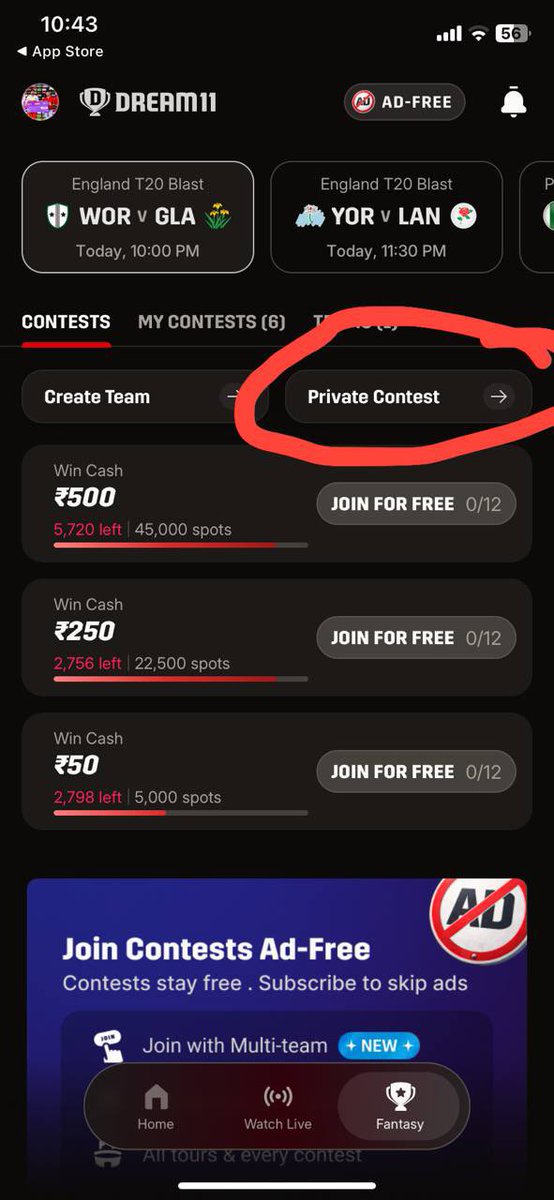
@Dream11@harshjain85 Hey
Me and my all friend play private contest on Dream11 .
But from Yesterday private contest features is removed from Dream11 . Please add private contest feature .
Please it’s my humble request. so we can creat private contest and play with my friends.
@neha_laldas Ho sakta Hai media bhi kafi coverage de rahi hai aur media ko kon control kar raha hai wo sab jaante hain. Cockroack bhi Raghav chadda ban jayegi.
Securities and Exchange Board of India (SEBI), has alleged that Rajesh Exports overstated or misrepresented revenue figures by about ₹15.15 trillion (₹15.15 lakh crore), equivalent to roughly $158 billion in its own accounts between FY2020-21 and FY2024-25.
◾India's total exports (goods + services) in FY26 were about $860 billion.
$158 billion is roughly 18–19% of that figure.
Question to @nsitharaman
▪️Are India's official export statistics overstated by the same amount ??
▪️Is these were merely accounting entries, circular transactions, or actual export shipments ??
As this will determine the meaningful impact on India's historical export statistics.
▪️Is this fictitious revenues corresponded to exports actually recorded in India's customs and trade databases ??
https://t.co/I63KYAbUPD
https://t.co/ocGCD4DVpK
This might be one of the biggest accounting scam India has seen in years.
Let me explain the whole thing, for anyone who has no idea what just happened.
First, let's understand who is this company.
Rajesh Exports is a company in Bengaluru that refines gold and makes jewellery. You may know its retail brand, Shubh Jewellers.
It also owns Valcambi, a Swiss company often called the largest gold refinery in the world, which it bought back in 2015. For years it was talked about as one of India's biggest companies by sales.
The man who runs it is Rajesh Mehta, the promoter and chairman.
Now the weird thing;
This company reported gigantic sales. In just the January to March quarter of 2026, it reported revenue of about ₹2.36 lakh crore. That is bigger than the sales of almost any company in India.
But for all those enormous sales, it barely made any profit. It actually posted a small loss. And the whole company on the stock market was worth only about ₹3,200 crore.
So a shop claims it sold goods worth lakhs of crores, but kept almost no profit, and the shop itself is valued at a tiny fraction of its sales. When the sales are huge but the profit and the company value are tiny, something is off.
Now this mismatch was visible for years but let's understand how the investigation started.
In March 2024, a shareholder complained to SEBI, the market regulator. The complaint was simple. The company was showing a huge pile of money that customers supposedly owed it, sitting unpaid for more than two years. That is a classic sign that the sales behind it might not be real.
SEBI dug in, appointed investigators, and brought in a forensic auditor to go through the books.
On June 3, 2026, it released its findings in an interim order. These are early findings, called prima facie, so the company has not been found guilty yet, and I will come back to that.
But let's understand what SEBI says it found. Will try to keep this simple;
1. Most of the sales came from a foreign company whose own books showed almost nothing.
SEBI says around 97 to 99% of the group's revenue was shown as coming from its overseas arms, mainly Valcambi in Switzerland. But Valcambi's own standalone audited accounts reported barely any revenue.
So the group was claiming lakhs of crores in sales through a subsidiary that, on its own books, looked nearly empty. SEBI also says the company kept hiding these subsidiary accounts from the public.
2. Fake-looking sales tied to the promoter's personal trades.
The company recorded about ₹11,487 crore of sales and ₹11,488 crore of purchases with a firm called Affluence.
That was roughly two-thirds of its standalone sales. But Affluence denied doing any such business with the company. SEBI says these were not real trades at all. They were linked to Rajesh Mehta's own personal derivative trading, written into the company's books as if they were company sales, just to make the business look bigger.
3. Other income were presented as sales.
SEBI says the company booked ₹867 crore and ₹716 crore of currency gains as if they were sales and purchases, and booked ₹204 crore of interest from mutual funds and fixed deposits as business revenue.
These are not sales. Calling them sales makes the business look bigger than it is.
4. The gold mines in Africa that no one could verify.
When the stock exchange asked about a ₹1,035 crore investment, the company said it was money put into gold mines in Africa.
SEBI looked into it and could not verify this claim. The Swiss arm's own boss told SEBI that it does not own any gold mine, it only refines gold.
5. Quietly erasing old money owed.
SEBI says the company wiped out about ₹2,914 crore of very old unpaid dues by secretly cancelling them against money it owed others, without properly explaining it.
6. Company money flowing through the promoter's personal accounts.
SEBI says company funds were routed through the personal bank accounts of Rajesh Mehta and a family member, including for his personal trades, without board approval and without telling investors.
News reports put one chunk of this at ₹339 crore, and the wider routing at around ₹926 crore.
7. Not cooperating.
SEBI says the company ignored more than ten official notices over months, did not give full records, gave changing and contradictory numbers, and did not give the auditors proper access.
SEBI says about ₹15.15 lakh crore of revenue over five years was misrepresented.
It is important to understand what this means.
That is not ₹15 lakh crore stolen from investors. It is the size of the sales that SEBI says were inflated or could not be verified.
The company's market value fell by close to ₹28,000 crore from its peak, and the wealth lost by public shareholders is estimated at around ₹12,725 crore.
The stock is down about 54% from its high last December, and it hit the lower limit again right after this order.
As of now, SEBI has taken the following steps;
> Rajesh Mehta is banned from buying, selling or dealing in the company's shares, directly or indirectly, until further orders.
> Both the company and Mehta must cooperate with the investigation and hand over a long list of documents within 30 days.
> The company must now make true and fair disclosures of its finances and its dealings with related parties.
> SEBI will appoint a new forensic auditor, because the first one could not finish the job without cooperation.
This is an interim order. It was passed without hearing the company first, which SEBI is allowed to do when it fears assets might be moved or records destroyed.
The company and Mehta get 21 days to reply and ask for a hearing. So far the company has not made any public statement.