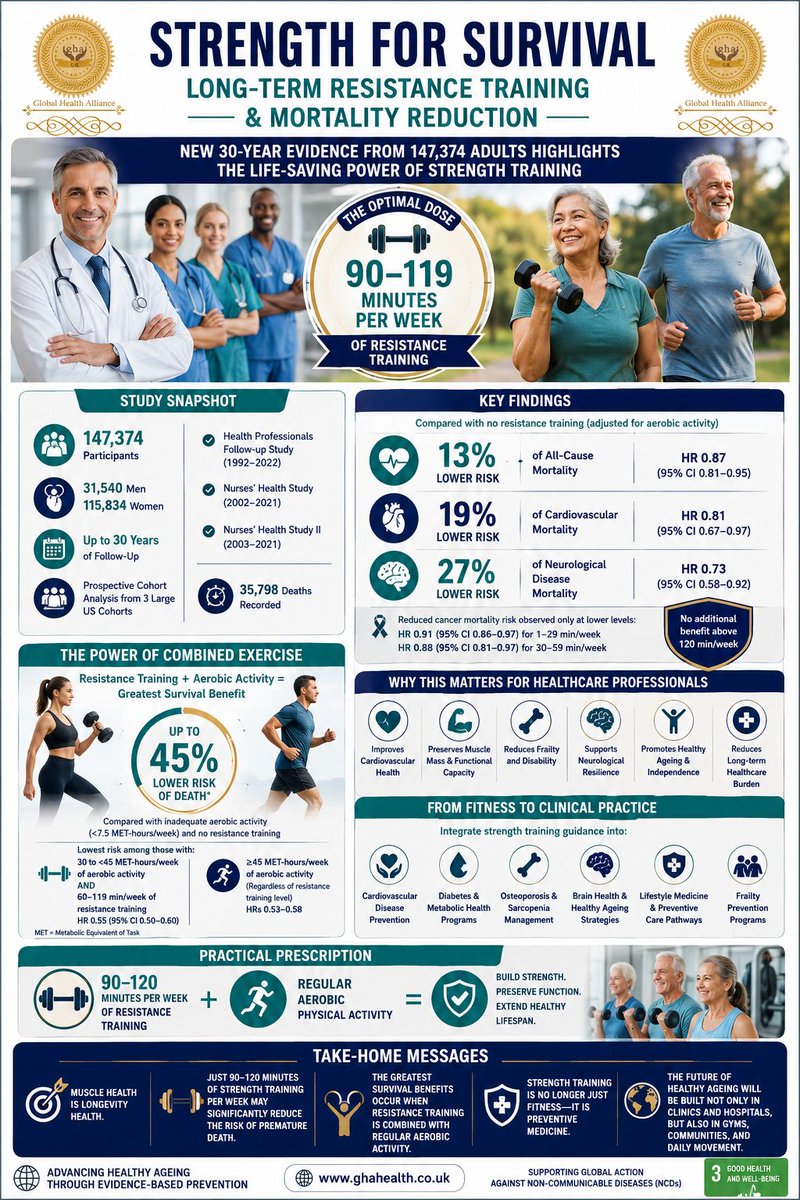
🏋️♂️ Strength training is medicine.
A 30-year study of 147,374 adults showed resistance training significantly reduced mortality risk especially cardiovascular & neurological deaths.
Muscle health = longevity health.
🌐 https://t.co/E7BWXvYojn
📄 https://t.co/hGM32gOkD4
🌍 Heart failure affects > 64 million people worldwide + remains a major global health challenge.
👉This review summarizes the latest data on HF epidemiology, trends, and future challenges.
https://t.co/xJipGll9Or
@EJHFEiC@AmrAbdin10@GiuseppeGalati_@HanCardiomd
Worldwide, approximately half of the general population is actively attempting to lose weight. However, weight loss is typically followed by substantial weight regain, often leading to repeated cycles of loss and gain of bodyweight https://t.co/6vqmVu0nfO
#obesity#weightloss
Looking forward to speak at Economics of Obesity and Metabolic Health Summit in Belgium. Join me and 60+ KOLs, Policymakers as we explore the economics of obesity and how to improve global health.
@EconomistEvents#EconObesity@GhaHealth@ghaoneworld
https://t.co/b7y9Z9ub15
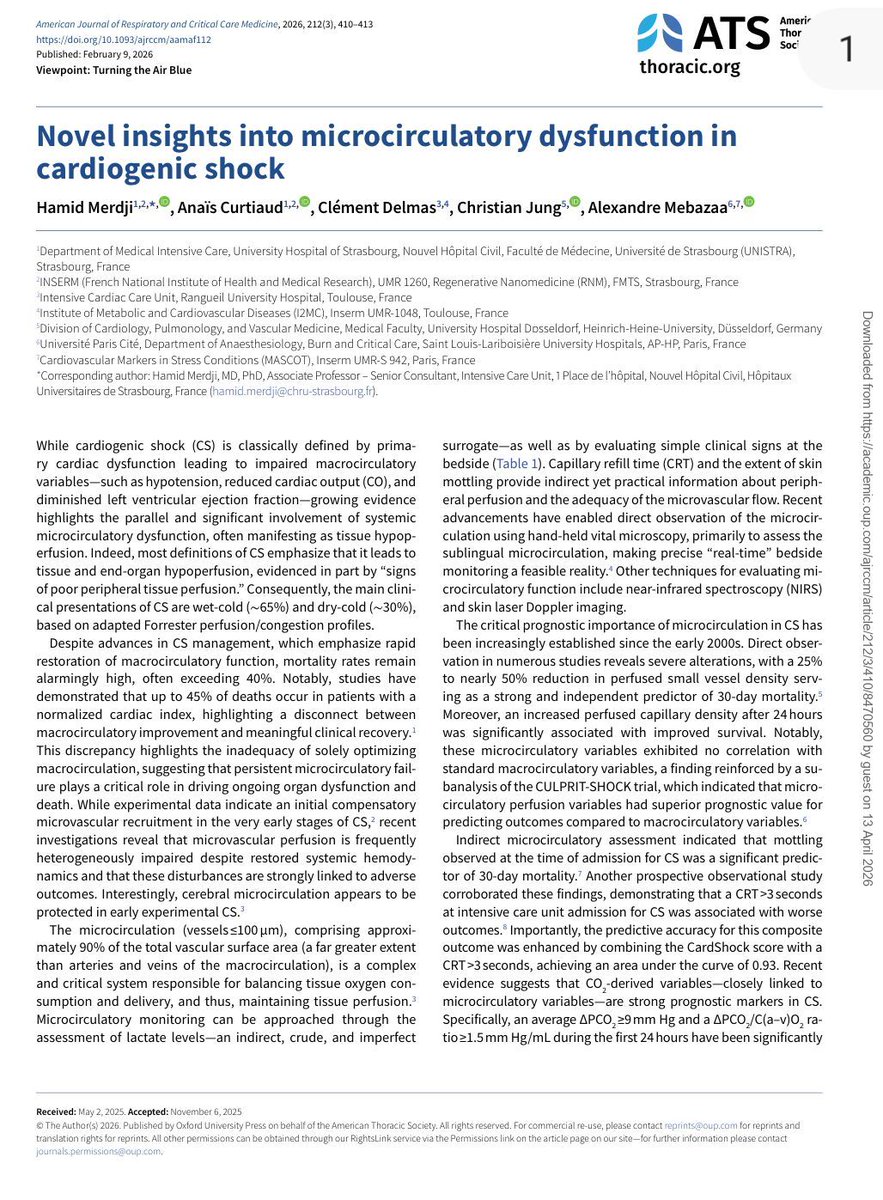
🫀In cardiogenic shock, we still focus heavily on MACROcirculation:
📉 blood pressure
📉 cardiac output
📉 LVEF
📉 vasopressor dose
But what if the real battle is happening deeper?
🩸 At the microcirculatory level.
This excellent ATS viewpoint highlights one of the most important evolving concepts in shock physiology:
⚠️ normalization of macrocirculation does not necessarily mean restoration of tissue perfusion.
Despite advances in cardiogenic shock management, mortality remains >40%.
Even more striking, up to 45% of deaths occur in patients with normalized cardiac index.
That disconnect may be explained by persistent:
🩸 microvascular dysfunction
🩸 impaired capillary perfusion
🩸 endothelial dysfunction
🩸 tissue hypoxia despite “acceptable” hemodynamics
The review reinforces that: Microcirculation is not a passive bystander.
It may be a central driver of:
• organ dysfunction
• lactate persistence
• shock progression
• mortality
Particularly interesting is the emphasis on simple bedside tools.
We often think microcirculation requires advanced devices, yet:
📌 capillary refill time (CRT)
📌 mottling
📌 ΔPCO₂
📌 lactate trends
still carry strong prognostic value.
A CRT >3 seconds at ICU admission was associated with worse outcomes, and combining CRT with the CardShock score achieved an impressive AUC of 0.93 for outcome prediction.
The article also reviews modern technologies:
🔬 handheld vital microscopy
🔬 sublingual microcirculation imaging
🔬 NIRS
🔬 laser Doppler assessment
bringing “real time” bedside microcirculatory monitoring closer to clinical practice.
One of the strongest physiological messages:
⚠️ Shock is not only about flow. It is about effective tissue level oxygen delivery.
The review beautifully summarizes the four major mechanisms of microvascular dysfunction:
• heterogeneity
• hemodilution
• congestion
• edema
Particularly relevant for intensivists:
📌 venous congestion itself may worsen microvascular flow
📌 elevated filling pressures impair driving pressure
📌 edema increases oxygen diffusion distance
This is highly relevant in:
• advanced heart failure
• VA ECMO
• mixed shock states
• fluid overloaded patients
Another important takeaway: Persistent microcirculatory dysfunction after VA ECMO initiation was associated with increased mortality, even when macrocirculation improved.
Perhaps the key message of this paper is:
🩸 Microcirculation should no longer be considered a secondary endpoint in cardiogenic shock.
It may become one of the most important physiological targets of the next decade.
📖 Merdji H, American Journal of Respiratory and Critical Care Medicine. 2026, 212(3), 410–413 https://t.co/81Zp3aj274.
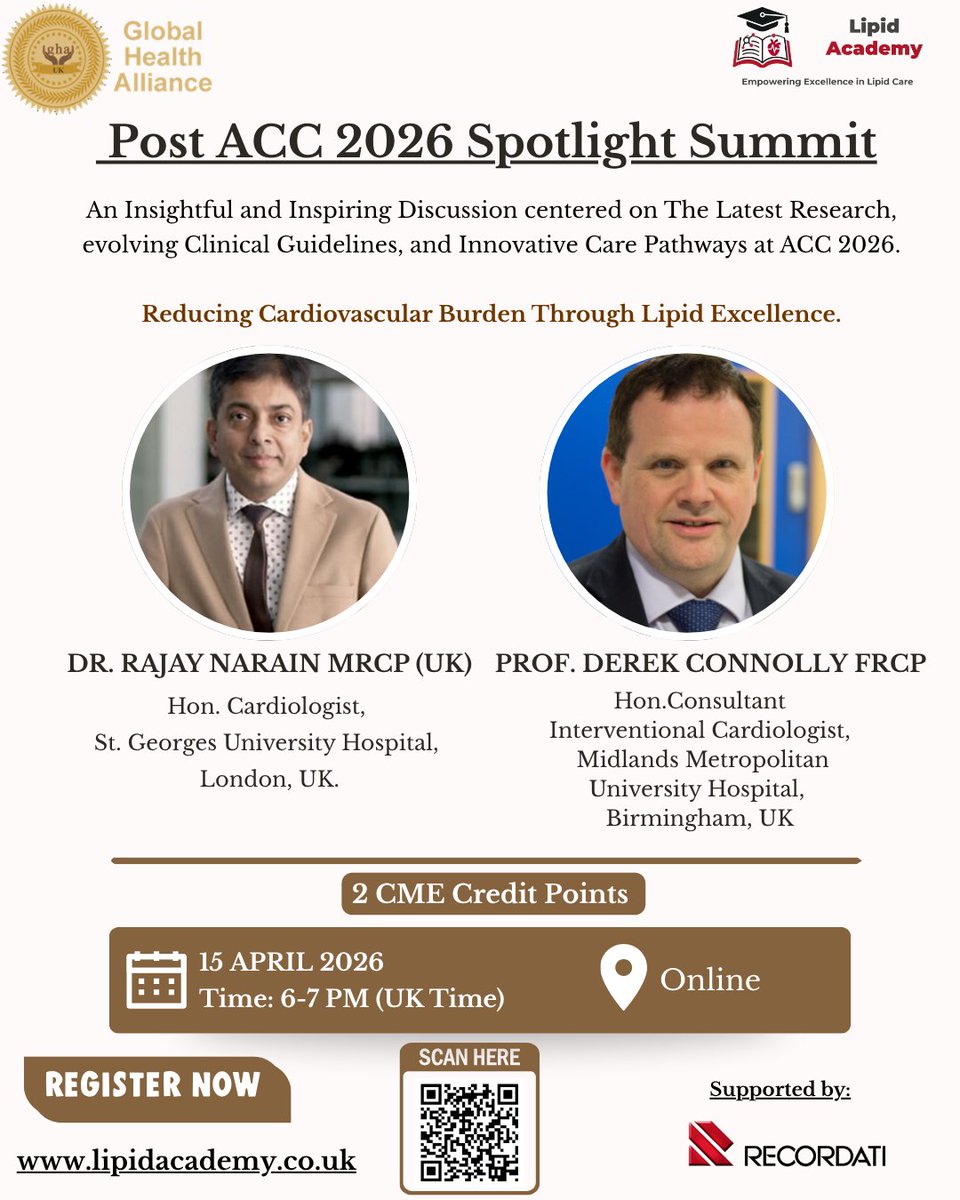
Big ideas. Real impact.
Step into the future of cardiovascular care at the Post ACC 2026 Spotlight Summit, where global expertise meets cutting-edge lipid science.
📅 15 Apr 2026 | 🌐 Online
Earn CME credits & stay ahead of evolving guidelines.
#ACC26#Cardiology
On this World Health Day, we’re reminded that health is a right, not a privilege. 🌍❤️
Together, let’s build a future where care, access, and awareness reach everyone everywhere.
#WorldHealthDay#HealthForAll#GlobalHealth#StrongerTogether
Discover mechanisms and novel therapeutic strategies targeting inflammation in patients with atrial fibrillation in this State-of-the-Art review in #EHJ
👉 https://t.co/E9bhVIG3Yz
@RoccoMontone@ehj_ed#atrialfibrillation#inflammation
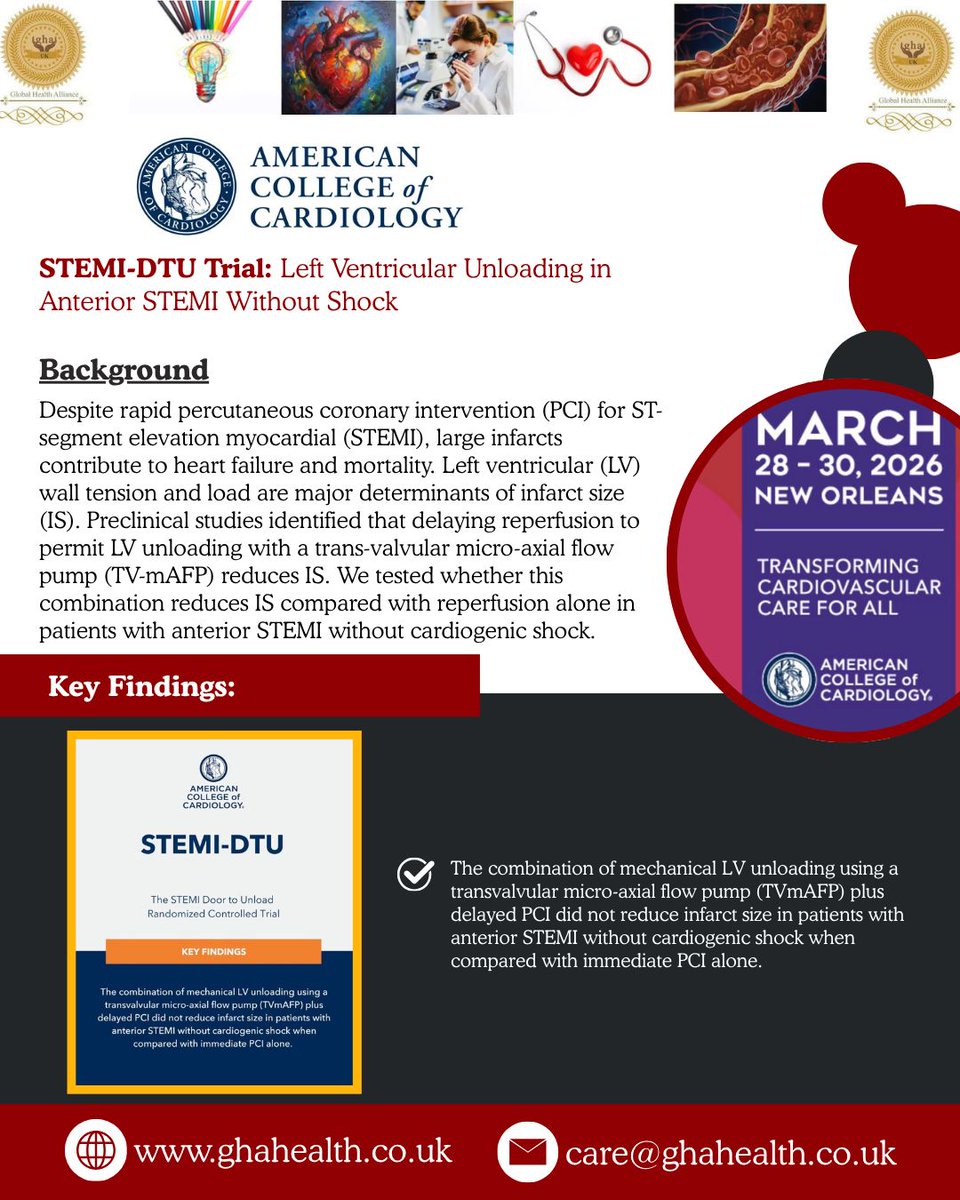
Rethinking timing in acute cardiac care. The STEMI-DTU trial challenges a key assumption:delayed PCI with LV unloading didn’t reduce infarct size vs immediate intervention.
Sometimes, faster is still better. Evidence leads the way.
#STEMI#Cardiology#PCI#ClinicalTrials#ACC26
CHAMPION-AF Trial ❤️
Devices vs. drugs: closing the gap.
LAA closure is non-inferior to NOACs and may reduce bleeding risk.
A potential shift in stroke prevention for AFib patients.
#AFib#StrokePrevention#Cardiology#ClinicalTrials#ACC26
Lower targets. Better outcomes.
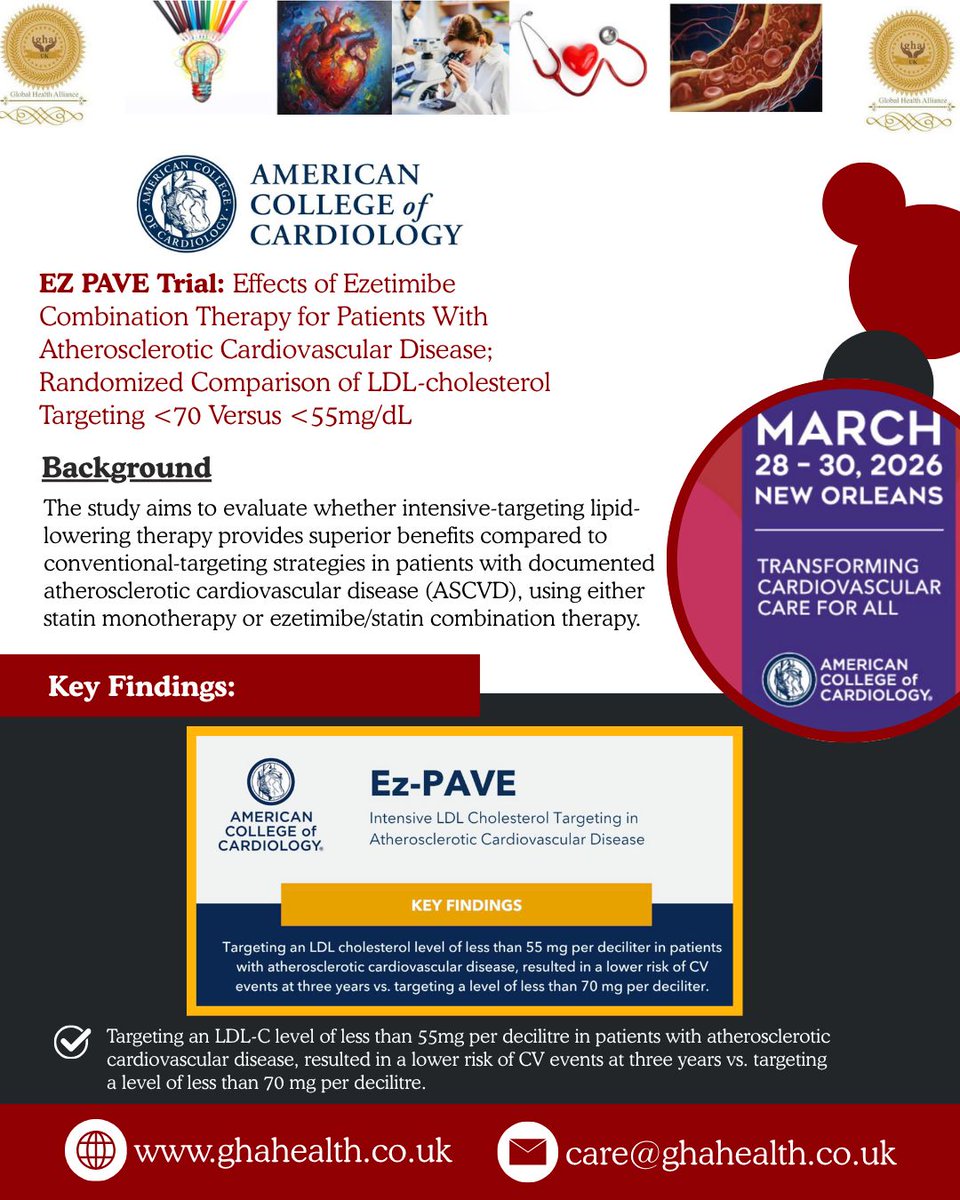
The EZ-PAVE trial shows LDL-C <55 mg/dL significantly reduces CV risk vs. conventional goals.
Precision prevention is the future of cardiology, where science meets impact.
#LDL#ASCVD#Cardiology#Cholesterol#ClinicalTrials#ACC26
Fight against Heart Diseases & NCDs continues at American College of Cardiology #ACC26 meeting in #NewOrleans
Great to be at the @ACCinTouch 75th Annual Meet at New Orleans.
Fantastic discussion on latest research in #Cardiology & #CardioRenalMetabolic
Excited to share that Global Health Alliance (GHA UK) is attending ACC 75th Annual Scientific Session & Expo in New Orleans 🇺🇸
Looking forward to connecting with global cardiology leaders and building meaningful collaborations ❤️
#ACC26#ACC75#Cardiology#GlobalHealth