Welcome to Predictive Security
#Aegis is leading the way to a new security standard.
🌐 AI-Powered
⛓️ Real-Time Monitoring
✅ Predictive & Actionable Security
Fully customizable, for crypto natives and newcomers.
https://t.co/Qqc24l5mwd
Restoring trust in #Web3, since 2021.
🚨What DeFi Users Actually Demand in 2026
They’re done with “secure” marketing.
After watching $600M+ vanish in weeks, smart capital is flowing to projects that offer more than audits and insurance promises.
They want instant transaction freezes, on-chain exploit verification, and fast fund recovery when prevention inevitably fails.
That’s why real-time defense iis the new baseline for trust.
Prevention still matters. But in 2026, users demand the missing layer that fights back when attacks hit.
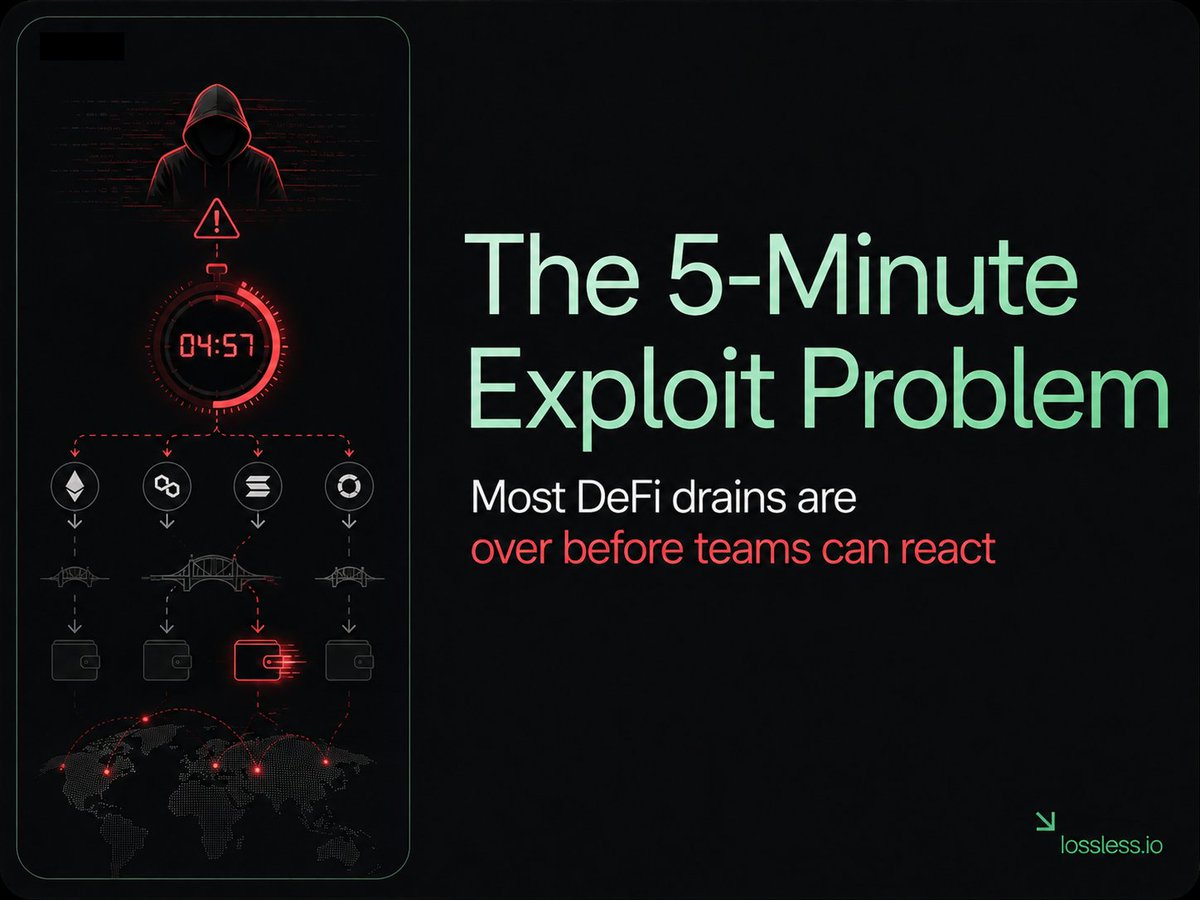
🚨 The 5-Minute Exploit Problem
Most DeFi drains in 2026 don’t drag on for days.They’re over in under 10 minutes.
By the time teams spot the attack, post “we’re investigating,” or even trigger a pause. The funds are already bridged out and gone.
→ Audits? They passed.
→ Insurance? Too slow to matter.
→ Bounties? Useless after the money’s moved.
This is exactly why real-time protection beats every traditional defense.
Prevention is vital, but when it fails (and it increasingly does), you need the ability to fight back in real time.
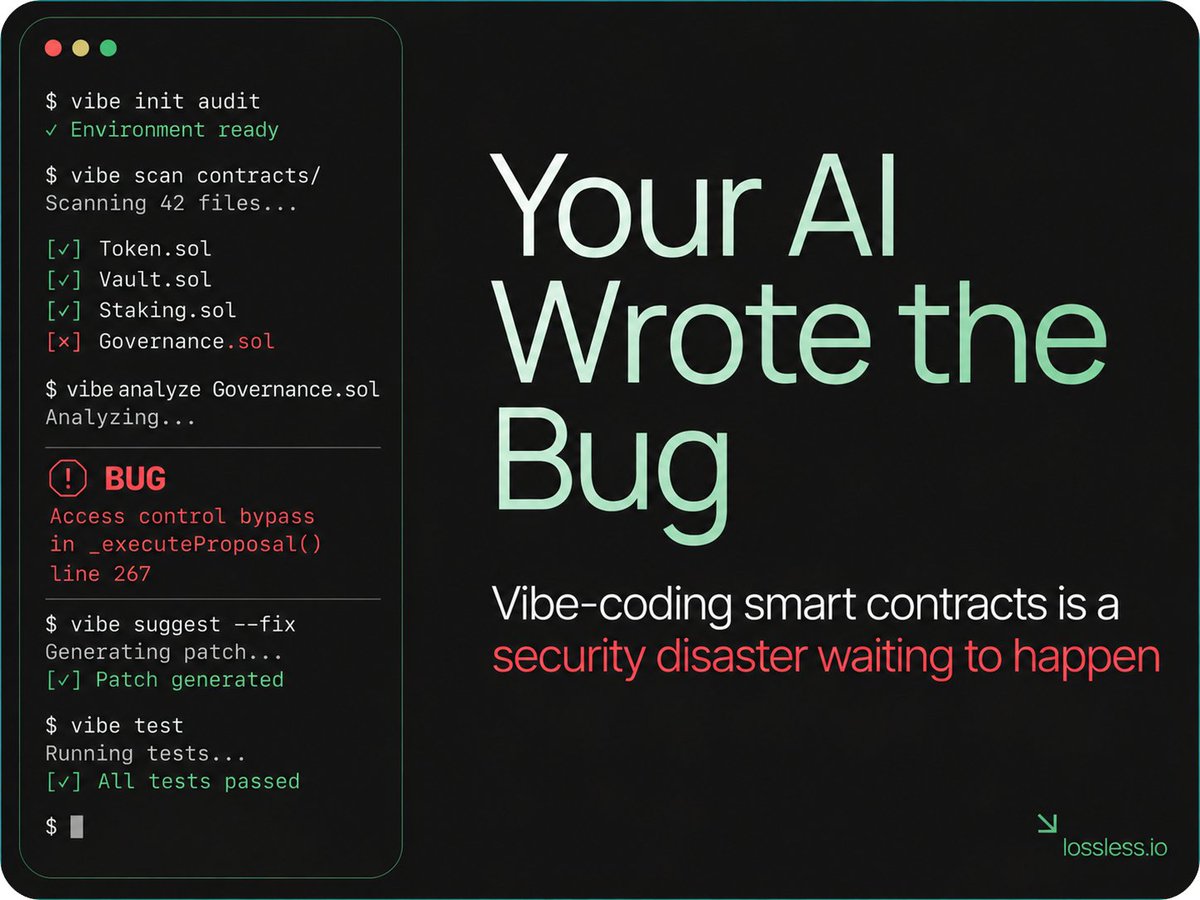
45% of AI-generated code fails basic security tests. And now people are vibe-coding smart contracts.
A new Cloud Security Alliance report found:
- 86% of AI-generated samples fail XSS defense
- 88% vulnerable to log injection
- AI-assisted devs produce security findings at 10x the rate of manual devs
- 20% of AI-generated code references packages that don't exist, opening the door to supply chain attacks
The security pass rate hasn't improved from 2025 to 2026 despite vendor claims.
Speed without protection isn't innovation. It's a countdown.
If you're building in Web3, your security can't be an afterthought prompted by an LLM. Bake mitigation into the token standard itself.
Vibe coding = great for ideas. Terrible for security.
AI is making Web3 development faster than ever, but you can't prompt-engineer your way out of a smart contract exploit.
Security requires active mitigation. By integrating the LERC-20 standard, you bake decentralized fail-safes directly into your token contract. If a breach happens, malicious transactions are frozen and reversed.
Stop relying on perfect code. Start building a net. 🥅
April just became one of the worst months for Web3 security in history, with over $570M drained in massive exploits like KelpDAO and Drift Protocol. 🚨
The harsh reality?
The "Audit and Pray" era is dead. Sophisticated threat actors are bypassing smart contracts to target infrastructure and human vulnerabilities.
Even with 10+ audits, perfect code won't save you when the exploit inevitably happens.
Zero-days are inevitable. Recovery is a choice.
🚨 April 2026: DeFi’s Brutal Reality Check
In under a month, hackers have drained over $600M from protocols like Kelp DAO ($292M bridge exploit) and Drift ($285M).
These weren’t black swan events. They followed the same script we’ve seen too often: known single points of failure, ignored governance warnings, and response times too slow to matter.
The uncomfortable truth? Prevention alone isn’t enough anymore. Audits, insurance, and “hope for the best” strategies leave communities exposed when sophisticated attacks hit.
We built the missing layer: real-time exploit identification and active mitigation.
Projects and builders: Don’t wait for the next headline. Integrate Lossless and give your users real security not just promises.
The future of resilient DeFi starts with better response systems.
👉 Explore how it works: https://t.co/2gjxjryU49
7/ Every major DeFi incident of 2026 has followed the same pattern: a single point of failure, a known risk, a slow response.
The tools to prevent this exist. Whether protocols choose to deploy them before the next headline is the real question.
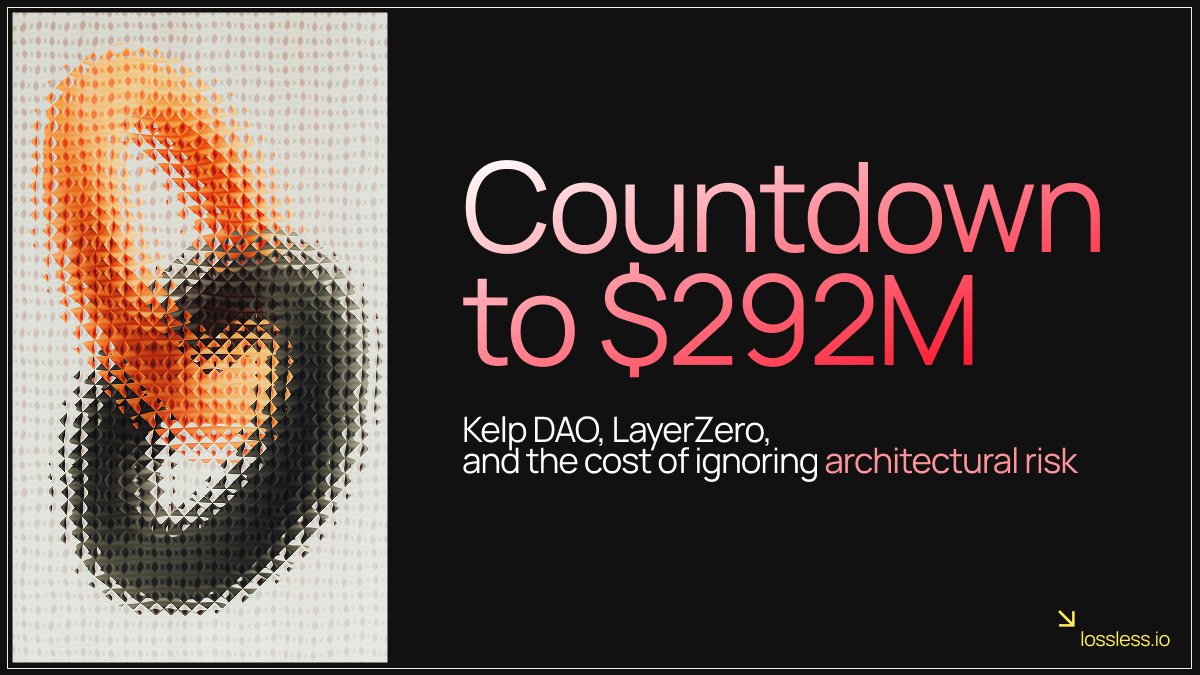
$292M drained from Kelp DAO's rsETH bridge on April 18. 18% of circulating supply, gone to a single forged cross-chain message.
The vulnerability was publicly documented 15 months before the attack.
A breakdown of how we got here. 🧵
6/ What did work is instructive. Kelp's pauser froze contracts 46 minutes after the drain. Two follow-up attempts carrying ~$100M each reverted.
Arbitrum's Security Council later froze $71M of the stolen ETH.
Response mechanisms prevented roughly $200M in additional losses.
Claude’s new Mythos model just changed the security game. Its ability to instantly identify zero-day vulnerabilities is incredible, but it exposes a sobering reality: even the most robust, heavily funded corporate infrastructures are riddled with flaws just waiting to be exploited.
If AI can uncover these massive attack vectors in seconds, the old Web3 standard of "audit and pray" is officially dead. No code is flawless, and relying entirely on a wall to keep bad actors out is a losing battle.
We have to accept that exploits will happen—no matter how big the protocol—and shift our focus to what happens next.
This is exactly why we built Lossless. By baking security directly into the token level before launch, we ensure that when the worst-case scenario hits, it’s not game over. If a vulnerability is exploited, your protocol already has the built-in infrastructure to freeze the malicious transactions and recover the funds.
Don't just build a taller wall. Build a net.
Security shouldn't be an afterthought. 🛡️
Launch your project with SECURITY BUILT IN.
With the Lossless Token Minter, creators can mint their smart contracts and remove all attack vectors from DAY 1. Safeguard your community and your assets right from the start.
Just use Lossless https://t.co/sHcU1RgHZa
“Code is Law” doesn’t cut it when institutions are watching.
The attack surface (perps, RWAs, tokenized assets) only gets bigger. The protocols winning serious TradFi capital treat security as infrastructure, not a patch:
• Real-time exploit detection
• Instant malicious transaction freezing
• Built-in fund recovery before damage spreads
Building secure first infrastructure is not easy, so start here 👇
https://t.co/uGE3XC6u2R
The S&P 500 now has an officially licensed perpetual contract on Hyperliquid.
Not a synthetic. Not an unofficial mirror. A licensed product backed by institutional-grade S&P index data, trading 24/7 on a decentralized L1.
This is the clearest signal yet: Tradfi trading capital is now on-chain markets.
But here's what doesn't get talked about enough:
Every new avenue of capital flow is a new surface to defend. Perpetuals, RWAs, tokenized benchmarks.
The instruments are getting more complex, the stakes are getting higher, and the security standards need to match.
DeFi and tradfi funds alike need active, real-time monitoring built into the stack, not bolted on after the fact.
Claude Code's security features are a great first step. But a first step is exactly what they are.
Enterprise-grade web3 security isn't a checkbox — it's a stack. And we're glad the floor is rising.
We build on top of foundations like this. When base-level tooling improves, our ability to give protocols deeper, smarter protection improves with it.
Better defaults for everyone → better surface for us to work with → stronger web3 for all.
The gate is open. Now let's build the fortress. 🔐
Every team shipping a token eventually hits the same wall:
Do we patch security as we go, or build it into the foundation from day one?
Patching on the fly means:
- Audits that expire the moment your code changes
- Engineers pulled off roadmap work to fight fires
- No clear response plan when an exploit lands
That's why we're embedding security at the protocol level through LERC20.
Combining real-time threat detection with community-powered hack mitigation before damage spreads.
Teams that treat security as infrastructure are the ones that survive, recover, and keep growing.
Institutions aren't just chasing APY and TVL anymore. They’re pricing in the risk of a single exploit taking their portfolio to zero. 📉
Every protocol lacking real-time security carries a massive hidden cost.
No continuous defense? Don't expect that Web2 capital to land.