La promessa della rivoluzione digitale era più libertà e una maggiore centralità per gli utenti. L’intelligenza artificiale rischia di essere il suo contrario. Inizia un viaggio a cui tengo molto. Si chiama “Tecno”, il mio podcast sulla nuova era tecnologica
🤖 Cosa succede quando le intelligenze artificiali iniziano a parlare tra loro? 🎧 Puoi ascoltare #Tecno, il podcast di 24Ore Podcast che esce due volte al mese, cliccando qui: https://t.co/jRtUqIzPD3
@lucasalvioli
💥 Il conflitto tra Stati Uniti, Israele e Iran è anche una guerra dell’energia. 🗺️ Ecco mappe e grafici elaborate da #Lab24 per capire la crisi nel Golfo: https://t.co/jLvsstVwg5
@lucasalvioli
Amazon pensa a un suo smartphone Ai con Alexa al centro
Secondo Reuters l’azienda starebbe esplorando anche l’ipotesi di un telefono minimale, che riduca la dipendenza dallo schermo https://t.co/Hfe5sA9OcN @lucasalvioli
Sul sito de #IlSole24Ore l’intervista completa di @lucasalvioli a Debbie Weinstein, responsabile area Emea (Europe, Middle East and Africa) di #Google: https://t.co/LYc9pB6Ulx
A chi fa comodo il racconto distopico dell’AI? Ascolta il nuovo episodio di #Tecno, il podcast di 24Ore Podcast che indaga opportunità e pericoli di questa nuova era tecnologica: https://t.co/jRtUqIzPD3
@lucasalvioli
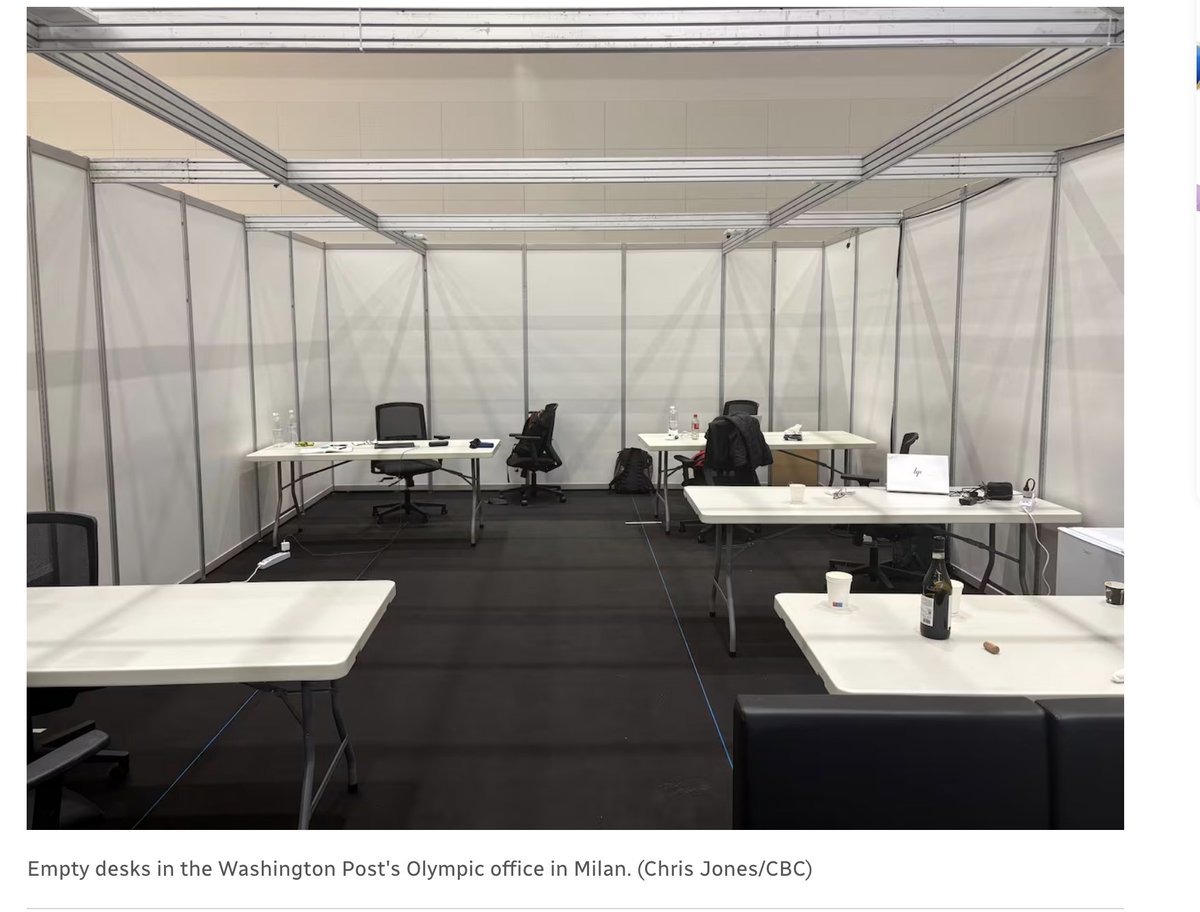
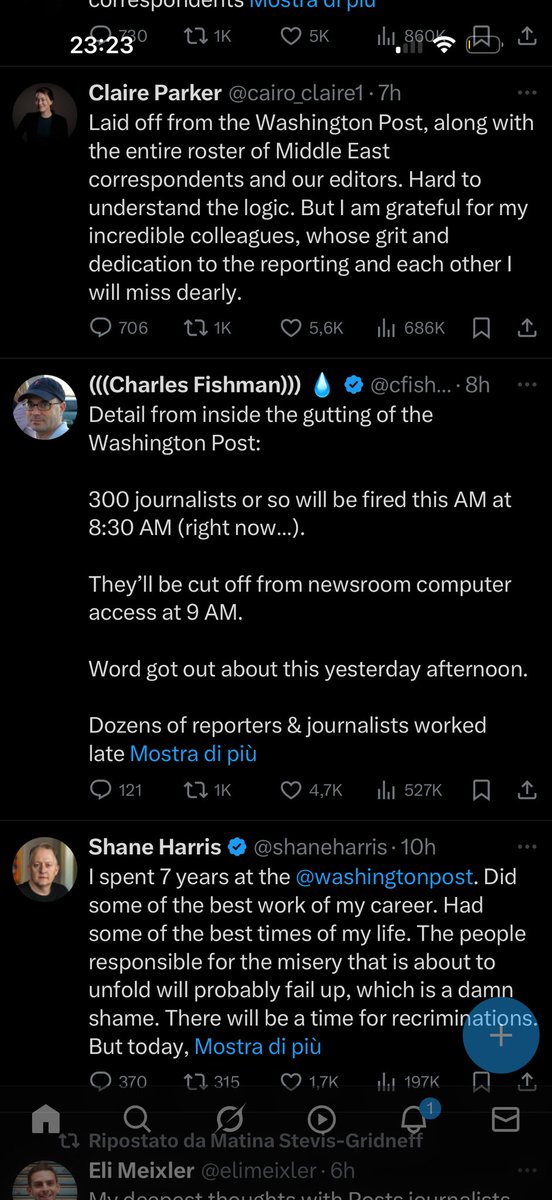
Picked up my notebook this morning — full of notes from a recent reporting trip — and got hit with another wave of grief over all the stories that now won't be told. I'm looking for work, preferably in Kyiv, should anyone need a dogged, empathetic reporter. DM/email.
From @WashingtonPost Executive Editor @murraymatt:
Dear All,
As we shared in our live stream earlier, the company is taking actions today to place The Washington Post on a stronger footing and better position us in this rapidly changing era of new technologies and evolving user habits.
These moves include substantial newsroom reductions impacting nearly all news departments. For the immediate future, we will concentrate on areas that demonstrate authority, distinctiveness, and impact and that resonate with readers: politics, national affairs, people, power and trends; national security in DC and abroad; forces shaping the future including science, health, medicine, technology, climate, and business; journalism that empowers people to take action, from advice to wellness; revelatory investigations; and what’s capturing attention in culture, online, and in daily life.
We will meet with leaders in each department today and tomorrow to review the impacts on their teams.
Today’s news is painful. These are difficult actions. We are proud of, and grateful for, the many valued colleagues whose talents and passion have contributed to The Post over many years.
But we take them with clarity of purpose. The need has never been more urgent to reposition The Post. A more flexible, sustainable model will help us better navigate unprecedented volatility, competition, technological change, news-consumption habits, and cost pressure.
As you know, we have grappled with financial challenges for some time. They have affected us in multiple rounds of cost cuts and buyouts, along with periodic constraints on other kinds of spending.
We have concluded that the company’s structure is too rooted in a different era, when we were a dominant, local print product. This restructure will help to secure our future in service of our journalistic mission and provide us stability moving forward.
We are far from alone in reevaluating our model or rethinking how we operate. The ecosystem of news and information, on- and off-platform, is changing radically. News consumers enjoy more variety, voices, platforms, and options than ever before. In just the last five years, multiple startups—and even individuals—have created meaningful products that draw attention and generate impact at low cost.
Platforms like Search that shaped the previous era of digital news, and which once helped The Post thrive, are in serious decline. Our organic search has fallen by nearly half in the last three years. And we are still in the early days of AI-generated content, which is drastically reshaping user experiences and expectations.
We are producing much great journalism of which we can be proud. As we discuss every day in the news meeting, some of our best work attracts readers and generates subscriptions and engagement.
Unfortunately, some does not. Some areas, such as video, haven’t kept up with changes in how consumers get news and information. Significantly, our daily story output has substantially fallen in the last five years. And even as we produce much excellent work, we too often write from one perspective, for one slice of the audience.
If we are to thrive, not just endure, we must reinvent our journalism and our business model with renewed ambition. We already have taken important and, in some cases, long overdue steps toward reinvention—creating the Print desk, transforming digital workflows, and embedding Audience Strategy editors in every department. Today’s moves will put us in position to find and develop better ways to connect Post journalism to news consumers in the ways they want it.
From this foundation, we aim to build on what is working, and grow with discipline and intent, to experiment, to measure and deepen what resonates with customers.
We can’t be everything to everyone. But we must be indispensable where we compete. That means continually asking why a story matters, who it serves and how it gives people a clearer understanding of the world and an advantage in navigating it.
Some of you have heard me ask how we can shrink the gap between some of what we create in our newsroom during the day and what we — and our children, families, and friends — consume at night.
Today’s actions are about addressing those questions, forcefully, to reinvent The Washington Post for this new era. This work is difficult, but it is essential. The Post is a necessary institution, and it must remain relevant.
Even amid challenges, The Washington Post retains great strengths. We have a deep pool of talented journalists and leaders, strong standards, institutional backing, a proud legacy, and millions of customers.
Most important, our central purpose remains as it ever was: To produce riveting and distinct journalism of the highest caliber that breaks news, explains the world with authority and fairness, empowers people with knowledge, and helps them live better-informed lives.
Matt