Promoting American Interests. We expose. We operate. Active from Capitol Hill to Iran's streets.
@CampusWatchMEF @Islamist_Watch @IsraelVictoryP1 | @GreggRoman
Israel cannot make peace with a Lebanon that Hezbollah still dominates.
@jonathan_spyer explains why Beirut’s weakness and Tehran’s patronage leave Israel with few stable options.
https://t.co/YhxU4oCXZs
Turkey’s prison system has become part of Erdoğan’s political machinery.
@abdbozkurt reports the inmate population now exceeds 420,000 as critics and opponents face repression.
https://t.co/PmnSHaoWaq
Turkey’s Somalia project now reaches into constitutional politics.
Siyad Madey argues Ankara needs a compliant Mogadishu to protect its offshore concessions, naval access, and bases.
https://t.co/dCfqIRrtOY
Turkey is testing whether Washington will tolerate a new Aegean crisis.
Christos Konstantinidis warns that Greek officials fear U.S. ambiguity could normalize Ankara’s partitionist claims.
https://t.co/Zo2ZJ2YvSQ
Italian police stopped an ISIS-inspired suspect before he could launch a car attack.
@DrJulesGomes reports the Moroccan immigrant allegedly wanted to “do like Modena” before his arrest.
https://t.co/ukEIjiSDb3
Trump talks about a deal. Tehran talks like it already won.
@MSoghom shows why Iranian rhetoric suggests compromise is far less likely than Washington hopes.
https://t.co/Z5a5RaQocv
A Hamas operative says Erdoğan personally promised protection.
@abdbozkurt details one of the clearest firsthand accounts yet of Turkey serving as sanctuary for Hamas networks.
https://t.co/pjH38Jv4aC
Iran’s Western Hemisphere network runs through Havana.
@ElliotNazar argues a free Cuba would weaken Tehran’s regional reach and remove a long-standing anti-American partner.
https://t.co/VuPl7CGk6W
Suwayda is being turned into Syria’s security scapegoat.
@ajaltamimi argues the focus on the Druze risks obscuring the deeper failures driving Syria’s instability.
https://t.co/5pco0gy7la
The takeaway: the far Left, fringe Right, and Islamist networks are increasingly finding common cause around anti-Western and anti-Israel narratives.
Their convergence is fueled by polarization, distrust, and the very democratic freedoms they seek to exploit. 5/5
Islamism, antisemitism, and anti-Western radicalism are no longer confined to foreign battlefields.
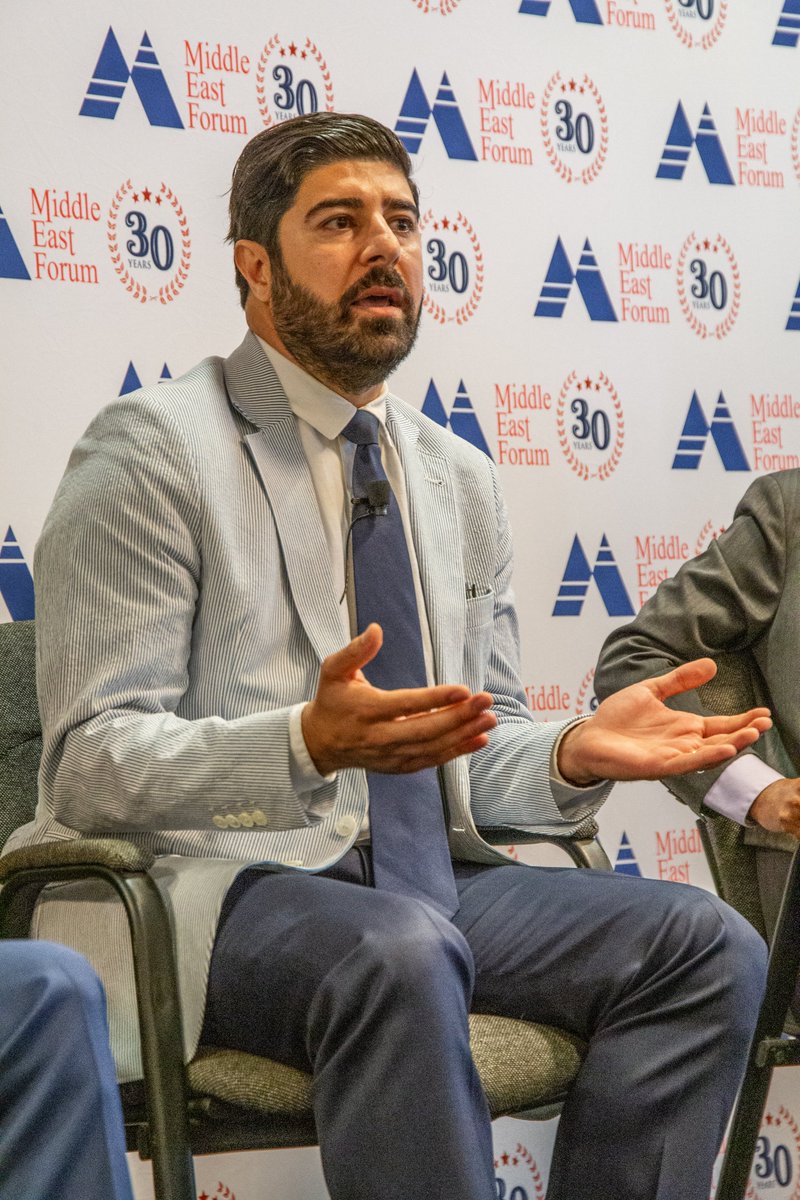
Panel 5 at MEF’s 2026 Policy Conference, “The Threat Next Door,” examined how extremist movements exploit Western freedoms, polarization, and distrust from within. 1/5
Karys Rhea (@RheaKarys) discussed the rise of antisemitism on the right.
She argued that post-COVID distrust, conspiracy theories, and anti-Israel media narratives have helped give latent antisemitism new political space, especially among younger audiences. 4/5
The takeaway: there are no magic formulas, and not every case is the same.
But many overlooked aspirants are more democratic, Western-leaning, and less dependent on foreign aid. Washington and Europe still lack a consistent approach to recognition — and too often ignore local agency. 7/7
Palestinian statehood dominates Western and regional diplomacy. But it is far from the only unresolved question of recognition, borders, and self-determination in the Middle East and beyond.
Panel 3 at the Middle East Forum’s 2026 Policy Conference examined “The Players You’re Not Watching.” 🧵1/7
Diliman Abdulkader (@D_abdulkader) compared these cases with the Kurdish plight.
Unlike Somaliland, South Arabia, and Artsakh, the Kurds have never had recognized borders — even as their homeland spans Turkey, Syria, Iraq, and Iran. 6/7