METER Group designs and manufactures scientific instrumentation that delivers real-time, environmental data to the agricultural, urban, and research sectors.
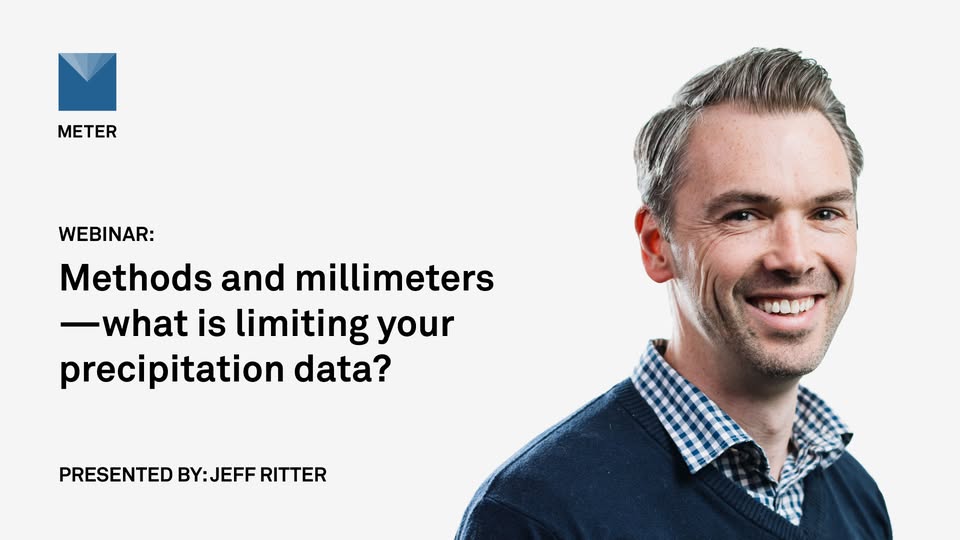
Precipitation data is more than a number in millimeters. Measurement method, sensor location, and precipitation type all affect how useful the data is. Join Jeff Ritter Sept. 3 at 9 a.m. PDT.
https://t.co/h1mibaBZzn
#Precipitation#Webinar
Accurate weather data is only the beginning. TAHMO provides water, weather, and climate information to 180+ research institutions—and invites wider collaboration around how it can be used.
Story: https://t.co/ElQNQpnPCR
#WeatherData#TAHMO
Urban landscapes can be far more variable than farm fields. Dr. Bryan Hopkins explains how soil sensors help turf managers find dry areas, avoid overwatering, and keep nutrients in the root zone, and then irrigate where water is actually needed.
https://t.co/e7f4WPHzFE
A weather station can work as designed and still collect unrepresentative data. Jeff Ritter covers siting, connectivity, installation, maintenance, and how to separate sensor problems from real microclimate effects.
https://t.co/xACBt4pnZs
#WeatherMonitoring#DataQuality
Actual ET depends on exchanges of water and energy. The ATMOS 51 VBR combines high-frequency temperature and humidity measurements with solar radiation data to support field-scale actual ET measurement in a compact sensor.
https://t.co/NYzvJWHve7
#Evapotranspiration#ATMOS51
Particle size tells only part of the story when designing soil for a baseball infield. Evan Mascitti explains how clay mineralogy and mix ratios shape engineered soils for safety and playability.
Listen to Episode 55: https://t.co/tbSAa4fJ3B
#SoilScience#SportsTurf
Choosing a weather station means weighing more than price and performance. Application risk, data reliability, spatial variability, and maintenance all shape what “fit for purpose” looks like.
Watch Office Hours 19: https://t.co/MO8zbvOVtV
Field-scale ET measurements can be difficult to expand across multiple sites. ATMOS 51 directly measures actual ET, supplementing an eddy covariance footprint or add field measurement locations.
Explore ATMOS 51: https://t.co/NYzvJWHve7
#Evapotranspiration#ATMOS51
Weather monitoring goes beyond graphs and charts.
Local data drives local action. TAHMO connects researchers, students, farmers, health professionals, and communities across Africa with local weather data.
Read the story: https://t.co/ElQNQpnPCR
Weather data from six miles away wasn’t enough to document conditions on a road project. Bryce Wuori explains how on-site measurements support scheduling, compliance, and decisions as conditions change.
Listen to the conversation: https://t.co/LfyWQTUVie
Can virtual weather data replace an on-site weather station?
Virtual models can support broad estimates, while on-site stations measure conditions at your location. Understanding the strengths of each can help you choose the right approach.
Learn more: https://t.co/rr4Nki7sm3
What works at one measurement site may not scale to more.
Daniel Beverly, research scientist at METER Group, explains how the ATMOS 51 VBR directly measures actual ET to support crop water use comparisons with field-based data.
https://t.co/NYzvJWHve7
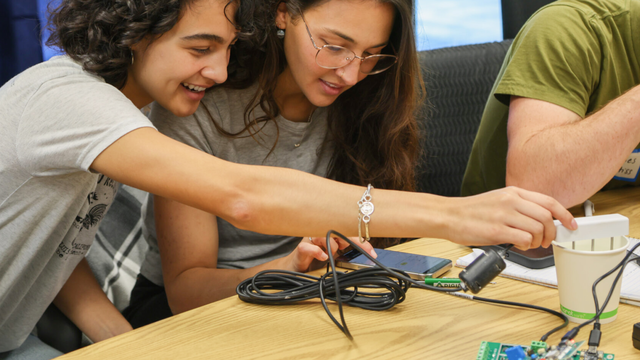
Young scientists at UC Santa Cruz are putting field measurements to work. Two research teams are developing practical tools to help specialty crop growers make irrigation decisions.
Read about their projects: https://t.co/j2snw5EZF2
How many steps does it take to install your weather station?
Shaun compares setups and shows how the wireless, solar-powered, self-logging ATMOS 41W simplifies remote deployment—so you can spend less time troubleshooting and more time collecting data.
https://t.co/KbpqrNioIO
Building a 20,000-station weather network across Africa takes more than hardware. TAHMO needed durable instruments, practical deployment, long-term support, and accessible data.
Read the story: https://t.co/ElQNQpnPCR
Join METER Product Scientist Jeff Ritter for a 30-minute webinar to learn about the differences in precipitation measurement methods.
Learn more and register here:
https://t.co/h1mibaBZzn
What happens when irrigation scheduling is tested in the field? Dr. Troy Peters discusses research comparing irrigation based on soil moisture sensor data and weather station data on a commercial farm.
https://t.co/yqNid8cH9X
Reference ET estimates water demand under ideal conditions, but actual ET tells you what's happening in the field. Daniel Beverly explains how the ATMOS 51 VBR measures actual evapotranspiration in a more accessible way than a full eddy covariance tower.
https://t.co/NYzvJWI33F
Small microclimate differences can shape what survives at the treeline.
Dr. Richard Gill studies how air temperature, soil temperature, and soil water influence plant communities as climates warm.
https://t.co/Yyx6MmlIXe